

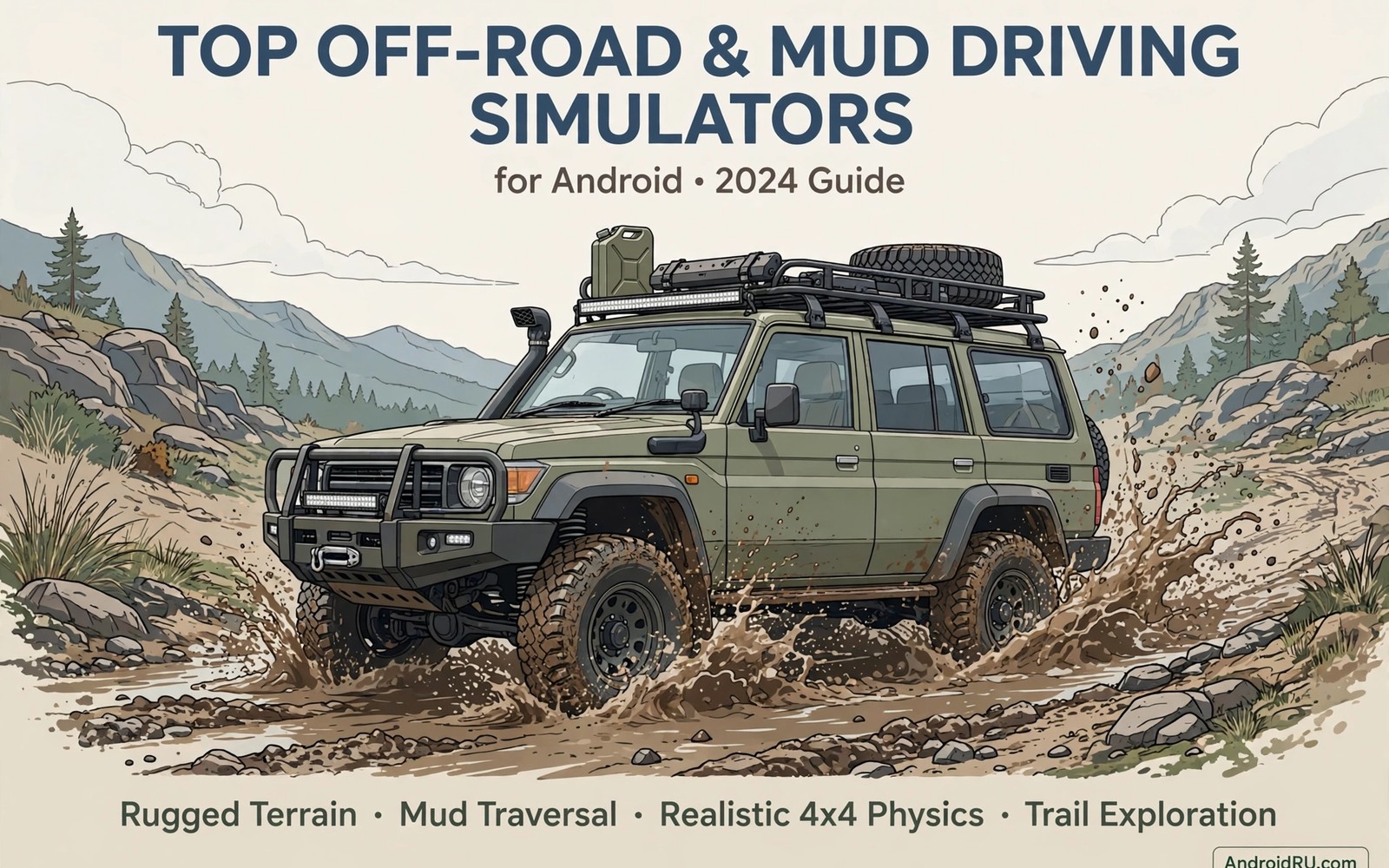
Off-road mud driving simulators test a different kind of skill from track racing. Speed matters less than grip and ground clearance and route choice. A slow careful line through mud often beats a fast reckless charge. This guide explains how mud physics work on mobile and how to pick a simulator worth your time.
Mud changes everything about how a vehicle behaves on screen. Wheels sink and spin and grip comes and goes without warning. Weight shifts matter even more on slopes and ruts. Players who learn to read terrain win races and rescue missions alike. tilt controls and touch steering
Good off-road games give you tools beyond the throttle. You get winches and tyre choices and differential locks in the best titles. Those tools turn stuck moments into puzzles instead of failures. Learn each tool before you tackle hard trails. Your patience will pay off in deep mud.
Off-road communities share trail guides and vehicle builds generously online. Reading trail notes before hard routes saves recovery time. Learn from experienced drivers about mud depth and winch points. Community knowledge complements in game tutorials well.
How mud physics change driving
Mud reduces grip and increases rolling resistance at the same time. Your wheels need gentle throttle to find grip without digging deeper. Sudden full throttle spins wheels and buries the vehicle further. Smooth inputs are worth more than horsepower in deep sections. Think of the throttle as a conversation with the ground.
Ruts form where many vehicles have passed before you. Those ruts can guide your wheels or trap them completely. A shallow rut helps you hold a straight line through mud. A deep rut can ground your chassis and stop all progress. Read rut depth before you commit to a line.
Mud depth varies across a single trail section more than it first appears. Shallow edges often hide firm ground beside deep centres. Drive edges cautiously before committing to centre lines. Edge driving also preserves momentum for deeper sections ahead. Terrain reading is a learned skill that grows with every trail.
Choose tyres and vehicles wisely
Mud tyres with deep tread clear mud faster and grip soft ground better. Road tyres clog quickly and spin on the first muddy slope. All terrain tyres offer a compromise for mixed routes with mud and gravel. Match tyre choice to the longest mud section on your route. Tyre choice alone can decide a hard trail.
Heavy trucks carry more momentum through mud but sink deeper when they stop. Light buggies float over soft ground but lack pulling power for rescues. Medium four wheel drive vehicles suit most players for learning. Start with a balanced vehicle and specialise later. Your driving style should shape the upgrade path. open-world driving games
Fuel consumption rises sharply in deep mud because wheels spin constantly. Carry extra fuel on long mud routes when the game allows. Plan fuel stops before remote trail sections carefully. Running dry in mud wastes more time than any shortcut saves. Fuel awareness is off-road professionalism.
adb shell settings put system haptic_feedback_enabled 1
adb shell cmd game mode performance com.example.mud
adb shell dumpsys gfxinfo com.example.mud framestats
The commands above are adapted from public platform documentation for Android settings and game performance tools. They are included here as a teaching example for testing off-road game smoothness and not as copied game code.
Use winches and recovery tools well
A winch turns a stuck vehicle into a slow steady recovery instead of a lost run. Anchor to a tree or rock that sits in line with your travel direction. Pull gently and steer while the winch works. Rushing a winch pull can snap the line or drag you sideways. Patience makes recovery tools work.
Differential locks send power to all wheels when one wheel spins freely. Use them before you enter deep mud and not after you are stuck. Locked differentials make steering heavier on firm ground. Unlock them on solid sections to protect handling. Timing matters as much as the tool itself.
Winch anchors vary in strength across trees and rocks in realistic games. Weak anchors slip under heavy loads and waste recovery time. Strong anchors sit close to your travel direction ideally. Test anchor strength gently before full pulls. Patient anchor choice prevents failed recoveries.
Read terrain before you drive it
Stop and survey a hard section before you charge into it when the game allows scouting. Look for firm ground at the edges of deep mud pools. Look for rocks that can support wheels without grounding the chassis. A short walk in game terms can save a long recovery later. Good drivers plan lines before they drive them.
Water crossings hide depth and hidden rocks under murky surfaces. Enter slowly and keep a steady throttle through the crossing. Stopping mid water risks flooding the engine in realistic titles. Pick the shallowest visible line even if it looks longer. A longer dry line beats a short drowned engine. motorbike racing games
Slope angles change mud behaviour dramatically on hillside trails. Uphill mud demands steady throttle and low gears. Downhill mud demands engine braking and careful steering. Gravity works against grip in both directions differently. Learn slope techniques on gentle hills first.
Progress through harder trails safely
Start with gravel and light mud trails before you attempt deep bogs. Early trails teach throttle control without harsh penalties. Medium trails add slopes and water and winch use. Hard trails combine every skill at once under time pressure. That ladder keeps learning fun instead of frustrating.
Upgrade suspension and ground clearance before engine power on mud builds. Clearance keeps your chassis off ruts and rocks. Suspension keeps wheels in contact with uneven ground. Power helps only when grip already exists. Build grip first and speed second for off-road success.
Night trails add visibility challenges to mud driving significantly. Headlights reveal ruts late on dark muddy sections. Drive slower at night and use spotlights when available. Night driving rewards caution more than daytime speed. Patience keeps night trails enjoyable instead of stressful.
Progress from easy trails to expert bogs
A clear progression path keeps off-road learning enjoyable for months. Start with gravel roads and shallow mud crossings. Move to forest trails with moderate ruts and slopes. Attempt deep bogs only after winch skills feel reliable. Each stage builds confidence for the next challenge.
Set personal goals for each trail difficulty level before advancing. Easy goals might include zero recoveries on three trails. Medium goals might include clean winch use twice. Hard goals might include night trail completion. Clear goals make progress visible and motivating.
Vehicle upgrades should follow trail difficulty rather than lead it. Upgrade tyres after struggling with grip repeatedly. Upgrade clearance after grounding on ruts often. Upgrade winches after failed recoveries frustrate progress. Need based upgrades teach vehicle systems naturally.
Trail completion times matter less than clean driving in off-road games. A slow clean run teaches more than a fast messy run. Focus on zero damage goals during learning stages. Speed arrives naturally once terrain reading improves. Clean habits compound across every trail type.
Keep improving after the basics
Advanced off-road drivers learn to read soil colour and vegetation as grip clues. Dark wet soil usually signals deep mud ahead. Light dry soil often offers firmer ground beside ruts. Vegetation patterns reveal where water collects after rain. These visual clues supplement in game terrain information usefully. Practice reading terrain on familiar trails first. Familiar trails let you verify clues against known mud depth. Verified clues then transfer to unknown trails with confidence. Terrain literacy is the off-road equivalent of track memorisation in circuit racing.
Recovery planning should begin before you enter difficult sections rather than after getting stuck. Identify winch anchors and escape routes visually before committing. Note firm ground behind you for reversing out if needed. A planned retreat beats a desperate recovery every time. Experienced off-road drivers always keep an exit option open. That habit prevents long frustrating recoveries in deep bogs. Planning takes thirty seconds and saves many minutes of winching later. Make pre section planning a non negotiable habit.
Vehicle maintenance between trails affects reliability during long expeditions significantly. Check tyre wear and suspension condition after hard trails. Worn tyres lose grip in mud far earlier than fresh tyres. Damaged suspension reduces ground clearance on rutted trails. Repair priorities should favour grip and clearance over cosmetic damage. Well maintained vehicles handle predictably when trails get hardest. Maintenance discipline is invisible until it prevents a failure far from help.
Common mistakes
The worst mistake is flooring the throttle the moment wheels start to spin. Spinning digs ruts deeper and buries the vehicle further into mud. Ease off and let tyres find grip again. Rock gently forward and back when the game allows that technique.
Another mistake is skipping vehicle preparation before hard trails. Wrong tyres and low clearance turn a fun trail into a long recovery slog. Check tyres and fuel and recovery gear before departure. Preparation takes a minute and saves many frustrating minutes later.
A further mistake is tackling expert bogs with a stock vehicle immediately. Stock vehicles lack tyres and clearance for deep mud sections. Progress through medium trails and earn upgrades first. Preparation respects trail difficulty and saves frustration.
Frequently asked questions
Are off-road simulators slow and boring?
No they replace track speed with terrain puzzles and careful vehicle control. Every mud pool and slope demands a decision about line and throttle. That tension feels exciting once you learn to read terrain. Players who love problem solving enjoy off-road games most.
Off-road games feel tense rather than boring once terrain reading clicks. Every mud pool presents a route puzzle with real consequences. Problem solving tension replaces track speed excitement. Players who enjoy puzzles love off-road driving deeply.
Do I need to understand real off-roading to play?
No the best games teach tools through early missions and tutorials. You will learn winch use and tyre choice by playing. Real knowledge helps but it is never required. Start on easy trails and let the game teach you step by step.
No real off-roading knowledge is needed to enjoy these games. Tutorials teach winch and tyre basics through early missions. Community guides fill gaps as difficulty rises. Curiosity and patience matter more than prior experience.
Which phone specs matter most for mud simulators?
Steady frame rate matters more than maximum graphics for mud games. Terrain deformation and physics run every frame during play. A mid range phone with lowered shadows runs these games well. Storage matters too because maps and vehicles take space.
Steady frame rates matter most for mud physics and terrain deformation. Mid range phones handle mud games with lowered shadows well. Storage space matters because detailed maps take room. Keep free space for smooth terrain streaming.
Conclusion
Off-road mud driving simulators reward patience and terrain reading over raw speed. Choose the right tyres and use recovery tools early. Plan your line before deep sections. Those habits turn stuck moments into satisfying recoveries.
Your next step is easy to start tonight. Pick one off-road game and finish three easy trails without rushing. Focus only on smooth throttle and tyre choice. Then try one medium trail and use the winch before you get stuck.
Read community trail notes before attempting your first expert bog. Shared knowledge about mud depth and anchors saves hours. Combine community wisdom with your own practice. Expert trails become achievable with preparation and patience.

