

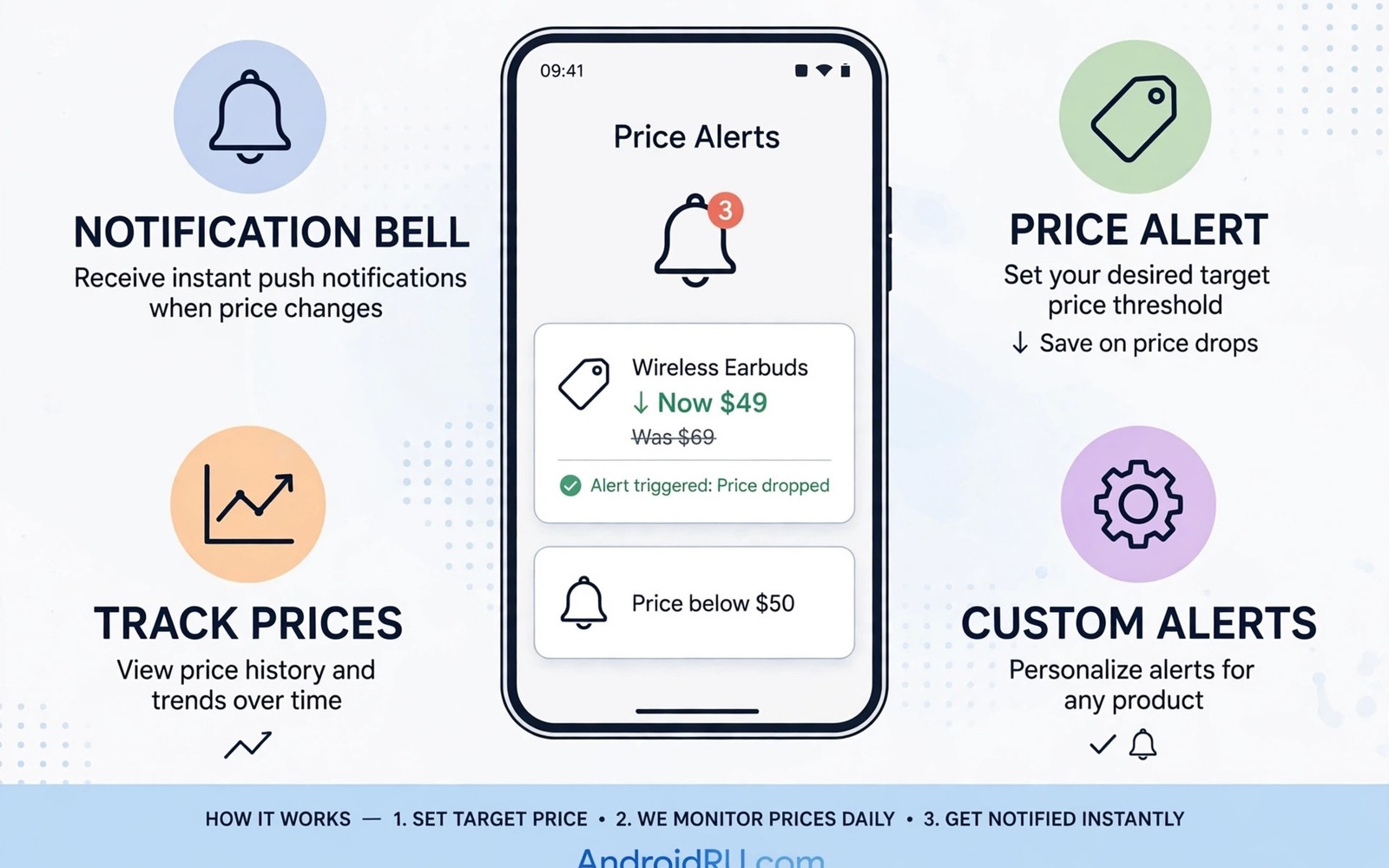
Deal alerts turn passive browsing into an automatic watch system for your target phones. You define the model and the price and the alert does the watching. A good alert arrives the moment a genuine drop appears. A poor alert floods you with noise until you ignore it. Setup quality decides whether alerts help or harm your buying.
Start with a short target list of no more than five models. A short list keeps alerts relevant and decisions clear. Rank the models by preference so a drop on your top choice triggers action. Remove models that no longer interest you promptly. For fake discount awareness read spotting fake discounts so alerts never trick you into a false bargain.
Choosing Alert Tools
Price tracking websites offer alerts with charts and history. Shopping apps offer alerts tied to their own stores. Browser extensions watch pages you visit directly. Each tool type has strengths for different shoppers. A tracker with history suits planners while a store app suits loyal store buyers.
Use two tools for your top model when the purchase matters greatly. Two tools reduce the risk of a missed alert from one service outage. They also let you cross check prices before acting. Avoid using five tools because duplicate alerts cause fatigue. Two reliable tools are the practical maximum for most buyers.
Setting Thresholds That Work
Thresholds should reflect researched target prices rather than guesses. Set the threshold at the price you would pay without hesitation. A threshold set too low may never trigger. A threshold set too high triggers on normal fluctuations. Review thresholds monthly as models age and prices fall naturally.
Use percentage thresholds when you track several price tiers. A fifteen percent drop from the current price is a meaningful signal. A two percent wobble is normal noise. Percentage thresholds scale across cheap and expensive models fairly. Combine percentage and absolute thresholds for the clearest signals.
Choosing Alert Channels
Email alerts suit shoppers who check mail several times daily. App push alerts suit shoppers who react fastest on their phones. SMS alerts suit urgent deals but may cost or disturb. Choose the channel you notice without delay. An alert you notice tomorrow may miss a flash deal today.
Test each channel with a deliberate alert before sale season. Confirm delivery speed and readability on your phone. A truncated alert that hides the price is useless. Adjust notification settings so deal alerts bypass quiet hours during events. Test now rather than discovering failure during a real drop.
Avoiding Alert Fatigue
Alert fatigue happens when too many alerts arrive for models you barely want. Fatigue causes you to ignore the alert that matters most. Prune your alert list weekly during active shopping. Pause alerts for models you decided against. A lean alert list protects your attention for real opportunities.
Group alerts by priority when your tool allows it. High priority alerts for top models deserve immediate sounds. Low priority alerts for backups can wait silently. Priority grouping turns a flood into a clear signal hierarchy. Your attention is a scarce resource during sale season.
Acting On An Alert Quickly
A price alert is only useful when you act with a prepared plan. Keep payment and delivery details ready in your store accounts. Know your exact variant and maximum price before the alert arrives. Check seller and warranty quickly using pre-saved trusted sellers. A prepared buyer converts an alert into a purchase in minutes.
Verify the alert price on the live store page before paying. Tracker delays can show prices that already ended. Check stock availability for your exact variant. A verified live price plus trusted seller equals a safe fast purchase. Speed without verification risks buying a stale or wrong listing.
Alerts For Refurbished And Open-Box Stock
Refurbished and open-box alerts need grade filters alongside price. A low price on a poor grade unit is not a deal. Set alerts only for grades you would accept. Include battery and warranty criteria in your notes for each alert. Grade aware alerts prevent disappointment after delivery.
Seasonal waves create the best refurbished alert opportunities. Set alerts before holiday return season and launch season. Stock waves during those periods trigger frequent alerts. Review them daily during wave weeks. For timing windows read best times to buy a phone and for price history tools read phone price history tools to support alert thresholds with data.
A Simple Alert Rule Script
Use the short script below to model an alert rule simply. Enter current price and threshold price and it checks for a trigger. The script prints whether an alert would fire. Real tools handle this automatically but the logic is identical. Understanding the logic helps you set thresholds wisely.
current_price = 579
threshold = 549
if current_price <= threshold:
    print("Alert: target price reached")
else:
    print(f"No alert: {current_price - threshold} above target")
The snippet above is a generic example created for illustration only. It uses placeholder prices and no tracker or store data. Replace the figures with your own target prices before use. The logic mirrors real alert tools in simplified form.
Alert Tools Comparison
Dedicated tracker tools offer richer history than store apps. Store apps offer faster alerts for their own stock. Browser extensions watch any page you choose. Each tool type fits different shopping styles. Combine a tracker with a store app for balanced coverage.
Free alert tools often limit alert counts. Paid tools may offer unlimited alerts and faster checks. Free limits suit short target lists well. Paid tools suit large lists or business buyers. Cost benefit depends on list size and purchase frequency.
Alert tool reliability varies during peak sale traffic. Popular tools may delay alerts under load. Store apps may handle peak traffic better. Reliability during peaks matters most. Test tools during a minor sale before relying on them for major events.
Alerts For Accessories And Bundles
Accessory alerts follow the same principles as phone alerts. Set thresholds for chargers and power banks you want. Accessory alerts are lower stakes than phone alerts. They still save money over a year of purchases. Accessory alert lists can be longer than phone lists safely.
Bundle alerts are harder because bundle contents change. A bundle price drop may reflect changed contents. Check bundle contents on every bundle alert. Content changes can erase apparent savings. Bundle alerts need manual verification always.
Accessory alert fatigue is less harmful than phone alert fatigue. Accessory alerts can be checked weekly rather than daily. Weekly checks suit low urgency accessory deals. Adjust check frequency by purchase urgency. Urgency based checking preserves attention.
Alerts And Budget Discipline
Alerts should enforce budgets rather than undermine them. A threshold above budget should never trigger an alert. Set thresholds at or below your maximum budget strictly. Alerts above budget tempt overspending. Budget strict thresholds protect financial discipline.
Alert triggered purchases still need a cooling off check. Pause for ten minutes before paying on any alert. A short pause catches variant errors and seller issues. Cooling off rarely loses genuine deals. It frequently prevents regretted purchases.
Track alert triggered spending separately from planned spending. Separate tracking reveals impulse patterns. Impulse alert purchases may exceed planned budgets over time. Monthly alert spending reviews restore discipline. Reviews turn alerts into a controlled tool.
Sharing Alerts With Partners
Partners can share alert duties for household purchases. One partner watches phones while another watches accessories. Shared duties reduce individual alert load. Coordination prevents duplicate purchases. A shared alert document keeps duties clear.
Shared alerts need agreement on thresholds beforehand. Different budget comfort levels cause alert conflicts. Agree maximum prices together before setting alerts. Agreed thresholds prevent arguments after alerts fire. Financial agreement is part of alert setup.
Gift alerts require secrecy handling within households. A partner setting a gift alert must hide notifications. Notification previews can spoil surprises. Disable previews for gift alert channels. Small secrecy steps preserve gift surprises fully.
Alert Fatigue Recovery
Alert fatigue recovery starts with pausing all alerts. A pause week resets attention and priorities. During the pause review which alerts ever led to purchases. Useless alerts should be deleted permanently. Recovery pruning restores alert usefulness.
Reintroduce alerts gradually after a pause. Add top models first and test for a week. Add secondary models only when top alerts feel manageable. Gradual reintroduction prevents immediate relapse. Alert discipline is a habit needing maintenance.
Alert holidays during non-shopping months help too. Pause alerts when no purchase is planned. Pausing prevents background noise accumulation. Resume alerts when planning resumes. Seasonal alert pauses match shopping reality.
Alerts For Price Increases
Price increase alerts warn when target models rise. Rising prices may signal stock shortages. Increase alerts prompt faster buying decisions. A rising price plus thinning stock means buy soon. Increase alerts complement drop alerts usefully.
Increase alerts also reveal market trends early. A broad price rise may reflect currency changes. Currency driven rises affect all models together. Trend awareness helps timing decisions. Increase alerts add market context beyond drops.
Set increase thresholds generously to avoid noise. Small fluctuations should not trigger increase alerts. A ten percent rise is a meaningful signal. Noise thresholds preserve attention for real moves. Generous thresholds suit increase alerts best.
Alert Data Privacy
Alert tools collect data about models you want. That data reveals shopping intentions to tool providers. Providers may share aggregated trends with retailers. Aggregated trends could influence pricing subtly. Privacy aware shoppers should read tool policies.
Use alert tools that minimise data collection. Tools requiring only email and models are preferable. Tools demanding broad account access deserve scepticism. Minimal data tools reduce privacy exposure. Privacy minimalism suits alert shopping well.
Delete alert accounts after purchases complete. Account deletion removes stored shopping intentions. Retained accounts continue collecting data unnecessarily. Post-purchase cleanup is good data hygiene. Cleanup habits protect future shopping privacy.
Final Alert Setup Advice
Keep your target list short and your thresholds researched. Choose channels you notice and test them before sale season. Prune alerts weekly to prevent fatigue. Act fast only on verified live prices from trusted sellers. Deal alerts should make buying calmer rather than more frantic.
A well set alert system watches the market while you live your life. It catches drops you would otherwise miss entirely. It also protects your budget by enforcing thresholds you chose calmly. Set alerts today for the phone you want next. Your future self will thank you when the right price arrives.

