

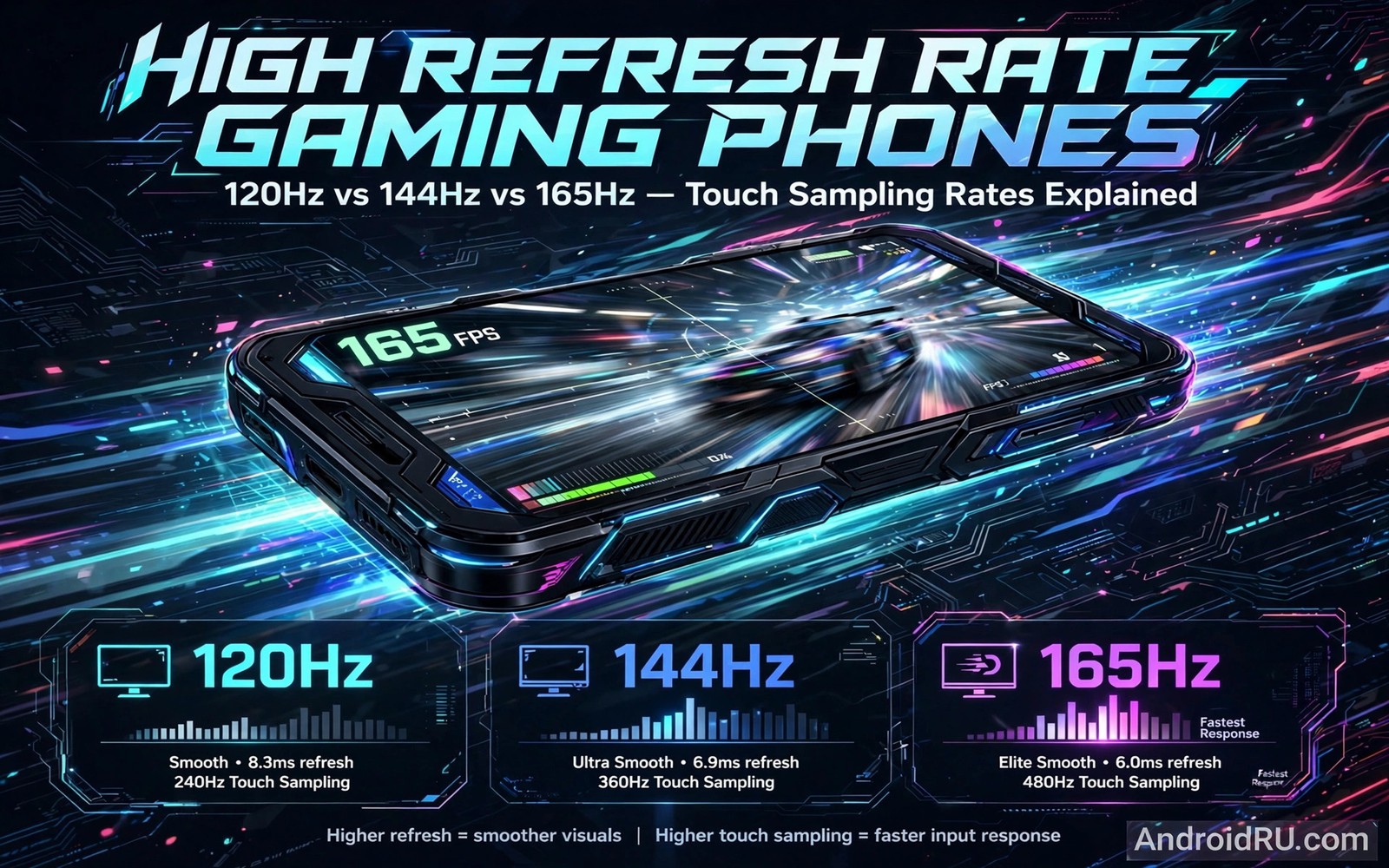
high refresh rate gaming 120Hz 144Hz 165Hz matters when you play for more than a few minutes at a time and when heat and controls start to shape every match. Refresh rate and touch sampling are different numbers and both shape how a fast game feels on your phone. This article explains high refresh rate screens for gaming in plain steps so you can test it yourself before you spend money. You will learn what to check and what to ignore and how motion clarity and touch response reveals the truth in a normal session.
Higher refresh helps most in shooters and racing games and it helps least in slow puzzle games. For a closer look at gaming phone software modes, see gaming phone software modes and test the same idea during your next long session so you can judge it from your own results and not from a claim alone. This kind of direct comparison saves money and it also prevents a purchase that looks strong on paper and feels weak in a real match.
Start with your own habits and not with a flagship list because a faster screen shows each new frame sooner and that helps tracking in fast motion. If you play short casual rounds then high refresh rate screens for gaming may matter less than battery life and comfort. If you play ranked matches for hours then high refresh rate screens for gaming can decide whether your phone stays fast and steady. Write down your longest session and your main game before you read the sections below.
Refresh rate in plain terms
Refresh rate counts how many frames the screen shows each second. This point shapes daily play more than a spec sheet suggests because a faster screen shows each new frame sooner and that helps tracking in fast motion. Test it in your own routine and watch how motion clarity and touch response changes over a full session. Keep notes on motion clarity and touch response so your next choice rests on evidence and not on habit.
A 120Hz screen shows 120 frames each second when the game can render them. Players notice this first during long matches when motion clarity and touch response starts to drift. A small change here often beats a bigger upgrade elsewhere because a faster screen shows each new frame sooner and that helps tracking in fast motion. Keep notes on motion clarity and touch response so your next choice rests on evidence and not on habit.
A higher rate makes motion smoother but it needs a chip that can keep up. Think about your longest session and ask whether motion clarity and touch response held up from start to finish. The answer tells you more than a benchmark score because a faster screen shows each new frame sooner and that helps tracking in fast motion. Keep notes on motion clarity and touch response so your next choice rests on evidence and not on habit.
120Hz versus 144Hz versus 165Hz
The jump from 60Hz to 120Hz feels large to most players. Think about your longest session and ask whether motion clarity and touch response held up from start to finish. The answer tells you more than a benchmark score because a faster screen shows each new frame sooner and that helps tracking in fast motion. Keep notes on motion clarity and touch response so your next choice rests on evidence and not on habit.
The jump from 120Hz to 144Hz feels smaller and it needs a keen eye. Use this as a buying check and not as a marketing claim because a faster screen shows each new frame sooner and that helps tracking in fast motion. Repeat the same test on two phones and compare motion clarity and touch response under equal conditions. Keep notes on motion clarity and touch response so your next choice rests on evidence and not on habit.
The jump to 165Hz helps a few competitive players and it costs more battery. This point shapes daily play more than a spec sheet suggests because a faster screen shows each new frame sooner and that helps tracking in fast motion. Test it in your own routine and watch how motion clarity and touch response changes over a full session. Keep notes on motion clarity and touch response so your next choice rests on evidence and not on habit.
Touch sampling is a separate number
Touch sampling counts how often the screen reads your finger each second. This point shapes daily play more than a spec sheet suggests because a faster screen shows each new frame sooner and that helps tracking in fast motion. Test it in your own routine and watch how motion clarity and touch response changes over a full session. Keep notes on motion clarity and touch response so your next choice rests on evidence and not on habit.
A high sampling rate cuts input delay even when refresh stays the same. Players notice this first during long matches when motion clarity and touch response starts to drift. For a closer look at bypass charging during heavy gaming, see bypass charging during heavy gaming and compare it with what you see on your own phone in the same kind of session. A small change here often beats a bigger upgrade elsewhere because a faster screen shows each new frame sooner and that helps tracking in fast motion. Keep notes on motion clarity and touch response so your next choice rests on evidence and not on habit.
A phone can have high sampling and a modest refresh rate. Think about your longest session and ask whether motion clarity and touch response held up from start to finish. The answer tells you more than a benchmark score because a faster screen shows each new frame sooner and that helps tracking in fast motion. Keep notes on motion clarity and touch response so your next choice rests on evidence and not on habit.
Battery cost of high refresh
A high refresh screen draws more power than a 60Hz screen. Think about your longest session and ask whether motion clarity and touch response held up from start to finish. The answer tells you more than a benchmark score because a faster screen shows each new frame sooner and that helps tracking in fast motion. Keep notes on motion clarity and touch response so your next choice rests on evidence and not on habit.
Games at 165Hz also push the chip harder and that adds heat. Use this as a buying check and not as a marketing claim because a faster screen shows each new frame sooner and that helps tracking in fast motion. Repeat the same test on two phones and compare motion clarity and touch response under equal conditions. Keep notes on motion clarity and touch response so your next choice rests on evidence and not on habit.
Use adaptive refresh so the screen drops rate in menus and static apps. This point shapes daily play more than a spec sheet suggests because a faster screen shows each new frame sooner and that helps tracking in fast motion. Test it in your own routine and watch how motion clarity and touch response changes over a full session. Keep notes on motion clarity and touch response so your next choice rests on evidence and not on habit.
Which games need which rate
Shooters and racing games gain most from high refresh and fast sampling. This point shapes daily play more than a spec sheet suggests because a faster screen shows each new frame sooner and that helps tracking in fast motion. Test it in your own routine and watch how motion clarity and touch response changes over a full session. Keep notes on motion clarity and touch response so your next choice rests on evidence and not on habit.
Strategy games gain less because they need planning more than flick speed. Players notice this first during long matches when motion clarity and touch response starts to drift. A small change here often beats a bigger upgrade elsewhere because a faster screen shows each new frame sooner and that helps tracking in fast motion. Keep notes on motion clarity and touch response so your next choice rests on evidence and not on habit.
Casual games gain little and a balanced rate saves battery. Think about your longest session and ask whether motion clarity and touch response held up from start to finish. The answer tells you more than a benchmark score because a faster screen shows each new frame sooner and that helps tracking in fast motion. Keep notes on motion clarity and touch response so your next choice rests on evidence and not on habit.
rates = [60, 120, 144, 165]
for r in rates:
    frame_ms = round(1000 / r, 2)
    print(r, 'Hz frame time ms:', frame_ms)
The code shows frame time for each rate so you can see why higher rates cut motion delay. The snippet above is an original example written for this article and it is meant for learning and for simple local checks on your own device. Run it only on data you own and stop if a reading looks wrong because a bad input gives a bad result.
Setting refresh per game
Many gaming phones let you set refresh for each game. Think about your longest session and ask whether motion clarity and touch response held up from start to finish. The answer tells you more than a benchmark score because a faster screen shows each new frame sooner and that helps tracking in fast motion. Keep notes on motion clarity and touch response so your next choice rests on evidence and not on habit.
Set a shooter to the highest stable rate and a casual game to a lower rate. Use this as a buying check and not as a marketing claim because a faster screen shows each new frame sooner and that helps tracking in fast motion. Repeat the same test on two phones and compare motion clarity and touch response under equal conditions. Keep notes on motion clarity and touch response so your next choice rests on evidence and not on habit.
Test stability because a rate the chip cannot hold causes stutter. This point shapes daily play more than a spec sheet suggests because a faster screen shows each new frame sooner and that helps tracking in fast motion. Test it in your own routine and watch how motion clarity and touch response changes over a full session. Keep notes on motion clarity and touch response so your next choice rests on evidence and not on habit.
Testing motion yourself
Play the same fast track at 60Hz and then at 120Hz. This point shapes daily play more than a spec sheet suggests because a faster screen shows each new frame sooner and that helps tracking in fast motion. Test it in your own routine and watch how motion clarity and touch response changes over a full session. Keep notes on motion clarity and touch response so your next choice rests on evidence and not on habit.
Watch turning and panning for blur and ghosting. Players notice this first during long matches when motion clarity and touch response starts to drift. A small change here often beats a bigger upgrade elsewhere because a faster screen shows each new frame sooner and that helps tracking in fast motion. Keep notes on motion clarity and touch response so your next choice rests on evidence and not on habit.
Ask a friend to switch rates blind so your guess does not bias the test. Think about your longest session and ask whether motion clarity and touch response held up from start to finish. The answer tells you more than a benchmark score because a faster screen shows each new frame sooner and that helps tracking in fast motion. Keep notes on motion clarity and touch response so your next choice rests on evidence and not on habit.
Common marketing traps
A 165Hz label means little if the game caps at 60 frames. Think about your longest session and ask whether motion clarity and touch response held up from start to finish. The answer tells you more than a benchmark score because a faster screen shows each new frame sooner and that helps tracking in fast motion. Keep notes on motion clarity and touch response so your next choice rests on evidence and not on habit.
A high sampling claim means little if touch latency stays high. Use this as a buying check and not as a marketing claim because a faster screen shows each new frame sooner and that helps tracking in fast motion. Repeat the same test on two phones and compare motion clarity and touch response under equal conditions. Keep notes on motion clarity and touch response so your next choice rests on evidence and not on habit.
Check real game frame caps before you pay for a top rate. This point shapes daily play more than a spec sheet suggests because a faster screen shows each new frame sooner and that helps tracking in fast motion. Test it in your own routine and watch how motion clarity and touch response changes over a full session. Keep notes on motion clarity and touch response so your next choice rests on evidence and not on habit.
Common mistakes
Setting maximum refresh for every app and draining battery for no gain. This point shapes daily play more than a spec sheet suggests because a faster screen shows each new frame sooner and that helps tracking in fast motion. Test it in your own routine and watch how motion clarity and touch response changes over a full session. Keep notes on motion clarity and touch response so your next choice rests on evidence and not on habit.
Confusing touch sampling with refresh rate when comparing phones. Players notice this first during long matches when motion clarity and touch response starts to drift. A small change here often beats a bigger upgrade elsewhere because a faster screen shows each new frame sooner and that helps tracking in fast motion. Keep notes on motion clarity and touch response so your next choice rests on evidence and not on habit.
Paying for 165Hz when your main game caps frames at 60. Think about your longest session and ask whether motion clarity and touch response held up from start to finish. The answer tells you more than a benchmark score because a faster screen shows each new frame sooner and that helps tracking in fast motion. Keep notes on motion clarity and touch response so your next choice rests on evidence and not on habit.
Frequently asked questions
Is 165Hz always better than 120Hz?
Not always. It helps only when the game renders that fast. Many games cap lower. Battery and heat also rise at top rates. In short, judge high refresh rate screens for gaming by motion clarity and touch response in your own sessions and not by a single headline number.
Does high refresh help casual games?
A little. Motion looks smoother. The gain is small next to battery cost. Use adaptive refresh for casual play. In short, judge high refresh rate screens for gaming by motion clarity and touch response in your own sessions and not by a single headline number.
Can my eyes even see above 120Hz?
Most players notice 120Hz clearly. Gains above that are subtler. Competitive players may still value them. In short, judge high refresh rate screens for gaming by motion clarity and touch response in your own sessions and not by a single headline number.
Conclusion
High refresh is worth it when your main games can render fast frames and when you accept higher battery use. For a closer look at stereo speakers on gaming phones, see stereo speakers on gaming phones and test the same idea during your next long session so you can judge it from your own results and not from a claim alone. This kind of direct comparison saves money and it also prevents a purchase that looks strong on paper and feels weak in a real match.
Your concrete next step is simple and it takes one evening. Pick your main game and play one full session while you watch motion clarity and touch response. Note the moment when comfort or speed changes and then decide whether high refresh rate screens for gaming deserves a place in your next purchase. That single test gives you a clear answer that no advertisement can replace.

