

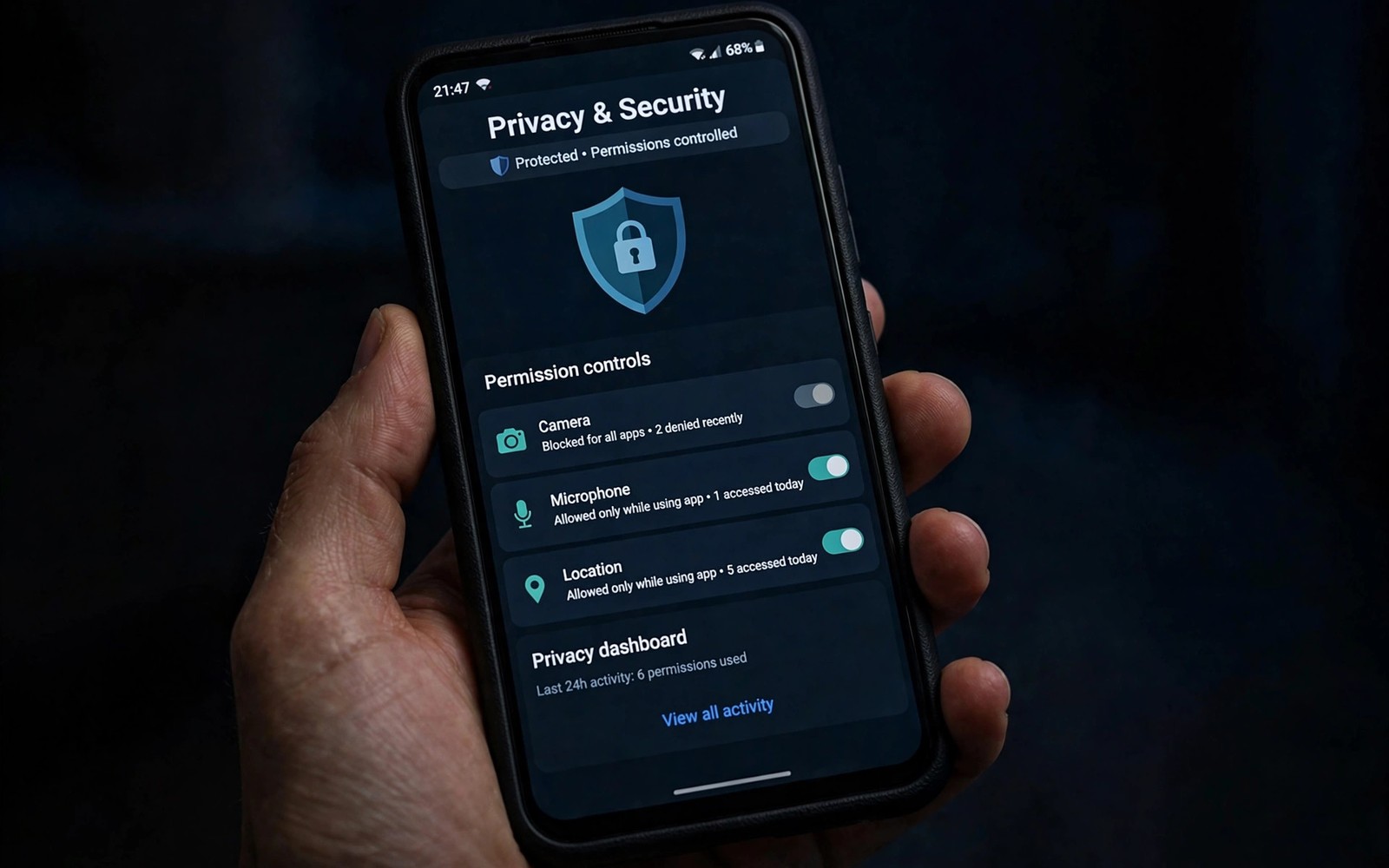
Essential privacy apps every Android smartphone user needs form a shield around data that leaks silently every day. Trackers follow browsing and apps request permissions they never use and public Wi-Fi exposes traffic to strangers. A small set of privacy tools closes those gaps without turning the phone into a burden. This article builds that set step by step with checks you can run yourself.
Start with the system privacy settings before you install any privacy app. Review permissions and location access and ad personalisation in one sitting. System controls already block many leaks when set with care. After the system review add tools such as open-source Android apps for jobs where transparency matters most. Settings first and apps second keeps privacy honest.
This article gives you a practical path through the topic without hype. You will learn what to install first and what to skip and how to judge each option on your own phone.
Set a reminder to revisit a new app after thirty days. A month of use shows whether the app became a habit or a forgotten icon. Remove habits that faded and keep tools that proved their worth.
Updates matter because developers fix bugs and close security gaps in each release. Turn on automatic updates for trusted apps and read the changelog when an update changes a feature you rely on. Skip an update only when you have a clear reason and a backup plan.
Check the data use of a new app during its first week. An app that syncs large files in the background can surprise you on a capped plan. Wi-Fi only sync for heavy apps keeps mobile data for urgent use.
Permission managers and audits
A permission audit lists every app with access to location and contacts and microphone and camera. Revoke access that an app does not need for its main job and watch for breakage for a day. Most apps work fine with fewer permissions than they request at install. An audit once a month keeps permissions aligned with real use.
Use one time permissions for sensitive access when Android offers them. A delivery app can get location once for a single order instead of always. One time access limits exposure while it preserves convenience. Set the habit now and future installs inherit safer defaults.
Check the data use of a new app during its first week. An app that syncs large files in the background can surprise you on a capped plan. Wi-Fi only sync for heavy apps keeps mobile data for urgent use.
Share a useful app with a friend only after you have used it for a week. A recommendation based on real use carries more weight than one based on a store page. Honest recommendations help friends avoid the same trial and error you already did.
Protect your accounts with a second factor wherever the app offers it. A second factor blocks most automated attacks even when a password leaks. Enable it on mail and cloud and banking apps first because those guard the rest.
VPNs for public networks
A virtual private network encrypts traffic on public Wi-Fi so nearby strangers cannot read it. Choose a provider with a clear no logs policy and independent audits rather than the cheapest offer. Test speed on your usual networks because a slow VPN tempts owners to turn it off. A VPN you actually keep on protects more than a fast one you disable.
Turn the VPN on automatically for untrusted networks when the app supports that rule. Automatic rules remove the decision from busy moments when you would otherwise forget. Keep the VPN off on trusted home networks when it slows video calls. Smart rules beat always on or always off. A complementary tool worth adding is system monitoring apps alongside the tools above.
Review app settings after a major update because updates sometimes reset a preference. A two minute settings check after an update prevents silent changes to privacy or sync. Updates should improve an app and never surprise its owner.
Protect your accounts with a second factor wherever the app offers it. A second factor blocks most automated attacks even when a password leaks. Enable it on mail and cloud and banking apps first because those guard the rest.
A backup turns a phone problem into a short delay instead of a lost week. Sync important notes and files to a cloud account you control and test the restore step once. A backup you never tested is only a hope and not a plan.
Private browsers and search
A private browser blocks third party trackers and deletes cookies when you close it. That behaviour reduces the profile that advertisers build from your browsing. Pair the browser with a search engine that does not store personal queries. Small changes in browsing habits compound into real privacy gains over months.
Check tracker blocking in action by visiting a news site and counting blocked items in the browser shield. Visible counts make privacy concrete instead of abstract. A browser that shows its work earns trust faster than one that only promises protection. Evidence beats slogans in privacy tools.
Set a reminder to revisit a new app after thirty days. A month of use shows whether the app became a habit or a forgotten icon. Remove habits that faded and keep tools that proved their worth.
Storage and battery shape how well any app performs over time. Check storage use once a month and clear cached files that grow without adding value. A phone with free space runs smoother and updates install without errors.
A simple home screen layout makes good apps easier to reach. Put daily tools on the first screen and move rarely used apps into folders. Fewer taps mean you finish tasks faster and you are less likely to open a distraction by accident.
adb shell cmd appops query-op --user 0
adb shell dumpsys package com.example.privacy
adb shell settings get global private_dns_mode
The permission and DNS commands above follow the pattern used in Android developer guides for inspecting app operations and private DNS state. The same guides explain that operation queries show which sensitive permissions an app actually used.
Vaults and locked notes
A vault app locks photos and files behind a separate passcode or fingerprint. Move sensitive documents into the vault and delete the originals from the gallery after confirming the vault copy opens. A vault that backs up encrypted copies to your cloud account protects against phone loss too. Test restore once so a vault never becomes a trap. Budget owners can also compare free apps that beat paid rivals for the same routine.
Locked notes protect passwords and codes that do not belong in plain notes. Use the notes lock inside your main notes app when it offers one. A single locked note beats scattered plain notes across many apps. Central locked storage is easier to protect and easier to find.
Protect your accounts with a second factor wherever the app offers it. A second factor blocks most automated attacks even when a password leaks. Enable it on mail and cloud and banking apps first because those guard the rest.
Try one change at a time when you rebuild your phone setup. Install two or three apps first and use them for real tasks before you add more. A slow start reveals problems early while a rushed setup hides them until they hurt.
Keep the home screen focused on tools you open every day. Move seasonal or rare apps into a folder with a clear name. A focused home screen reduces taps and helps you reach the right tool without hunting.
Tracker blockers and DNS filters
A DNS filter blocks known tracker domains before apps can reach them. That system level block works across apps without configuring each one separately. Choose a filter list maintained by a known community and update it monthly. A stale list misses new trackers while an aggressive list can break a useful app.
Test a filter by opening an app that previously showed personalised ads and noting the change. Some apps detect filtering and limit features which signals how much they relied on tracking. Decide per app whether the privacy gain outweighs the feature loss. Informed trade offs beat blanket rules.
Permissions deserve a quick review before you trust a new app with daily work. Grant only the access the app truly needs for its main job and leave the rest off until a feature asks for it. You can change any permission later in system settings without losing your data.
Check how an app handles your data before you sign in. Read the privacy screen inside the app and look for clear controls to export or delete your content. Strong defaults beat long promises when you compare two similar apps.
Protect your accounts with a second factor wherever the app offers it. A second factor blocks most automated attacks even when a password leaks. Enable it on mail and cloud and banking apps first because those guard the rest.
Common mistakes
A common mistake is installing a VPN and assuming all privacy problems vanish. Another mistake is granting a privacy app full access without checking what it does with that access. A third mistake is setting strong tools once and never reviewing them as apps update. Privacy is a routine of audits and updates and not a single install.
A backup turns a phone problem into a short delay instead of a lost week. Sync important notes and files to a cloud account you control and test the restore step once. A backup you never tested is only a hope and not a plan.
Check how an app handles your data before you sign in. Read the privacy screen inside the app and look for clear controls to export or delete your content. Strong defaults beat long promises when you compare two similar apps.
A good setup starts with a clear purpose for each app on your phone. Open the app once a day for a week and notice whether it saves time or adds noise. Keep the apps that earn their place and remove the ones that only fill space on the home screen.
Frequently asked questions
Do I need a VPN on home Wi-Fi?
Home Wi-Fi needs a VPN less than public Wi-Fi because the network owner is you. A VPN still hides browsing from your internet provider when that matters to you.
Can privacy apps slow my phone?
Well built privacy tools add little overhead because they filter traffic or manage permissions. Avoid tools that run constant scans or show ads inside a privacy app.
Should I pay for privacy tools?
Paid tools often fund audits and support without selling data. Free tools can be safe when they show a clear funding model such as donations.
What to do next
Your concrete next step is to run a full permission audit tonight and revoke every access that lacks a clear purpose. That one audit improves privacy more than any new install. Repeat it monthly and your phone stays guarded.
Test a new app in a real situation before you trust it with important work. A short test on a busy day reveals speed problems that a quiet demo hides. Keep the test short and focused so you can judge fairly without wasting an afternoon.
Start small and review your setup after one week of real use. Keep what helped and remove what did not and your phone will stay fast and useful.

