

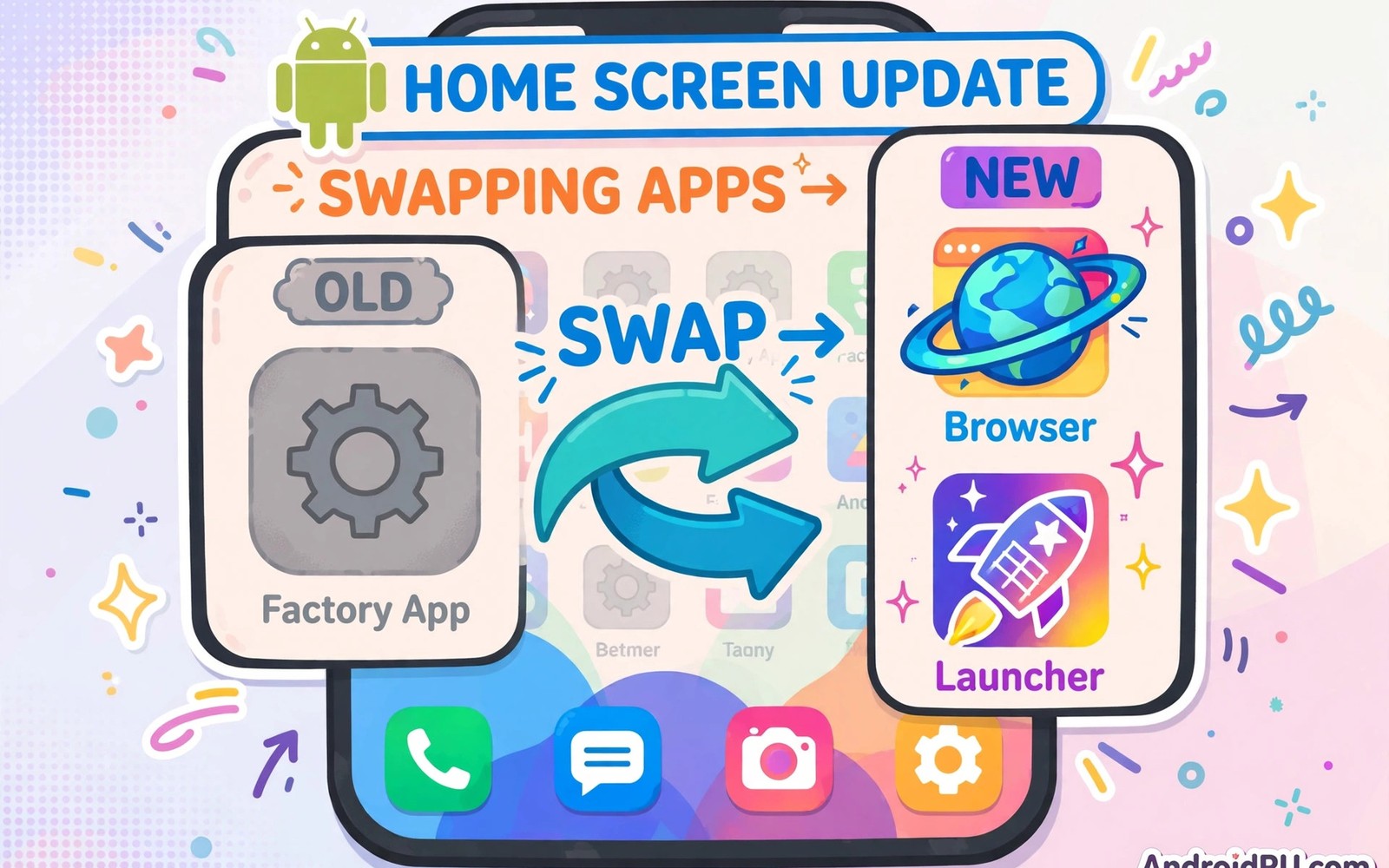
Best Android apps to replace pre-installed default factory apps help you escape tools that feel limited or collect more data than you like. A better browser or launcher or gallery can change daily phone use more than new hardware. Replacement works best when you swap one app at a time and set it as the default properly. This article shows which swaps pay off and how to make each new default stick.
Start with the app you open most often and dislike most. A launcher or browser swap delivers daily benefit while a rarely used tool swap barely registers. Test the replacement for a week before you disable the factory app. Owners exploring alternatives should also compare hidden apps on Google Play you are not using yet for quiet tools that beat factory options. One strong swap beats five rushed ones.
Use this article as a checklist rather than a shopping list. Pick the ideas that match your routine and ignore the rest until your needs change.
Test a new app in a real situation before you trust it with important work. A short test on a busy day reveals speed problems that a quiet demo hides. Keep the test short and focused so you can judge fairly without wasting an afternoon.
Compare two similar apps on the same task on the same day. A direct comparison shows speed and clarity differences that feature lists hide. Pick the winner promptly and remove the loser so data never splits across two tools.
Keep the home screen focused on tools you open every day. Move seasonal or rare apps into a folder with a clear name. A focused home screen reduces taps and helps you reach the right tool without hunting.
Launchers that reshape the phone
A custom launcher changes icons and gestures and app drawer layout without changing the system itself. Choose a launcher with a clean drawer and gesture controls that match your hand size. Set up one home screen first and live with it for days before you add widgets. A launcher swap feels dramatic yet stays fully reversible.
Back up the launcher layout once it feels right so a reset never forces a rebuild from memory. Most launchers export settings to a file you can store in cloud storage. A saved layout turns a new phone setup into a ten minute restore. Reversibility makes experimentation safe.
Test a new app in a real situation before you trust it with important work. A short test on a busy day reveals speed problems that a quiet demo hides. Keep the test short and focused so you can judge fairly without wasting an afternoon.
Write down the settings you change when you set up a new app. A short note helps you restore the setup after a reset or a new phone. Good notes turn a one time setup into a repeatable routine.
Compare two similar apps on the same task on the same day. A direct comparison shows speed and clarity differences that feature lists hide. Pick the winner promptly and remove the loser so data never splits across two tools.
Browsers with better privacy
A privacy browser blocks trackers by default and offers a clear way to erase history. Sync bookmarks across devices only when the browser encrypts that sync. Test page loading on your favourite sites because aggressive blocking can break a login page. A browser that balances privacy and compatibility wins daily use.
Set the new browser as default in system settings so links from other apps open in it. Test a link from mail after the change to confirm the default took effect. Some apps ignore the system default for in app links so check those settings too. Defaults need verification and not just a toggle. A related alternative worth exploring is open-source Android apps alongside the tools above.
Compare two similar apps on the same task on the same day. A direct comparison shows speed and clarity differences that feature lists hide. Pick the winner promptly and remove the loser so data never splits across two tools.
Keep the home screen focused on tools you open every day. Move seasonal or rare apps into a folder with a clear name. A focused home screen reduces taps and helps you reach the right tool without hunting.
Set a reminder to revisit a new app after thirty days. A month of use shows whether the app became a habit or a forgotten icon. Remove habits that faded and keep tools that proved their worth.
Galleries and camera replacements
A gallery replacement should sort by date and folder and offer fast search without uploading photos to a cloud. Local sorting protects privacy while it speeds up browsing. Check that the gallery handles large folders without lag before you commit. A gallery that stutters on a thousand photos fails its main job.
A camera replacement earns its place through manual controls or faster capture rather than filters alone. Test low light shots and focus speed in real conditions. Keep the factory camera until the replacement proves reliable for important moments. Photos cannot be retaken when a new camera fails.
Keep the home screen focused on tools you open every day. Move seasonal or rare apps into a folder with a clear name. A focused home screen reduces taps and helps you reach the right tool without hunting.
Set a reminder to revisit a new app after thirty days. A month of use shows whether the app became a habit or a forgotten icon. Remove habits that faded and keep tools that proved their worth.
Storage and battery shape how well any app performs over time. Check storage use once a month and clear cached files that grow without adding value. A phone with free space runs smoother and updates install without errors.
adb shell pm disable-user --user 0 com.example.factory
adb shell cmd role get-role-holders android.app.role.BROWSER
adb shell settings get secure default_input_method
The default and role commands above follow the pattern used in Android developer guides for inspecting system roles and default apps. The same guides explain that role holders decide which app handles browser and input jobs.
Messengers and keyboards
A messenger replacement needs your contacts on the same service or it becomes an empty app. Choose a messenger that your friends already use or that bridges to common services. Encryption matters but reach matters more for daily chats. A secure app with no contacts helps no one. For daily phone jobs you may also add essential utility apps for the same routine.
A keyboard replacement changes typing speed and comfort every day. Test prediction accuracy and swipe typing and layout size for a full week. A keyboard that learns your words saves time while a flashy keyboard with poor prediction wastes it. Typing is too frequent to tolerate a weak tool.
Share a useful app with a friend only after you have used it for a week. A recommendation based on real use carries more weight than one based on a store page. Honest recommendations help friends avoid the same trial and error you already did.
A good setup starts with a clear purpose for each app on your phone. Open the app once a day for a week and notice whether it saves time or adds noise. Keep the apps that earn their place and remove the ones that only fill space on the home screen.
Test an app with your real routine before you judge it. A demo on a quiet afternoon hides problems that appear during a busy commute or a low battery day. Real use shows speed and reliability in a way that screenshots never can.
Setting defaults that stick
Android lets you set defaults per job such as browser and phone and SMS in system settings. Open the default apps screen and assign each job once after installing replacements. Clear defaults for the old app when a link still opens in the wrong place. A quick defaults audit after each swap prevents confusion.
Some factory apps cannot be uninstalled without advanced steps. Disable them instead so they stop running and leave the home screen. Disabling is safe and reversible while forced removal can break system features. Leave system critical apps alone even when you never open them.
Learn one advanced feature per month inside an app you already love. Small steady learning beats a weekend of tutorials that you forget by Monday. One feature per month compounds into mastery within a year.
Updates matter because developers fix bugs and close security gaps in each release. Turn on automatic updates for trusted apps and read the changelog when an update changes a feature you rely on. Skip an update only when you have a clear reason and a backup plan.
Compare two similar apps on the same task on the same day. A direct comparison shows speed and clarity differences that feature lists hide. Pick the winner promptly and remove the loser so data never splits across two tools.
Common mistakes
A common mistake is replacing every factory app on day one and then losing track of which tool handles which job. Another mistake is forgetting to set the new app as default so links keep opening in the old app. A third mistake is disabling a factory app that other apps depend on for sharing or accounts. Swap slowly and set defaults and test each change.
Updates matter because developers fix bugs and close security gaps in each release. Turn on automatic updates for trusted apps and read the changelog when an update changes a feature you rely on. Skip an update only when you have a clear reason and a backup plan.
Review app settings after a major update because updates sometimes reset a preference. A two minute settings check after an update prevents silent changes to privacy or sync. Updates should improve an app and never surprise its owner.
Set a reminder to revisit a new app after thirty days. A month of use shows whether the app became a habit or a forgotten icon. Remove habits that faded and keep tools that proved their worth.
Frequently asked questions
Is it safe to replace factory apps?
Replacement apps from trusted sources are safe when you check permissions and reviews. Keep system critical apps untouched and disable rather than remove uncertain ones.
Will a new launcher slow my phone?
A well built launcher uses little power and can feel faster than a heavy factory launcher. Avoid launchers packed with ads and constant animations.
How do I go back to the factory app?
Clear the default for the replacement app and the system will ask again on the next matching action. Re-enable a disabled factory app from system settings.
What to do next
Your concrete next step is to replace a single factory app you dislike today and set it as the default. Use it for a week and note whether daily tasks feel easier. One verified swap teaches the whole replacement process.
Check the data use of a new app during its first week. An app that syncs large files in the background can surprise you on a capped plan. Wi-Fi only sync for heavy apps keeps mobile data for urgent use.
The best setup is the one you actually use every day. Choose tools that fit your routine and let the rest go without regret.

