

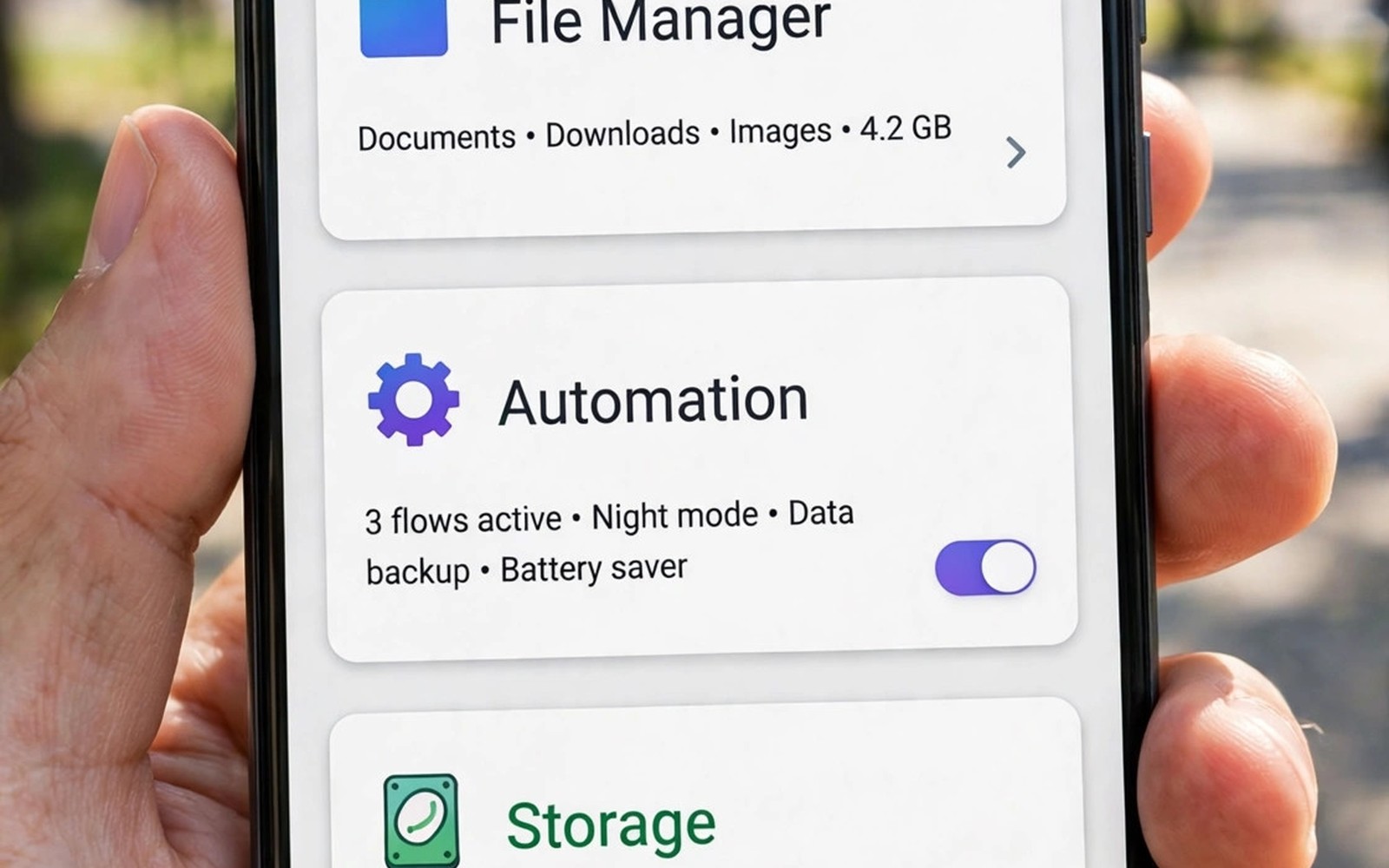
Essential utility apps are the quiet tools that upgrade your whole phone experience without demanding attention. A strong file manager and a smart automation tool and a reliable clipboard manager save minutes every day. Those minutes add up to hours each month which is why utility apps deserve a place before entertainment apps. This article picks the utility categories that help most owners and shows how to use each one well.
Start with the job that frustrates you most on your current phone. If lost files annoy you then a file manager comes first. If repetitive tasks waste time then automation comes first. Owners with tight storage should also look at lightweight apps that save storage and memory before adding heavier tools. One solved frustration beats five unused utilities.
The advice below focuses on daily use rather than feature lists. A useful app proves itself in real tasks and a weak app reveals itself just as fast.
Permissions deserve a quick review before you trust a new app with daily work. Grant only the access the app truly needs for its main job and leave the rest off until a feature asks for it. You can change any permission later in system settings without losing your data.
Review app settings after a major update because updates sometimes reset a preference. A two minute settings check after an update prevents silent changes to privacy or sync. Updates should improve an app and never surprise its owner.
Permissions deserve a quick review before you trust a new app with daily work. Grant only the access the app truly needs for its main job and leave the rest off until a feature asks for it. You can change any permission later in system settings without losing your data.
File managers that actually help
A good file manager shows downloads and documents and media in one clear view with search that works fast. It should move and rename and compress files without extra steps and it should reveal hidden folders when you need them. Local storage support matters because cloud only tools fail when the connection drops. Test the manager by finding a recent download in under ten seconds.
Batch actions separate a great manager from a basic one. Select twenty photos and move them to a new folder in one action instead of handling each file alone. A manager with a built in viewer saves time because you can preview a document before you move it. Small efficiencies like these define a utility worth keeping.
A simple home screen layout makes good apps easier to reach. Put daily tools on the first screen and move rarely used apps into folders. Fewer taps mean you finish tasks faster and you are less likely to open a distraction by accident.
Share a useful app with a friend only after you have used it for a week. A recommendation based on real use carries more weight than one based on a store page. Honest recommendations help friends avoid the same trial and error you already did.
Updates matter because developers fix bugs and close security gaps in each release. Turn on automatic updates for trusted apps and read the changelog when an update changes a feature you rely on. Skip an update only when you have a clear reason and a backup plan.
Automation for repetitive tasks
Automation apps run small routines when a trigger fires such as arriving home or connecting to car Bluetooth. A routine can silence the phone at work and turn Wi-Fi on at home without daily taps. Start with one routine that you already do by hand every day so the benefit is obvious at once. Add more routines only after the first one runs reliably for a week.
Keep automation simple at first because complex routines fail in surprising ways. One trigger and one or two actions form a routine you can debug in minutes. Log each routine run for the first days so you can see whether it fired at the right time. Simple automation saves time while tangled automation creates new chores. A complementary tool worth adding is system monitoring apps alongside the tools above.
Write down the settings you change when you set up a new app. A short note helps you restore the setup after a reset or a new phone. Good notes turn a one time setup into a repeatable routine.
Protect your accounts with a second factor wherever the app offers it. A second factor blocks most automated attacks even when a password leaks. Enable it on mail and cloud and banking apps first because those guard the rest.
Check how an app handles your data before you sign in. Read the privacy screen inside the app and look for clear controls to export or delete your content. Strong defaults beat long promises when you compare two similar apps.
Clipboard and text tools
A clipboard manager remembers text you copied earlier so you can reuse an address or a tracking number without retyping it. That single feature saves time for anyone who fills forms or shares links often. Choose a manager that stores history locally and clears sensitive clips on a schedule you set. Privacy controls matter because clipboard history can hold passwords by accident.
Text expansion tools turn short codes into full phrases such as an email signature or a frequent reply. Type a few letters and the full text appears which speeds up messaging and support chats. Keep the code list short at first so you remember each shortcut without a cheat sheet. A dozen well chosen expansions beat a hundred forgotten ones.
Check the data use of a new app during its first week. An app that syncs large files in the background can surprise you on a capped plan. Wi-Fi only sync for heavy apps keeps mobile data for urgent use.
Storage and battery shape how well any app performs over time. Check storage use once a month and clear cached files that grow without adding value. A phone with free space runs smoother and updates install without errors.
Check the data use of a new app during its first week. An app that syncs large files in the background can surprise you on a capped plan. Wi-Fi only sync for heavy apps keeps mobile data for urgent use.
adb shell pm path com.example.utility
adb shell dumpsys usagestats
adb shell cmd appops get com.example.utility
The inspection commands above follow the pattern used in Android developer guides for checking an installed package and its usage stats. The same guides explain that usage data helps owners see which apps run most often.
Storage and cleanup tools
Storage tools show which folders and apps use the most space so you can act on facts instead of guesses. Look for a tool that groups large videos and duplicate downloads and forgotten installers in clear categories. Delete in small batches and check that the phone still works well after each batch. Careful cleanup protects data while it frees space. Owners who track power can also explore battery life apps for the same routine.
Avoid cleaner apps that promise speed boosts through constant background scans. A storage viewer that reports facts is useful while a cleaner that kills apps all day can hurt battery life. Android already manages memory well so aggressive cleaning often creates more work for the system. Choose insight over hype when you pick a storage tool.
Review app settings after a major update because updates sometimes reset a preference. A two minute settings check after an update prevents silent changes to privacy or sync. Updates should improve an app and never surprise its owner.
Try one change at a time when you rebuild your phone setup. Install two or three apps first and use them for real tasks before you add more. A slow start reveals problems early while a rushed setup hides them until they hurt.
Learn one advanced feature per month inside an app you already love. Small steady learning beats a weekend of tutorials that you forget by Monday. One feature per month compounds into mastery within a year.
System utilities worth keeping
A battery and network monitor helps you spot a misbehaving app before it ruins a day. Check which app used the most power overnight and which one used mobile data in the background. That evidence guides a decision to restrict or replace the app. Guessing wastes time while measured data points to the real cause.
A QR scanner and a unit converter and a compass may sound minor until you need one urgently. Keep these small tools in one folder so they are easy to find without cluttering the home screen. Small utilities earn their place through reliability at the moment of need. Test each one once after install so it never surprises you later.
Set a reminder to revisit a new app after thirty days. A month of use shows whether the app became a habit or a forgotten icon. Remove habits that faded and keep tools that proved their worth.
Check how an app handles your data before you sign in. Read the privacy screen inside the app and look for clear controls to export or delete your content. Strong defaults beat long promises when you compare two similar apps.
Updates matter because developers fix bugs and close security gaps in each release. Turn on automatic updates for trusted apps and read the changelog when an update changes a feature you rely on. Skip an update only when you have a clear reason and a backup plan.
Common mistakes
A common mistake is installing a dozen utility apps that overlap and then wondering why the phone feels busy. Another mistake is granting automation apps full access before understanding what each routine does. A third mistake is trusting cleaner apps that delete files without showing what they removed. Pick one tool per job and review its actions and the toolkit stays helpful.
Notifications decide whether an app helps you or interrupts you all day. Keep alerts on for messages that need a fast reply and silence the rest. A quiet phone still delivers urgent news while it protects your focus.
A backup turns a phone problem into a short delay instead of a lost week. Sync important notes and files to a cloud account you control and test the restore step once. A backup you never tested is only a hope and not a plan.
Share a useful app with a friend only after you have used it for a week. A recommendation based on real use carries more weight than one based on a store page. Honest recommendations help friends avoid the same trial and error you already did.
Frequently asked questions
Which utility app should I install first?
Install the tool that solves your biggest daily annoyance first. A file manager helps most owners while automation helps owners with repetitive routines.
Do utility apps slow down a phone?
Well built utilities use little power because they run only when you open them. Avoid tools that run constant background scans since those drain battery without clear benefit.
Are paid utility apps worth it?
A paid utility can be worth it when it removes ads and adds export or automation features you use weekly. Try the free version first and pay only for features you already miss.
What to do next
Your concrete next step is to choose one utility category from this article and install a single well reviewed app for it today. Use it for a real task tonight and judge it by time saved. If it saves time then keep it and only then consider a second utility.
Keep the home screen focused on tools you open every day. Move seasonal or rare apps into a folder with a clear name. A focused home screen reduces taps and helps you reach the right tool without hunting.
A tidy phone setup is a habit and not a one time project. Revisit your apps each month and your choices will stay aligned with your life.

