

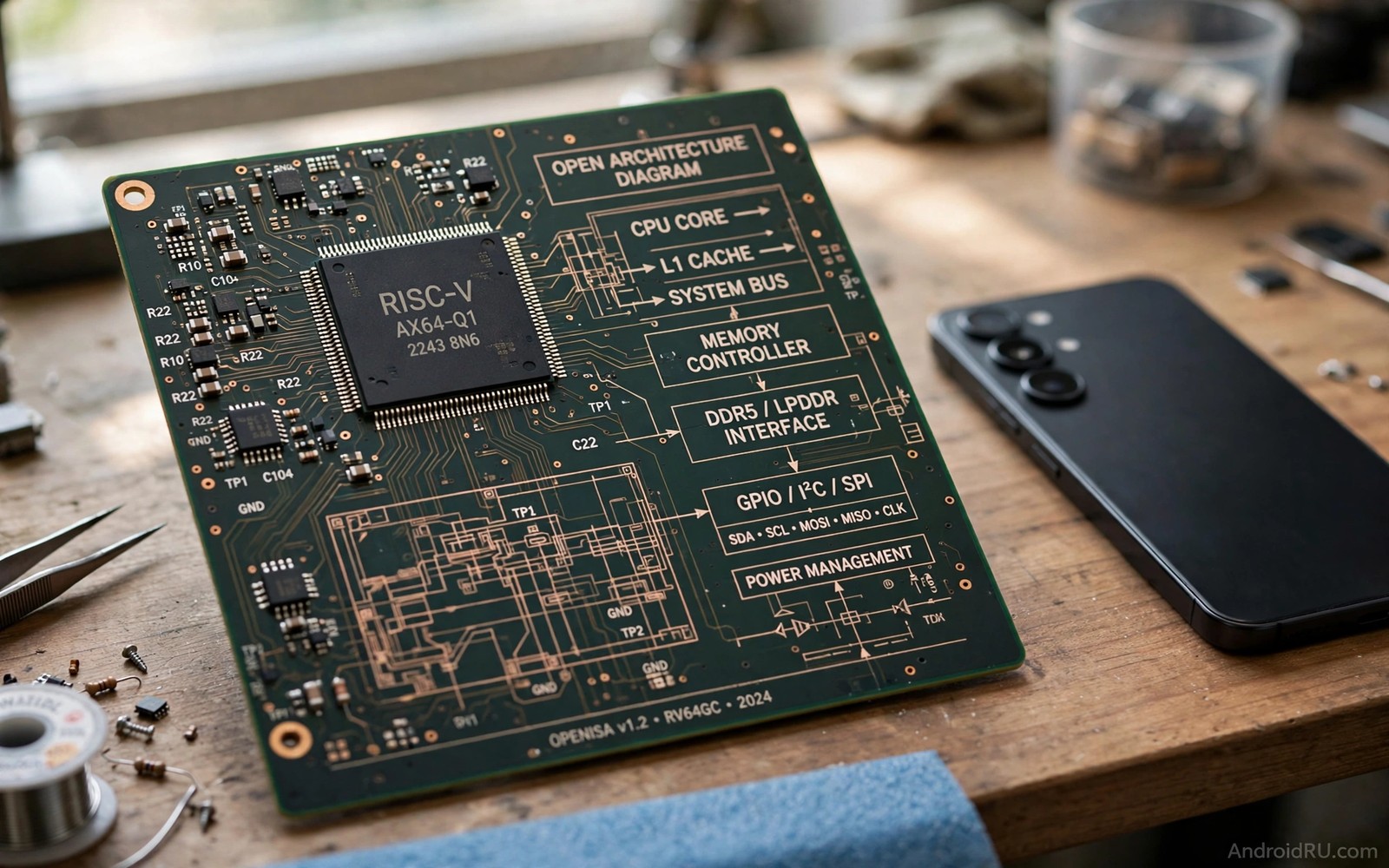
Most Android phones today run on chips built around a licensed architecture that comes with fees and rules and limits on custom design. RISC-V offers a different path because its core instruction set is open and royalty free. A company can design a processor that follows the open standard and can add its own extensions for a specific job. That freedom could lower costs for budget phones and could speed up innovation for specialised devices.
Open does not mean simple and it does not mean ready for every phone tomorrow. A phone chip needs a fast processor and a strong graphics unit and a modem and a security block and a power system that works together. RISC-V covers the processor core well. The rest of the system still needs careful engineering and software support and testing. The promise is real but the path runs through years of steady work rather than one sudden switch.
What RISC-V actually is
RISC-V is an instruction set architecture that defines how software talks to a processor. Think of it as a common language between apps and hardware. A compiler turns code into instructions in that language. A processor executes those instructions. Because the base language is open, many companies can build compatible processors without paying a licence for the core design. They can still charge for their own chip products and services.
The open model also allows extensions for vector maths and cryptography and custom accelerators. A company that builds a phone for photography can add a strong image extension. A company that builds a phone for long battery life can focus on efficiency extensions. That tailoring is harder when a licence restricts what a designer can change. Open extensions must still pass compatibility tests so that Android apps run correctly across different chips.
Why Android makers care about cost and control
Licence fees and royalties add cost to every phone and they matter most for low price devices. A saving of a few dollars per phone can decide whether a budget model reaches a new market. Open cores also give a maker more control over its roadmap. It can fix a flaw and optimise a core for its own software without waiting for a licensor to release a new design.
Control also helps supply resilience because a maker is not tied to a single supplier for its core design. It can work with several foundries and several design teams. That diversity can reduce risk during shortages and trade disputes. It does not remove risk completely because manufacturing still depends on advanced factories. It does spread design risk across more partners.
Software is the hard part
Android already runs on many chip types but most apps and games are tuned for the dominant architecture. A RISC-V phone needs a solid compiler and a fast Java runtime and working graphics drivers and media codecs. App developers should not need to rewrite every app. The system must run existing apps well through native builds and efficient translation where needed.
Performance testing must cover real apps rather than only synthetic benchmarks. A chip can score well on a simple test and still stutter in a social app or a camera app. Early RISC-V phones will likely appear in specific roles such as developer devices and wearables and low cost tablets before they reach flagship phones. That gradual path lets software mature without disappointing mainstream buyers.
Where RISC-V could win first
Wearables and smart home devices and industrial Android devices are natural first wins because they value efficiency and cost and custom sensors over peak speed. A small RISC-V core can run a watch or a display panel for days on a small battery. A factory device can use a custom extension for machine vision without paying for a high end phone chip. Success in those niches builds tools and talent for larger phones later.
Education and development boards also help because students and hobbyists can study an open design and build projects around it. That community creates documentation and bug reports and open drivers. A strong community does not replace commercial engineering but it speeds up learning and it attracts engineers who later work on phone chips. Open hardware benefits from the same network effect that helped open software.
Security and custom silicon
Open designs let security researchers inspect the core specification and test implementations for flaws. That transparency can improve trust when it is paired with strong testing and secure boot and hardware isolation. Open does not automatically mean secure because a flawed implementation can still leak data. Makers must add verified security blocks and update mechanisms and clear patch policies.
Custom silicon also lets a phone maker add a dedicated security core and a dedicated AI accelerator and a dedicated image processor around a RISC-V main core. That mix can improve privacy by keeping sensitive work on the device. It can also improve battery life by using a small efficient core for background tasks. Readers following device hardware can also explore custom silicon processing chips for how specialised cores change speed and efficiency.
What buyers should watch
A buyer should watch for app compatibility lists and battery results and update promises rather than open source slogans. A phone that runs popular apps smoothly and receives security updates for years is a good buy regardless of its core architecture. A phone that promises openness but drops updates after one year is a poor buy. Check the modem bands and camera quality and storage speed because those factors affect daily life more than the instruction set name.
Developers should watch for official Android support and tooling and emulator images. A stable toolchain lets a team test an app on RISC-V without buying dozens of devices. A clear compatibility standard lets a team trust that one build works across makers. Those practical signals matter more than conference announcements about future chips.
Testing a new chip platform
A fair test of a new chip platform starts with the apps that a tester uses every day rather than with a benchmark chart. Open a social app and a map app and a camera app and a game and note load times and heat and battery drain. A chip that feels fast in a benchmark but heats up during a video call will disappoint in real life. A chip that stays cool and smooth during those daily tasks earns trust even if its benchmark score looks modest.
Testers should also check update speed and driver fixes after launch. A new platform often improves quickly when early bugs get fixed. A platform that receives regular fixes shows that its maker cares about long term support. A platform that stays silent after launch signals risk for a buyer who plans to keep a phone for three years or more.
Common mistakes
People often treat RISC-V as a finished phone chip rather than as a processor language that still needs a full system around it. That mistake leads to unrealistic timelines and disappointment when early devices show rough edges. A fair view treats RISC-V as a long term option that grows through niches and tooling and software maturity.
- Assuming an open core automatically means a cheaper flagship phone in the next year.
- Ignoring graphics and modem and driver maturity when judging a new chip.
- Expecting every Android app to run perfectly on day one without native builds or testing.
- Treating openness as a security guarantee without checking updates and secure boot.
- Buying a developer device as a daily phone and then complaining about missing features.
A patient buyer watches niche wins and software milestones and then judges a mainstream RISC-V phone on real app performance. That evidence based approach avoids both hype and unfair dismissal.
Frequently asked questions
Will RISC-V phones be cheaper?
RISC-V can lower licence costs but the final price also depends on manufacturing and modem and display and software support. Early devices may cost more due to small volumes. Savings are more likely in budget and specialised devices first.
Will my Android apps work on RISC-V?
Most apps should work once the platform provides native builds and good compatibility layers. Performance will vary by app until developers optimise for the new core. Buyers should check compatibility for the apps they use every day.
When will RISC-V reach flagship phones?
No firm date exists because software and graphics and modem maturity must arrive first. Developer and niche devices will lead. Flagship adoption will follow only when real app performance and battery life match current leaders.
Conclusion
RISC-V gives Android makers an open and flexible processor language that could lower costs and encourage custom designs and stronger competition. The hard work lies in software and graphics and modems and long term support. Buyers should judge each device on daily performance rather than on architecture slogans. The open path is promising precisely because it invites many makers to solve those problems in parallel. Related future hardware coverage includes mobile gaming revenue growth and future wearable devices where efficient chips matter most.
Take one concrete next step today. List the five apps you use most and check whether their developers publish native builds for new architectures. That list will tell you how ready you are for a future RISC-V phone.
A final check helps a buyer avoid regret after a new architecture launch. Wait for independent reviews that test real apps and battery life over at least two weeks. Compare those results with your own daily needs rather than with a launch presentation. That patience often saves money and it leads to a phone that fits real life.
Developers who publish clear test results for new cores will earn trust faster than developers who only promise future speed. A public test report that shows app load times and thermal behaviour helps buyers compare fairly. Transparency turns an abstract architecture debate into a practical buying choice.
# Check the processor architecture reported by an Android device
adb shell getprop ro.product.cpu.abi
adb shell cat /proc/cpuinfo | grep -m 1 "model name"
The commands above were written for this guide to show a simple way to check the reported processor architecture on a connected Android device. They are general diagnostic commands and they do not modify the device.

