

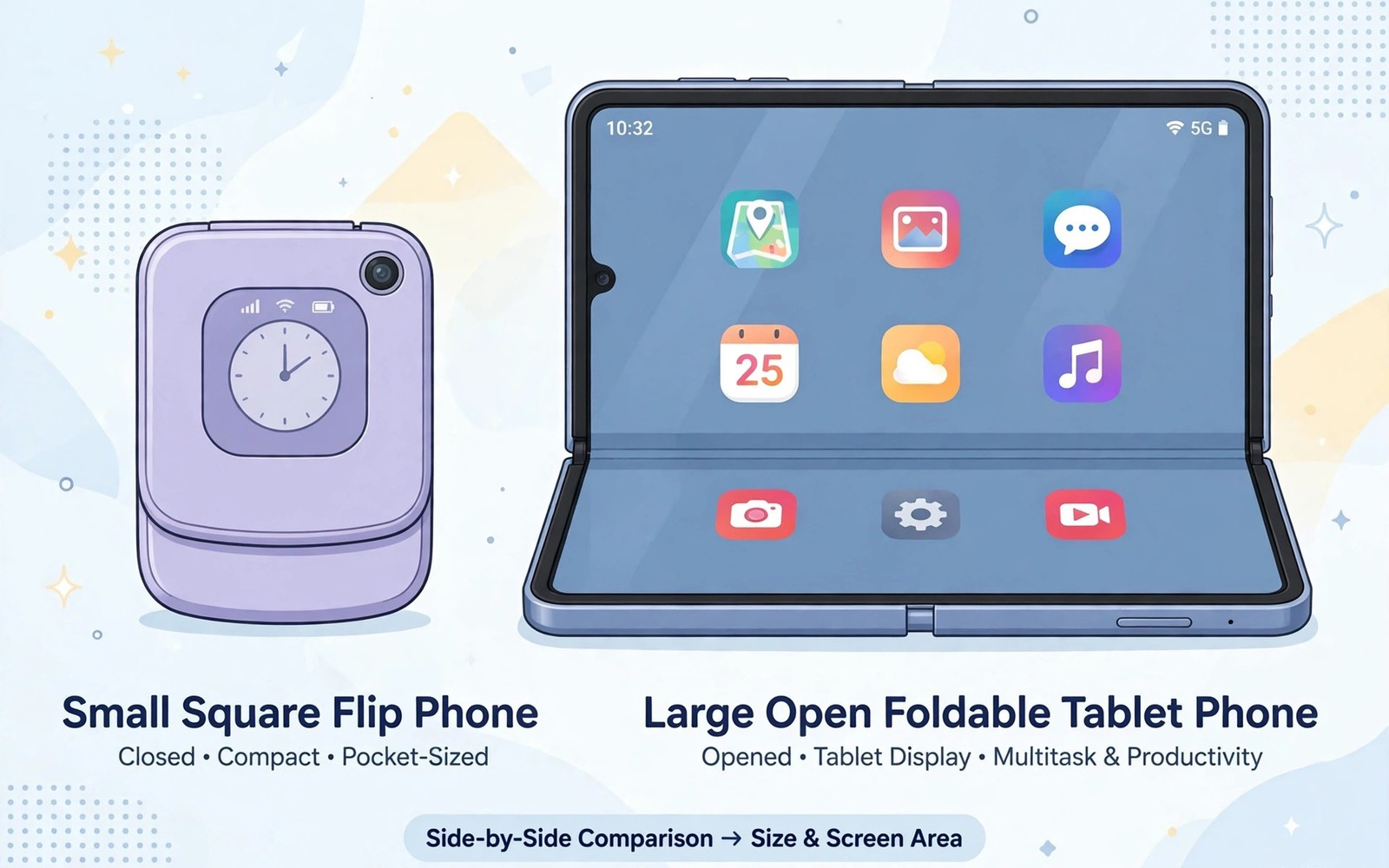
A flip phone folds into a small square that slips into a tight pocket. A fold phone opens into a small tablet that replaces a second device. Both fold but they serve opposite days. The flip suits a person who wants a normal phone that simply gets smaller. The fold suits a person who wants a bigger screen without carrying a tablet. This comparison walks through size and cameras and battery and durability so you can pick the shape that fits your hand and your routine.
The easiest way to choose is to picture your heaviest phone task. If that task is calls and messages and quick photos then a flip gives you everything with less bulk. If that task is reading documents and split screen work and video then a fold gives you room that a flip cannot match. Price also splits the two shapes sharply. Flips usually cost far less than folds. That gap alone decides the choice for many buyers.
Do not judge either shape by its folded size alone. A flip feels tiny when closed but normal when open. A fold feels like a thick phone when closed but wide when open. You will use both shapes open most of the time. Judge the open experience first. Judge the closed size second. The shape that feels right open is the shape you will keep happily for years.
Size And Pocket Feel In Daily Use
A closed flip is roughly half the height of a normal phone. It fits small jacket pockets and small bags with ease. It also feels lighter in a pocket because its weight sits in a compact block. When open it matches a normal phone in height and width. Typing feels familiar at once. One handed use feels natural because the open width stays narrow.
A closed fold is narrow and tall and thick. It feels like a remote control in the hand. It fits a pocket but it adds noticeable thickness. When open it spans nearly twice the width of a normal phone. Two handed use becomes the norm for reading and typing. One handed use feels awkward because the thumb must travel far across the wide screen. If you often use a phone with one hand while carrying bags then a fold will frustrate you.
Weight tells a similar story. Flips usually weigh close to a normal flagship. Folds weigh clearly more because they carry a larger screen and a stronger hinge and a bigger battery. That extra weight matters on long reading sessions. Your wrist will notice it after thirty minutes. Try holding each shape for ten minutes in a shop before you decide. A short hold hides fatigue that a long hold reveals.
Screen Quality And Multitasking
Flip inner screens match normal flagship screens closely. They offer bright colours and smooth scrolling and sharp text. The crease sits in the middle but it fades from notice during normal scrolling. The small cover screen shows time and notifications and quick replies. Newer cover screens also run small widgets and music controls. They do not replace the main screen for long tasks. They save you from opening the phone for every alert.
Fold inner screens change how you work. You can place two apps side by side at usable sizes. You can drag text from a browser into a notes app. You can watch video on one side while you chat on the other. Reading a document feels like reading a small book page rather than a narrow phone column. That extra width is the fold’s main selling point. Without it the fold would just be a heavy phone.
Video watching also differs. A flip shows video at normal phone size with black bars on some clips. A fold shows video larger but still with bars on many aspect ratios. The gain is real but smaller than the raw screen size suggests. Games benefit more clearly on a fold because controls can sit apart from the play area. On a flip games feel exactly like on a normal phone. Neither shape is wrong for video. The fold simply gives you more room for everything at once.
Cameras And Selfies Compared
Flip cameras punch above their size for selfies. You can use the main rear cameras for a selfie by framing yourself on the cover screen. That trick gives you sharper selfies than a small front camera ever could. Rear camera quality on flips now rivals normal flagships in daylight. Low light still trails the best camera phones because the sensor and lens package must stay slim.
Fold cameras face a harder trade-off. The thin halves leave less room for large camera hardware. Main cameras on folds are good but rarely match the best slab flagships. The inner front camera often sits under the display and produces softer selfies. The outer front camera works better for video calls when closed. If camera quality tops your list then a normal flagship still beats both fold shapes. Between the two folds the flip usually wins for selfies while the fold wins for framing a shot on a large preview.
Think about how you shoot. A flip props itself half open on a table for hands free video calls and timed group shots. That flex mode is genuinely useful. A fold props itself as a mini tripod too and its large screen makes framing easier. Both shapes help creators who shoot alone. The flip helps more for quick social clips. The fold helps more for reviewing footage on the spot.
Battery Life And Charging Reality
Flip batteries are smaller because the compact body leaves less room. A heavy day of video and navigation can drain a flip before dinner. Moderate users will reach bedtime with charge left. Heavy users should expect a top up during the day. Charging speed helps here because a short plug in adds useful charge fast. Wireless charging works on most flips and suits a desk pad routine.
Fold batteries are larger in total but they must power a much larger screen. Real life battery life often lands close to a normal flagship rather than far ahead. The large screen is the cost. The large battery merely pays for it. Standby drain can also be higher because two screens and more sensors stay ready. If battery life is your top priority then neither fold shape beats a slab phone with a huge battery. Between the two the fold usually lasts longer than the flip on mixed days.
Heat matters for both shapes during charging and gaming. The hinge area can feel warm first. A case that covers the hinge can trap heat further. Charge on a hard surface with airflow when you can. Avoid gaming while fast charging if the phone feels hot. Heat over months ages batteries faster than any single charging habit. A cooler phone keeps its battery healthier for longer.
Durability And Repair Costs
Both shapes use a flexible inner screen that needs more care than rigid glass. Dust and grit are the main enemies. A single grain trapped in the hinge can scratch the inner screen. Keep the phone away from sand and pocket lint. Wipe the inner screen with a soft cloth only. Never press hard on the crease area. The crease is a normal part of the design but sharp pressure can damage the layers beneath it.
Water resistance has improved but it still trails slab phones on many models. Check the exact rating for the model you want. A splash rating is not a swimming rating. Hinge repairs cost far more than a normal screen repair. Screen replacement on a fold costs more again because the panel is larger and complex. Factor repair cost into your budget. A good case and careful handling pay for themselves quickly here. Readers weighing risk should also read five critical foldable issues makers rarely highlight before committing.
Long term hinge feel also matters. A good hinge opens smoothly and holds any angle without slipping. Test the hinge in a shop many times. It should feel firm but not stiff. It should close fully without a gap that catches dust. If the hinge feels loose on a demo unit then expect worse after a year of daily folds. Build quality varies more between fold models than between slab models. Never buy a fold shape on specs alone.
Price And Who Should Buy Each Shape
Flips sit near flagship slab prices and sometimes below them on sale. That makes them the safer first foldable. You get novelty and pocketability without a huge premium. Folds cost a large premium over slab flagships. You pay for the large screen and the complex hinge and the engineering behind them. That premium only makes sense if you truly use the large screen daily for work or reading or multitasking.
Choose a flip if you want a normal phone that folds small and you value pocket comfort and selfie quality and a lower price. Choose a fold if you replace a tablet with your phone and you multitask daily and you accept extra weight and cost. Choose neither if camera quality or battery life or repair cost tops your list. A slab flagship still wins those three contests. Honest priorities beat novelty every time. A comparison of two leading slab flagships at flagship prices shows what a fold premium could buy instead.
flip_closed_height = 85
flip_open_height = 170
fold_closed_width = 68
fold_open_width = 135
# compare pocket fit and one hand reach
# smaller closed height favours flip
# larger open width favours fold
The snippet above is an original example written for this guide. It shows generic size numbers you can adapt to your own shortlist. It does not copy code from any outside source.
Use the numbers only as a thinking aid. Measure your own pocket depth and your own thumb reach before you trust any chart. A phone that fits a jacket pocket may still fail a jeans pocket test. A phone that suits a large hand may strain a small hand. Your body and your bag decide the winner more than any spec sheet does.
Common Mistakes
Many buyers pick a fold for the wow factor and then rarely open it fully. They carry extra weight for a tablet mode they never use. A second mistake is judging a flip only when closed. The open experience is what you live with. A third mistake is skipping the repair price check. Fold repairs can shock buyers who assumed slab repair prices.
A fourth mistake is ignoring cover screen limits on a flip. Some apps still need the main screen for full features. A fifth mistake is buying a fold for camera leadership. Slab flagships still lead cameras. A sixth mistake is forgetting case bulk. A thick case can erase the pocket advantage of a flip and worsen the thickness of a fold.
Frequently Asked Questions
Question: Which foldable lasts longer on one charge?
Answer: The fold usually lasts longer because its battery is larger. The large screen eats much of that gain. Expect flagship level life rather than multi day life from either shape.
Question: Is the crease a defect?
Answer: No. A visible crease under angled light is normal on current flexible screens. It fades during normal use. A sharp dent or a bright line is different and deserves a warranty check.
Question: Should a first time foldable buyer pick flip or fold?
Answer: Pick a flip first. It costs less and feels familiar and teaches you foldable care habits. Move to a fold later only if you miss a larger screen every day.
Conclusion
Flip phones win on pocket comfort and price and selfie tricks. Fold phones win on multitasking and reading and large screen work. Neither wins on camera leadership or battery leadership or cheap repairs. Your concrete next step is to visit a shop and hold both shapes open for ten minutes each. Open your mail and a document and a video on each. The shape that still feels comfortable at minute ten is your answer. Then check repair prices and cover screen limits before you pay. For a second opinion on value read how a cheap phone can beat pricey rivals and why midrange phones have made many flagships hard to justify.

