

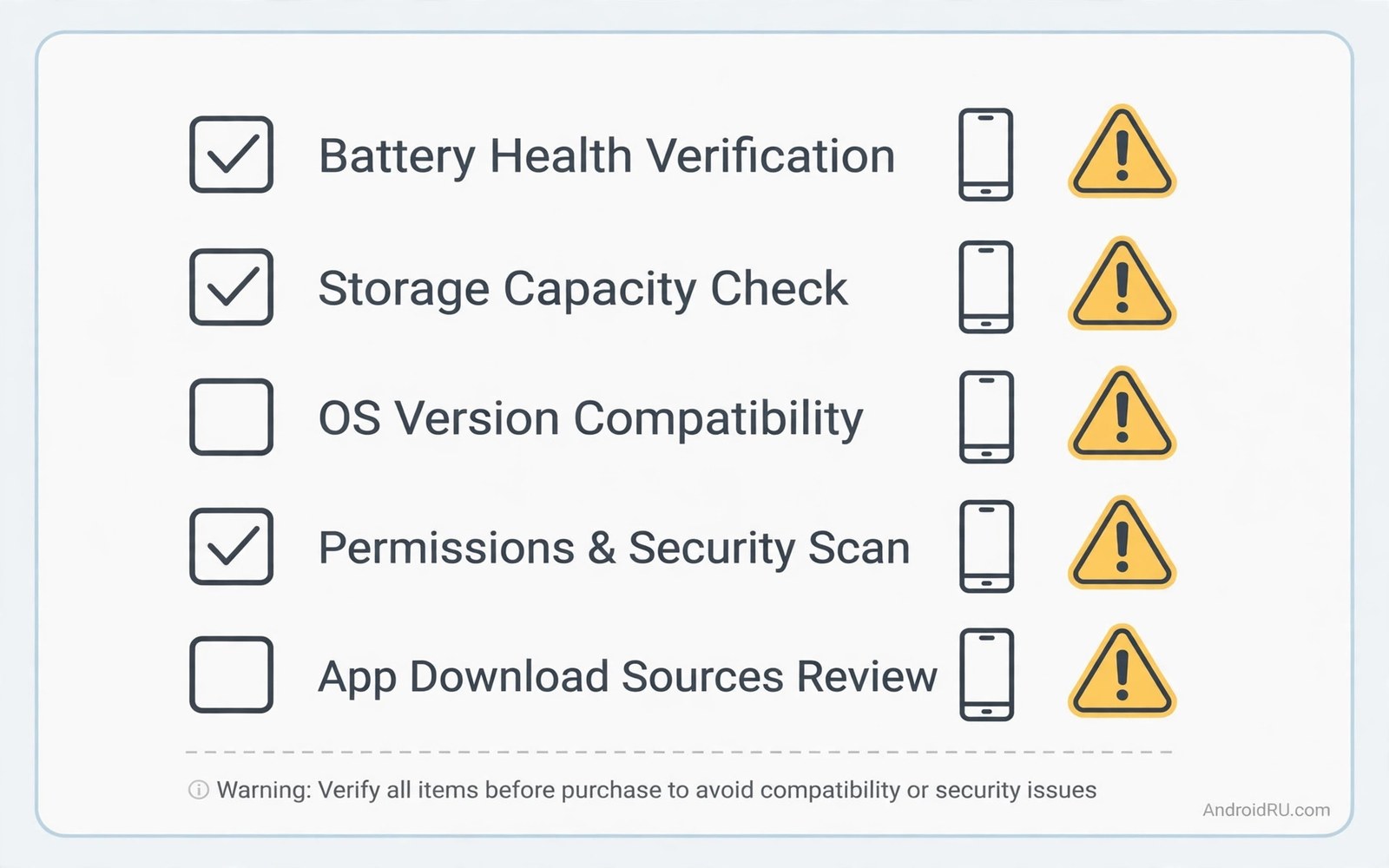
Smartphone shopping rewards patience and punishes haste. Sellers know that excitement clouds judgement during launches and sales. Red flags hide in vague specifications and missing warranties and suspicious prices. Spotting them early saves money and frustration.
A red flag is not proof of a bad phone. It is a signal to pause and verify before paying. One flag may reflect a simple omission. Several flags together suggest a deal designed to mislead. Your checklist turns suspicion into a clear decision.
This guide walks through seven warning signs with practical checks for each. You will learn what documents to request and what tests to run. Careful shoppers enjoy better phones for less money.
Vague or missing specifications
Trustworthy sellers publish full specifications for every model. Missing processor details or sensor sizes or update promises signal trouble. Vague pages let sellers hide weak components behind bold headlines. A missing specification often hides a weakness.
Request the full specification sheet before buying from an unfamiliar seller. Compare the sheet against the maker product page for the exact model. Discrepancies between seller claims and maker data deserve explanation. Walk away when explanations stay vague.
Check network bands and storage type and memory size specifically. Those details shape daily speed and connectivity heavily. A seller who cannot confirm bands may sell a grey import with poor local support. Clarity protects your daily use.
Suspiciously low prices
A price far below every reputable seller deserves scepticism. Extremely low prices often signal refurbished units sold as new or grey imports without warranty. Some listings use bait prices and add fees at checkout. Others ship a different model than advertised.
Compare prices across several reputable sellers before trusting a bargain. A modest discount during a sale looks plausible. A dramatic discount outside a sale looks suspicious. Price context reveals bait listings quickly.
Read the full checkout total including shipping and taxes and fees. A low headline price can grow sharply at payment. Check return costs too because returning a suspicious phone should stay affordable. Total cost honesty separates real deals from traps.
No warranty or unclear returns
A phone without a clear warranty carries serious risk. Screens and batteries and ports fail even on good phones. A seller without warranty support leaves you paying for repairs alone. Warranty clarity is part of the product value.
Ask who honours the warranty and where service happens. A maker warranty with local service beats a seller promise without a service address. Check warranty length for the battery specifically because batteries wear fastest. Battery cover reveals warranty honesty.
Return policy matters just as much. A short return window traps you with faults discovered after a week. Choose sellers with at least a two week return period. Test every function during that window without delay.
Grey imports and locked devices
Grey imports may lack local network bands and local warranty. They may also receive updates later than local models. A grey import can work well yet frustrate when service is needed. Local models offer smoother support and clearer updates.
Carrier locked phones restrict your network choice until unlocking. A locked phone may also delay updates behind carrier approval. Confirm unlocked status in writing before paying. An unlocked phone preserves freedom and resale value.
Check the serial number and model code against maker records when possible. A mismatch signals a different regional variant than advertised. Regional variants differ on bands and chargers and software. Exact model verification prevents surprises.
Inflated storage and fake accessories
Some sellers advertise inflated storage that the phone does not actually contain. Modified software can report false storage totals until you fill the drive. Test storage by copying large files and verifying free space changes correctly. Real storage behaves predictably under load.
Fake chargers and cables also accompany suspicious listings. Counterfeit chargers risk overheating and slow charging and battery harm. Use a reputable charger and compare charging speed against maker claims. Charger quality protects your investment.
Check seals and packaging for signs of resealing or mismatched labels. A resealed box may hide a used phone sold as new. Compare serial numbers on box and phone and warranty card. Matching numbers signal a genuine new unit.
Flag risky listings with a checklist
A short script can count red flags in any listing you consider. Mark each warning sign as present or absent from the seller page. The script below totals the flags and warns when the count grows high.
flags = {
    "vague specs": True,
    "no warranty": False,
    "suspicious price": True,
    "grey import": False,
    "fake storage risk": True,
}
count = 0
for flag, present in flags.items():
    if present:
        count += 1
        print(flag, "present")
print("Total red flags:", count)
This snippet was written for this guide so you can count red flags in a phone listing before you spend money. Replace the sample flags with the exact signs you found on the seller page.
A count of three or more should pause any purchase until verification succeeds. A count of one may reflect a simple omission worth a question. Let the total guide caution rather than panic.
A safe checkout routine
A safe checkout routine turns excitement into verification. Confirm the exact model code and storage size on the order page before paying. Model codes differ by region and a single letter can change bands and warranty. Exact matching prevents costly variant surprises.
Read the delivery estimate and return window together before payment. A long delivery window with a short return window creates a trap. Return clocks should start at delivery rather than at order. Clarify return timing in writing when the page stays vague.
Pay with a secure method that offers dispute protection. Credit cards and reputable payment platforms protect buyers when listings disappoint. Bank transfers and cash remove that protection almost entirely. Payment safety outweighs a tiny discount.
Save screenshots of the listing and price and warranty terms at checkout. Screenshots preserve evidence when listings change after purchase. Store them with your order confirmation email. Evidence supports disputes months later.
Inspect the sealed box on arrival before signing for delivery when possible. Check seals and serial numbers against the order details. Report mismatches immediately with photos. Prompt reporting preserves return rights.
Run a full function test within the first three days. Test cameras and ports and speakers and battery health in that window. Early testing catches faults while returns stay simple. A tested phone brings lasting peace of mind.
After delivery: the 7 day test plan
Day one tests cover screen and touch and basic calls. Check for dead pixels and touch dead zones across the display. Make a call and test both speakers and microphones. Early screen faults deserve immediate reporting.
Day two tests cover cameras in varied light. Shoot indoors and outdoors and at night with each lens. Compare results on a larger screen for softness and noise. Camera faults hide in store lighting and appear at home.
Day three tests cover battery behaviour with your normal apps. Note screen time and standby drain across a full day. Compare endurance against reviewer results for the same model. Abnormal drain signals a rogue app or faulty cell.
Day four tests cover connectivity in your daily places. Check calls and downloads at home and at work and on your commute. Weak signal spots reveal antenna or band issues. Connectivity tests protect commuters most.
Days five to seven test accessories and daily comfort. Try your case and charger and earbuds with the new phone. Carry it in your usual pocket and bag for comfort. Comfort issues appear only through real carrying.
Common mistakes
Many shoppers rush during flash sales and skip verification. Urgency marketing pushes buyers past red flags. A genuine deal survives a ten minute specification check. Haste benefits sellers and harms buyers.
Another mistake is trusting seller ratings without reading negative reviews. Ratings can be inflated by incentivised feedback. Negative reviews reveal patterns around warranty and authenticity. Read the worst reviews first for balance.
Buyers also ignore total checkout cost until payment. Fees and shipping can erase a headline discount. Compare final totals across sellers rather than headline prices. Final totals reveal true value.
Finally avoid paying through unsafe methods to secure a low price. Secure payment protects you when a listing disappoints. A small saving never justifies losing payment protection. Safety beats a bargain every time.
Frequently asked questions
How do I verify a seller is genuine?
Check seller history and warranty terms and return policy together. Compare specifications against the maker page for the exact model. Read negative reviews for patterns around authenticity and service. Genuine sellers welcome verification questions.
Are grey imports always bad?
Grey imports are not always bad but they carry warranty and band risks. Some buyers accept those risks for a lower price. Check bands and update history and service options before buying grey. Informed grey buying beats blind grey buying.
What should I test first after delivery?
Test screen and cameras and ports and speakers and battery health immediately. Copy large files to verify real storage capacity. Confirm unlocked status and serial numbers match the box. Early testing protects your return window.
Conclusion
Red flags protect careful shoppers when they pause and verify. Vague specs and missing warranty and suspicious prices deserve questions before payment. A verified deal brings confidence that lasts far beyond checkout.
Your concrete next step is to run the red flag checklist on your current shortlist tonight and contact any seller with more than two flags for written clarification before paying. Buy only from sellers who answer clearly. New buyers should start with a complete buying guide for a new phone and sceptical readers should study marketing tricks that mislead buyers while bargain hunters can compare a refurbished flagship against a new budget phone and foldable curious shoppers should weigh foldable risks before spending flagship money before checkout.

