

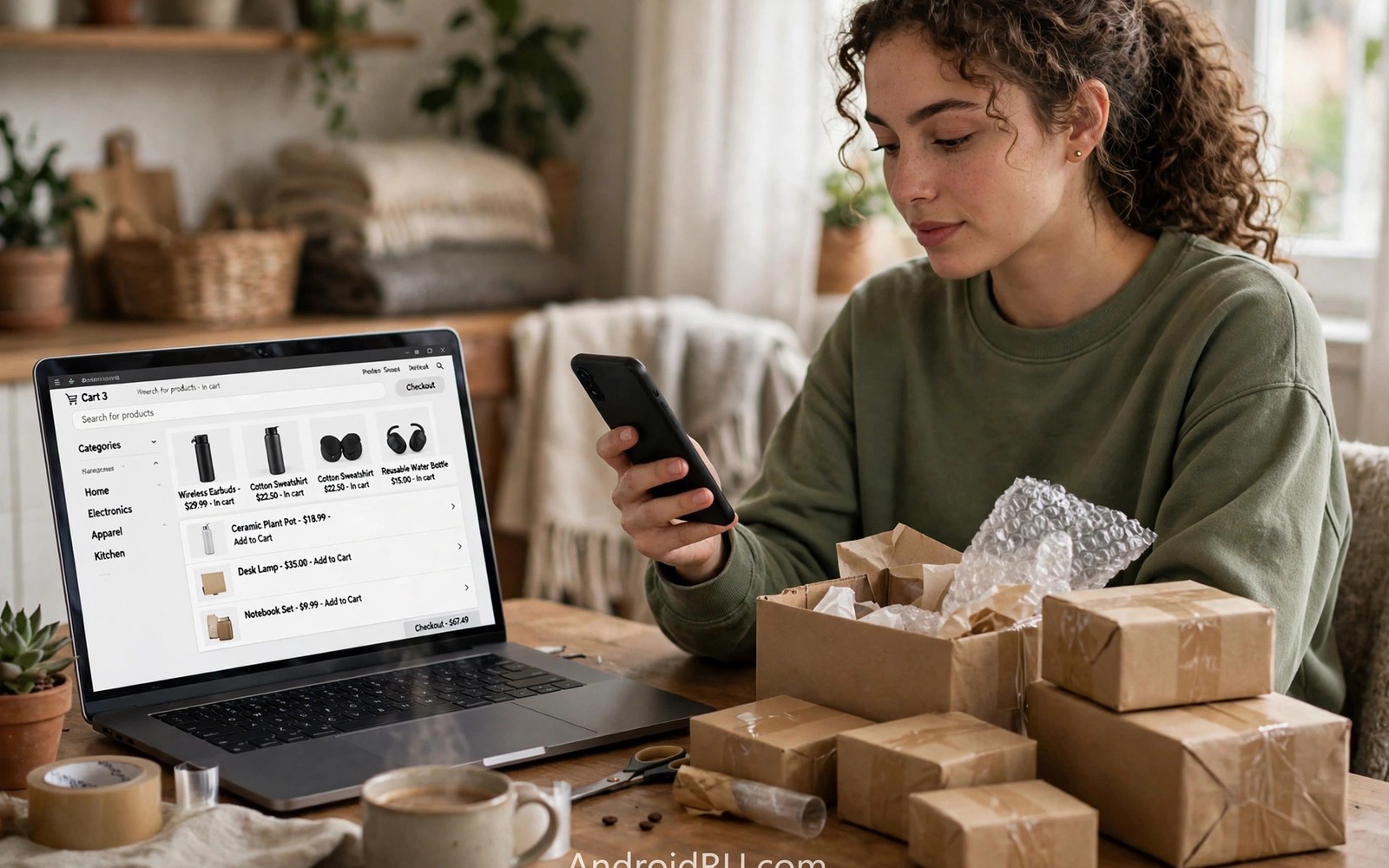
Holiday sales attract scammers because shoppers rush and trust big discounts. Fake stores appear with professional designs and impossible phone prices. Social media ads drive traffic to those stores during sale weeks. Victims often realise the fraud only after payment disappears. Calm verification habits protect you better than any single tool.
Start by slowing down whenever a deal looks far cheaper than every rival. Extreme discounts are the most common scam bait during holidays. Check the seller through independent sources before you enter payment details. A few minutes of checking can save the full purchase amount. For price reality checks read cashback and warranty benefits alongside scam warning signs.
Fake Stores And Copycat Websites
Fake stores copy the design of trusted retailers closely. They may use a similar domain name with a small spelling change. They may also use stolen product photos and fake trust badges. Look closely at the domain spelling in the address bar. A single letter difference is a strong warning sign.
Check contact details and company registration for unfamiliar stores. A real store provides a physical address and working phone support. A fake store often hides behind a form only with no phone number. Search the store name plus scam reports from other buyers. Repeated complaints about missing deliveries confirm the risk.
Payment Safety Rules
Credit cards offer stronger fraud protection than direct bank transfers. Card networks allow chargebacks when goods never arrive. Bank transfers and gift card payments are far harder to reverse. Never pay a new store by transfer when card payment is refused. Refusal of protected payment methods is itself a warning sign.
Use secure checkout pages with proper encryption indicators. Avoid entering card details on pages reached through suspicious links. Keep card statements checked weekly during holiday season. Report unknown charges to your bank immediately rather than waiting. Early reporting increases the chance of a full recovery.
Phishing Messages And Fake Delivery Notices
Phishing messages spike during holiday shopping season. Fake delivery notices claim a parcel needs a fee or address confirmation. Fake order confirmations link to pages that steal login details. Never click links in unexpected messages about orders you did not place. Visit the store or carrier site directly by typing its address yourself.
Check sender addresses carefully because scammers spoof familiar names. A message from a free email account claiming to be a major store is suspicious. Urgent language about account closure is a classic pressure tactic. Real stores rarely demand immediate action through a message link. When in doubt contact support through official channels only.
Social Media Ad Scams
Social media ads can promote fake phone deals to millions quickly. Scammers use stolen reviews and fake comments to build trust. Comments may be disabled or filtered to hide warnings. Check the linked store independently rather than trusting ad comments. A deal that exists only in ads and nowhere else deserves suspicion.
Reverse image search product photos from suspicious ads. Stolen photos often appear on many unrelated stores. A genuine seller uses consistent branding across its own channels. A scammer reuses images from many sources without coherence. Inconsistent branding across pages is a useful warning signal.
Account Security During Sales
Holiday account creation on many stores increases password reuse risk. Use a unique strong password for each shopping account. Enable two factor authentication wherever the store offers it. A breached shopping account can expose addresses and order history. Unique passwords limit damage when one store suffers a breach.
Avoid shopping on public Wi-Fi without proper protection. Public networks can expose login details to nearby attackers. Use mobile data for payments when a trusted network is unavailable. Keep your phone system and browser updated during sale season. Updates patch security flaws that scammers actively exploit.
After Purchase Checks
Track every holiday order from confirmation through delivery. Save order numbers and confirmation emails in one folder. Check tracking details on the carrier site directly rather than message links. A tracking number that never updates after days deserves a support query. Early queries catch problems while recovery remains possible.
Inspect delivered phones immediately for authenticity and condition. Check model numbers and seals and included accessories against the listing. Test core functions during the return window without delay. Report mismatches to the seller and payment provider promptly. Clear records and photos support any dispute that follows.
A Simple Scam Risk Checker
Use the short script below as a personal checklist score. Rate seller trust and payment safety and price realism simply. The script totals the scores and flags low totals for review. Adjust thresholds to your own caution level. A checklist never replaces judgement but it slows impulsive decisions usefully.
seller_trust = 6
payment_safety = 9
price_realism = 4
total = seller_trust + payment_safety + price_realism
print(f"Safety score: {total} out of 30")
print("Proceed carefully" if total >= 20 else "Stop and verify first")
The snippet above is a generic example created for illustration only. It uses placeholder scores and no store or fraud data. Replace the scores with your own checks before deciding. The score supports caution and does not guarantee that a seller is safe.
Marketplace Scam Patterns
Marketplace scams often use new seller accounts with too good prices. A new account with many high value listings is suspicious. Established sellers build feedback over years. New sellers can be legitimate but need extra verification. Price plus newness together signal high risk.
Scammers may hijack established seller accounts during holidays. A trusted account suddenly listing phones cheaply may be compromised. Check recent feedback for sudden pattern changes. A hijacked account shows inconsistent listing styles. Inconsistency warns buyers before payment.
Escrow style marketplace protections help when used correctly. Never bypass marketplace payment to pay directly. Direct payment removes marketplace protection entirely. Scammers push direct payment with discount promises. That discount is the cost of losing all protection.
Delivery Scams And Porch Theft
Holiday delivery volumes increase porch theft opportunities. Thieves follow delivery patterns in residential areas. Require signatures for expensive phone deliveries when possible. Signature requirements prevent unattended parcels. A short trip to a pickup point beats a stolen parcel.
Track deliveries closely and retrieve parcels promptly. A parcel left for hours invites theft. Delivery notifications help you time retrieval. Set notifications for every holiday order. Prompt retrieval is the simplest theft defence.
Delivery lockers offer secure alternatives in many areas. Lockers hold parcels until you collect with a code. They avoid porch exposure entirely. Check locker availability near your home or work. Locker delivery suits workers away during the day.
Kids And Elderly Holiday Shoppers
Children shopping online during holidays face targeted scams. Game related phone deals attract young shoppers. Teach children to check with adults before paying. Family payment rules prevent impulsive scam losses. A simple rule of adult approval protects young buyers.
Elderly shoppers face phone scam calls during holidays. Callers impersonate stores and banks with urgent stories. Teach elderly relatives to hang up and call back officially. Official callback numbers come from cards rather than caller claims. Family scam education protects vulnerable shoppers best.
Shared family accounts need holiday vigilance. Children or relatives may make purchases on shared devices. Set purchase approval requirements on shared accounts. Approval steps prevent accidental scam payments. Family account settings are a holiday safety tool.
Recovering From A Scam
Fast action after a scam improves recovery chances greatly. Contact your bank immediately to block further charges. Report the fraud to the payment provider promptly. Save all messages and receipts as evidence. Evidence quality affects recovery outcomes directly.
Report scam stores to marketplaces and consumer authorities. Reports help remove stores before more victims pay. A report also creates an official record for claims. Reporting takes minutes and protects strangers. Community reporting is part of scam defence.
Learn from the scam pattern without shame. Scammers use professional designs and psychology. Anyone can fall victim during rushed holidays. Share the pattern with family to prevent repeat victimisation. A shared lesson turns a loss into protection for others.
Holiday Account Takeover Risks
Account takeover attacks increase during holiday shopping. Attackers use leaked passwords from old breaches. Reused passwords let attackers enter shopping accounts easily. Unique passwords block most takeover attempts. Password managers make unique passwords practical.
Takeover attackers may place orders to new addresses. Order notifications help owners spot takeovers quickly. Check order emails daily during holidays. Fast reporting limits fraudulent order damage. Notification vigilance is a holiday habit worth building.
Two factor authentication blocks takeovers even with leaked passwords. Enable it on shopping and email accounts. Email account protection matters most because password resets flow through email. Protect email first and shopping second. Layered protection defeats most takeover attempts.
Holiday Wi-Fi Safety
Holiday travel often means shopping on hotel Wi-Fi. Hotel networks may be monitored by attackers. Avoid payment transactions on untrusted hotel networks. Use mobile data for purchases while travelling. Mobile data is safer than shared hotel Wi-Fi.
Virtual private networks add protection on public networks. A reputable VPN encrypts traffic from local snoops. VPN use does not replace payment caution. Combine VPN use with protected payment methods. Layered safety suits holiday travel shopping.
Auto-connect settings can join malicious networks automatically. Disable auto-connect for open networks during travel. Manually choose trusted networks only. Auto-connect convenience creates real risk. Manual network choice is a simple travel safety step.
Final Scam Protection Advice
Verify sellers independently and pay only through protected methods. Ignore urgency tactics and extreme discounts that defy market reality. Keep records of every order until delivery and testing are complete. For cashback safety read Prime Day versus Black Friday deals and for event deal comparisons read refurbished flash deal hunting before you spend. A safe holiday purchase feels calm rather than rushed.
Scammers rely on speed and excitement during holiday sales. Your best defence is a short pause and a few independent checks. Real deals survive verification without any problem. Fake deals collapse under basic scrutiny. Protect your money with patience and your next holiday purchase can be both cheap and safe.

