

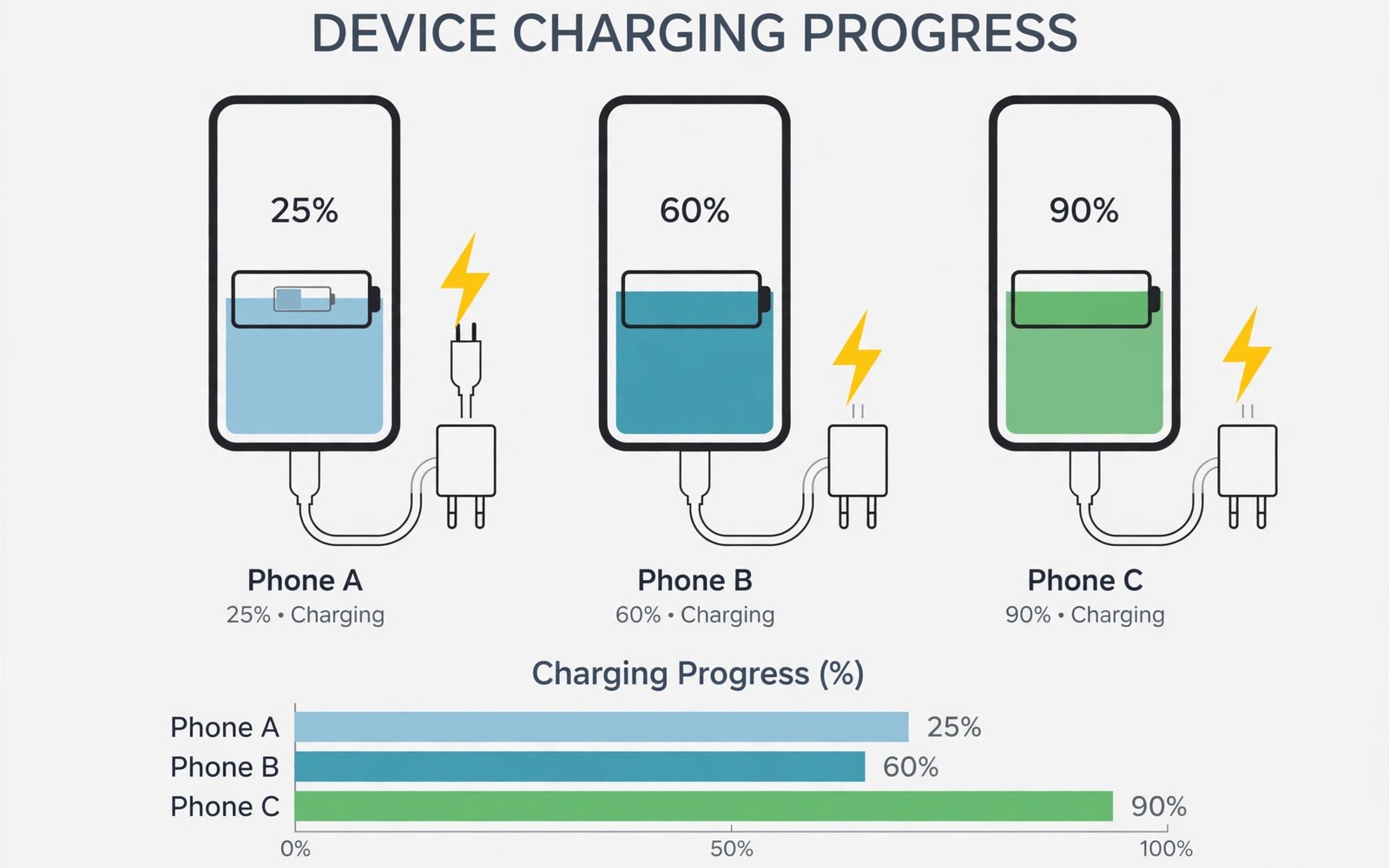
Charging wattage numbers promise huge time savings. Real charging tells a slower story. Phones charge fast only while batteries are empty. Speed drops sharply as batteries fill. Heat and battery care limits shape the curve too.
This shootout tests three power levels from empty to full. It records times at key charge points. Readers chasing endurance can also see battery life champions for phones that need charging less often. Real minutes matter more than wattage labels.
How Fast Charging Actually Works
Lithium batteries accept high power only at low charge levels. Charging circuits taper power as voltage rises. A 120W phone may draw full power for minutes only. A 25W phone draws steady power for longer. The gap shrinks as charging progresses.
Cables and chargers must match the phone protocol. A generic charger may deliver far less than the label suggests. Brand protocols unlock peak speeds only with matched gear. Heat also forces throttling during fast sessions. Cool rooms charge faster than hot cars.
25W Real World Results
25W charging feels slow on paper but stays practical. A dead phone reaches half charge in about half an hour. Full charges take well over an hour in most tests. Overnight users will never notice the slower pace. Morning top ups still add useful power.
25W generates less heat than faster levels. Battery health benefits from gentler charging over years. Many trusted brands still ship 25W as standard. Users who charge overnight gain little from faster options. Patience pays off in battery lifespan.
| Aspect | First Option | Second Option |
|---|---|---|
| Power level | Half charge pace | Full charge pace |
| 25W | About thirty minutes | Well over one hour |
| 67W | About twenty minutes | Under one hour |
| 120W | About ten to fifteen minutes | About thirty minutes |
67W Real World Results
67W hits a sweet spot for many buyers. Half charges land in roughly twenty minutes. Full charges finish in under an hour in most tests. Heat stays manageable with good cooling design. Daily top ups feel quick without extreme battery stress.
67W chargers are common and affordable in many markets. Phones at this level balance speed and health well. A ten minute charge before leaving home adds real hours. Commuters gain most from this middle tier. It is the sensible default for busy users.
120W Real World Results
120W delivers dramatic early speed. Phones can reach half charge in about ten to fifteen minutes. Full charges finish in roughly half an hour in top tests. The lead over 67W narrows sharply after eighty percent. Battery care limits protect the final stretch.
Extreme speed demands matched chargers and cables. Heat management becomes critical at this level. Dual cell battery designs split power to stay cooler. Long term health effects remain debated but care modes help. Speed lovers and emergency users gain most here.
- Use the matched charger and cable for peak speed.
- Charge in a cool room when possible.
- Avoid gaming during fast charging sessions.
- Enable battery care for overnight charging.
- Judge speed at eighty percent and not only at fifty.
Heat And Battery Health
Heat ages lithium batteries faster than any other factor. Fast charging sessions warm phones noticeably. Cooling cases off and cool rooms help during charging. Avoid gaming while fast charging to limit heat buildup. Wireless charging adds heat too and runs slower.
Battery care features cap overnight charge at safer levels. Some phones learn user routines and delay full charging. Users who keep phones for years should use these modes. Readers planning long ownership can check long-term reliability for brand durability. Health matters more than a few saved minutes.
adb shell dumpsys battery | grep -E 'level|temperature|health'
# Check battery level temperature and health
adb shell cat /sys/class/power_supply/battery/current_now
The commands above come from standard Android developer tooling for battery inspection. They only read battery data and they change no setting on the phone.
Which Wattage Should You Pick
Pick 25W if you charge overnight and keep phones for years. Pick 67W for the best balance of speed and health. Pick 120W if your days demand emergency top ups. All three levels work fine with good habits. Charger compatibility matters as much as wattage.
Check what charger ships in the box before you buy. Some brands sell fast chargers separately. Total cost includes the right charger and cable. A 120W phone with a slow charger charges slowly. Match gear to phone for true speed.
Charging Protocols And Compatibility Maze
Charging protocols confuse buyers because brands differ widely. USB Power Delivery serves as a common standard across brands. Brand protocols unlock peak speeds only with matched chargers. Cross brand chargers fall back to slower standard rates. Buyers traveling with one charger face slower speeds on foreign brand phones. Universal chargers with multiple protocols solve travel headaches best.
Cable ratings limit charging more than users expect. Thin cheap cables throttle high wattage charging severely. Certified cables rated for high power cost little more than cheap ones. Cable length also affects voltage drop at high power. Short thick cables deliver peak speeds most reliably. Buyers should test charging with their travel cables before trips.
Wireless Charging Speed Realities
Wireless charging trades speed for convenience daily. Pads charge slower than wired fast charging. Heat builds faster on wireless pads during charging. Alignment affects wireless speed strongly. Misaligned phones charge slowly or stop entirely. Magnetic alignment systems improve consistency greatly for users.
Wireless charging suits desks and nightstands best. Users drop phones on pads between tasks effortlessly. Overnight wireless charging avoids cable wear completely. Commuters gain little from wireless speed limits. Wireless pads also serve earbuds and watches conveniently. Buyers should weigh convenience against slower refill times honestly.
Charging In Cars And On The Go
Car charging needs differ from home charging needs. Car chargers must handle vibration and temperature swings. Low quality car chargers deliver unstable power. Trusted car chargers with proper certification protect phones. Short trips add little charge regardless of wattage. Long drives can refill phones fully with good chargers.
Power banks have their own wattage limits. Many power banks charge phones slower than wall chargers. High wattage power banks cost more and weigh more. Airline rules limit power bank capacity for flights. Travelers should match power bank output to phone needs. A 120W phone with a 18W power bank charges slowly on trips.
Battery Longevity Versus Speed Habits
Speed habits shape battery lifespan over ownership years. Daily ultra fast charging ages cells faster than gentle charging. Heat accumulates fastest during the first half of charging. Cooling phones during fast sessions reduces aging somewhat. Removing cases during charging helps heat escape. Users who upgrade yearly can ignore aging effects safely.
Long term owners should adopt mixed charging routines. Slow overnight charging preserves capacity best. Fast charging should serve emergencies and busy days. Smart charging features automate this balance well. Brands now offer adaptive charging that learns routines. Enabling these features costs nothing and extends battery life measurably.
Future Charging Trends To Watch
Future charging trends point toward smarter rather than faster systems. Wattage races may slow as battery health concerns grow. Gallium nitride chargers shrink high power bricks dramatically. Solid state batteries promise faster safe charging eventually. Wireless charging over distance remains experimental and inefficient. Buyers should not delay purchases waiting for breakthrough charging tech.
Standardization efforts may simplify chargers across brands eventually. Common standards already help USB Power Delivery users. Brand exclusive protocols still fragment peak speeds today. Regulations in some regions push common charging ports. Future phones may converge on shared fast standards. Until then buyers must check protocol compatibility carefully.
Charging Safety Standards
Charging safety standards protect users from faulty gear. Certified chargers include overcurrent and overheat protection. Uncertified chargers risk damage and fire hazards. Brand chargers undergo rigorous safety testing. Third party certified chargers offer safe alternatives affordably.
Cable certification matters equally for safety. Damaged cables should be replaced immediately. Frayed cables risk shorts and overheating. Users should inspect cables regularly for wear. Safe charging habits include unplugging damaged gear promptly.
Charging And Battery Warranty
Battery warranties cover defects rather than normal aging. Fast charging within specs does not void warranties. Unauthorized chargers may complicate warranty claims. Manufacturers test batteries under specified charging conditions. Users following official guidance stay within warranty terms.
Battery health thresholds trigger warranty replacements sometimes. Capacity below eighty percent may qualify under some policies. Warranty terms vary by brand and region significantly. Buyers should read battery warranty details before purchase. Long warranties add value for heavy fast charging users.
Public Charging Tips
Public charging requires caution and preparation. USB data blockers prevent juice jacking attacks. Trusted wall outlets beat unknown USB ports. Power banks offer safer public charging alternatives. Airport charging stations vary in speed and safety.
Carrying personal chargers avoids public port risks. Compact GaN chargers travel easily in bags. Multi port chargers serve phones plus accessories. Public charging etiquette includes sharing outlets fairly. Prepared travelers charge faster and safer everywhere.
Charging Myths Debunked
Charging myths confuse users unnecessarily. Overnight charging no longer damages modern phones severely. Battery care systems prevent overcharging automatically. Full discharges harm lithium batteries more than full charges. Partial charging benefits battery health measurably.
Closing apps does not improve charging speed meaningfully. Airplane mode speeds charging slightly by reducing radio drain. Powering off phones charges fastest marginally. Heat remains the main charging enemy to avoid. Myth busting helps users charge confidently.
Final Verdict
120W wins on raw speed but 67W wins on balance. 25W remains fine for overnight chargers and long term owners. Real charging curves matter more than peak wattage claims. Choose the level that fits your daily rhythm.
Buyers comparing full devices can also read value flagships for fast charging leaders. Speed is useful only when it fits real life. Pick practical speed over headline numbers.

