

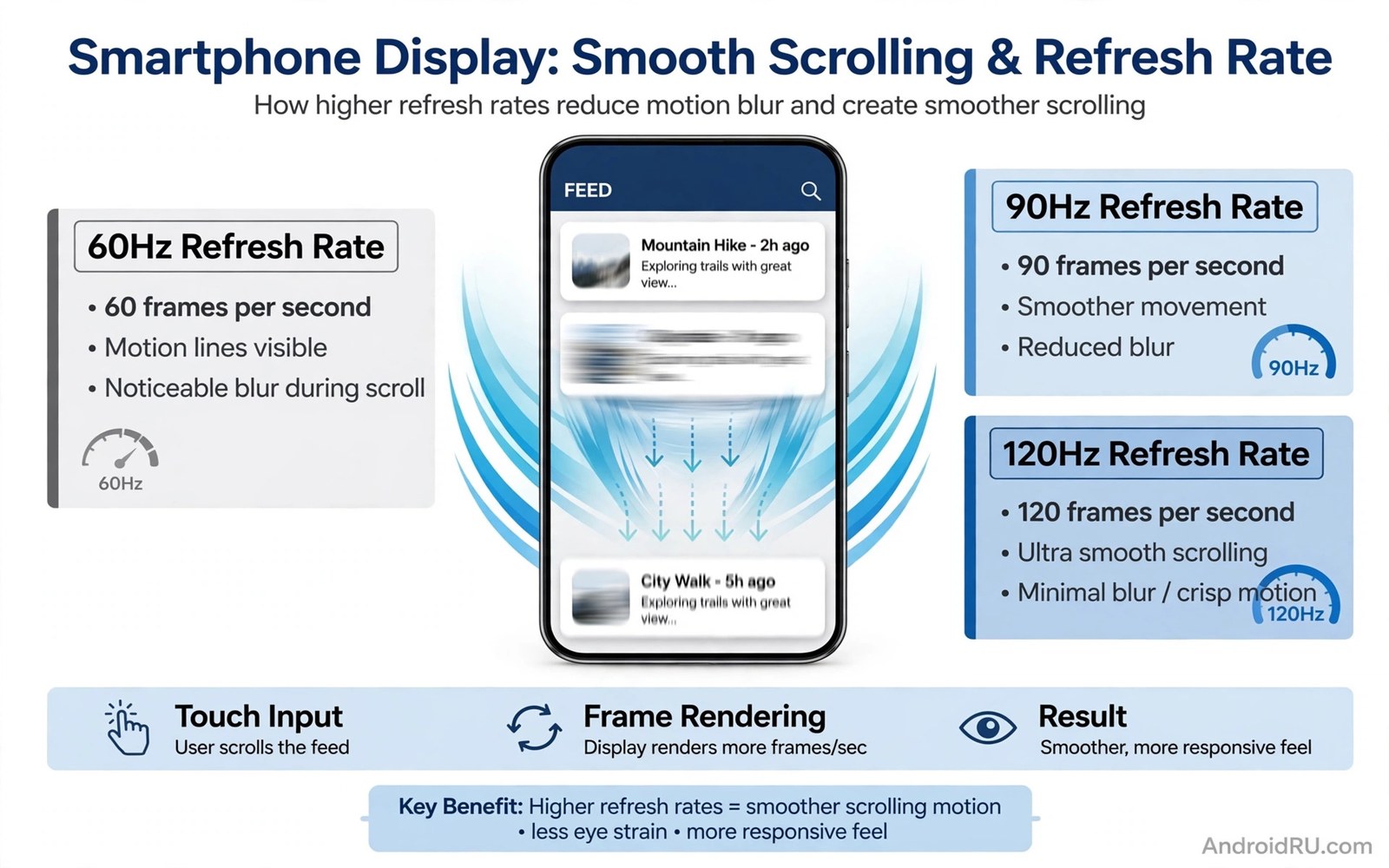
A 120Hz label does not guarantee a smooth phone. The whole system must keep up with the screen. This guide explains high refresh rate displays on cheap phones in plain language and helps you judge real value. You will learn what matters and what you can safely ignore.
Before you compare models, think about how you use a phone each day from morning messages to evening video. A clear picture of your habits makes every spec easier to judge. how to pick a phone that fits your daily routine That detail can change a buying decision so read it before you finalise your shortlist.
Set a total budget that includes a case and a screen protector. Those accessories protect resale value and daily durability. A good case costs little compared with a screen repair. Buy protection on day one and fit it before first use.
What refresh rate means
Refresh rate counts how often the screen updates each second during motion. Test this point on a demo unit when you can. A short real test reveals more than a spec table.
Set a total budget that includes a case and a screen protector. Those accessories protect resale value and daily durability. A good case costs little compared with a screen repair. Buy protection on day one and fit it before first use.
Check storage needs by counting your photos and offline media today. Add room for app growth over two years of use. Storage pressure slows a phone and forces constant deletions. A larger storage choice now prevents that hassle later.
When you notice the gain
You notice it most while scrolling feeds and switching apps quickly. That point matters because it shapes daily comfort more than a headline spec. what to check before you spend money on a new phone That detail can change a buying decision so read it before you finalise your shortlist.
Think about how long you plan to keep the phone. A longer plan favours update support and battery size over peak speed. Short plans favour price and immediate features. Match the phone lifespan to your real upgrade cycle.
Start with your daily routine and list the apps you open most. That list reveals the chip and battery you truly need. Test those apps on a demo unit when you can. A short hands on test beats a long spec sheet every time.
When the gain disappears
Weak chips and slow touch response can hide the benefit of a fast panel. Test this point on a demo unit when you can. A short real test reveals more than a spec table.
Test call quality and signal strength in your usual places when possible. A phone with weak reception frustrates daily use more than a slower chip. Ask friends on the same network about their experience. Real world signal beats lab numbers in daily life.
Compare at least three phones in the same price band before you decide. Look at screen brightness and speaker quality and update length. Small differences in those areas shape daily comfort. A phone that feels good in hand wins over a phone that only looks good on paper.
Battery cost of fast screens
Fast screens use more power unless the phone drops the rate when idle. Buyers who test this point in person avoid most regret after purchase. practical tips for getting more value from a mid-range phone That detail can change a buying decision so read it before you finalise your shortlist.
Check storage needs by counting your photos and offline media today. Add room for app growth over two years of use. Storage pressure slows a phone and forces constant deletions. A larger storage choice now prevents that hassle later.
Read recent user reviews for battery life and software bugs. Look for patterns across many reviews not single complaints. Patterns reveal real flaws while single posts may reflect one faulty unit. Trust consistent feedback over marketing claims in every case.
Panel quality beyond refresh rate
Brightness and colour accuracy matter as much as the refresh number. Test this point on a demo unit when you can. A short real test reveals more than a spec table.
Start with your daily routine and list the apps you open most. That list reveals the chip and battery you truly need. Test those apps on a demo unit when you can. A short hands on test beats a long spec sheet every time.
Check warranty terms and service centres in your area before you pay. A cheap phone with no local service can cost more after a fault. Ask the seller about repair time and spare parts stock. That question saves weeks of waiting when something breaks later.
Buying checklist for this class
Think about how long you plan to keep the phone. A longer plan favours update support and battery size over peak speed. Short plans favour price and immediate features. Match the phone lifespan to your real upgrade cycle.
Compare at least three phones in the same price band before you decide. Look at screen brightness and speaker quality and update length. Small differences in those areas shape daily comfort. A phone that feels good in hand wins over a phone that only looks good on paper.
Test call quality and signal strength in your usual places when possible. A phone with weak reception frustrates daily use more than a slower chip. Ask friends on the same network about their experience. Real world signal beats lab numbers in daily life.
Long term ownership
Read recent user reviews for battery life and software bugs. Look for patterns across many reviews not single complaints. Patterns reveal real flaws while single posts may reflect one faulty unit. Trust consistent feedback over marketing claims in every case.
Check storage needs by counting your photos and offline media today. Add room for app growth over two years of use. Storage pressure slows a phone and forces constant deletions. A larger storage choice now prevents that hassle later.
Check warranty terms and service centres in your area before you pay. A cheap phone with no local service can cost more after a fault. Ask the seller about repair time and spare parts stock. That question saves weeks of waiting when something breaks later.
What to test before you keep the phone
Start with your daily routine and list the apps you open most. That list reveals the chip and battery you truly need. Test those apps on a demo unit when you can. A short hands on test beats a long spec sheet every time.
Set a total budget that includes a case and a screen protector. Those accessories protect resale value and daily durability. A good case costs little compared with a screen repair. Buy protection on day one and fit it before first use.
Read recent user reviews for battery life and software bugs. Look for patterns across many reviews not single complaints. Patterns reveal real flaws while single posts may reflect one faulty unit. Trust consistent feedback over marketing claims in every case.
Test call quality and signal strength in your usual places when possible. A phone with weak reception frustrates daily use more than a slower chip. Ask friends on the same network about their experience. Real world signal beats lab numbers in daily life.
Final comparison step
Compare at least three phones in the same price band before you decide. Look at screen brightness and speaker quality and update length. Small differences in those areas shape daily comfort. A phone that feels good in hand wins over a phone that only looks good on paper.
Think about how long you plan to keep the phone. A longer plan favours update support and battery size over peak speed. Short plans favour price and immediate features. Match the phone lifespan to your real upgrade cycle.
Start with your daily routine and list the apps you open most. That list reveals the chip and battery you truly need. Test those apps on a demo unit when you can. A short hands on test beats a long spec sheet every time.
Check current refresh rate
You can check key details on your current phone with a simple command. The command below reads system info without changing any setting. Run it from a computer with developer options enabled.
adb shell dumpsys display | grep -i -m 3 refresh
adb shell settings get system min_refresh_rate
This code snippet is a generic example for checking device information on Android. It is provided for learning and testing only and it does not modify your phone. Use it on your own device and stop if any output looks unfamiliar.
Common mistakes
Many buyers treat refresh rate as the only screen spec. That view ignores brightness and touch speed. Check the full spec sheet and recent reviews before you trust a headline feature. That habit protects you from weak cameras and short support.
A common mistake is to trust one review or one benchmark alone. That single source can miss heat and battery issues that appear after weeks of use. Another mistake is to ignore return policy and warranty terms until a fault appears. Read those terms before you pay and keep the receipt safe.
Another mistake is to buy the largest storage or fastest screen without checking battery life. Balance matters more than any single spec at this price. A balanced phone stays pleasant after months of daily use.
Frequently asked questions
Is 90Hz enough on a budget phone?
Yes for most users because the jump from 60Hz to 90Hz feels large. Check reviews and spec sheets for the exact model you plan to buy. Regional models can differ in features and support.
Think about how long you plan to keep the phone. A longer plan favours update support and battery size over peak speed. Short plans favour price and immediate features. Match the phone lifespan to your real upgrade cycle.
Does 120Hz drain battery fast?
It uses more power but adaptive rates reduce the cost a lot. Check reviews and spec sheets for the exact model you plan to buy. Regional models can differ in features and support.
Read recent user reviews for battery life and software bugs. Look for patterns across many reviews not single complaints. Patterns reveal real flaws while single posts may reflect one faulty unit. Trust consistent feedback over marketing claims in every case.
Can a cheap 120Hz screen look bad?
Yes when brightness is low or colours look washed out. Check reviews and spec sheets for the exact model you plan to buy. Regional models can differ in features and support.
Test call quality and signal strength in your usual places when possible. A phone with weak reception frustrates daily use more than a slower chip. Ask friends on the same network about their experience. Real world signal beats lab numbers in daily life.
Conclusion
Scroll a long feed on the demo phone for two minutes. Then compare smoothness and brightness side by side. Compare battery life and update support and real camera samples before you choose. Those three checks reveal most of the value in this class.
Visit a store or read trusted reviews this week and test your top choice in person. That single step turns research into a confident purchase.

