

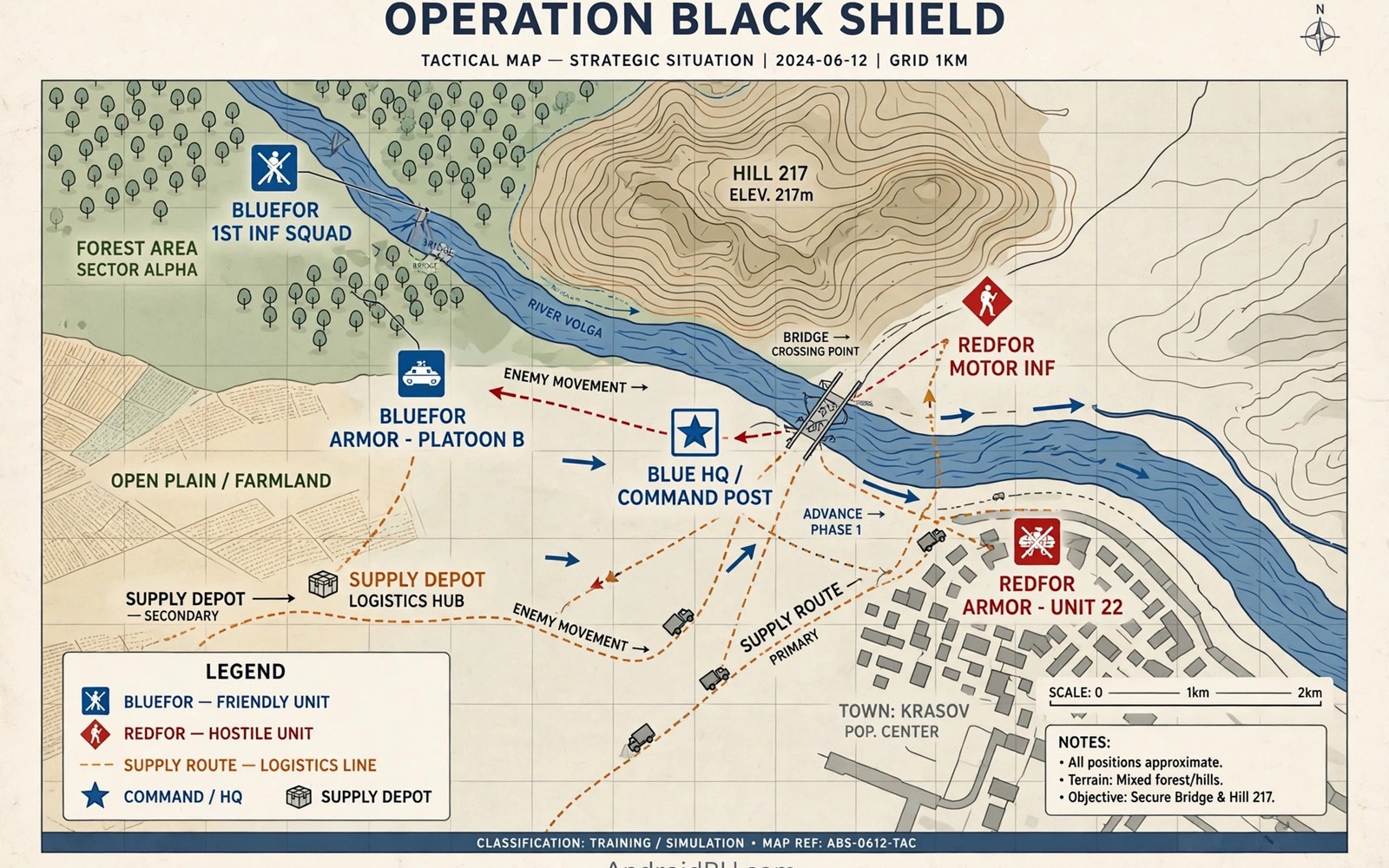
Best War Strategy Games Featuring Realistic Combat Mechanics
Most war games let you win by building the biggest pile of units and throwing it at the enemy until something breaks. That approach gets old fast. The games on this list work differently. They ask you to read the ground, protect a flank, keep a supply line open, and pull a squad back before it gets wiped out. A single bad decision can cost you a veteran unit you spent twenty minutes keeping alive, and that sting is exactly what makes the victories feel earned.
I spent weeks playing the games below on Android, on a tablet, and on PC, comparing how their battles actually play rather than how their trailers look. Some are slow and methodical. Some are frantic. All seven reward thinking like a commander instead of clicking like a collector. If you have ever lost a battle and known it was your fault, not the game’s, you will recognise the feeling these titles chase.
This guide gives you a real ranked list, a comparison table, and honest pros and cons for every game. You will also find advice on touch controls, tablet play, and the mistakes that wreck most first campaigns. Pick one game, play three missions with it, and judge it on how its battles feel in your hands.
What realistic combat mechanics mean in war strategy games
Realistic combat in a strategy game does not mean the graphics look like a documentary. It means the rules of the battle behave the way a real fight would. A squad in the open dies fast. A squad behind a stone wall holds far longer than its numbers suggest. Tanks fear infantry with anti-tank weapons in a narrow street. Artillery fired blind hits nothing. When those rules are consistent, you can plan around them, and planning becomes the game.
The strongest titles in this genre share a few habits. They model line of sight, so a unit cannot shoot what it cannot see. They model cover, suppression, and morale, so a pinned squad stops being useful even before it is destroyed. They make ammunition, fuel, and reinforcements finite, so charging everywhere is a quick road to defeat. Put together, those systems turn each map into a puzzle with more than one answer.
Line of sight, cover and terrain that change every fight
Cover is the first realistic mechanic most players notice, because it changes every order you give. Moving a rifle squad across an open field in Company of Heroes feels reckless for a reason: it is reckless. The same squad behind a wall, in a crater, or inside a building becomes a problem the enemy has to solve with mortars, grenades, or a flank. Terrain stops being decoration and starts being the argument you win or lose.
Height matters too. A machine gun on a ridge covers a road. A tank hull-down behind a rise shows only its turret. A forest hides an ambush until it is too late. Games that model these details give you a reason to study the map before the first shot, and they punish players who treat every tile as identical.
How fog of war punishes careless scouting
Fog of war is the mechanic that separates commanders from button mashers. When you cannot see the enemy, you have to guess, probe, and accept risk. Sending a cheap scout forward before your main force is not a chore. It is the difference between walking into a prepared kill zone and spotting it in time. I learned this the hard way in Total War: MEDIEVAL II, marching an army into a forest and meeting spearmen I never saw coming.
Why high ground and choke points decide battles
A narrow bridge or a mountain pass lets a small force hold off a large one, and the best games in this list know it. Choke points reward patience and punish greed. If you hold the bridge, you do not need the bigger army. You need the discipline to stay put, keep your ranged units safe, and let the enemy spend itself against your line. That discipline is a skill the game teaches you one defeat at a time.
Supply, morale and fatigue shape wars more than raw firepower
An army that cannot eat, refuel, or rearm stops being an army. Several games below model this directly. In Supremacy 1914, provinces far from your core take longer to supply. In Total War, an army cut off from friendly territory loses men every turn. In Art of War 3, a base that loses its supply buildings cannot replace losses. These rules force you to think about the map as a network, not a pile of objectives.
Morale works the same way. Units that watch their neighbours break will often break themselves. A cavalry charge into the rear of an engaged unit can rout it without killing many soldiers. That is how real battles were often won: not by annihilation, but by breaking the enemy’s will to stand. Games that model morale give flanking and timing a weight that raw damage numbers never will.
How I picked these seven war strategy games
Every game below had to clear four tests. First, combat must follow consistent rules for cover, sight, range, and morale, not just bigger numbers beating smaller ones. Second, tactics must matter more than grinding: a clever player with fewer units should be able to win. Third, the game must be playable today on Android or PC without hunting down dead servers. Fourth, it must have enough depth to stay interesting after the first ten hours.
I left out pure shooters, even popular ones, because aiming a rifle is not commanding an army. I also left out games where the strategy layer is only a menu between identical auto-battles. The seven that remain cover real-time tactics, turn-based campaigns, base building under fire, and long multiplayer wars, so there is a realistic combat game here for almost every taste.
- Combat rules you can learn and trust: cover, sight lines, range, and morale behave the same way every battle, so skill grows with practice.
- Tactics beat numbers: flanking, ambushes, and combined arms decide fights more often than raw unit counts.
- Playable now: each game runs on current Android devices or PC, with an active player base or a complete single-player campaign.
- Depth that lasts: campaigns, skirmish modes, or multiplayer that still offer new problems after dozens of hours.
The seven best war strategy games with realistic combat mechanics
Each game below gets the same treatment: what it does, who it suits, what it does well, where it frustrates, and a verdict. Play the first three on the list if you want the purest tactics. Jump to the later entries if you prefer base building, naval combat, or long multiplayer campaigns.
1. Company of Heroes
Company of Heroes remains the benchmark for squad tactics on a small map. You command infantry squads, machine gun teams, mortars, and tanks across Second World War battlefields where every wall, crater, and building changes the odds. Squads gain veterancy as they survive, so a unit you kept alive through three missions fights noticeably better than a fresh replacement. That persistence makes you care about retreat, and retreat is a real order here, not a surrender.
The Android and iOS versions, ported by Feral Interactive, keep the full PC campaigns and add touch controls that work surprisingly well once you learn the camera gestures. The game suits players who love tense, small-scale fights where a single grenade or a well-placed machine gun turns a battle. Matches are usually decided by positioning and timing, not by who built more tanks.
- Pros: outstanding cover and suppression systems; veteran squads create real attachment; full campaigns on mobile with no stripped-down mode.
- Pros: skirmish against the AI teaches tactics at your own pace; every faction plays differently.
- Pros: maps reward flanking and combined arms instead of head-on charges.
- Cons: the learning curve is steep for the first few missions, and the AI punishes careless advances.
- Cons: later missions can feel long, and touch controls take a few hours to feel natural.
Verdict: start here if you want the purest realistic squad combat on this list. It is demanding, fair, and still the game other tactics titles are measured against.
2. Total War: MEDIEVAL II
Total War: MEDIEVAL II pairs a turn-based campaign map with real-time battles, and the battles are where its realism lives. Cavalry charges break lines, spearmen brace against horses, archers lose effectiveness in rain, and a general’s death can rout an entire army. The Feral Interactive mobile port brings the full game, including the Kingdoms expansion content, to Android tablets and phones.
This is the game for players who want the whole war, not just the battle. You manage diplomacy, religion, trade, and succession on the campaign map, then fight the consequences on the battlefield. A siege is a slow, grinding affair where walls, towers, and gatehouses matter, and a battle fought in a forest feels completely different from one fought on open plains.
- Pros: huge variety of factions, units, and campaign paths; battles model morale, fatigue, and terrain in real depth.
- Pros: sieges, ambushes, and river crossings all play by distinct rules.
- Pros: the mobile port is the complete game, not a cut-down companion app.
- Cons: the campaign can feel slow between wars, and the interface is dense on a phone screen.
- Cons: older AI sometimes makes odd decisions on the campaign map.
Verdict: pick this one if you want a campaign that lasts weeks and battles where morale and terrain decide the day. A tablet makes it far more comfortable.
3. Rusted Warfare – RTS
Rusted Warfare is a classic real-time strategy game in the Command and Conquer tradition, built by one developer and still updated. You build a base, harvest resources, raise an army of tanks, aircraft, ships, and infantry, and fight across land, sea, and air. What earns it a place here is how its units behave: range, line of sight, and unit counters matter, and a mixed force beats a single-unit spam almost every time.
The game suits players who want a proper RTS on their phone without timers, energy systems, or pay-to-win shortcuts. It has a campaign, skirmish against AI, online multiplayer, and a huge library of community mods. I keep returning to it because a match against a hard AI still punishes lazy base layouts and rewards scouting.
- Pros: a complete RTS with no timers or energy gates; land, sea, and air combat in one game.
- Pros: strong mod support and custom maps extend it far beyond the campaign.
- Pros: runs well on modest phones and works fully offline.
- Cons: the graphics are functional rather than pretty, and the interface is crowded on small screens.
- Cons: new players get little hand-holding, so the first skirmishes can feel brutal.
Verdict: the best honest RTS on Android for players who want base building, unit counters, and real battles without free-to-play traps.
4. Art of War 3: Global Conflict
Art of War 3 is a modern real-time strategy game built for touchscreens, with two factions, the Confederation and the Resistance, fighting over territory in live multiplayer and campaign missions. You build a base, train infantry, armour, and aircraft, and fight for control points. Fog of war is strict: you cannot attack what you cannot see, so scouts and radar matter as much as tanks.
This one suits competitive players who want quick, tense multiplayer matches with real tactics. Base placement, walling, and unit composition all matter, and a rush that ignores scouting usually dies to a prepared defence. The campaign teaches the systems gradually, which makes it a friendlier first RTS than Rusted Warfare for many players.
- Pros: designed for touch from the start, with controls that feel natural on a phone.
- Pros: fog of war, unit counters, and base defence create genuinely tactical matches.
- Pros: regular updates, tournaments, and a live multiplayer scene.
- Cons: progression and upgrades take time, and some units feel slow to earn.
- Cons: multiplayer can be unforgiving once you climb past the beginner ranks.
Verdict: choose Art of War 3 if you want competitive real-time strategy built for a phone, with fog of war that makes every scout run matter.
5. World of Tanks Blitz
World of Tanks Blitz takes the tank combat of the PC original and rebuilds it for seven-versus-seven mobile battles. Every tank has armour thickness, weak spots, and a gun with real penetration values. Angling your hull, hiding your lower plate, and using a ridge to show only your turret are not advanced tricks. They are the basic skills that decide who survives a duel.
The game suits players who love vehicle combat with honest ballistics. Shells can bounce, tracks can be destroyed, and a smaller tank that flanks a heavy can win through positioning. Maps are compact, matches last a few minutes, and the garage holds hundreds of real historical and prototype tanks to learn.
- Pros: armour, penetration, and weak spots are modelled in real depth for a mobile game.
- Pros: short matches fit a phone session, and the tank roster is enormous.
- Pros: crew skills and equipment let you tune a tank to your play style.
- Cons: progression toward top-tier tanks takes a long grind without spending.
- Cons: a few maps favour certain tank classes more than others.
Verdict: the pick for players who want realistic vehicle combat in short bursts, where angling armour and knowing weak spots beat raw firepower.
6. Rise of Kingdoms
Rise of Kingdoms is a civilisation-building strategy game where you found a city, choose a historical civilisation, and expand across a shared kingdom map. Combat happens in real time on that map: armies march, gather, and fight where they stand, and terrain, commander pairings, and troop types decide the result. A cavalry army that catches archers in the open wins. The same army charging into a prepared infantry line loses.
This game suits social players who enjoy long campaigns with an alliance. Wars are won by coordination: rallies, reinforcements, and timing matter more than any single army. If you like building a city, researching technology, and then testing it all in kingdom-wide wars that last days, this is the most approachable large-scale option on the list.
- Pros: real-time open-field battles with commanders, troop counters, and terrain effects.
- Pros: alliance warfare rewards planning and teamwork over solo spending.
- Pros: many civilisations and commanders give the game real replay value.
- Cons: the pace is slow, and late-game progress depends heavily on alliance activity.
- Cons: events and upgrades constantly compete for your attention.
Verdict: play Rise of Kingdoms if you want a long, social war game where marching, rallying, and picking the right fight matter more than reflexes.
7. Supremacy 1914
Supremacy 1914 is a slow real-time grand strategy game set in the First World War, where matches run for days or weeks in real time. You manage a nation: production, diplomacy, espionage, and armies that move across a map of Europe province by province. Combat is deliberately slow and logistical. An army far from supply fights worse, artillery needs time to set up, and a naval blockade can starve a nation that looks strong on paper.
This is the game for patient planners. There is no twitch skill here, only judgement: when to declare war, where to concentrate force, and whether a province is worth the men it will cost. I have watched carefully built alliances fall apart over one badly timed attack, and that is the point. The game models the First World War as a problem of logistics and politics, not just guns.
- Pros: genuine grand strategy with diplomacy, espionage, and supply lines that shape every war.
- Pros: long-form matches reward patience and planning over fast reactions.
- Pros: a large, active community and many map variants.
- Cons: the real-time pace is very slow, and a match demands attention over many days.
- Cons: the interface is dense, and new players can feel lost in the first match.
Verdict: choose Supremacy 1914 if you want war as logistics and diplomacy, where a supply line matters as much as a battleship.
War strategy games compared side by side
The table below puts the seven games on the same footing. Use it to narrow the list to two or three, then play a few missions in each before you commit. The right game is the one whose pace matches your free time and whose combat rules click with how you like to think.
| Game | Combat style | Platforms | Realism focus | Best for |
|---|---|---|---|---|
| Company of Heroes | Real-time squad tactics | Android, iOS, PC | Cover, suppression, veterancy | Tense small battles |
| Total War: MEDIEVAL II | Turn-based campaign, real-time battles | Android, iOS, PC | Morale, terrain, fatigue | Long campaigns |
| Rusted Warfare | Real-time strategy | Android, PC | Unit counters, range, sight | Classic base building |
| Art of War 3 | Real-time strategy | Android, iOS | Fog of war, unit counters | Competitive mobile play |
| World of Tanks Blitz | Team vehicle combat | Android, iOS, PC | Armour, penetration, weak spots | Short tank battles |
| Rise of Kingdoms | Real-time open-field battles | Android, iOS, PC | Troop counters, commanders | Social alliance wars |
| Supremacy 1914 | Slow real-time grand strategy | Android, iOS, PC | Supply, diplomacy, logistics | Patient planners |
Read the table as a starting point, not a final ranking. Company of Heroes wins on pure tactics, Total War wins on campaign scale, and Rusted Warfare wins on honest value. Your best game depends on whether you have ten minutes or ten days.
Real-time battles or turn-based campaigns: which combat style suits you
Real-time games reward quick judgement. You make a decision, watch it play out in seconds, and live with it. Turn-based games reward deep planning. You can sit with the map, weigh three plans, and pick the best one. Neither style is smarter. They test different skills, and most players have a clear preference once they have tried both.
On a phone, real-time games can feel rushed, especially on a small screen where your fingers cover the units you are trying to move. Turn-based games forgive a small screen because nothing happens while you think. That is one reason Total War and Supremacy 1914 work so well on mobile, even though their interfaces are dense.
When real-time tactics feel right
Pick a real-time game when you want tension and immediate feedback. A flank that works pays off in seconds. A mistake costs you a squad right away, and you learn fast. Company of Heroes and Art of War 3 both shine here, because their battles are short enough to replay and learn from. If you have half an hour and want a complete battle with a beginning, middle, and end, real-time is your style.
Keeping calm when a real-time battle speeds up
The trick I learned is to pause the plan, not the game. Before a fight starts, decide your fallback point and your retreat route. When the battle speeds up, you are not inventing a plan under fire. You are following one you already made. That single habit cut my losses in half in Company of Heroes skirmishes.
When turn-based campaigns feel right
Pick a turn-based campaign when you want the war to breathe. Total War lets you fight a battle, then spend turns rebuilding, negotiating, and planning the next one. Supremacy 1914 stretches that further, with days of real time between decisions. These games suit players who enjoy the map as much as the battlefield, and who like a campaign that is still there tomorrow.
Playing war strategy games on Android tablets and touchscreens
War strategy games live or die by their controls, and touch is the hardest test of all. A mouse gives you precision. A finger gives you a blunt instrument that covers the very unit you are trying to select. The games above handle this in different ways, and the difference shows within minutes of play.
On a tablet, the extra screen space changes everything. You can see the whole front line, select squads without zooming, and keep the minimap in view. That is why tablet strategy play suits these games so well: a 10-inch or larger screen turns a cramped phone game into a proper command table. If you own a tablet, try Total War: MEDIEVAL II and Company of Heroes there first.
On a phone, the games designed for touch win. Art of War 3 and Rusted Warfare both built their controls around taps and drags, with large buttons and sensible camera gestures. The best touchscreen strategy games share a few habits: tap to select, drag to move, pinch to zoom, and a clear way to group units. Before you judge a phone RTS, spend an hour learning its gestures. The first twenty minutes are always clumsy.
Whatever device you use, the skill that matters most is tactical army command: keeping your force together, scouting before you advance, and refusing a bad fight. A player who commands carefully on a phone will beat a careless player on a tablet every time. Controls help. Judgement wins.
Mistakes that ruin a realistic war campaign
Most lost campaigns share the same few errors. The good news is that all of them are fixable, and fixing one usually fixes the next. Watch for these in your first ten hours with any game on this list.
- Advancing without scouting: if you cannot see the enemy, assume they can see you, and send a cheap unit forward first.
- Fighting on open ground: always move from cover to cover, and let the enemy cross the open space instead.
- Ignoring supply: an army that outruns its support dies quietly, so keep your lines short and guarded.
- Replacing veterans carelessly: a surviving squad is worth more than two fresh ones, so retreat a veteran rather than lose it.
- Attacking everywhere at once: pick one objective, concentrate force there, and hold the rest with the minimum.
The pattern behind all five is the same: patience beats enthusiasm. A commander who waits for the right fight wins more than one who starts every fight available. That said, patience is not passivity. When your scouts report a weak flank, hit it hard and fast, then consolidate before the enemy recovers.
Frequently asked questions about war strategy games with realistic combat
Which war strategy game has the most realistic combat mechanics on Android?
Company of Heroes is the strongest answer for pure tactics, because cover, suppression, and veterancy shape every fight. Total War: MEDIEVAL II is the strongest answer for large battles, because morale, fatigue, and terrain decide outcomes. If you want both in one library, install those two first and compare them yourself over a weekend.
Are war strategy games with realistic combat hard for beginners?
They are harder than arcade strategy games, but they are fair. Start on the easiest difficulty, play the campaign missions in order, and use skirmish mode to practise one mechanic at a time. Most players feel comfortable after five or six missions, and the difficulty comes from decisions you can learn, not reflexes you cannot train.
Can I play these war strategy games offline?
Several of them, yes. Company of Heroes, Total War: MEDIEVAL II, and Rusted Warfare all offer full single-player campaigns and skirmish modes that work without a connection. Art of War 3, Rise of Kingdoms, and Supremacy 1914 need a connection for multiplayer and live events, though some offer campaign content offline. World of Tanks Blitz is online only, since every battle is against other players.
Do I need a tablet to enjoy war strategy games on Android?
No, but a tablet helps a lot for the complex ones. Total War and Company of Heroes are far more comfortable on a larger screen, while Art of War 3, Rusted Warfare, and World of Tanks Blitz were designed for phones and play well on them. If you only have a phone, start with the touch-first games and move to the tablet-friendly ones later.
Which war strategy game should you play first
If you want one answer, start with Company of Heroes. Its battles teach cover, suppression, flanking, and retreat in the first few missions, and those lessons carry into every other game on this list. If you prefer a slower pace, start with Total War: MEDIEVAL II and let a campaign unfold over a week. If you want a free-to-start RTS on your phone tonight, start with Rusted Warfare or Art of War 3.
Whichever you pick, give it three honest sessions before you judge it. Learn its scouting, learn its cover rules, and fight one battle where you refuse a bad position and win from a good one. That is the moment these games click, and once it clicks, the genre rarely lets you go. Open your chosen game now, play its first mission, and see how your decisions hold up when the shooting starts.

