

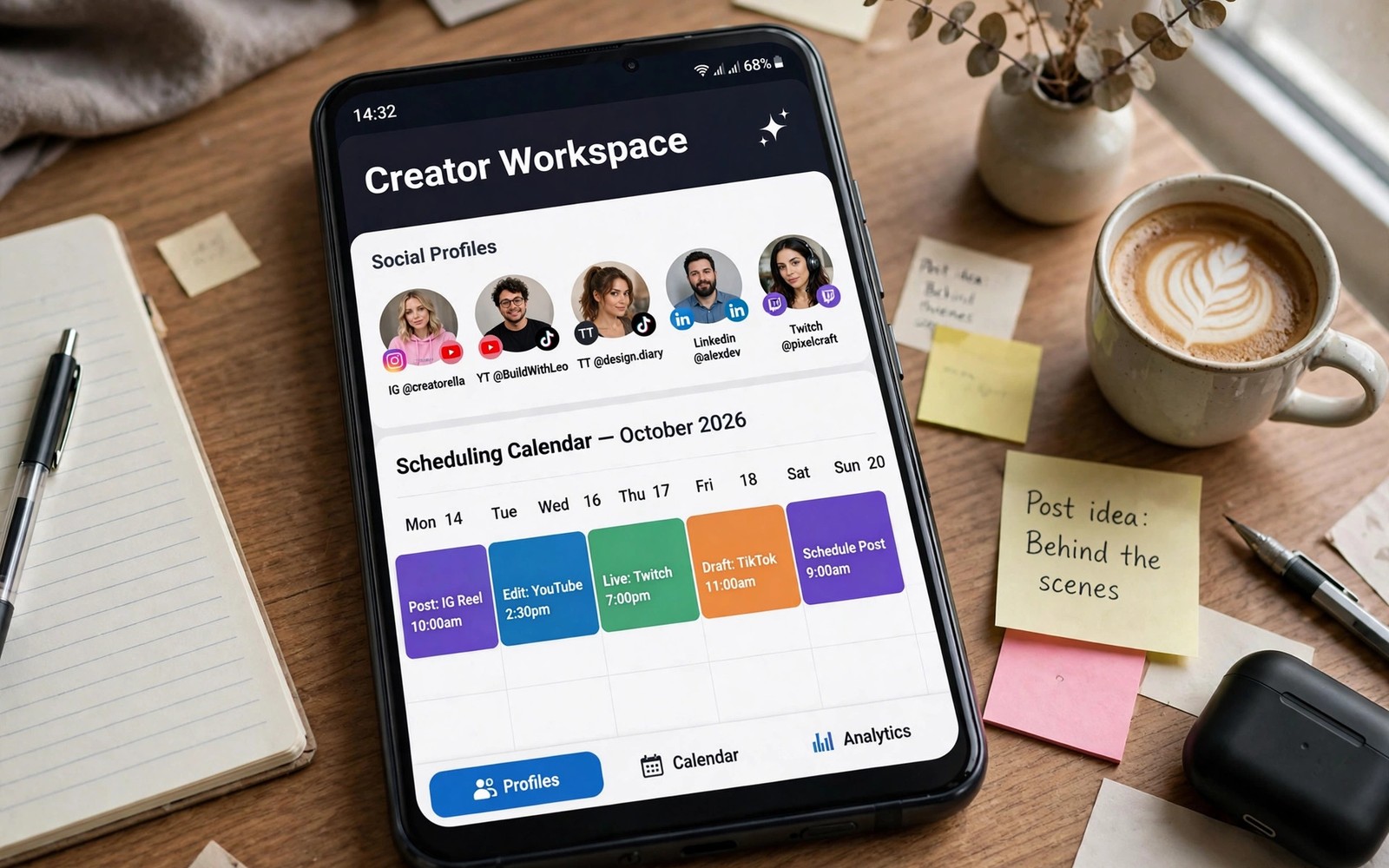
Top Android apps for managing multiple social media profiles solve the chaos of switching accounts all day. Creators and small teams juggle personal and brand and client accounts across several networks. A manager app centralises posting and scheduling and replies in one place. This article shows how to run many profiles without losing content or sanity.
Start by listing every profile you truly manage and the network each belongs to. A clear list prevents duplicate posts and wrong account accidents. Choose a manager that supports all networks on your list rather than one that covers only the largest. Creators publishing video can pair a manager with high-performance apps for content creators for editing before scheduling. A manager that fits your list beats a famous manager that misses a network.
Use this article as a checklist rather than a shopping list. Pick the ideas that match your routine and ignore the rest until your needs change.
Check the data use of a new app during its first week. An app that syncs large files in the background can surprise you on a capped plan. Wi-Fi only sync for heavy apps keeps mobile data for urgent use.
Write down the settings you change when you set up a new app. A short note helps you restore the setup after a reset or a new phone. Good notes turn a one time setup into a repeatable routine.
Try one change at a time when you rebuild your phone setup. Install two or three apps first and use them for real tasks before you add more. A slow start reveals problems early while a rushed setup hides them until they hurt.
Account switching without errors
Safe switching starts with clear profile labels and colours inside the manager. Label each account with brand and network so a glance confirms the active profile. Always check the active account banner before you post. That two second check prevents the most embarrassing social mistake.
Keep personal and brand accounts in separate manager workspaces when the app supports them. Separation reduces accidental cross posting. Log out of rarely used accounts instead of keeping them always active. Fewer active accounts mean fewer chances for error.
Set a reminder to revisit a new app after thirty days. A month of use shows whether the app became a habit or a forgotten icon. Remove habits that faded and keep tools that proved their worth.
Share a useful app with a friend only after you have used it for a week. A recommendation based on real use carries more weight than one based on a store page. Honest recommendations help friends avoid the same trial and error you already did.
Review app settings after a major update because updates sometimes reset a preference. A two minute settings check after an update prevents silent changes to privacy or sync. Updates should improve an app and never surprise its owner.
Scheduling across networks
Scheduling lets you plan a week of posts in one sitting and publish at peak times automatically. Draft posts per network because each network favours different lengths and formats. A post copied blindly across networks looks lazy and performs poorly. Tailor each version while keeping the core message consistent.
Review the scheduled queue each morning for news that makes a planned post inappropriate. A scheduled joke during a crisis harms a brand fast. Pause the queue when major news breaks and resume only after review. Scheduling needs a human safety check daily. Travellers can also use travel apps for flights and navigation alongside the tools above.
Protect your accounts with a second factor wherever the app offers it. A second factor blocks most automated attacks even when a password leaks. Enable it on mail and cloud and banking apps first because those guard the rest.
Protect your accounts with a second factor wherever the app offers it. A second factor blocks most automated attacks even when a password leaks. Enable it on mail and cloud and banking apps first because those guard the rest.
A good setup starts with a clear purpose for each app on your phone. Open the app once a day for a week and notice whether it saves time or adds noise. Keep the apps that earn their place and remove the ones that only fill space on the home screen.
Replies and inbox management
A unified inbox gathers comments and messages from many profiles into one stream. Reply to urgent messages first and batch similar replies to save time. Use saved replies for frequent questions but personalise the first line so replies never feel robotic. A unified inbox turns chaos into a queue.
Assign replies to team members when the manager supports roles. Clear ownership prevents duplicate replies and missed messages. Check the inbox twice daily at set times rather than all day. Batching replies protects focus while it keeps response times reasonable.
Permissions deserve a quick review before you trust a new app with daily work. Grant only the access the app truly needs for its main job and leave the rest off until a feature asks for it. You can change any permission later in system settings without losing your data.
Storage and battery shape how well any app performs over time. Check storage use once a month and clear cached files that grow without adding value. A phone with free space runs smoother and updates install without errors.
Try one change at a time when you rebuild your phone setup. Install two or three apps first and use them for real tasks before you add more. A slow start reveals problems early while a rushed setup hides them until they hurt.
adb shell dumpsys account
adb shell cmd account list
adb shell settings get global auto_sync
The account commands above follow the pattern used in Android developer guides for inspecting accounts and sync state on a device. The same guides explain that account inspection shows which services hold active sessions.
Analytics that guide content
Analytics should answer which posts earned attention and which fell flat. Compare reach and replies across similar posts to find patterns in topic and timing. Double down on formats that consistently perform and drop formats that never connect. Data guides creativity instead of replacing it. For planning posts you may also add daily organization apps for the same routine.
Export a monthly analytics summary for clients or personal review. A simple summary of top posts and growth trends supports honest conversations about what works. Avoid vanity metrics that look good without driving real engagement. Replies and saves matter more than raw views.
Updates matter because developers fix bugs and close security gaps in each release. Turn on automatic updates for trusted apps and read the changelog when an update changes a feature you rely on. Skip an update only when you have a clear reason and a backup plan.
Try one change at a time when you rebuild your phone setup. Install two or three apps first and use them for real tasks before you add more. A slow start reveals problems early while a rushed setup hides them until they hurt.
Test a new app in a real situation before you trust it with important work. A short test on a busy day reveals speed problems that a quiet demo hides. Keep the test short and focused so you can judge fairly without wasting an afternoon.
Security for many accounts
Many accounts mean many passwords and many sessions to protect. Use a password manager and two factor authentication on every profile. Review active sessions monthly and revoke devices you no longer use. A compromised manager account risks every profile at once so protect it strongly.
Limit team access to only the profiles each member needs. A junior member rarely needs full access to every brand account. Least privilege reduces damage from a mistake or a breach. Review team roles quarterly as members join and leave.
Try one change at a time when you rebuild your phone setup. Install two or three apps first and use them for real tasks before you add more. A slow start reveals problems early while a rushed setup hides them until they hurt.
Check how an app handles your data before you sign in. Read the privacy screen inside the app and look for clear controls to export or delete your content. Strong defaults beat long promises when you compare two similar apps.
Review app settings after a major update because updates sometimes reset a preference. A two minute settings check after an update prevents silent changes to privacy or sync. Updates should improve an app and never surprise its owner.
Common mistakes
A common mistake is posting the same content to every network without adapting format. Another mistake is keeping dozens of accounts active which invites wrong account posts. A third mistake is ignoring the scheduled queue during breaking news. Label accounts and tailor posts and check the queue daily.
Storage and battery shape how well any app performs over time. Check storage use once a month and clear cached files that grow without adding value. A phone with free space runs smoother and updates install without errors.
Compare two similar apps on the same task on the same day. A direct comparison shows speed and clarity differences that feature lists hide. Pick the winner promptly and remove the loser so data never splits across two tools.
A backup turns a phone problem into a short delay instead of a lost week. Sync important notes and files to a cloud account you control and test the restore step once. A backup you never tested is only a hope and not a plan.
Frequently asked questions
Can one app manage all social networks?
Most managers cover major networks but some niche networks need separate apps. Check network support against your exact list before you pay.
Is scheduling safe for engagement?
Scheduling is safe when posts match each network format and timing. Poorly adapted scheduled posts perform worse than timely manual posts.
How do I avoid posting to the wrong account?
Check the active account banner before every post and use colour labels per brand. A two second check prevents most accidents.
What to do next
Your concrete next step is to list all your profiles tonight and move them into one manager app tomorrow. Label each account clearly and schedule your next three posts from the manager. One managed week shows the time saved.
Notifications decide whether an app helps you or interrupts you all day. Keep alerts on for messages that need a fast reply and silence the rest. A quiet phone still delivers urgent news while it protects your focus.
The best setup is the one you actually use every day. Choose tools that fit your routine and let the rest go without regret.

