

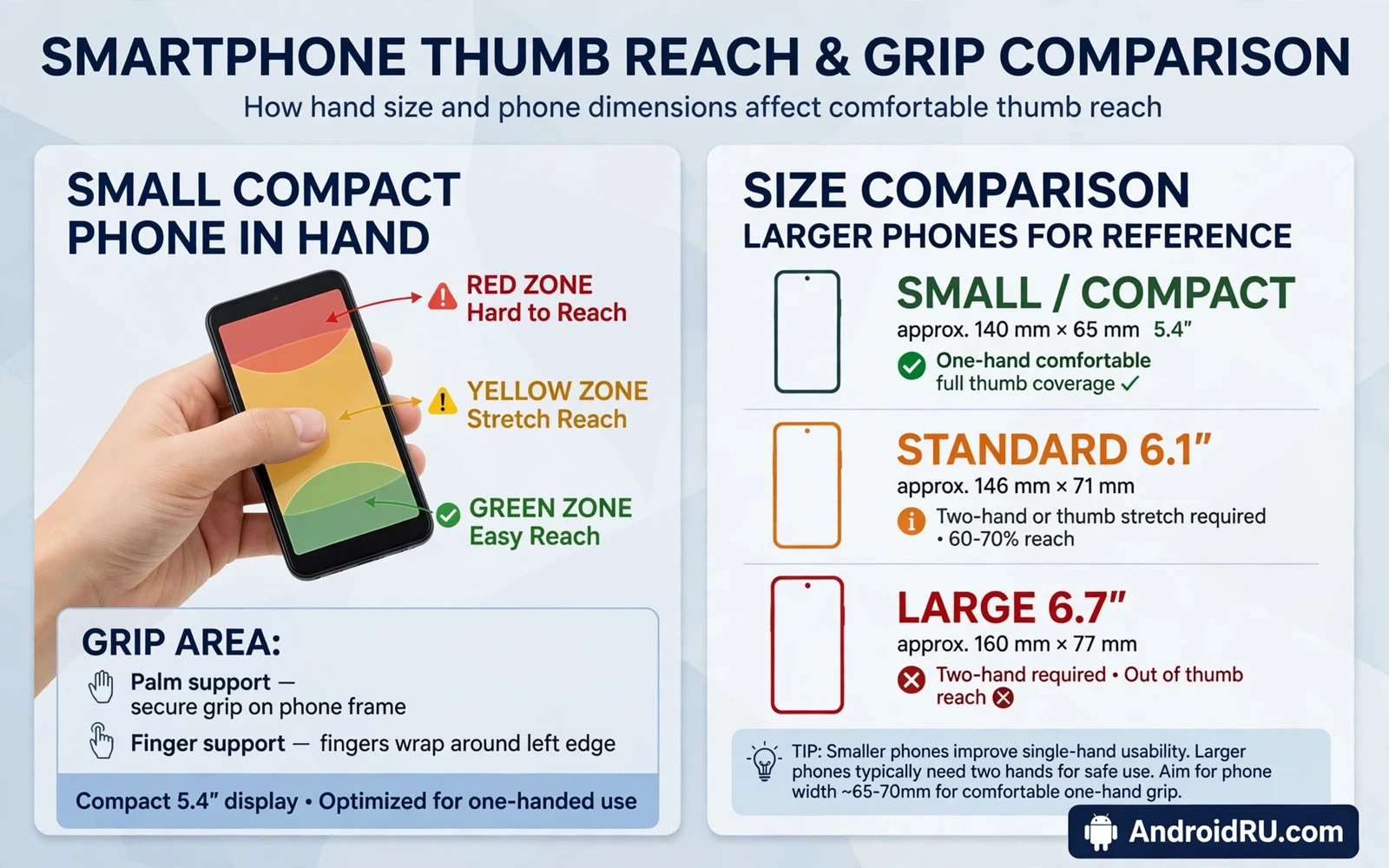
Why Compact Phones Still Matter
A phone that fits in one hand changes how you move through the day. You can answer a message while holding a bag or open a map while walking or check a boarding pass while carrying coffee. A large phone often demands two hands for the same simple task and that extra effort adds up across hundreds of small interactions every week. Compact phones also slip into a jacket pocket without a bulge and they rest more naturally in a small palm during a long call. The market has moved toward large screens for video and gaming and reading. That shift makes sense for media lovers yet it leaves many buyers without a comfortable option for daily life. A compact phone is not a compromise for everyone. For the right buyer it is the more practical tool because it matches the hand that holds it.
Size is only the starting point for a good compact phone. Weight matters just as much because a heavy small phone still tires the wrist during long use. Balance matters too because a phone that feels top heavy will shift in the grip when you reach for the far corner of the screen. Button placement matters because a power key that sits too high forces an awkward stretch. Software helps as well because a one-handed mode can pull the whole interface down toward the thumb. When you shop for a compact phone you should judge the whole package rather than the diagonal screen size alone. Hold the phone if you can and try to reach the top corner with your thumb without shifting your grip. That single test tells you more than any specification sheet ever will.
What Counts As Compact In A Modern Market
Modern compact phones usually sit well below the largest flagships in height and width even when their screens look generous on paper. Thin bezels let a modest body carry a screen that once needed a much larger frame. That is why two phones with similar screen sizes can feel very different in the hand. Width is the dimension that decides one-handed comfort more than height because the thumb must travel across the screen from one side to the other. A narrow body keeps that journey short and keeps the far edge within reach. A tall narrow phone can still feel comfortable even with a large display because the thumb moves mostly up and down rather than across.
Weight completes the picture of compact comfort. A phone under a moderate weight feels light during a long scroll session and it stays stable when you tap with one thumb. A heavier phone pulls the wrist downward and invites a second hand for support. Materials change the feel as well because a matte back grips the palm better than a slick glass back. A case adds protection yet it also adds width and weight so a compact phone paired with a bulky case can lose its main advantage. If you plan to use a case every day then judge the phone with the case fitted rather than bare. The best compact phone is the one that still feels small after you add the protection you actually use.
Shoppers who are torn between a tiny pocket phone and a folding screen can weigh both shapes in the flip versus foldable comparison before deciding which design earns space in a small pocket every day. Note takers who sketch and sign documents on the go may prefer the stylus phone guide which explains built-in pens and active pens in plain terms. Music lovers who still trust a wired connection can also study the headphone jack phone guide to see why a physical port remains a practical daily feature.
Grip And Reach Tests You Can Do In A Store
A quick in-store test beats a long review when you judge comfort. Start by holding the phone in your dominant hand with a relaxed grip and no finger gymnastics. Try to tap the top far corner with your thumb while keeping the phone steady. Then try to pull down the notification shade with the same thumb. Then type a short sentence with one thumb and watch whether the phone wobbles or slides. If the phone shifts in your hand during any of these moves then daily use will demand constant micro adjustments. Those adjustments sound trivial yet they cause fatigue and they raise the risk of a drop over months of use.
Reach matters for more than the home screen. Camera controls sit at the bottom of most camera apps and that placement helps one-handed shooting. Volume keys and the power key should fall under the thumb or the index finger without a stretch. A fingerprint sensor on the side often suits small hands better than an in-display sensor placed high on the screen. Face unlock can help when your hands are busy yet it still needs a comfortable grip for everything after unlock. For a deeper look at phones that balance size and everyday power you can read a comparison that weighs compact design against the wider flagship field and the value of a well chosen mid-range model. The right test is always your own hand and your own daily routine rather than a stranger review score.
Software That Makes Small Phones Feel Smaller
Good software can rescue a phone that is slightly too large and bad software can ruin a phone that is physically perfect. One-handed mode shrinks the display toward the bottom corner and it turns a stretch into a simple tap. Reachability gestures let you pull the top of the screen down without moving your hand. A compact keyboard layout narrows the keys toward one side and it reduces thumb travel while typing. Custom launchers can move icons closer to the bottom of the home screen and they can shrink grid spacing so everything sits within thumb range. These tools do not replace good hardware yet they extend the comfort of a phone that is close to ideal.
Notification handling also shapes one-handed comfort in a quiet way. A phone that groups alerts well lets you clear a whole stack with one swipe rather than many taps. Quick replies from the notification shade let you answer without opening a full app. Voice input helps when typing with one thumb feels slow or awkward. A well tuned compact phone treats the thumb as the main input tool and it keeps common actions near the bottom of the screen. When you compare compact models you should check these software features with the same care that you give to the processor or the camera. A phone that respects the thumb will feel better every single day.
Battery And Camera Trade-Offs On Small Bodies
A small body leaves less room for a battery and that physical fact shapes every compact phone. Makers balance battery size against thickness and weight and they often choose a slimmer profile over maximum endurance. Efficient processors and well tuned displays can still deliver a full day of normal use from a modest battery. Heavy gaming or long video sessions will drain a small phone faster than a large phone with a bigger cell. If you spend most of your day on messages and maps and calls then a compact phone will usually last until bedtime without drama. If you stream video for hours then you should carry a small power bank or choose the compact model with the strongest endurance record.
Camera hardware faces a similar space squeeze in a compact body. Large sensors and long zoom lenses need depth and width that a small frame cannot always provide. Most compact phones still take excellent daylight photos and strong portraits because software processing has improved so much. Low light results and long zoom remain the areas where large phones keep a clear edge. Buyers who photograph mainly friends and food and travel scenes will rarely notice the gap. Buyers who chase distant subjects or shoot in very dark rooms should weigh that trade-off honestly. A compact phone asks you to choose comfort first and accept a camera that is very good rather than class leading in every exotic situation.
Choosing The Right Compact Phone For You
Start your choice with your hand size and your daily tasks rather than with a brand name. A commuter who reads and messages one-handed needs a narrow light phone with a bright screen for outdoor use. A parent who juggles a child and a phone needs a grippy back and a case that does not add much bulk. A traveller who navigates on foot needs strong outdoor visibility and a battery that survives a long day of maps. Each of these buyers can end up with a different compact phone and each choice can be correct. The shared test stays the same across all of them. The phone must feel secure in one hand during the tasks that fill your day.
Price shapes the compact field in a useful way because many compact phones sit in the mid-range rather than at the flagship peak. That placement keeps the price friendly while still delivering smooth performance for everyday apps. A mid-range compact phone often gives up a premium zoom camera or wireless charging extras yet it keeps the core experience intact. A flagship compact phone keeps those extras and it suits buyers who want small size without giving up top features. Readers who want to see how compact models sit beside folding designs can explore a head-to-head look at flip and foldable shapes and how each shape changes pocket feel and one-handed reach. Your budget and your feature priorities will point to one of these two paths and both paths can end with a phone you enjoy holding.
Living With A Compact Phone Day To Day
Daily life with a compact phone feels calmer once the novelty fades. Pockets stay lighter and the phone disappears until you need it. One-handed typing becomes natural rather than a stretch exercise. Video watching feels smaller yet most buyers adapt quickly because the screen still shows plenty of detail at normal viewing distance. Reading long articles benefits from a comfortable grip more than from a huge canvas because you hold the phone for a long time. Gaming is the one area where a small screen asks for patience because on-screen controls crowd the display. A controller accessory can solve that gap for serious mobile gamers who still want a small daily phone.
Protection and accessories deserve the same care as the phone itself. A slim case preserves the compact feel while guarding against drops. A screen protector keeps the display safe without changing the grip much. A compact phone also pairs well with a smartwatch because the watch handles quick alerts and the phone stays in the pocket for longer stretches. That pairing reduces the number of times you pull the phone out each day and it makes one-handed use even less of a burden. The compact phone is not a relic of an older era. It is a deliberate choice for buyers who value comfort and control over maximum screen area and it rewards that choice every time you use it with one hand.
Keeping A Compact Phone Comfortable Over Time
Comfort fades when a phone accumulates clutter and worn accessories so a short routine keeps a compact phone feeling new. Clean the case edges and check that the case still grips the body without slipping. Replace a stretched case promptly because a loose case adds bulk without adding protection. Review home screen layout every few months and move the apps you use most toward the bottom rows where the thumb reaches easily. Delete apps you no longer open because a tidy app drawer reduces scrolling and searching during one-handed use.
Software updates can change one-handed comfort for better or worse so test reach after a major update. A new gesture or a moved button can shift thumb travel in unexpected ways. Most launchers let you restore a familiar layout quickly when an update rearranges icons. A compact phone rewards small maintenance habits because every millimetre of grip matters more on a small device. Owners who protect that grip and layout will keep enjoying one-handed use long after the novelty of a new phone has faded.

