

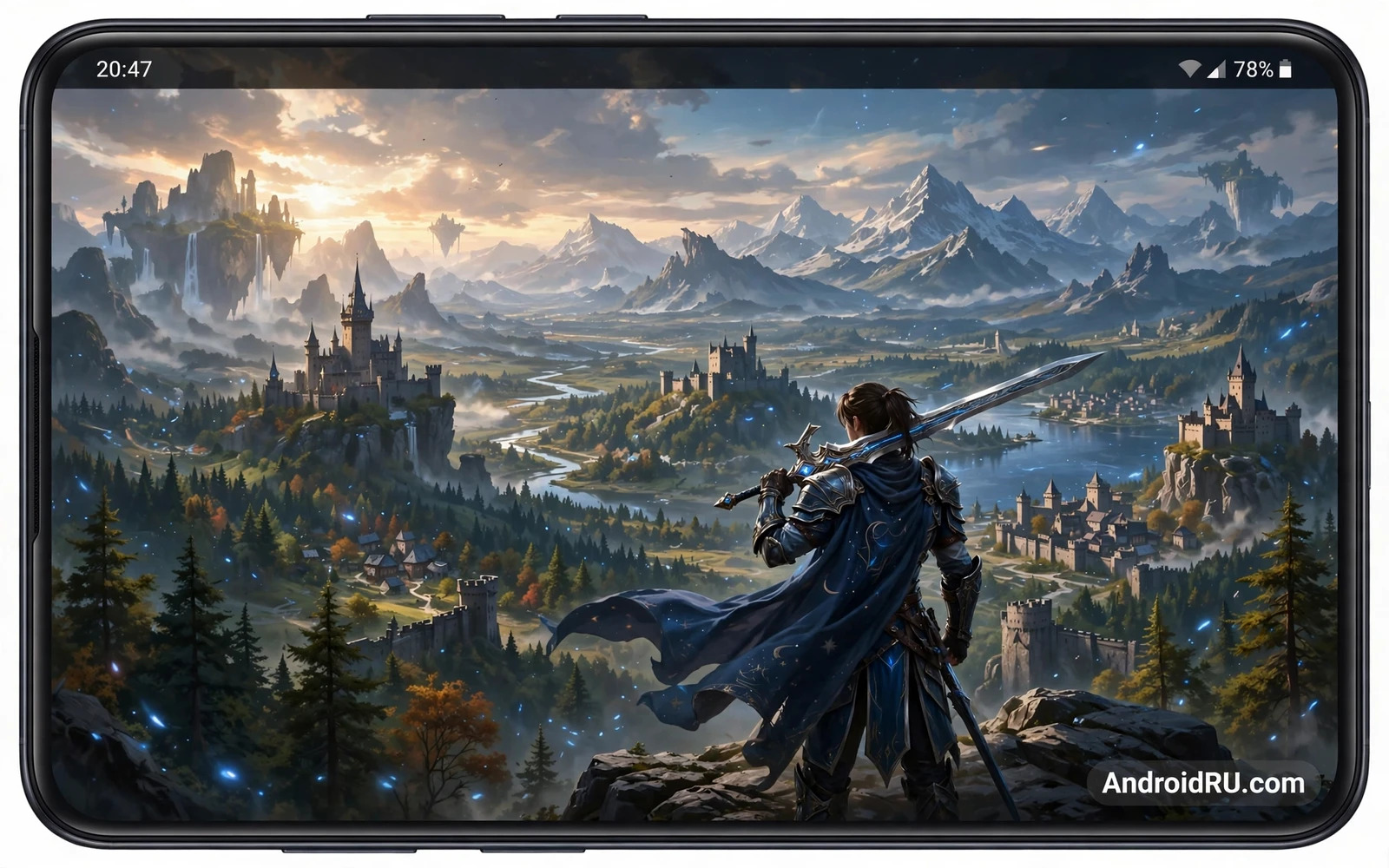
Top Android RPGs with Deep Storylines and Open Worlds
I have lost count of the RPGs I started on my phone and abandoned after two hours. The pattern was always the same: a pretty opening, a few fetch quests, and then a world that felt like a painted backdrop with nothing behind it. The games that kept me playing for months were different. They had companions I actually cared about, choices that came back to haunt me twenty hours later, and maps where walking off the main road led somewhere worth the walk. This guide covers the Android RPGs that deliver all three, and it teaches you how to judge story depth and world design before you commit a hundred hours to a download.
A great mobile RPG respects your time and your phone. It saves often, lets you pause mid-dialogue, and keeps the story moving in short sessions. The ten games below earned their place because they combine a real narrative with a world that rewards curiosity, and each entry tells you honestly what it costs, who it suits, and where it falls short.
What Makes an RPG Story Deep, Not Just Long
Story depth starts with characters who change. A memorable companion should have goals, fears, and doubts of their own. A strong villain should have reasons that make sense, even when you disagree with them. A good quest should ask for more than a fetch and a return: saving one village may cost another village time or resources, and helping one faction may anger another. Those trade-offs make choices feel real, and they make a second playthrough feel different instead of identical.
Dialogue quality matters more than dialogue quantity. Short, honest lines can reveal character faster than long speeches. A companion who jokes during danger feels distinct. A merchant who remembers your past deeds feels alive. Read the dialogue slowly during the opening hours, and if the opening bores you, trust that signal — a strong opening usually means a cared-for script, and a weak one rarely improves later.
Choices That Echo Through the Story
The test I apply to every RPG is simple: does the game remember what I did? A saved village may send help in a later battle. A betrayed ally may refuse help when I need it most. A spared enemy may return as a friend or as a rival. These echoes do not need to change the whole ending. Small echoes still make choices feel meaningful. Keep a note of major choices if the game offers many branches; it helps you compare outcomes across playthroughs and spot which decisions actually mattered.
What Makes an Open World Feel Alive
An open world should reward curiosity. A hidden cave should hold a story or a useful item. A remote village should hold people with daily routines. A mountain path should lead somewhere worth the climb. Empty space can create scale and calm, but too much of it creates boredom, and the balance between scale and discovery defines a good world. Walk off the main road early and see what you find. What you find reveals the design philosophy of the game faster than any review.
World systems make a map feel alive. Day and night cycles change enemy behaviour and shop hours. Weather changes visibility and travel speed. Factions control territory and react to your actions. Wildlife roams, hunts, and flees. These systems interact in small ways: a storm may hide your approach to an enemy camp, and night may close a shop that holds a quest item. Systems that interact create stories that no script could plan.
Side Quests Should Expand the World, Not Just Fill It
A good side quest reveals a town’s history, introduces a character who returns later, or changes how you see the main conflict. A weak side quest repeats the same task with a new name. Count how many side quests feel distinct in the first region. Distinct quests signal careful design. Repeated quests signal padding, and padding is the first sign that a hundred-hour game will feel like forty hours stretched thin.
Fast Travel Shapes How a World Feels
Generous fast travel saves time for busy players. Limited fast travel forces you to learn roads and landmarks. Both designs can work: generous travel suits short sessions, while limited travel suits players who enjoy the journey itself. Check the travel rules before you invest many hours, because travel rules that frustrate you early will frustrate you more later.
10 Android RPGs Worth Your Next 100 Hours
Every game below runs on Android today and offers a real storyline inside a world you can explore freely. I have played each of them long enough to know where they shine and where they ask for patience or money.
1. Genshin Impact
Genshin Impact drops you into Teyvat, a huge open world of seven nations, each with its own culture, architecture, and elemental theme. You play the Traveller, searching for a lost sibling while getting pulled into the politics of gods and nations. The main story quests are fully voiced, the world is dense with hidden puzzles and bosses, and the elemental combat system rewards team building across four-character parties. It is free to play, with a gacha system for new characters and weapons. Pros: one of the largest and prettiest open worlds on mobile, constant story updates, full cross-save with PC and console. Cons: the gacha can tempt heavy spending, and the download is enormous at over 20 GB with all content. Verdict: the best starting point if you want a console-scale open world on your phone and you can ignore the gacha shop.
2. Wuthering Waves
Wuthering Waves is a post-apocalyptic open-world action RPG from Kuro Games, set in the world of Solaris-3 after a catastrophe called the Lament. Combat is fast, with dodges, parries, and character-swapping combos that feel closer to a console action game than a typical mobile RPG. The story follows Rover, an amnesiac resonator, through factions and ruins, and the game has improved its writing and quest pacing sharply since launch. Pros: excellent combat feel, generous free currency for new players, a world full of climbable terrain and hidden echoes to collect. Cons: the story starts slowly, and the game demands a strong phone for high settings. Verdict: pick this if combat matters as much as story to you, and you own a phone with a recent flagship chip.
3. Honkai: Star Rail
Honkai: Star Rail trades a single open map for a galaxy of large explorable zones, tied together by one of the best-written stories on mobile. You ride the Astral Express between planets, each with its own arc, tone, and cast, from a space station under siege to a Chinese-inspired fantasy city and a Wild West planet. Combat is turn-based, which suits touch screens beautifully and gives you time to plan every move. Pros: superb writing and voice acting, turn-based battles that reward strategy over reflexes, and a fair free-to-play economy for patient players. Cons: it is not a single continuous open world, and the gacha still gates the strongest characters. Verdict: the strongest choice here if you value writing and characters above raw map size.
4. Exiled Kingdoms
Exiled Kingdoms is an old-school isometric open-world RPG in the spirit of the classic PC games, and it asks for a one-time purchase instead of a subscription or gacha. You explore the continent of Varannar freely from the start, join factions, and face quests with multiple solutions, including solutions that depend on your skills and reputation rather than your level. The graphics are deliberately retro, but the quest design is dense and the world reacts to your choices in ways modern free-to-play games rarely attempt. Pros: no ads, no energy timers, no pay-to-win, with over 100 hours of content and real consequences for your decisions. Cons: dated visuals and a slow opening that expects you to read. Verdict: the best value on this list if you want a complete game you own outright.
5. Star Wars: Knights of the Old Republic
Knights of the Old Republic is a full port of the 2003 BioWare classic, and its story still sets the standard for choice-driven RPGs. You are a Republic soldier with a hidden past, travelling between planets, gathering companions, and deciding whether to follow the light side or the dark side — and the game remembers those decisions all the way to a twist that players still talk about twenty years later. The touch controls are adapted well, and the whole game works offline. Pros: one of the greatest RPG stories ever written, meaningful light and dark choices, and no microtransactions at all. Cons: the graphics show their age, and combat is real-time-with-pause rather than modern action combat. Verdict: essential if you care about story above all else and you have never played it.
6. Neverwinter Nights: Enhanced Edition
Neverwinter Nights: Enhanced Edition brings the Dungeons and Dragons 3rd Edition classic to Android, complete with its original campaign, two expansions, and support for community-made modules that add hundreds of hours. You build a hero from classic D&D classes and races, then fight through a plague-stricken city and beyond, with companions, moral choices, and tactical pause-and-play combat. Pros: enormous content including fan-made adventures, deep character building, and full offline play. Cons: the interface is dense on a small screen, and a tablet or a controller improves the experience a lot. Verdict: the deepest character-building on this list, best enjoyed on a large phone or a tablet.
7. Oceanhorn 2: Knights of the Lost Realm
Oceanhorn 2 is a Zelda-inspired open-world action RPG with a bright, colourful world called Gaia, full of towns, dungeons, and secrets. You play a young knight on a quest that spans forests, deserts, and ancient ruins, with puzzle-filled dungeons and a story that unfolds through exploration rather than cutscene dumps. It launched as a premium title with no ads or in-app purchase pressure. Pros: charming world design, satisfying dungeon puzzles, and a complete story without monetisation tricks. Cons: combat is simpler than in Genshin or Wuthering Waves, and the story is lighter in tone. Verdict: the friendliest pick here for players who want adventure and charm without a hundred-hour commitment.
8. Black Desert Mobile
Black Desert Mobile adapts the PC MMO into a huge open world you can explore on foot or horseback, with life skills like fishing, cooking, and trading sitting beside the combat. The story follows your search for a dark power, but the real draw is the living world: towns with their own economies, world bosses that need groups, and a character creator that is still the most detailed on mobile. Pros: a massive continuous world, rich life-skill systems, and regular content updates. Cons: heavy monetisation and a grind that rewards daily play. Verdict: choose it if you want an MMO world that keeps growing and you enjoy long-term progression.
9. Diablo Immortal
Diablo Immortal is a dark fantasy action RPG set between Diablo II and Diablo III, with an open-world structure across zones like Westmarch and the Ashwold Cemetery. The story is a proper Diablo tale of demons, angels, and doomed heroes, and the combat is fast, readable, and satisfying on a touch screen. Dungeons, rifts, and world events give the world a reason to keep moving after the campaign ends. Pros: excellent combat feel, strong atmosphere, and a real campaign with a beginning and an end. Cons: aggressive monetisation around legendary gems, and the endgame leans on grinding. Verdict: great for the story campaign and casual dungeon runs; treat the endgame shop with caution.
10. 9th Dawn III: Shadow of Erthil
9th Dawn III is a retro-styled open-world RPG with a huge handcrafted map, first-person dungeons, monster collecting, and a story about a spreading darkness across the land of Erthil. It is a one-time purchase with no ads and no in-app purchases, and it hides an enormous amount of content behind exploration: card games, fishing, crafting, and a monster-taming system that lets captured creatures fight beside you. Pros: a genuinely large world for a small price, tons of side systems, and zero monetisation pressure. Cons: pixel-art visuals will not impress everyone, and the opening hours are slow. Verdict: a hidden gem for players who value exploration and value over graphics.
Character Growth, Combat, and Choices That Echo
Character growth should offer real options. A skill tree with many branches lets you shape a play style, and a warrior build should feel different from a mage build. Growth should come from play, not only from purchases: experience from quests and exploration rewards curiosity, and gear from crafting and discovery rewards patience. A game that sells power directly undermines fair growth, so check the shop before you commit. If the strongest gear is only available for money, the game is telling you who it is built for.
Combat must stay readable on a phone screen. Buttons should be large enough to tap without error, enemy attacks should telegraph clearly before they land, and the camera should not fight your thumbs during a fight. Turn-based combat suits touch screens very well because it gives you time to plan each move. Real-time combat needs smart auto-targeting and clear cues. Test combat in a tough fight before you judge it, because easy fights hide control problems that only appear when the game gets hard.
Difficulty Should Challenge Skill, Not Patience Alone
Enemies that demand new tactics feel fair. Enemies that demand only higher numbers feel dull. A fair game lets you retreat, prepare, and return stronger, while an unfair game traps you in a fight with no escape. Check the difficulty options before you start: a story mode can help players who value narrative over combat, and a hard mode can challenge veterans who want tactical depth. Character-driven storytelling only lands when the combat between story beats respects your time instead of wasting it.
Playing a 100-Hour RPG on a Phone: Battery, Storage, and Saves
Long RPGs need comfortable session design. A good mobile RPG lets you save often, lets you pause during dialogue and combat, and respects short sessions with clear quest markers. Test save behaviour in the first hour: a game that loses progress after a phone call is a poor mobile citizen. Your phone is a daily tool first and a game device second, and the best RPGs on this list understand that.
Battery and Heat Across a Long Campaign
Long sessions drain battery faster than short bursts, and a hot phone throttles its processor and drops frame rate during large battles. Lower graphics settings can extend a story session without harming dialogue, and closing background apps before a long dungeon run helps. Players who plan long sessions can compare visual styles that stay smooth on their own device in top 20 best graphics Android games you need to play. Visual comfort and story comfort grow together during a long campaign, so do not max out settings on day one.
Storage Planning for Big Downloads
Open worlds need large downloads for maps and voices, and extra story chapters may arrive as data packs. Keep free space for updates and saves, delete games you finished if storage gets tight, and back up saves when the game allows it. A lost save after a hundred hours hurts more than a lost save after one hour, so treat saves as precious progress. Large-scale worlds on strong hardware raise a different question about scale and performance, and players who want the biggest maps on the strongest phones can compare top open world games for high end Android devices for heat and storage notes before they commit to a huge download.
Offline Play Adds Freedom to a Long Journey
Many story campaigns work without a constant connection, which lets you continue on a plane or in a rural area. Test offline behaviour in airplane mode early: some games need a connection for purchases or events, but core story progress should work offline in a well-designed mobile RPG. Players who travel often can mix story games with best offline Android games that do not require Wi-Fi for trips where networks disappear. A mixed library keeps both story and variety ready.
Multiplayer, Guilds, and Social Play
Some RPGs add multiplayer dungeons and guilds. Cooperative dungeons let friends tackle tough bosses together, and guilds give you a social home and shared goals. Social play should never force you to play at fixed hours: flexible events respect adult schedules, while a guild that demands daily attendance can turn fun into obligation. Choose a guild that matches your available time, and leave one that pressures you to spend or to play beyond comfort.
Player-versus-player modes need balance and fair matchmaking. A new player should not face veterans with vastly stronger gear, and fair brackets group players by level and gear strength. Unfair brackets drive new players away fast. Test player-versus-player modes only after you learn core combat: early losses teach tactics when brackets are fair, and early losses teach frustration when brackets are unfair. Open-world exploration is best enjoyed at your own pace, so do not let competitive modes rush you through a story you wanted to savour.
Chat, Community, and Staying Safe
A good chat system lets you mute abusive players fast, and good report tools should be easy to find. Never share personal details in game chat, and never share account passwords with guild mates. A strong community protects new players, while a toxic community can spoil even a great story. If a game’s community feels hostile in the first week, the story alone may not be enough to keep you there.
How to Choose Your Next RPG
Start with time. A game that needs a hundred hours suits a long-term hobby, while a game that needs twenty hours suits a focused month. Be honest about weekly play time: a huge game you never finish can feel like a burden, while a shorter game you finish can feel satisfying. Both lengths have value, so match length to your real schedule.
Start with tone next. Dark fantasy suits players who enjoy grim choices. Bright adventure suits players who enjoy humour and hope. Science fiction suits players who enjoy technology and alien worlds. Tone affects every quest and dialogue line, and a tone mismatch can spoil a well-made game. Watch gameplay footage with sound on before you download, because sound reveals tone faster than screenshots.
Start with controls last. Touch controls suit turn-based and story-heavy games, while controller support suits real-time combat and exploration. Test both when the game offers both: a controller can transform a cramped touch layout into smooth play, and a good touch layout can feel natural for slow exploration. Choose the control style that keeps your hands comfortable across long sessions.
A Checklist Before You Commit
Play the opening hours and judge dialogue and tone. Test combat readability and control comfort early. Check save behaviour and offline progress rules. Confirm growth comes from play and not only purchases. Check storage size and data pack needs before download. Test battery and heat during a long session. Choose a guild and difficulty level that fits your schedule. Keep a note of major choices for later comparison. If a game passes most of that list, it has earned your next hundred hours.
Frequently Asked Questions
What is the best Android RPG with a deep story for a new player?
Honkai: Star Rail is the friendliest entry point, because its turn-based combat is easy to learn, its writing is strong from the first planet, and its free-to-play economy is fair to patient players. If you want a single open world instead, Genshin Impact is the safer pick, with a huge map and a story that keeps expanding.
How much storage do big open-world RPGs need on Android?
Expect 15 to 30 GB for the largest games once all content packs are installed, with Genshin Impact at the top end. Check the download size before you start, keep at least 5 GB free for updates, and remember that voice packs in multiple languages add several gigabytes each.
Can I play these RPGs offline?
It depends on the game. Premium ports like Knights of the Old Republic, Exiled Kingdoms, and 9th Dawn III work fully offline. Online games like Genshin Impact, Wuthering Waves, and Honkai: Star Rail need a connection for almost everything, including single-player story content. Test offline behaviour in airplane mode before a trip.
Do I need a controller to enjoy Android RPGs?
No, but it helps for real-time combat and exploration. Turn-based games like Honkai: Star Rail and classic ports like Neverwinter Nights play beautifully with touch alone. Action games like Wuthering Waves and Genshin Impact support controllers, and a controller makes long sessions more comfortable on your hands.
Your Next Adventure Starts With the Opening Hour
Do not judge an RPG by its trailer. Play the opening hour, read the dialogue, walk off the main road, and fight one hard battle. If the characters interest you, the world rewards your curiosity, and the controls feel natural, you have found a game worth a hundred hours. If any of those three fails, try the next game on this list instead of forcing yourself through a story that never earns your attention. The best RPG is the one you actually finish, and the one whose ending stays with you long after the final quest.

