

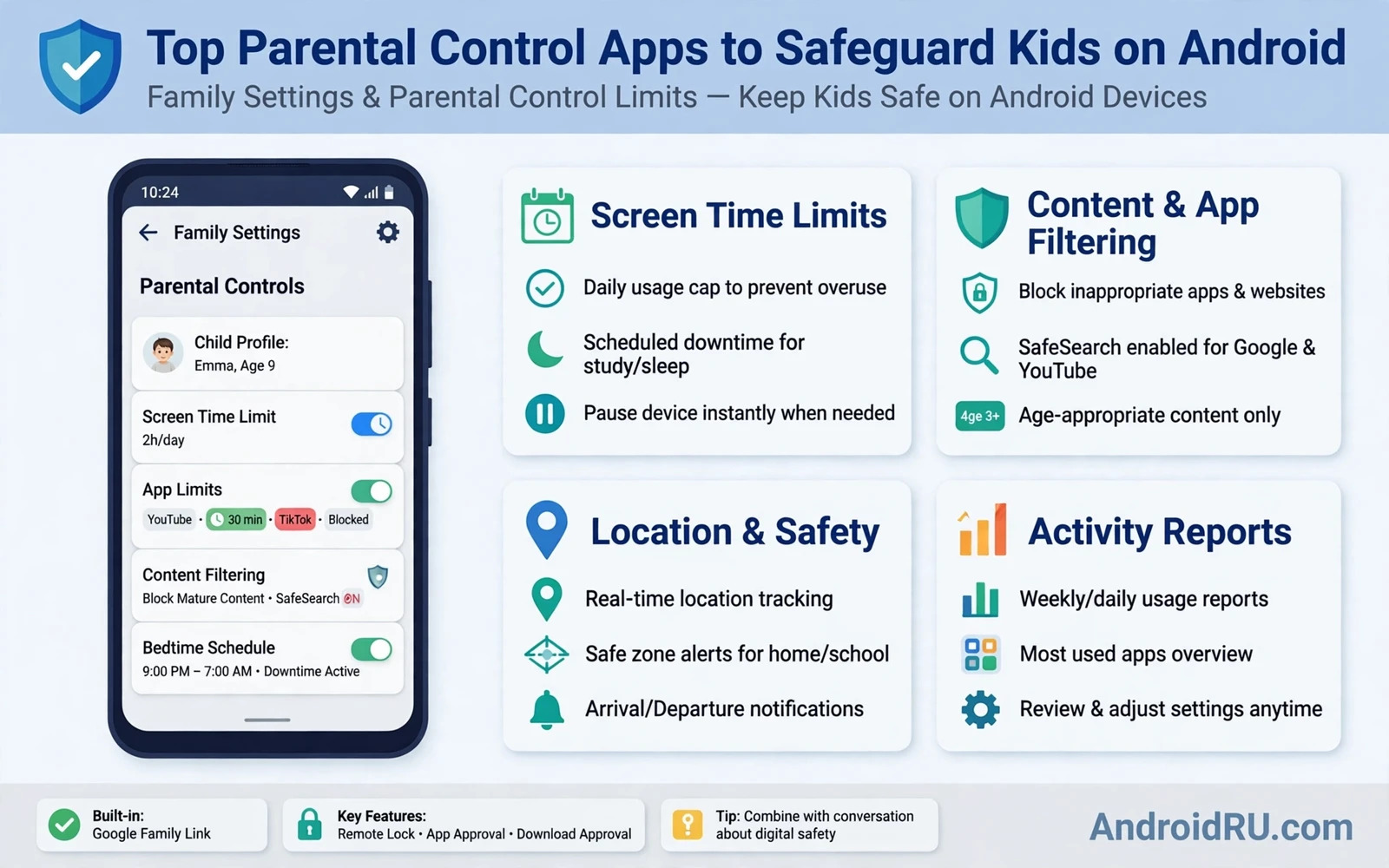
A good parental control app earns its place on your home screen by making keeping children safe on Android phones easier and less stressful. The best options stay fast and clear even on a busy day. They avoid clutter and they avoid tricks that waste your time. This guide compares what matters and what you can safely ignore. It focuses on real daily use rather than marketing claims.
Choosing well starts with one question about your own routine. You need to know when you will use the tool and what result you expect from it. A student and a busy professional may need different strengths from the same category. A casual user may value simplicity above depth. A power user may value control above simplicity. The sections below help parents and guardians and teachers judge each option with confidence.
A wider view helps here so explore password manager apps that keep credentials safe and note which strengths match your own daily routine.
What makes a strong parental control app
Strong parental control apps share a few traits that show up after a week of use rather than after five minutes in a store listing. The interface stays readable and the main action stays one tap away. Settings use plain words and changes take effect right away. The app respects your phone and it does not demand permissions that it never uses. A strong option also stays stable after system updates and it keeps your work safe when the app closes.
Depth matters only when it stays discoverable after the first week. A feature buried three menus deep rarely helps in real life. A clear home screen and a logical settings order matter more than a long list of extras. The best parental control apps grow with you and they reveal advanced tools only when you look for them. That balance keeps beginners calm and it keeps power users satisfied.
- Screen time limits for school hours and bedtime
- Content filters for apps and web browsing
- Location sharing with clear family consent
- App approval before a child installs anything
- Activity reports that spark family talks
- Safe search controls across browsers
How to choose the right parental control app
Start with your must have features and ignore every extra that you will never open. A short list beats a long list when you compare apps side by side. Test one app at a time so you can judge battery use and speed fairly. Keep notes about friction points during your first three days. Delete an app quickly when it slows your phone or confuses your routine. A calm test beats a rushed install every time.
Price deserves the same calm test as features. A free version should cover the core job without constant upgrade pressure. A paid version should add clear value rather than unlocking basic tools. A trial week reveals whether premium features truly change your routine. Pay only when the paid tier solves a problem that the free tier leaves open. A fair price feels fair after a week of real use.
- Pick controls that match the age of the child
- Prefer transparent rules over secret monitoring
- Check that limits work across apps and browsers
- Test location features with family consent
- Read the privacy policy for child data handling
- Choose an app that the child can understand
For a related angle study call blocker apps that stop spam calls and see how it solves a neighbouring problem in daily use.
Set it up without friction
A careful setup saves trouble later and it takes only a few minutes. Follow the steps below in order and test each change before moving on. Keep default settings for the first day when you feel unsure about an option. Advanced settings can wait until you understand the basic flow. A patient start builds a setup that lasts for months.
- Install the parent app on your phone first
- Create a child profile with age and limits
- Install the child app on the child phone
- Set school hours and bedtime rules together
- Review the first week report as a family
Permissions deserve a slow look before you tap allow on anything. Grant only the access that matches the core job of the app. Deny access to contacts or location when the app can work without that data. You can change a permission later in system settings when a feature truly needs it. A careful start protects privacy and it keeps later surprises rare.
Using it every day
Daily value comes from a small habit that fits your existing routine. Open the app at the same moment each day so the habit stays automatic. Keep your setup simple for the first week and add advanced options only when a need appears. A calm routine beats a complex system that you abandon after a few days. Small steady use builds skill faster than rare intense sessions.
Small checks during the week keep the tool useful over months. Review saved items and remove clutter before it grows into a burden. Update the app when a new version fixes a bug that affects your use. Back up important items when the app offers a safe export option. These habits protect your time and they protect your data at the same time.
Parental controls work best as a family agreement rather than a secret fence. Children accept limits more easily when they understand the reason behind each rule. A weekly report gives parents a calm moment to talk rather than a daily reason to argue. Controls should grow looser as a child shows responsible use over time.
A natural companion read is app lockers that secure private apps since it covers a habit that overlaps with this one.
Privacy safety and performance
Privacy starts with the data that an app collects and the data that it sends elsewhere. Read the privacy screen inside the app before you create an account. Prefer sign in options that need only an email address when an account is truly required. Avoid apps that demand broad access for a narrow job. Your phone holds personal material and a careful choice keeps that material under your control.
Performance matters because a slow app can spoil an otherwise strong feature set. Watch battery use during the first week and compare it with your other daily apps. Watch storage growth when the app saves files or caches media for offline use. A lean app that runs smoothly beats a heavy app that stutters on older hardware. Remove background access when the app does not need to run while closed.
Parental tools must respect local law and the privacy of older children. Explain what the app can see and what it cannot see. Never use a parental app to monitor another adult without consent. Back up family settings before a phone reset so rules survive a device change.
Common problems and fixes
Most problems have a simple fix that starts with the basics. Check the setting that matches the broken feature before changing anything else. Restart the app and test the feature again with a fresh session. A single change at a time makes the true cause easy to spot. Keep a note of the fix that worked so a repeat problem takes seconds to solve.
- Child bypasses limits so check device admin settings and app updates
- Filter blocks school sites so add trusted sites to an allow list
- Location looks wrong so check GPS and battery settings
- Reports feel overwhelming so review only weekly summaries
When a problem returns after a simple fix then look one layer deeper. Clear only the cache when a screen freezes and keep your saved data intact. Reinstall as a last step after you back up anything that matters. Contact support with clear steps that reproduce the fault when the fault returns. A clear report helps support solve the issue faster.
Advanced options worth trying
Advanced options reward users who already master the basics and want more control. Explore one advanced setting at a time and note the effect before changing another. A preset or profile system helps you switch between contexts without rebuilding your setup each time. Saved profiles for work and home and travel keep the app ready for each part of your day.
Automation inside the app can reduce repetitive taps when the app supports schedules or triggers. A morning profile can prepare the tool before you need it. An evening profile can quiet the tool when the day ends. Test automation for a week and disable any rule that creates confusion. The best automation feels invisible and it never surprises you at a bad moment.
Sharing and export options matter when your work leaves the phone. Export a copy in a standard format that other tools can open. Share only the items that the recipient truly needs and remove personal notes first. A clean export protects your work when you switch phones or switch apps. Keep a dated backup of exports that hold important plans or records.
Long term value comes from updates that respect existing users. Read update notes before installing a major version and back up your setup first. Report bugs with clear steps so developers can fix the exact fault. A responsive developer and a clear changelog signal an app that will stay useful for years. Stay loyal to tools that treat your time and data with respect.
A final habit separates lasting setups from setups that fade after a month. Review your profiles and exports once a month and delete rules that no longer match your life. Keep a short note about why each profile exists so a future change stays deliberate. Share useful setups with friends only after removing personal data from them. A setup that you understand fully is a setup that you will keep.
Final verdict
The right choice depends on your routine and not on the longest feature list. Pick the option that you will actually open each day and that respects your phone. Keep your setup lean and revisit your choice after a month of real use. A tool that quietly supports your goals is worth more than a flashy tool that demands constant attention. The best parental control app is the one that delivers safer phone use for children without friction.
To round out the comparison look at encrypted messaging apps for private chats and judge it against the needs you listed earlier.
Compare your shortlisted apps on one page of notes before you decide. List the strengths that matter and the weaknesses that you can accept. A clear note prevents a second install spiral later. Trust the app that scored well on your own tests rather than the app with the loudest store page.
Start with one app from this guide and give it a fair week of daily use. Judge it by speed and clarity and privacy rather than by the size of its feature list. Keep what helps and delete what distracts without guilt. Your phone should serve your day and not steal attention from it. A thoughtful choice today makes every tomorrow a little calmer.

