

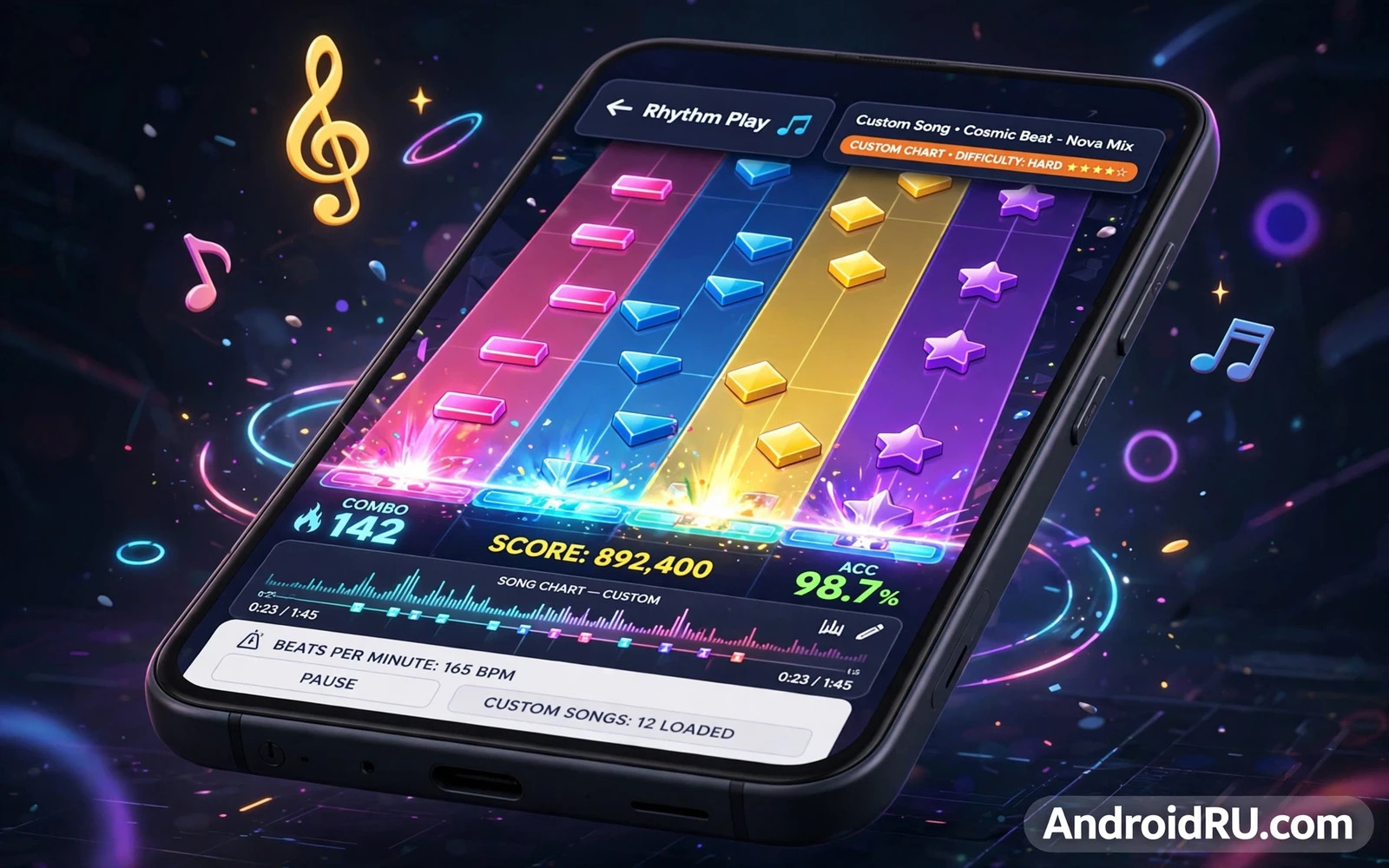
Why Rhythm Games Feel So Satisfying
Rhythm games turn music into touch. Notes fall in time with a beat and your taps become part of the song itself. A perfect run feels like playing an instrument even when you only tap a screen. That fusion of music and movement creates a flow state where time disappears and focus sharpens. Few mobile genres deliver that feeling so directly. Rhythm games reward listening as much as looking because the beat guides your hands before your eyes confirm each note.
Mobile rhythm play suits short sessions beautifully. A single song lasts minutes and gives a clear score at the end. You can chase a full combo during a break and stop without losing progress in a long campaign. That song based structure also makes improvement visible. A score that rises week by week shows real skill growth. That visible progress keeps players returning to favourite tracks long after other games fade.
Timing Accuracy And What It Demands
Timing accuracy is the heart of rhythm skill. Games judge taps as perfect or good or early or late with windows that shrink at higher difficulty. Small timing errors that feel invisible in casual play become clear in scores. Training timing starts with listening rather than watching. Let the beat lead your taps and use visual notes as confirmation rather than as the sole cue. That listening habit improves accuracy faster than staring harder at the screen.
Device factors affect timing too. Screen touch latency and audio delay can shift perceived timing. Use wired audio or low latency wireless audio when possible for serious play because delayed sound makes beats feel off even when your taps are correct. Test audio offset settings in game when offered because a small calibration can transform a frustrating experience into a fair one. Calibration is not cheating. It aligns the game with your device so skill decides scores.
Custom Songs And Why They Matter
Custom songs extend a rhythm game far beyond its built in track list. Players can create charts for favourite songs and share them with a community. That creativity turns a finite game into a living library where new challenges appear constantly. Custom charts also let players practise genres they love rather than only genres a developer chose. A player who loves jazz can find jazz charts. A player who loves electronic music can find dense electronic charts. Choice is the gift of custom content.
Quality varies widely in custom charts because community creators have different skill levels. A good custom chart matches notes to musical accents and builds difficulty gradually. A poor chart places notes randomly and ignores the song structure. Learn to judge charts by their ratings and comments and creator reputation before you invest time. Favour charts that feel musical even on a first play because musicality is the sign of a thoughtful creator.
Players who enjoy relaxed music sessions can explore audio focused picks through the music category family but rhythm players should first master built in tracks. Built in tracks teach timing and chart reading with polished design. Custom songs shine brightest after that foundation is solid because you can then judge custom quality with an experienced ear.
Chart Reading And Difficulty Progression
Chart reading is the skill of seeing note patterns and preparing your hands before notes arrive. Beginners should start with slow songs and simple patterns that use two fingers comfortably. Intermediate players can handle faster streams and jumps between lanes. Advanced players read dense patterns as shapes rather than individual notes. That progression mirrors learning an instrument where scales precede complex pieces. Rushing to extreme difficulty before foundations are ready builds bad habits and frustration.
Hand placement matters as much as speed. Keep fingers relaxed and near the screen zones they cover. Avoid tensing shoulders during fast sections because tension slows movement and causes mistakes. Take breaks between intense songs to reset focus. A calm hand plays faster than a tense hand because relaxation allows quicker recovery after each tap. Rhythm skill is physical as well as mental and body care is part of training.
Calm puzzle style play shares a focus habit with rhythm training. Readers who want a slower mental challenge can try the logic picks in Best Puzzle Games for Android to Train Your Brain where patience and pattern recognition also decide success. Cross training keeps your mind sharp between intense rhythm sessions.
Offline Play And Building A Song Library
Many rhythm games work well offline once songs and charts are downloaded. Offline play suits travel and quiet practice without data worries. Check storage before downloading many custom charts because audio files and chart data add up over time. Organise favourites into playlists or folders when the game allows it so practice sessions start quickly. A tidy library encourages daily play while a cluttered library wastes time on searching.
Back up custom charts and progress when the game offers cloud or local backup. Community charts can disappear if a creator removes them or a link breaks. Keeping local copies of favourites protects your practice library. Respect creator rights when sharing charts by crediting authors and following community rules. A respectful community keeps custom content flowing for everyone.
Offline friendly players will recognise the same travel value in the picks in Best Offline Android Games That Don’t Require Wi-Fi because games that work anywhere fit mobile life best. Rhythm games belong in that conversation when their libraries live on the device.
Multiplayer Rhythm And Friendly Rivalry
Multiplayer rhythm modes add friendly rivalry to a traditionally solo genre. You may compete live against another player on the same chart or compare scores asynchronously on leaderboards. Live matches test consistency under pressure because a single miss can swing a close contest. Leaderboards test long term dedication because top scores require repeated practice. Both formats reward calm focus over panic because rhythm punishes tension more than most genres.
Community events and chart contests keep multiplayer fresh. A weekly featured song gives every player a shared challenge and a common topic for discussion. Participating in events exposes you to songs outside your comfort zone and broadens your taste. Treat events as learning opportunities rather than only as ranking battles. A new favourite song is a better prize than a temporary leaderboard position.
Social players can compare competitive spirit with the multiplayer picks in Best Multiplayer Esports Games for Android Competition where teamwork and rivalry take different forms. Rhythm rivalry stays personal and musical even in a crowd.
Audio Gear And Screen Setup For Best Feel
Audio gear shapes rhythm accuracy more than graphics settings do. Good earbuds or headphones reveal beats and accents clearly. Low latency audio keeps sound aligned with visuals. A clean screen free of smudges improves touch response. Brightness set for your environment prevents glare that hides notes. Those small setup details add up to a fairer and more enjoyable session.
Phone placement also matters. Hold the phone steadily with both thumbs free or place it on a flat surface for finger play. Avoid playing on an unstable surface during fast songs because movement shifts timing. A stable setup lets your hands focus on music rather than on holding the device. Comfort and stability are performance tools in rhythm gaming.
Casual rhythm fans can also enjoy relaxed sessions alongside the idle picks in Top Idle Clicker Games for Casual Mobile Gamers when they want a low pressure break between intense songs. Variety keeps music gaming joyful rather than exhausting.
Choosing Your Rhythm Game
Choose a rhythm game by music taste and chart style and custom support. A game with a strong built in library suits players who want polished songs immediately. A game with strong custom tools suits players who want endless variety and community creativity. A game with forgiving timing suits beginners. A game with strict timing suits veterans who chase perfect scores. Match the game to your current skill and taste rather than to popularity alone.
Try several rhythm games for a week each and notice which one you open for fun rather than duty. The right rhythm game makes you hum its songs away from the phone. That lingering melody is the best sign of a good fit. Keep that game as your main rhythm title and revisit others when you want fresh charts. Music gaming rewards joy first and scores second because joy keeps your hands returning to the beat.
Creating Your First Custom Chart
Creating a custom chart starts with choosing a song you know deeply. Listen several times and tap along to find the main beat and the accents that deserve notes. Start with a simple chart that follows the beat rather than every sound in the mix. A simple musical chart feels better than a dense chart that ignores the song. Test your chart at slow speed if the editor allows it and fix notes that feel early or late before you share anything.
Sharing a chart responsibly means crediting the song artist and following the community rules of the platform you use. Ask for feedback from other players and revise based on their comments. A first chart rarely feels perfect and revision is part of the craft. Over time your charts will grow more musical and more creative as you learn pattern design. The custom chart community thrives on generous creators who listen and improve together.
Practising Difficult Charts Step By Step
Practising a difficult chart starts with breaking it into sections. Play the opening until it feels comfortable before tackling the middle. Play the middle until its patterns feel familiar before combining sections. That sectional practice builds confidence faster than repeated full runs that always fail at the same hard part. Focused repetition on a weak section turns a wall into a stepping stone.
Slow practice helps even when a game lacks a formal slow mode. Listen to the song outside the game and tap the rhythm on a table. Memorise the pattern away from the screen so your hands know the shape before speed arrives. Mental practice counts because rhythm skill lives partly in memory and partly in muscle. A chart learned slowly can later be played fast with surprising ease.
Track progress honestly with scores and accuracy rather than only with pass or fail. A score that rises a little each week shows real growth even when a full combo stays out of reach. Celebrate small gains because they sustain motivation through long practice. The hardest chart you master will feel easy one day and that transformation is the quiet reward of patient rhythm training.

