

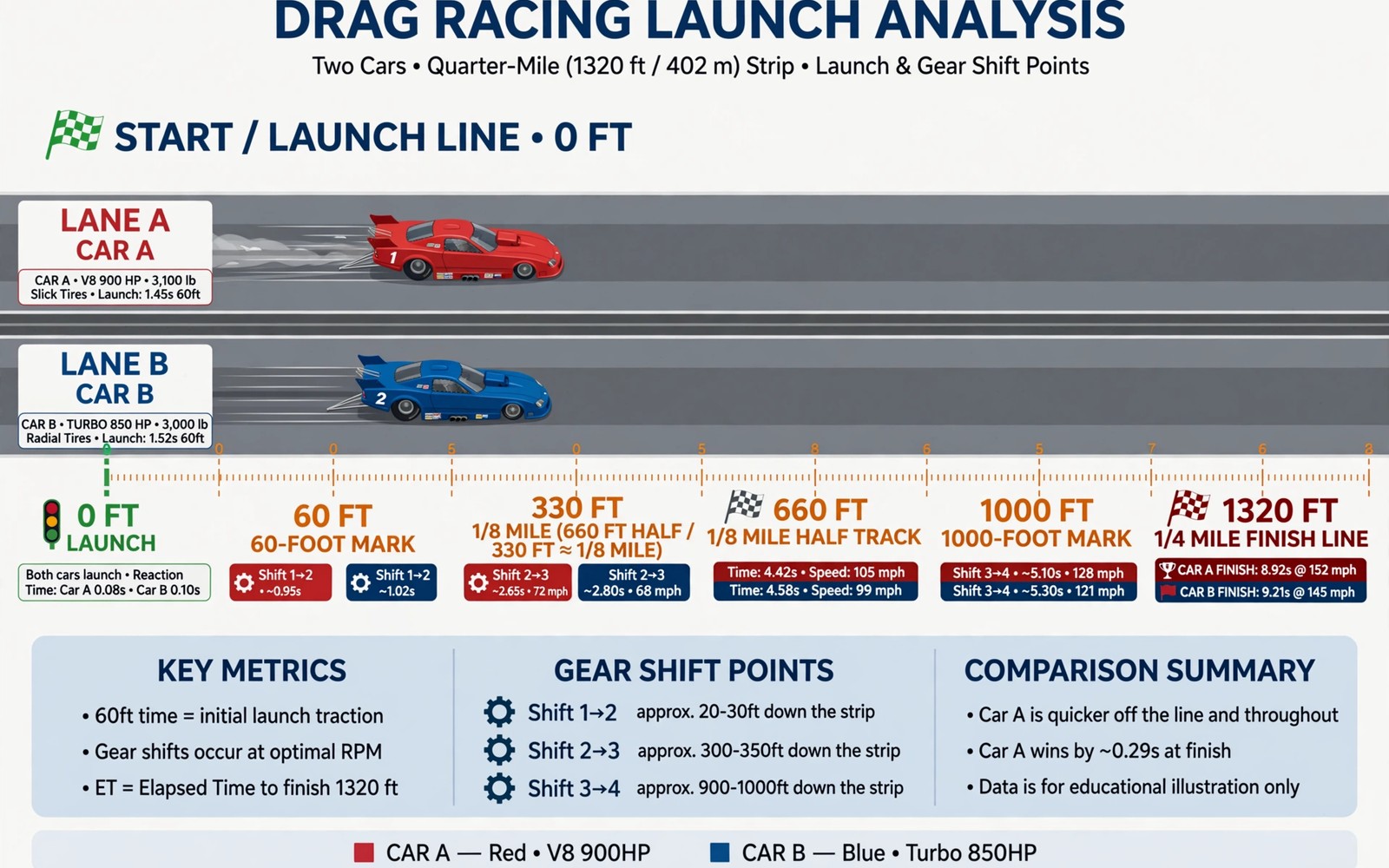
Drag racing games strip racing down to launch and shifts and tuning. A quarter mile race lasts seconds but rewards hours of preparation. Perfect shifts beat powerful cars when timing is tight. This guide explains drag systems and tuning for consistent wins.
Drag racing looks simple from outside the genre. Inside the genre every millisecond of shift timing matters deeply. Launch control and gear ratios and tyre grip interact on every run. Small tuning changes show up clearly in elapsed times. flight simulators for Android
Different drag games emphasise different skills for players. Some focus on manual shifting with precise timing windows. Others focus on deep car building and part choices. A few focus on live multiplayer duels and betting systems. Pick the focus that excites you most.
Drag racing culture values car building knowledge as much as driving. Garage talk about gear ratios fills drag communities. Learning build theory deepens appreciation for tuning menus. Community builds offer starting points for personal experimentation.
Master the launch first
Launch control sets engine revs before the lights turn green. Too many revs spin tyres and waste the start badly. Too few revs bog the engine and lose early momentum. Find the rev sweet spot for your car and tyres. Practice launches alone before ranked duels.
Reaction time to the green light matters as much as car power. Watch the light sequence and anticipate the final green carefully. Jumping early causes disqualification in strict drag games. Late reactions lose races before first gear ends. Calm focus beats nervous speed at the lights.
Reaction training improves launch consistency more than car upgrades initially. Practice light sequences daily for ten minutes. Consistent reactions beat occasional perfect reactions. Reaction drills transfer across all drag games. Treat reaction like a trainable muscle skill.
Shift at the right revs every time
Each gear has a power band where acceleration peaks strongly. Shifting too early wastes engine power in the next gear. Shifting too late hits the rev limiter and loses time sharply. Learn the shift point for each gear separately. Gears rarely share one perfect shift point.
Sound cues help shift timing when visual gauges feel distracting. Engine pitch rises steadily toward the shift point. Shift just before the sound turns harsh at the limiter. Practice with sound on until timing feels automatic. Muscle memory then carries you through tense duels. futuristic anti-gravity racing
Weather and track temperature affect drag strip grip noticeably. Cold strips grip less and spin tyres easily. Hot strips grip more but wear tyres faster. Adapt launch revs to strip conditions. Condition awareness separates experienced drag racers from beginners.
adb shell settings put system haptic_feedback_enabled 1
adb shell cmd game mode performance com.example.drag
adb shell dumpsys gfxinfo com.example.drag framestats
The commands above are adapted from public platform documentation for Android settings and game performance tools. They are included here as a teaching example for testing drag game smoothness and not as copied game code.
Tune gear ratios for the strip
Short gear ratios accelerate hard but need more shifts per race. Long gear ratios reduce shifts but accelerate slower early on. Quarter mile races favour ratios that finish in top gear cleanly. Test ratios over ten runs and compare elapsed times honestly. One lucky run never proves a ratio choice.
Final drive ratio changes all gears together in a simple way. Short final drives suit short strips and light cars well. Long final drives suit long strips and powerful cars well. Change final drive in small steps between test sessions. Record times for every change to avoid guesswork.
Transmission types change shift timing strategies fundamentally. Manual transmissions demand precise shift inputs every gear. Automatic transmissions shift optimally but remove driver skill. Sequential transmissions suit rapid drag shifting best. Choose transmission style by skill goals.
Choose tyres and suspension for grip
Drag tyres need soft compounds that grip the strip surface instantly. Hard road tyres spin badly under launch power. Wide rear tyres spread power and reduce wheelspin strongly. Tyre pressure tweaks also change grip in realistic drag games. Test pressure changes over several launches for clear results.
Suspension tuning controls weight transfer during launch acceleration. Soft rear suspension lets weight shift back onto drive wheels. That shift improves grip at the critical launch moment. Stiff suspension suits high grip strips with powerful cars. Match suspension to strip surface and car power. parking simulators
Weight reduction upgrades improve acceleration across all gears. Removing interior parts reduces weight cheaply in games. Lightweight wheels reduce rotational inertia further. Weight savings compound with power upgrades effectively. Balance weight cuts against class limits carefully.
Build cars for classes and events
Drag games divide cars into classes by power and parts. Building for a class limit beats raw maximum power often. A balanced car at the top of its class wins more events. Max power cars face tougher rivals in higher classes. Smart class placement is a strategy skill itself.
Save multiple builds for different event types when the game allows it. A street build and a strip build serve different race formats. Switching builds takes seconds and saves hours of retuning. Label builds clearly by event type and track length. Organised garages win more events over time.
Aerodynamic drag matters at high speeds on long strips. Spoilers add downforce but increase drag significantly. Low drag builds suit top speed focused strips. Downforce builds suit short strips with traction needs. Match aero to strip length thoughtfully.
Build a testing routine for drag cars
Testing routines separate real improvements from lucky runs. Run ten launches per setup change minimum. Record best and average times separately. Averages reveal true setup quality better than bests. Lucky bests mislead tuning decisions often.
Change one part at a time during testing sessions. Multiple changes hide individual part effects completely. Single change testing takes longer but teaches clearly. Knowledge gained transfers to future builds permanently.
Test builds on multiple strip surfaces when games offer them. Concrete and asphalt grip differently under launch power. Surface specific builds may outperform general builds. Versatile builds suit mixed event cups better.
Keep a build log with parts and times for each car. Logs prevent repeating failed experiments unknowingly. Logs also speed rebuilding after game resets. Organised builders progress faster than forgetful builders.
Keep improving after the basics
Advanced drag racers study opponent build patterns before duels when possible. Opponent car classes hint at power and gearing choices. Heavy cars likely launch hard but shift slower. Light cars likely shift fast but struggle with grip. Pre duel scouting informs launch rev choices. Scouting knowledge turns blind duels into strategic contests. Even brief scouting improves win rates noticeably over random duels.
Drag racing psychology affects reaction times under pressure significantly. Nervousness causes early jumps and late reactions equally. Breathing routines before duels calm reaction consistency. Focus on light sequences rather than opponent reputation. Reputation pressure distracts from timing fundamentals. Mental routines are trainable skills like shifting itself. Calm racers react consistently across high stakes duels.
Seasonal drag events introduce limited cars and unique strips regularly. Limited events force adaptation to unfamiliar vehicles quickly. Adaptation skills transfer to standard duels strongly. Play seasonal events casually even without reward goals. Unfamiliar car experience broadens tuning knowledge. Seasonal variety prevents drag burnout over long play periods.
Common mistakes
The classic mistake is shifting by the speedometer instead of engine revs. Speed rises differently in each gear and misleads timing badly. Watch revs and listen to engine pitch for shifts. Rev based shifting wins quarter miles consistently.
Another mistake is adding power before fixing launch grip. Extra power only spins tyres harder at launch. Fix tyres and suspension first for usable grip. Power becomes useful only when the car can put it down.
A further mistake is copying popular builds without understanding them. Popular builds suit specific tracks and driving styles. Blind copying fails when conditions differ. Understand build logic before adopting community setups.
Frequently asked questions
Are drag games only about tapping at the right time?
No drag games combine tuning knowledge and launch skill and shift timing. Tapping alone loses to tuned cars with smart drivers. Part choices and gear ratios shape every result deeply. Preparation matters as much as reaction speed.
Drag games combine tuning knowledge and launch skill and shift timing. Tapping alone loses to tuned cars with smart drivers. Part choices shape results deeply. Preparation matters as much as reaction speed.
How long does a drag race last?
Most quarter mile races last ten to twenty seconds of driving. Preparation and tuning take far longer than the race itself. That contrast defines the genre appeal for many players. Quick races suit short play sessions perfectly.
Quarter mile races last ten to twenty seconds of driving. Preparation and tuning take far longer than races. That contrast defines genre appeal for many players. Quick races suit short sessions perfectly.
Can beginners win drag duels early?
Yes beginners win early duels with stock cars and good shift timing. Early events match similar power levels fairly. Learn one car deeply before collecting many cars. Skill growth beats garage size in early progression.
Beginners win early duels with stock cars and good timing. Early events match similar power levels fairly. Learn one car deeply before collecting many. Skill growth beats garage size early.
Conclusion
Drag racing games reward launch control and shift timing and smart tuning together. Learn rev sweet spots and gear ratios through testing. Fix grip before adding power to any build. Consistent preparation wins more duels than lucky reactions.
Your next step is easy tonight. Pick one drag car and run twenty launches in practice mode. Record your best and worst launch times. Adjust revs in small steps until launches feel consistent.
Join a drag community to share build logs and test results. Community feedback accelerates tuning knowledge dramatically. Share your own findings generously too. Drag culture grows through shared experimentation.

