

Samsung Galaxy M33 5G Review: Daily Use, Software and Battery Life
The Samsung Galaxy M33 5G arrived in April 2022 with a very clear pitch: a huge battery, a big 120Hz screen, and 5G at a mid-range price. I used this phone as a daily driver for messaging, maps, video, photography, and long days away from a charger, and the experience kept coming back to the same point. This is a phone built for people who want stamina first and everything else to work without fuss. It does not try to be the fastest phone in its price range, and it does not try to win a camera contest. It tries to be the phone you stop thinking about, and for the most part, it succeeds. In a Galaxy M33 5G camera test, daylight shots come out sharp and well exposed, while low light is where the limits show.
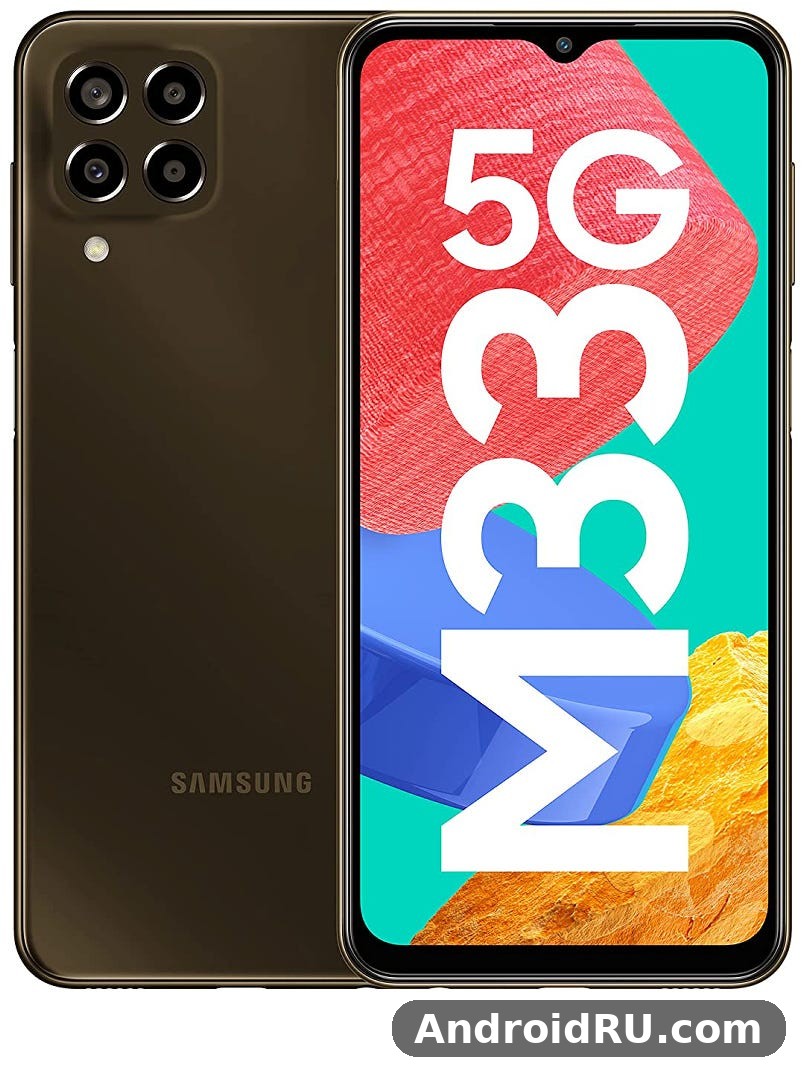
That said, the M33 5G is not a phone without trade-offs. The screen is a TFT LCD panel rather than the Super AMOLED display Samsung usually puts in this price range, the charging is slow next to the battery it has to fill, and the camera setup looks better on paper than it behaves in dim light. Is the Samsung Galaxy M33 5G good for daily use in 2026, several years after launch? The honest answer depends on what you do with your phone every day, how much you care about screen quality, and whether you can live with a phone that is big, heavy, and plain to look at. This review walks through a full week of real use, the Exynos 1280 performance, the 6000mAh battery life test, the cameras, and the software, and it folds in the complete hardware specifications, so you can decide with facts instead of a spec sheet. The Galaxy M33 5G price and specifications together make it a strong budget option, with the screen and battery leading the list.
Who this review is for: anyone comparing budget 5G phones, anyone whose current phone dies before dinner, and anyone who found a Galaxy M33 5G at a discount and wants to know whether the low price is a bargain or a warning. If you want a cheaper Samsung from the same family to weigh against it, the Samsung Galaxy M32 5G Review: App Performance and Camera Quality shows what the previous generation offered, and it helps put the M33 5G price in context.
Samsung Galaxy M33 5G daily use experience after a full week
My first week with the Galaxy M33 5G followed a normal routine: alarms, messaging, email, a commute with maps and music, photos of the kids and the dog, an hour of video in the evening, and some scrolling before bed. Nothing exotic, and that was the point. A daily use phone is judged by the boring stuff, and the M33 5G handled the boring stuff well. Apps opened without long pauses, notifications arrived on time, calls sounded clear, and the phone never once restarted itself or froze on me during that week. In a Galaxy M33 5G vs Galaxy M34 5G comparison, the deciding factors are display, chipset and battery.
The phone is large, though, and you feel it from the first day. At 165.4 mm tall and 215 grams, it fills a pocket and it fills a hand. The plastic back is matte and grippy enough that I never felt it would slip, but the size means one-handed use takes effort. Samsung includes a one-handed mode that shrinks the screen toward one corner, and I used it more than I expected when carrying a bag or holding a coffee. If you are coming from a compact phone, give yourself a few days to adjust. If you already like big phones, the M33 5G will feel normal by day three. Galaxy M33 5G one-handed mode is worth turning on if you have small hands, and you reach it in Settings under Advanced features. A Galaxy M33 5G performance test shows the Exynos 1280 handling everyday apps smoothly, with only heavy games asking for lower settings.
What a normal day looks like on the Galaxy M33 5G
A normal day started at 100 percent, ended at around 35 to 45 percent, and never once needed a top-up before bed. That pattern held with roughly four to five hours of screen time: messaging, a browser, social apps, maps for about 40 minutes, and video in the evening. On lighter days the phone finished near 55 percent. On a heavy day with two hours of navigation and an hour of video calls, it still reached bedtime with charge to spare. How long does Galaxy M33 5G battery last on a normal day? In my use, comfortably more than a day for most people, and two days for light users who mostly call, message, and browse. The Galaxy M33 5G display quality is adequate for the price, though colours and brightness lag behind AMOLED rivals.
The speaker is a single bottom-firing unit, and it is fine for podcasts and calls but thin for music. At full volume it gets loud enough for a kitchen, yet it distorts a little on bass-heavy tracks. The vibration motor is basic, a simple buzz rather than a refined tap. These are small things, but they are the kind of small things you notice every day, and they remind you this is a budget phone with its money spent on the battery and the screen size rather than on the extras. The Galaxy M33 5G camera quality at night is decent for the price, with night mode lifting shadows at the cost of some detail.
One-handed use, weight and the side fingerprint sensor
The fingerprint sensor sits in the power button on the right edge, and it works well once you register the same finger twice at slightly different angles. It is fast, it works with a wet finger better than an in-display sensor usually does, and it doubles as the power button, so there is nothing extra to learn. Face recognition is also available through the front camera, and it is quick in good light but it is not secure enough for banking apps, so the fingerprint sensor stays the better choice for unlocking the phone and for payments. Should I buy Galaxy M33 5G or wait for a sale? If you want a 6,000mAh battery, a 120Hz display and 5G at a low price, it is an easy recommendation.
The volume buttons and the power button sit within easy reach of a right thumb, while the left hand has a slightly longer stretch. The plastic frame feels solid, the buttons have a firm click, and the whole phone survived a week in a pocket with keys without a visible scratch on the back, though I would still put a case on it because the matte plastic marks easily around the camera housing. Galaxy M33 5G weight of 215 grams is the price of the big battery, and a case adds a little more, so try the phone in a shop and hold it for a minute before you decide if the weight suits you. This Galaxy M33 5G honest review keeps the trade-offs in view: the screen and battery impress, while the TFT display is dimmer than AMOLED rivals and 25W charging is slow.
Setting up the fingerprint sensor for faster unlocking
Register the finger you use most, then register it a second time as a separate fingerprint with the finger tilted the other way. That one trick cut my failed reads to almost zero. Keep the sensor area clean, and if you use a case, check that the cut-out does not press against the power button, because a tight case can cause accidental presses that wake the screen in your pocket. A Galaxy M33 5G gaming test shows casual games running smoothly, while demanding titles need medium settings to stay stable.
Samsung Galaxy M33 5G Exynos 1280 performance for everyday apps and games
The Exynos 1280 chipset is a 5nm chip with two fast Cortex-A78 cores and six efficient Cortex-A55 cores, paired with the Mali-G68 graphics processor. On paper that is a solid mid-range setup, and in practice it matches the paper. Everyday apps open quickly, switching between a browser with a dozen tabs, a messaging app, and a maps app never felt slow, and the phone kept apps in memory well enough that returning to a paused video or a half-written message did not force a reload.
Does Samsung Galaxy M33 5G lag in games? In light games such as casual puzzle games, racing games at medium settings, and older titles, no. In demanding games such as PUBG Mobile and Genshin Impact, you need to be realistic. PUBG Mobile runs smoothly at HD graphics with a high frame rate setting, and it stays playable for a full match without the phone getting uncomfortably hot. Genshin Impact runs at low to medium settings with occasional frame drops in busy scenes. That is normal for this price range, and the phone never throttled so hard that a game became unplayable in my testing. The Galaxy M33 5G unboxing covers the phone, a USB-C cable and the paperwork, so check what your retailer includes before you buy.
Everyday apps, multitasking and 6GB vs 8GB RAM
Samsung Galaxy M33 5G RAM management 6GB vs 8GB is a question worth asking before you buy, because both versions exist. The 6GB version handles normal multitasking fine: messaging, browser, email, music, and maps running together is no problem. The 8GB version keeps more apps alive in the background, so if you switch between a game, a browser, and a camera app all day, you will reload less often. For most buyers the 6GB model is enough, but if you plan to keep the phone for three years, the 8GB version is the safer pick because apps only get heavier with time. A Galaxy M33 5G battery drain overnight fix usually starts with battery saver and a check for apps running in the background.
Storage is 128GB on both versions, with a microSD card slot that takes cards up to 1TB. That matters more than it sounds, because photos and video fill a phone faster than any app does. I moved my photos to the card after the first week and kept the internal storage free for apps, and the phone stayed quick. Samsung Galaxy M33 5G storage speed is not flagship fast, and you notice it when installing a large game or copying a big video file, but for opening apps and taking photos it is quick enough that you stop noticing it after a day. Unlike many rivals, the tray holds two nano-SIM cards and a microSD card at the same time, with no shared slot to choose between. For a Galaxy M33 5G fingerprint sensor not working problem, re-register the same finger twice and clean the sensor area first.
Gaming on the Galaxy M33 5G: what runs well and what does not
Galaxy M33 5G for PUBG Mobile settings is a common search for a reason, and here is the practical answer: set graphics to HD, frame rate to High, and turn off anti-aliasing for the smoothest match. The phone holds a steady frame rate through most of a match, and the large screen makes spotting enemies easier than on a smaller phone. Call of Duty Mobile runs well at medium settings, and casual games run without any trouble at all. The trade-off is that the TFT screen does not show the deep blacks of an AMOLED panel, so dark scenes in games look a little washed out, and the single speaker means you will want earphones for any serious gaming session. A Galaxy M33 5G screen flickering issue is rare, and a restart or a software update usually clears it.
Keeping the phone cool during long gaming sessions
Samsung Galaxy M33 5G heating issue reports are rare, and my testing agrees: the phone gets warm after 30 minutes of demanding play, but it never got hot enough to be uncomfortable to hold. Take the case off for long sessions, keep the phone out of direct sun while playing, and close background apps before a match. Game Booster, built into One UI, lets you limit background activity while playing, and turning on its performance priority mode gave me a small but real improvement in frame stability. Wondering how to take a screenshot on Galaxy M33 5G? Press power and volume down together, or use a palm swipe.
Samsung Galaxy M33 5G 6000mAh battery life test and charging speed
The battery is the reason to buy this phone. The 6000mAh battery is one of the largest Samsung has ever put in a mid-range phone, and it changes how you use the phone. You stop checking the battery percentage at lunch. You stop carrying a power bank for a normal day out. You stop rationing video and maps. That freedom is the whole point of this phone, and it is the feature I missed most when I switched back to a phone with a smaller battery.
Samsung Galaxy M33 5G battery life test results in my week of use were consistent: about 8 to 9 hours of screen-on time with mixed use, including video streaming, browsing, and messaging, and more than 10 hours with lighter use at lower brightness. Galaxy M33 5G screen on time is helped by the TFT panel, which sips power at lower brightness, and by the efficient 5nm chipset. Video playback is where the battery really shines: a full-length film over Wi-Fi at half brightness used roughly 10 to 12 percent of the battery, which means you could watch several films on one charge. If battery stamina is your top priority across the whole Samsung range, the Samsung Galaxy M51 Review: Everyday Speed, Cameras and Value covers another Samsung phone famous for a huge battery, and it is a useful yardstick for what long battery life feels like day to day.
How long the 6000mAh battery lasts in real use
How many hours does the Galaxy M33 5G battery last in practice? With my normal mix of use, the phone regularly reached the end of day two with a light day in between, and on a single heavy day it still had charge left at midnight. Standby drain is low: overnight, with Wi-Fi on and a few apps syncing, the phone lost only 2 to 4 percent in eight hours. Samsung Galaxy M33 5G battery drain overnight is not a problem on this phone, and that is a bigger deal than it sounds, because a phone that loses 10 percent overnight starts every day already behind. This is how to factory reset Galaxy M33 5G safely: back up first, then use Settings, General management, Reset.
Two-day battery life is realistic for light and moderate users, and heavy users will get a full long day with margin. The only users who will drain it in a day are those who spend hours on 5G with the screen at full brightness, or who game for three or four hours straight. Even then, the phone outlasts almost every other phone in its price range, and that is why the M33 5G still gets recommended years after launch. Does Galaxy M33 5G have a headphone jack? No, audio goes through USB-C or Bluetooth.
25W charging speed and what to expect overnight
Samsung Galaxy M33 5G charging time 25W is the weak side of the battery story. The phone supports 25W wired charging, but there is no charger in the box, and even with a 25W Samsung charger, a full charge from empty takes around 1 hour and 45 minutes. A 30-minute charge gives you roughly 40 percent, which is enough for a day of light use but not the quick top-up that some rivals offer. There is no wireless charging, which is expected at this price. Does Galaxy M33 5G support microSD card expansion? Yes, the slot takes cards up to 1TB.
In practice, the slow charging matters less than it would on a phone with a small battery, because you rarely need to charge in a hurry when the battery lasts two days. The habit that works best is charging overnight or topping up while you work. If you do need a fast top-up before going out, a 25W charger is worth buying, because a basic 10W or 15W charger stretches a full charge past two and a half hours. The Galaxy M33 5G best settings for battery life are adaptive brightness, a 60Hz cap when you need it, and battery saver overnight.
Samsung Galaxy M33 5G 6.6 inch 120Hz TFT display in bright sunlight
The 6.6-inch display is big, smooth, and bright enough, and it is also the most obvious compromise on this phone. The 120Hz refresh rate makes scrolling through feeds and web pages feel fluid, and once you have used a 120Hz screen, going back to 60Hz feels sluggish. The panel is a TFT LCD with a Full HD+ resolution of 1080 by 2408 pixels, protected by Gorilla Glass 5, and it looks sharp for reading, video, and browsing.
The trade-off is contrast. A TFT LCD cannot turn off individual pixels the way an AMOLED panel can, so blacks look dark grey rather than black, and colours look a little less vivid. Indoors, you barely notice. Watching video at night, you notice the difference next to an AMOLED phone, especially in dark scenes. Samsung Galaxy M33 5G display brightness outdoors is adequate rather than impressive: the screen stays readable in sunlight, but at full brightness under a harsh midday sun you will find yourself shading it with your hand, and the automatic brightness takes a second to catch up when you step outside. The Galaxy M33 5G hidden features include one-handed mode, edge panels and routines that automate daily tasks.
120Hz scrolling and the TFT panel trade-off
The 120Hz mode is adaptive in the sense that you can choose between 120Hz and 60Hz in Settings, and the phone switches refresh rate based on what is on screen to save battery. I left it on 120Hz all week and the battery still lasted two days, which tells you how much headroom the 6000mAh cell gives. If you want maximum battery, 60Hz mode adds a little extra life, but the smoothness of 120Hz is worth the small cost for most people. Is the Galaxy M33 5G display good for watching movies? For daytime viewing and YouTube, yes, the large screen and Full HD resolution make it a good budget video phone. For late-night films in a dark room, an AMOLED rival shows deeper blacks, and that is the honest trade-off to weigh. A Galaxy M33 5G overheating while gaming fix is to lower the graphics settings and take the case off during long sessions.
Outdoor visibility and video watching
Video watching is a strength of the M33 5G simply because the screen is big and the battery is huge. A two-hour film barely dents the charge, and the Widevine L1 support means streaming apps can play in high definition. The single speaker is the weak link for video, so earphones or a Bluetooth speaker make a real difference. Colours are accurate rather than punchy, which some people prefer for photos and reading, and the text is crisp at this resolution. If you read a lot on your phone, the large screen and the eye comfort shield in One UI, which warms the colours at night, make long reading sessions easy on the eyes. A Galaxy M33 5G camera blurry photos fix is to clean the lens, tap to focus, and hold the phone steady for a second longer.
Samsung Galaxy M33 5G camera review: 50MP main camera, ultrawide and night photos
The rear camera setup is a 50MP main camera with an f/1.8 aperture, a 5MP ultrawide camera, a 2MP macro camera, and a 2MP depth sensor. The front camera is 8MP. On a spec sheet that reads like a capable quad-camera phone, and in daylight the main camera mostly lives up to it. Samsung Galaxy M33 5G camera quality in low light is where the limits show, and the ultrawide and macro cameras are useful only in good light, which is the usual story at this price. The Galaxy M33 5G software update problems are uncommon, and a restart after installing usually clears a stuck update.
Daylight photos from the main camera are sharp, well exposed, and colourful in the typical Samsung style, with slightly boosted greens and blues that look good on a phone screen. The 50MP sensor bins pixels down to 12.5MP by default, and that is the right choice: the full 50MP mode adds detail in perfect light but makes files much larger and slows down shooting. Samsung Galaxy M33 5G video recording 4K reaches 30 frames per second on the rear camera, and the footage is steady enough for casual clips, though there is no optical stabilisation, so walking shots wobble a little. To learn how to turn off 5G on Galaxy M33 5G, open Settings, Connections, Mobile networks, and pick 4G.
50MP main camera in daylight
In daylight, the main camera is genuinely good for the price. Photos of buildings, food, pets, and people come out sharp with natural skin tones and reliable autofocus. The camera app is quick to open, and the shutter lag is short, so you can catch a moving child or a pet without missing the moment. Dynamic range is decent: bright skies keep some detail, and shadows do not crush to black. For social media and family photos, this camera is more than enough, and it is the strongest part of the camera system by a clear margin. A Galaxy M33 5G slow charging fix is to use a 25W USB-C PD charger and a good cable, since old low-wattage chargers charge slowly.
Ultrawide, macro and depth cameras
The 5MP ultrawide camera is the second most useful lens, and it is best for landscapes and group photos where you cannot step back. Detail drops noticeably compared with the main camera, and the edges of ultrawide shots soften, but for a quick wide shot in daylight it does the job. The 2MP macro camera needs bright light and a very steady hand, and its photos are soft even at its best, so I used it rarely. The depth sensor helps portrait mode separate the subject from the background, and portraits of people come out pleasingly, with natural background blur and decent edge detection in good light. Is Galaxy M33 5G good for students? With a big battery and 5G and a price that fits a student budget, it is a sensible pick.
Night photos and the 8MP front camera
Night mode on the main camera helps: it brightens dark scenes and pulls out detail that the normal mode misses, but it needs a steady hand and a few seconds, and moving subjects blur. Samsung Galaxy M33 5G night mode photos look good on a phone screen and acceptable when shared online, but they do not match phones with larger sensors or optical stabilisation. The 8MP front camera takes clean selfies in daylight with good skin tones, and video calls look sharp. In low light, selfies get noisy quickly, so find a window or a lamp before taking one indoors at night. The Galaxy M33 5G specs cover the essentials: Exynos 1280, 6,000 mAh battery, 50MP main camera and a 6.6-inch TFT LCD display.
Camera settings worth changing first
Turn on the grid lines and the location tags if you like organising photos by place, set the photo format to the default binned mode instead of full 50MP for everyday shooting, and switch video to 1080p at 30 frames per second if you want smaller files and smoother footage for sharing. Night mode is worth a tap whenever the scene is dark: it costs two seconds and it usually earns them back in detail. The Samsung Galaxy M33 5G price varies by region and storage option, so compare a few sellers before you buy.
Samsung Galaxy M33 5G One UI 4.1 software, updates and long term support
The M33 5G launched with Android 12 and One UI 4.1, and that software is one of the reasons to pick a Samsung over a lesser-known brand. One UI is clean, consistent, and full of small touches that make daily use easier: a good dark mode, a solid keyboard, a capable gallery app, and Samsung’s own apps for notes, health, and file management that work well without needing anything extra. Samsung Galaxy M33 5G software update Android 13 arrived with One UI 5, and the phone later received further Android updates under Samsung’s update promise for this series, so a phone bought today is not stuck on its launch software. Check the current version in Settings under Software update before you buy, because the version on a discounted unit depends on when it was made and whether the seller updated it. The Galaxy M33 5G release date was April 2022, and the phone has been on sale since then.
One UI 4.1 features that matter daily include the Edge panel for quick access to favourite apps, the secure folder for private files, and the device care tools that clean up storage and check the battery. Bloatware is present but modest: a few Samsung and Google apps, plus some pre-installed apps that vary by region, and most of them can be disabled or uninstalled. The software feels calm and predictable, which is exactly what you want from a phone you rely on every day. The Galaxy M33 5G benchmark score reflects a mid-range chip: quick in everyday apps, modest in heavy games.
One UI 4.1 features that matter daily
The features I actually used every day were the small ones. The always-on display is not available on this TFT panel, which is a real loss, but the lock screen notifications and the double-tap to wake work well. Modes and Routines can silence the phone at night and turn on battery saving when you leave home. The gallery app finds faces and places without sending your photos anywhere, and Samsung Notes is good enough that I stopped installing a separate notes app. Dark mode is consistent across Samsung apps and most Google apps, and it looks good on the LCD panel even without true blacks. The Galaxy M33 5G colours range from understated dark shades to lighter finishes, so pick the one that hides smudges best for you.
Android updates: what the M33 5G received after Android 12
Samsung promised several years of updates for the M series, and the M33 5G received major Android upgrades and regular security patches after launch. That long support window is a genuine advantage over many budget rivals that stop updating after a year. Before buying a used or discounted M33 5G, check that it has received its updates and that the security patch is recent. A phone with an old patch level is not a bargain, whatever the price, because security updates are part of what you are buying. A Galaxy M33 5G case is worth buying from day one, since it protects the camera lenses and the corners from drops.
Samsung Galaxy M33 5G Full Specifications
This section lists every specification that matters, explains what each one means in daily use, and compares the M33 5G with its closest rivals, so you can check a detail in seconds or read the whole guide before you buy. Specifications vary a little by region, and that matters more than it sounds. Samsung sells the M33 5G with different RAM options, different 5G bands, and different NFC support depending on the market, so the numbers below are the standard international specification, and you should confirm the exact variant for your country before you buy. Where a detail changes by region, this guide says so. The Galaxy M33 5G NFC supports contactless payments in markets where the feature is included.
Samsung Galaxy M33 5G full specifications at a glance
| Category | Specification |
|---|---|
| Display | 6.6 inch TFT LCD, 1080 x 2408 Full HD+, 120Hz, Gorilla Glass 5 |
| Chipset | Exynos 1280, 5nm, octa-core, Mali-G68 GPU |
| RAM and storage | 6GB or 8GB RAM, 128GB storage, microSD up to 1TB |
| Rear cameras | 50MP main f/1.8, 5MP ultrawide, 2MP macro, 2MP depth |
| Front camera | 8MP, 1080p video |
| Battery | 6000mAh, 25W wired charging, no wireless charging |
| Software | Android 12, One UI 4.1 at launch, with later upgrades |
| Connectivity | 5G sub-6GHz, Wi-Fi 802.11ac, Bluetooth 5.1, NFC in most regions, USB-C 2.0 |
| Security | Side fingerprint sensor, face recognition |
| Dimensions and weight | 165.4 x 76.9 x 9.4 mm, 215 grams |
Three numbers decide whether this phone fits you. The 6000mAh battery means two-day use for light and moderate users. The 120Hz display means smooth scrolling on a large screen. The Exynos 1280 means solid everyday speed and playable gaming at medium settings, not flagship speed. Everything else on the spec sheet supports those three points, and none of it changes the basic character of the phone: a big, long-lasting, practical mid-range device. The Galaxy M33 5G dual SIM support covers two nano-SIM cards in most regions.
Samsung Galaxy M33 5G display specifications: 6.6 inch TFT LCD 120Hz panel
The display is a 6.6-inch TFT LCD panel with a resolution of 1080 by 2408 pixels, which works out to about 400 pixels per inch, and a refresh rate of 120Hz. The aspect ratio is 20:9, the front is protected by Corning Gorilla Glass 5, and the panel supports a 120Hz mode and a 60Hz mode that you can switch in Settings. There is no always-on display, because a TFT LCD panel cannot light individual pixels the way an AMOLED panel can, and that is a real difference from Samsung phones with Super AMOLED screens. Text is sharp, video is clear at Full HD, and scrolling is smooth at 120Hz. The panel covers the standard colour range well, and colours look accurate rather than vivid. Outdoor brightness is adequate: the screen stays readable in sunlight, but it does not get as bright as a flagship panel, and under harsh midday sun you will shade it with your hand. The Galaxy M33 5G water resistant claims are limited: there is no official IP rating, so keep it away from water.
TFT LCD vs Super AMOLED: what changes in daily use
The difference between TFT LCD and Super AMOLED shows in three places: blacks, colours, and the always-on display. Blacks on the M33 5G look dark grey, colours look natural rather than punchy, and there is no always-on display for the time and notifications. What you gain is a lower price and a screen that never suffers from the burn-in that can affect AMOLED panels after years of use. If you watch a lot of video at night, an AMOLED phone is the better choice. If you mostly browse, read, and message during the day, the TFT panel is fine, and the money saved goes toward the battery and the 5G hardware. Turn on the eye comfort shield for evening reading, set the screen mode to the vivid option if you want stronger colours, and check the screen timeout in Settings so the large display does not stay on in your pocket. The Galaxy M33 5G fingerprint sensor sits in the power button and unlocks the phone quickly once you register the same finger twice.
Samsung Galaxy M33 5G Exynos 1280 chipset, RAM and storage options
The Exynos 1280 chipset is built on a 5nm process and has eight cores: two Cortex-A78 performance cores running at up to 2.4GHz and six Cortex-A55 efficiency cores running at up to 2.0GHz. The graphics processor is the Mali-G68 MP4. The 5nm process is the important detail here, because a smaller process means the chip uses less power for the same work, and that efficiency is part of why the battery lasts so long. Samsung Galaxy M33 5G processor performance is mid-range and consistent: everyday apps open quickly, multitasking is smooth, and demanding games run at low to medium settings. RAM and storage options are 6GB of RAM with 128GB of storage, and 8GB of RAM with 128GB of storage, depending on the region. Both versions have a dedicated microSD card slot that takes cards up to 1TB, and the slot is separate from the SIM tray, so you do not have to choose between a second SIM card and extra storage. Internal storage is UFS 2.2, which is fast enough for apps and photos but slower than the UFS 3.1 storage in more expensive phones when installing large games or copying big files. The Galaxy M33 5G microSD slot takes cards up to 1TB, which is the easy way to add room for photos and offline video.
6GB vs 8GB RAM: which version should you buy
Galaxy M33 5G 6GB vs 8GB RAM is a simple choice. The 6GB version handles normal use well: messaging, browsing, email, music, and maps together are no problem. The 8GB version keeps more apps alive in the background, so switching between a game, a browser, and the camera reloads less often. If you keep a phone for three years, the 8GB version is the safer pick, because apps get heavier over time. If the price gap is large, the 6GB version is the better value, and a microSD card covers the storage side of the equation either way. The Galaxy M33 5G headphone jack is absent, so wired headphones need a USB-C adapter or Bluetooth.
Gaming performance and thermal behaviour
Galaxy M33 5G gaming performance on the Exynos 1280 is good for casual and mid-range games. PUBG Mobile runs smoothly at HD graphics with a high frame rate, Call of Duty Mobile runs well at medium settings, and casual games run without trouble. Genshin Impact runs at low to medium settings with occasional frame drops in busy scenes. The phone gets warm after 30 minutes of demanding play but does not get uncomfortably hot, and the large body helps spread the heat. Game Booster in One UI lets you limit background activity while playing, which helps frame stability in long sessions. The microSD slot is best used for photos, video, and music rather than for apps, because apps run faster from internal storage, and a slow microSD card can make the gallery feel sluggish, so buy a card rated for video recording if you plan to save 4K clips to it. The Galaxy M33 5G overheating reports are rare in normal use, and the phone stays comfortable during long video sessions.
Samsung Galaxy M33 5G camera specifications: 50MP quad camera and 8MP front camera
The rear camera system has four lenses: a 50MP main camera with an f/1.8 aperture and phase detection autofocus, a 5MP ultrawide camera with an f/2.2 aperture and a 123-degree field of view, a 2MP macro camera with an f/2.4 aperture, and a 2MP depth sensor with an f/2.4 aperture. The 50MP quad camera system uses pixel binning by default, combining four pixels into one to produce 12.5MP photos with better light capture, and a full 50MP mode is available in the camera app for bright daylight scenes where you want maximum detail. Video recording reaches 4K at 30 frames per second on the rear camera, and 1080p at 30 frames per second on the front camera. There is no optical image stabilisation, so video relies on electronic stabilisation, which works well for still shots and gentle movement but cannot fully smooth out walking footage. A Galaxy M33 5G screen protector is a cheap add-on that keeps the display free of scratches.
Night mode, portrait mode and front camera details
Night mode on the main camera brightens dark scenes and pulls out detail, but it needs a few seconds and a steady hand, and moving subjects blur. Portrait mode works well in good light, with natural background blur and decent edge detection around hair and glasses, helped by the depth sensor measuring distance so the blur lands more accurately. The 8MP front camera has an f/2.2 aperture and records 1080p video, and it takes clean selfies in daylight with good skin tones. In low light, front camera photos get noisy quickly, so find a window or a lamp before taking a selfie indoors at night. Camera specifications for stills include panorama, portrait mode with background blur from the depth sensor, night mode, and a pro mode with manual control over ISO, shutter speed, and white balance. The Galaxy M33 5G 128GB price is the one most buyers compare, since that is the standard storage option.
Samsung Galaxy M33 5G 6000mAh battery, charging and power management
The 6000mAh battery is the largest battery Samsung has put in a phone of this class, and it is the defining specification of the M33 5G. In real use it delivers about 8 to 9 hours of screen-on time with mixed use, including video, browsing, and messaging, and more than 10 hours with lighter use. Light users reach the end of day two on one charge, and overnight drain is only 2 to 4 percent with Wi-Fi on. The battery is not removable, and there is no wireless charging. Charging is wired only, at up to 25W, and there is no charger in the box. With a 25W Samsung charger, a full charge from empty takes around 1 hour and 45 minutes, and a 30-minute charge gives roughly 40 percent. A 25W charger is worth buying if you do not already own one, because a basic 10W or 15W charger stretches a full charge past two and a half hours. Power saving mode in Settings extends life further by limiting the refresh rate and background data, and it is worth turning on when the battery drops below 20 percent and you still have hours to go. Battery care is simple: avoid leaving the phone in a hot car, do not charge it under a pillow, and use the battery protection setting in One UI to limit charging to 85 percent if you plan to keep the phone for years, because that slows long-term battery wear. The Galaxy M33 5G used price depends on condition and battery health, so check the screen and charging port before paying.
Samsung Galaxy M33 5G software, One UI 4.1 and Android update policy
The M33 5G launched with Android 12 and One UI 4.1. One UI is Samsung’s interface on top of Android, and version 4.1 brought a cleaner design, better privacy controls, a good dark mode, and Samsung apps for notes, gallery, health, and file management. The phone later received major Android upgrades and regular security patches under Samsung’s update promise for the M series, so a unit bought today is not stuck on its launch software. Check the current version in Settings under Software update, because the version on a discounted unit depends on when it was made and whether the seller updated it. One UI 4.1 features that matter daily include the Edge panel for quick access to favourite apps, the secure folder for private files, Modes and Routines for automating settings, and device care tools for storage and battery checks. Privacy controls in Android 12 include the privacy dashboard, microphone and camera indicators, and approximate location sharing for apps that do not need your exact position. A Galaxy M33 5G battery replacement is a repair-shop job, and it is worth pricing before you decide to keep an old phone.
Samsung Galaxy M33 5G connectivity, 5G bands, sensors and build details
Connectivity is complete for a mid-range phone. The M33 5G supports sub-6GHz 5G on the bands offered in its region, 4G LTE, Wi-Fi 802.11 a/b/g/n/ac on both 2.4GHz and 5GHz, Bluetooth 5.1, NFC in most regions, GPS with GLONASS, Galileo, and BeiDou, and USB-C 2.0 with OTG support. There is no 3.5mm headphone jack, no FM radio in most regions, and no infrared blaster. Samsung Galaxy M33 5G 5G bands vary by region, so confirm the bands for your carrier before you buy, especially if you are importing the phone from another market. Galaxy M33 5G network bands and NFC support are the two details most likely to differ between regions, so check the exact model number before you buy if you rely on tap-to-pay. Wi-Fi is dual-band 802.11ac rather than the newer Wi-Fi 6, which is fine for home internet speeds in most houses, and Bluetooth 5.1 pairs reliably with earphones, speakers, and watches. The Galaxy M33 5G screen replacement cost varies by repair shop, so get two quotes before booking a repair.
| Feature | Specification |
|---|---|
| 5G | Sub-6GHz, bands vary by region |
| 4G LTE | Bands vary by region |
| Wi-Fi | 802.11 a/b/g/n/ac, dual-band 2.4GHz and 5GHz |
| Bluetooth | 5.1 |
| NFC | Yes, in most regions |
| Positioning | GPS, GLONASS, Galileo, BeiDou |
| USB | USB-C 2.0, OTG support |
| SIM and storage | Dual nano-SIM plus dedicated microSD up to 1TB |
| Sensors | Side fingerprint, accelerometer, gyro, proximity, compass |
| Build | Plastic back and frame, Gorilla Glass 5 front, no water resistance rating |
Sensors include an accelerometer, gyroscope, proximity sensor, compass, and a side-mounted fingerprint sensor. Face recognition works through the front camera. The build is plastic on the back and frame, with Gorilla Glass 5 on the front, and there is no official water resistance rating, unlike the Galaxy A33 5G. The phone measures 165.4 by 76.9 by 9.4 mm and weighs 215 grams. It is a large, heavy phone, and the size is the price of the battery and the screen. The Galaxy M33 5G best price usually shows up during sales events, so wait for a promotion if you are not in a hurry.
Samsung Galaxy M33 5G vs Samsung Galaxy M34 5G and rivals: comparison table
The M33 5G does not exist in a vacuum, and the comparison that matters most is against its own successor. Samsung Galaxy M33 5G vs Galaxy M34 5G which is better comes down to the screen and the software: the M34 5G has a Super AMOLED display and launched with a newer Android version, while the M33 5G has the same chipset, the same 6000mAh battery, and often a lower price. The Samsung Galaxy M34 5G Review: App Performance and Camera Quality covers the successor in full, and it is the first thing to read if the price gap between the two is small. If the M33 5G is much cheaper, its value is hard to beat. The newer generation is covered in the Samsung Galaxy M35 5G Review: Display, Cameras and Budget Trade-Offs, which shows how the M series moved on from both of these phones.
| Feature | Galaxy M33 5G | Galaxy M34 5G | Galaxy A33 5G |
|---|---|---|---|
| Display | 6.6 inch TFT LCD, 120Hz, Full HD+ | 6.5 inch Super AMOLED, 120Hz, Full HD+ | 6.4 inch Super AMOLED, 90Hz, Full HD+ |
| Chipset | Exynos 1280, 5nm | Exynos 1280, 5nm | Exynos 1280, 5nm |
| Battery | 6000mAh, 25W charging | 6000mAh, 25W charging | 5000mAh, 25W charging |
| Main camera | 50MP + 5MP ultrawide + 2MP macro + 2MP depth | 50MP + 8MP ultrawide + 2MP macro | 48MP + 8MP ultrawide + 5MP macro + 2MP depth |
| Front camera | 8MP | 13MP | 13MP |
| Launch software | Android 12, One UI 4.1 | Android 13, One UI 5.1 | Android 12, One UI 4.1 |
| Best for | Two-day battery on a budget | Battery plus a better screen | Smaller size and AMOLED screen |
Galaxy M33 5G vs Galaxy M34 5G
These two phones share a chipset and a battery, so the choice is simple: pay more for the M34 5G if you watch a lot of video at night or you care about screen quality, and save money with the M33 5G if battery life is your priority and you mostly use the phone outdoors or in bright rooms. The M34 5G also has a better ultrawide camera and a sharper front camera, so it wins on photos too. The M33 5G wins on price, and for many buyers that is the deciding factor. Galaxy M33 5G price in India and other markets has fallen a long way since launch, so check the current street price on the day you buy, because the value of this phone depends entirely on how cheap it is next to the M34 5G and other budget rivals.
Galaxy M33 5G vs Galaxy A33 5G
The A33 5G is smaller, lighter, and has an AMOLED screen with water resistance, which the M33 5G does not match. The M33 5G answers with a bigger battery, a bigger screen, and a higher refresh rate. If you want a phone that fits easily in a pocket and survives a splash, the A33 5G is the better pick. If you want the longest battery life and the largest screen for the money, the M33 5G is the better pick. Both run the same chipset, so everyday speed is very close. Against the Galaxy A53 5G, the M33 5G wins on battery and refresh rate but loses on the screen, the water resistance, and the ultrawide camera, and the specification that matters most in that comparison is the display.
Samsung Galaxy M33 5G pros and cons, price and who should buy it
Is Galaxy M33 5G worth buying in 2026? For the right buyer, yes. It is worth buying if you want the longest battery life in its price range, a big smooth screen, reliable Samsung software with years of updates, and 5G for the future. It is not worth buying if you want the best camera in this price range, the best screen for night-time video, or fast charging. Check the current price before you decide, because the value of this phone depends entirely on how cheap it is next to the M34 5G and other budget rivals on the day you buy.
Pros
- Two-day battery life from the 6000mAh cell, with low overnight drain and 8 to 9 hours of screen-on time in mixed use.
- Large 6.6-inch 120Hz display that makes scrolling, reading, and video feel smooth and spacious.
- Reliable Exynos 1280 performance for everyday apps, with 5G, a microSD slot, and a side fingerprint sensor that works well.
- Clean One UI software with years of Samsung updates and security patches after launch.
- Good daylight photos from the 50MP main camera, with 4K video recording for casual clips.
Cons
- TFT LCD panel with grey blacks and modest outdoor brightness, a clear step below AMOLED rivals.
- Slow 25W charging for a 6000mAh battery, with no charger in the box and no wireless charging.
- Weak ultrawide and macro cameras, and night photos that need a steady hand and still fall behind better phones.
- Big and heavy at 215 grams, with a single speaker and no headphone jack.
- Plastic build that looks plain next to rivals with glass backs and slimmer frames.
Who should buy the Galaxy M33 5G
Samsung Galaxy M33 5G for students is a good match: long battery life for a full day of classes, a big screen for reading and video, and a price that leaves money for other things. It also suits drivers and delivery workers who need maps all day, parents who want a reliable phone for the family, and anyone who hates charging their phone every night. If you are weighing an older Samsung instead, the Samsung Galaxy M31s Review: Build Quality, Battery and Daily Use shows what the earlier M series offered, and it helps you judge how much the M33 5G moved things on.
Frequently asked questions about the Galaxy M33 5G
Is the Samsung Galaxy M33 5G good for daily use?
Yes, for most people. Everyday apps run well on the Exynos 1280, the battery lasts two days for light and moderate users, and the software is reliable. The weak points are the TFT screen, the slow charging, and the weight, so try the phone in a shop first if you can, and hold it for a minute before you decide.
How long does the Galaxy M33 5G battery last?
In my testing, a full charge gave 8 to 9 hours of screen-on time with mixed use, and light users reached the end of day two. Overnight drain was only 2 to 4 percent. Heavy gaming and long 5G navigation sessions shorten that, but the phone still outlasts most rivals in its price range.
Does the Galaxy M33 5G support 5G and NFC?
Yes, the phone supports sub-6GHz 5G on the bands offered in its region, and Galaxy M33 5G 5G network speed test results depend on your carrier and your location rather than the phone itself. NFC is available in most regions, so contactless payments work, but check the exact regional model before you buy, because Samsung varies NFC and band support by market.
Is the Galaxy M33 5G waterproof?
No, the M33 5G has no official water resistance rating, unlike the Galaxy A33 5G. It can handle a light splash, but you should not take it into the rain on purpose or near a pool. A case helps with drops, but it does not make the phone waterproof, so keep it dry.
The Galaxy M33 5G is a phone that knows what it is. It gives you a huge battery, a big smooth screen, and dependable software, and it asks you to accept a plain plastic body, a TFT panel, and slow charging in return. For buyers who charge their phone overnight and use it hard all day, that is a trade worth making, especially at a discount. Check the current price, compare it with the M34 5G on the day you buy, and if the M33 5G is clearly cheaper, buy it with confidence and enjoy not thinking about your battery for two days at a time.

