

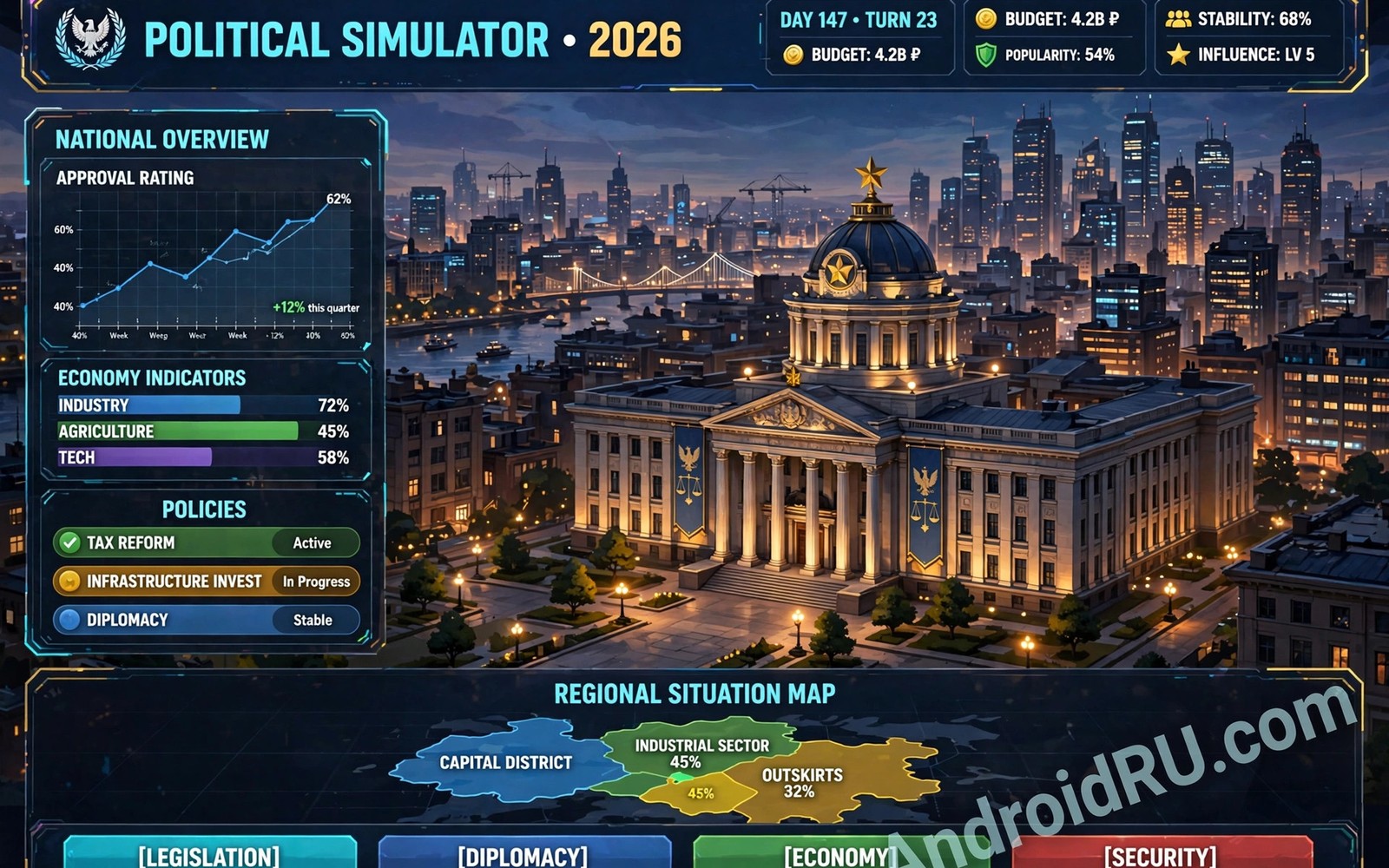
This guide to political and economic simulation games covers the basics that matter most. Political and economic simulation rewards planning more than speed. You will learn how the core systems work. You will also learn how to avoid the errors that cost new players their early games.
Each section builds on the last one in a simple order. Players who enjoy careful planning will find that card game balance sharpens the same habit in a faster setting with shorter matches and clearer feedback. That cross training keeps practice fresh without splitting your focus.
Players who enjoy running nations and economies will find this guide useful. The advice fits short daily sessions. It also fits longer weekend play when you want to test a new idea.
Before you start, set one clear goal for the week. A single goal keeps practice focused. You might aim to scout earlier in every match. You might aim to stop wasting resources on units you never use. Write the goal down and check it after each session.
What makes political and economic simulation different
Political simulation turns governing into a strategy puzzle. Every policy helps one group and hurts another. Budgets force choices that speeches cannot avoid.
Economic simulation adds numbers behind the politics. Taxes fund services and services win votes. A nation that spends without income collapses no matter how popular it starts.
Core systems that decide results
Four systems decide most results in this genre. Learn them in order and your decisions will improve fast. Skip them and even strong units will underperform.
Budget. Balance income against spending each term. Debt grows quietly and then limits choices. Cut low value programs before raising broad taxes.
Public opinion. Track which groups support each policy. A policy that angers a large group costs votes fast. Compromise policies often hold coalitions together.
Trade. Trade deals boost income and resource access. Bad deals create dependence on rivals. Diversify partners to avoid single partner leverage.
Services. Services like health and education build long term strength. Underfunded services decay slowly and then fail suddenly. Fund basics before prestige projects.
A good way to learn these systems is to isolate one per session. Start with budget and use it deliberately in three games. Then move to public opinion and notice how it changes your results. Isolated practice reveals cause and effect faster than changing everything at once.
After that, combine trade with services in the same session. Combined systems create the advantages that win close games. Keep notes on which combination helped most.
A practical session plan
A simple plan beats random play every time. Use the steps below for your first week. Tick each step off as you complete it in real games.
- Read the budget screen before any new policy.
- Pick one coalition to satisfy first.
- Fund basic services before prestige projects.
- Negotiate trade deals with several partners.
- Review opinion polls after each major decision.
After your first week, try tower defense tactics to practise a related skill without abandoning your main game or losing your current progress. Small focused sessions build habits that last.
Choosing the right starting approach
New players often copy advanced strategies too early. Advanced strategies assume skills you have not built yet. Start with a simple approach that you can repeat reliably. Reliable play teaches timing better than complex play does.
Pick one faction or deck or army style and stay with it. Familiarity reveals small advantages that switching hides. You will learn matchups faster with one stable choice. Switch only after you can explain why your current choice loses.
Set difficulty to a level where you win about half your games. Constant wins teach little and constant losses teach frustration. A balanced win rate forces adaptation without crushing confidence. Raise difficulty when wins feel routine rather than earned.
Watch one strong player and copy one habit only. Copying everything at once creates confusion. A single habit like early scouting transfers to every game you play. Add a second habit only when the first feels automatic.
Advanced tactics for steady progress
Once basics feel natural, focus on reading your opponent. Watch what your opponent builds in the first minutes. Early choices reveal their plan before it becomes dangerous. Adjust your own plan as soon as you spot their direction.
Trade resources for position when the trade favours you. A slightly costly move that secures key ground often pays back. Position gives vision and vision gives safer decisions. Avoid trades that gain resources but lose map control.
Plan two moves ahead instead of reacting to each event. Reaction keeps you one step behind a prepared opponent. A short plan lets you ignore distractions that do not matter. Review your plan after each major fight and update it once.
Save your strongest option for the moment it decides a game. Early use of a strong option wastes its surprise value. Patience turns a good card or unit into a winning play. Ask what your opponent fears most and hold the answer until it counts.
Building a weekly practice routine
A weekly routine turns casual play into steady improvement. Short daily sessions beat one long monthly session. Twenty focused minutes teach more than two distracted hours.
Divide each week into learning days and testing days. Use learning days to practise one system in safe matches. Use testing days to play normally and measure the result. Rest days matter too because tired play reinforces bad habits.
- Play three focused sessions on learning days.
- Play two normal sessions on testing days.
- Write one lesson after every session.
- Review lessons each Sunday and pick next week goal.
After a month, compare your notes with your first week. Progress becomes visible in fewer repeated mistakes. That visible progress keeps motivation alive for the next month.
Controls, device setup and performance
Good controls start with settings you check once. Set touch sensitivity to a level that feels steady. Turn off extra effects if your phone heats up during long sessions. A cool phone holds frame rate better than a hot one.
Play in a quiet spot for your first ranked sessions. Notifications break focus at key moments. Use do not disturb mode for matches that matter. Charge your phone before long sessions so low battery warnings never distract you.
Check audio cues as well as visual settings. Sound warnings often arrive before visual threats appear. Use headphones when you play competitive matches. Clear audio helps you react without staring at every corner.
Gear, settings and comfort
Your phone setup affects results more than players admit. A stable grip prevents mis taps during tense moments. A case with good grip beats a slippery premium case for play. Clean your screen before sessions so swipes stay smooth.
Consider a controller only if the game supports it well. Touch controls suit most mobile strategy games by design. A controller adds comfort for long tablet sessions. Test controller support in casual matches before ranked play.
Keep your game updated but read update notes first. Updates can change balance and controls without warning. A quick read of patch notes prevents surprise losses. Update over Wi-Fi before sessions so downloads never interrupt play.
Plan with numbers, not guesses
Numbers turn vague plans into testable choices. This section shows a small budget check example. Run it with your own numbers and compare results.
budget = {"income": 120, "spending": 135}
print("Deficit:", budget["income"] - budget["spending"])
The snippet above is an original planning aid written for this article. It contains no code taken from a game or a store page. You can change the numbers to match your own account and run it on any device that runs Python.
How to tell you are improving
Progress shows in decisions before it shows in ranks. You will scout earlier and waste fewer resources. You will also lose fewer games to mistakes you already fixed.
Track three numbers for two weeks. Record wins and average game length and one repeated error. When the repeated error fades, your rank usually follows.
Share replays with a friend who plays the same genre. A second pair of eyes spots habits you cannot see. Explain your decisions out loud during a replay review. Teaching a choice forces you to understand it fully.
Common mistakes
Most losses come from a short list of repeated errors. Fixing one error at a time works better than changing everything at once.
- Spending without checking income first.
- Pleasing every group with contradictory policies.
- Ignoring debt until it blocks all choices.
- Cutting basic services for prestige projects.
- Signing trade deals with a single partner only.
Many of these mistakes appear in war strategy combat too, so fixing them once improves results across several strategy styles at the same time. Pick the mistake that costs you most and fix it first.
Frequently asked questions
Do I need economics knowledge to play?
No because games explain budgets in simple screens. Basic ideas like income and spending transfer well. Start with small nations and easy scenarios.
Can I win without raising taxes?
Sometimes through trade and efficiency gains. Most games still need some tax income. Balance taxes with service quality to keep support.
Why do popular policies still fail?
Popularity does not fund implementation. Policies need budget and services behind them. Check costs before chasing poll gains.
When to switch games or styles
Stay with one game until its core systems feel natural. Switching early resets learning before habits form. Give a new game at least ten focused sessions. Ten sessions reveal whether the game suits you.
Switch when progress stalls for three weeks despite practice. A stall may mean the game no longer teaches you. Try a related style that uses the same skills differently. Related styles transfer habits while restoring motivation.
Keep your old game installed during the switch. Returning later feels easier with fresh perspective. Many players improve at an old game after a break. A break often fixes habits that grinding could not.
Conclusion
Start small and build one skill at a time. Political and economic simulation becomes far more fun once the core systems feel natural. Use this guide as a checklist for your next ten sessions.
Return to this guide after ten sessions and reread the mistakes section. Mistakes that seemed abstract will feel familiar by then. Fixing them a second time locks in habits that first reads cannot.
Your next step is simple. Open political and economic simulation tonight and play three focused sessions using the session plan above. Note one mistake after each session and fix it in the next one. That loop will do more for your results than any single purchase.

