

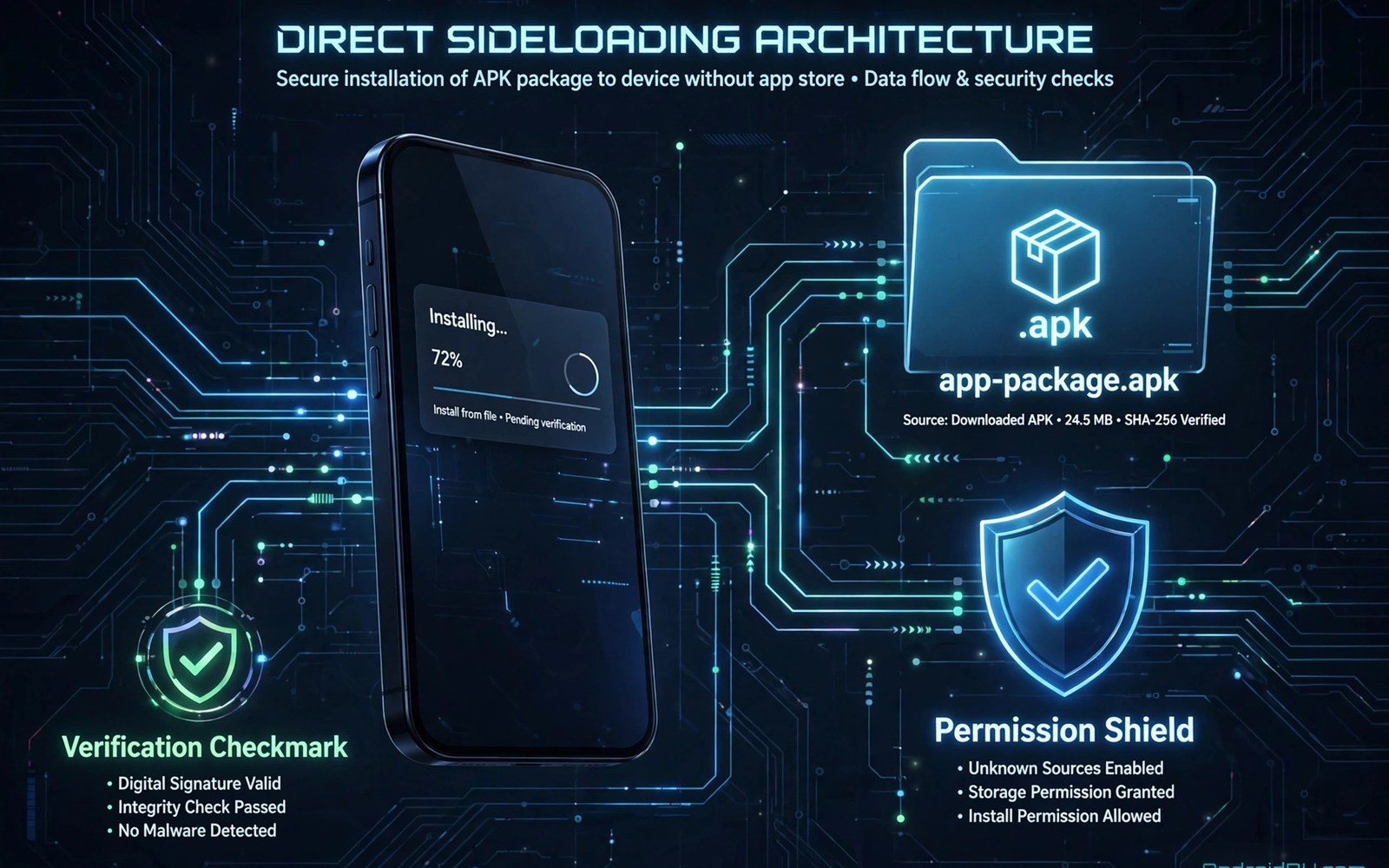
Good tooling for direct APK sideloading architecture removes repetitive manual steps while keeping a human in charge of approvals. When direct APK sideloading architecture is treated as a product feature rather than an afterthought the whole catalog feels steadier. The core idea behind direct APK sideloading architecture is easier to grasp once the full journey is mapped from source to reader device. Sideloading means installing a package from outside the main store through an approved install path. Modern install sessions stage files first so a failed install leaves no half installed app behind. User consent is central because the system asks clearly before an unknown source can install.
A steady approach to direct APK sideloading architecture also protects the team during traffic spikes and rushed release days. Readers who want more background can explore CDN delivery for APK assets and version tracking across thousands of apps. Without attention to direct APK sideloading architecture even strong content can feel unreliable to first time visitors. The business case for direct APK sideloading architecture is simple because fewer failed downloads mean fewer lost readers.
What sideloading means today
Verification runs before install and it checks signatures and declared permissions together. A reader rarely sees direct APK sideloading architecture directly yet the quality of that hidden work shapes every download experience. Small errors in direct APK sideloading architecture compound quickly when thousands of listings share the same pipeline. Clear naming and consistent records make direct APK sideloading architecture far easier to audit when something looks wrong. The safest way to judge direct APK sideloading architecture is to follow one real file from intake through publication and update.
adb install app-release.apk
adb shell pm list packages -3
adb shell pm uninstall example.app
# session based install for larger sets
adb install-multiple base.apk config.en.apk
A single untested assumption in direct APK sideloading architecture can ripple across an entire catalog overnight. Teams should watch for drift in direct APK sideloading architecture because quiet decay is harder to spot than a loud outage. The most common failure in direct APK sideloading architecture is a silent mismatch between what the listing promises and what the file delivers. Rushed changes to direct APK sideloading architecture often create edge cases that only appear on older devices or slow networks.
- Archive old releases instead of deleting them at once.
- Ask a second reviewer to confirm sensitive changes.
- Define one owner for direct APK sideloading architecture checks before any file goes live.
- Record the version and the file size for every release.
- Test the result on a clean device with no cached data.
- Keep a rollback copy of the previous working release.
Install sessions behind the scenes
Sideloaded apps still live under the same sandbox rules as store installed apps. The business case for direct APK sideloading architecture is simple because fewer failed downloads mean fewer lost readers. Consistency in direct APK sideloading architecture builds a habit since readers return to places that worked the first time. Readers trust a catalog more when direct APK sideloading architecture behaves the same way on every visit. Publishers save support time when direct APK sideloading architecture prevents broken links and stale versions from reaching readers.
Next pick one measurable outcome for direct APK sideloading architecture such as fewer failed installs or faster listing updates. Then test the change on a small set of listings and compare the result with the previous week. After the pilot looks stable roll the change out in stages and keep the old path available. Finally schedule a monthly review of direct APK sideloading architecture so improvements keep pace with new platform rules.
- Define one owner for direct APK sideloading architecture checks before any file goes live.
- Record the version and the file size for every release.
- Test the result on a clean device with no cached data.
- Keep a rollback copy of the previous working release.
- Review permissions and declared features before approval.
- Log every change with a date and a short reason.
Permissions and user consent
Updates for sideloaded apps need the same signature or the system will refuse the update. The most common failure in direct APK sideloading architecture is a silent mismatch between what the listing promises and what the file delivers. Rushed changes to direct APK sideloading architecture often create edge cases that only appear on older devices or slow networks. Skipping verification in direct APK sideloading architecture may save minutes today yet cost hours of cleanup after a bad release. Over automation in direct APK sideloading architecture can hide problems until many readers have already hit the same broken path.
Separate staging from production so experiments with direct APK sideloading architecture never leak into the live catalog. Review the oldest listings first because they are the most likely to carry outdated details. A short checklist for direct APK sideloading architecture catches most mistakes before readers ever see them. Version numbers and file sizes deserve a second glance because they are easy to mistype.
- Test the result on a clean device with no cached data.
- Keep a rollback copy of the previous working release.
- Review permissions and declared features before approval.
- Log every change with a date and a short reason.
- Compare the published hash with the stored hash.
- Remove outdated drafts so readers never see stale files.
Package verification steps
Readers should keep unknown sources narrow and grant install rights only to trusted tools. Then test the change on a small set of listings and compare the result with the previous week. After the pilot looks stable roll the change out in stages and keep the old path available. Finally schedule a monthly review of direct APK sideloading architecture so improvements keep pace with new platform rules. Document each decision about direct APK sideloading architecture so a new team member can follow the reasoning later.
No single tool solves direct APK sideloading architecture alone since the workflow spans intake and storage and delivery. Compared with a manual workflow the automated path for direct APK sideloading architecture trades setup effort for long term reliability. Larger catalogs feel the benefit of direct APK sideloading architecture sooner because manual checks stop scaling after a point. Smaller teams can still adopt direct APK sideloading architecture by starting with the one step that fails most often.
- Review permissions and declared features before approval.
- Log every change with a date and a short reason.
- Compare the published hash with the stored hash.
- Remove outdated drafts so readers never see stale files.
- Check download speed on a slow connection.
- Confirm the listing page shows the correct version.
Managing sideloaded apps later
A tidy device removes sideloaded apps it no longer uses instead of letting them linger. Separate staging from production so experiments with direct APK sideloading architecture never leak into the live catalog. Review the oldest listings first because they are the most likely to carry outdated details. A short checklist for direct APK sideloading architecture catches most mistakes before readers ever see them. Version numbers and file sizes deserve a second glance because they are easy to mistype.
A reader rarely sees direct APK sideloading architecture directly yet the quality of that hidden work shapes every download experience. Small errors in direct APK sideloading architecture compound quickly when thousands of listings share the same pipeline. Clear naming and consistent records make direct APK sideloading architecture far easier to audit when something looks wrong. The safest way to judge direct APK sideloading architecture is to follow one real file from intake through publication and update.
- Compare the published hash with the stored hash.
- Remove outdated drafts so readers never see stale files.
- Check download speed on a slow connection.
- Confirm the listing page shows the correct version.
- Archive old releases instead of deleting them at once.
- Ask a second reviewer to confirm sensitive changes.
Safer sideloading habits
Sideloading means installing a package from outside the main store through an approved install path. Compared with a manual workflow the automated path for direct APK sideloading architecture trades setup effort for long term reliability. Larger catalogs feel the benefit of direct APK sideloading architecture sooner because manual checks stop scaling after a point. Smaller teams can still adopt direct APK sideloading architecture by starting with the one step that fails most often. The right balance for direct APK sideloading architecture keeps automation for repetition and human judgment for exceptions.
Publishers save support time when direct APK sideloading architecture prevents broken links and stale versions from reaching readers. A steady approach to direct APK sideloading architecture also protects the team during traffic spikes and rushed release days. Without attention to direct APK sideloading architecture even strong content can feel unreliable to first time visitors. The business case for direct APK sideloading architecture is simple because fewer failed downloads mean fewer lost readers.
- Check download speed on a slow connection.
- Confirm the listing page shows the correct version.
- Archive old releases instead of deleting them at once.
- Ask a second reviewer to confirm sensitive changes.
- Define one owner for direct APK sideloading architecture checks before any file goes live.
- Record the version and the file size for every release.
Putting it all together for readers
Version numbers and file sizes deserve a second glance because they are easy to mistype. Test on a real device when possible since emulators can hide install and storage quirks. Keep logs simple and searchable so the team can trace any listing back to its source. Separate staging from production so experiments with direct APK sideloading architecture never leak into the live catalog. Review the oldest listings first because they are the most likely to carry outdated details.
Smaller teams can still adopt direct APK sideloading architecture by starting with the one step that fails most often. The right balance for direct APK sideloading architecture keeps automation for repetition and human judgment for exceptions. No single tool solves direct APK sideloading architecture alone since the workflow spans intake and storage and delivery. Compared with a manual workflow the automated path for direct APK sideloading architecture trades setup effort for long term reliability.
- Compare the published hash with the stored hash.
- Remove outdated drafts so readers never see stale files.
- Check download speed on a slow connection.
- Confirm the listing page shows the correct version.
- Archive old releases instead of deleting them at once.
- Ask a second reviewer to confirm sensitive changes.
Treat direct APK sideloading architecture as ongoing maintenance rather than a one time project and the catalog will age gracefully. For further reading see bandwidth overhead and compression for downloads and security audits for distribution repositories. The teams that succeed with direct APK sideloading architecture are rarely the fastest since they are the most consistent. A calm review cycle for direct APK sideloading architecture beats a frantic rebuild after every platform change.
The guidance above follows the approach described in the official developer documentation for this platform and matches how experienced distribution teams handle the same tasks.

