

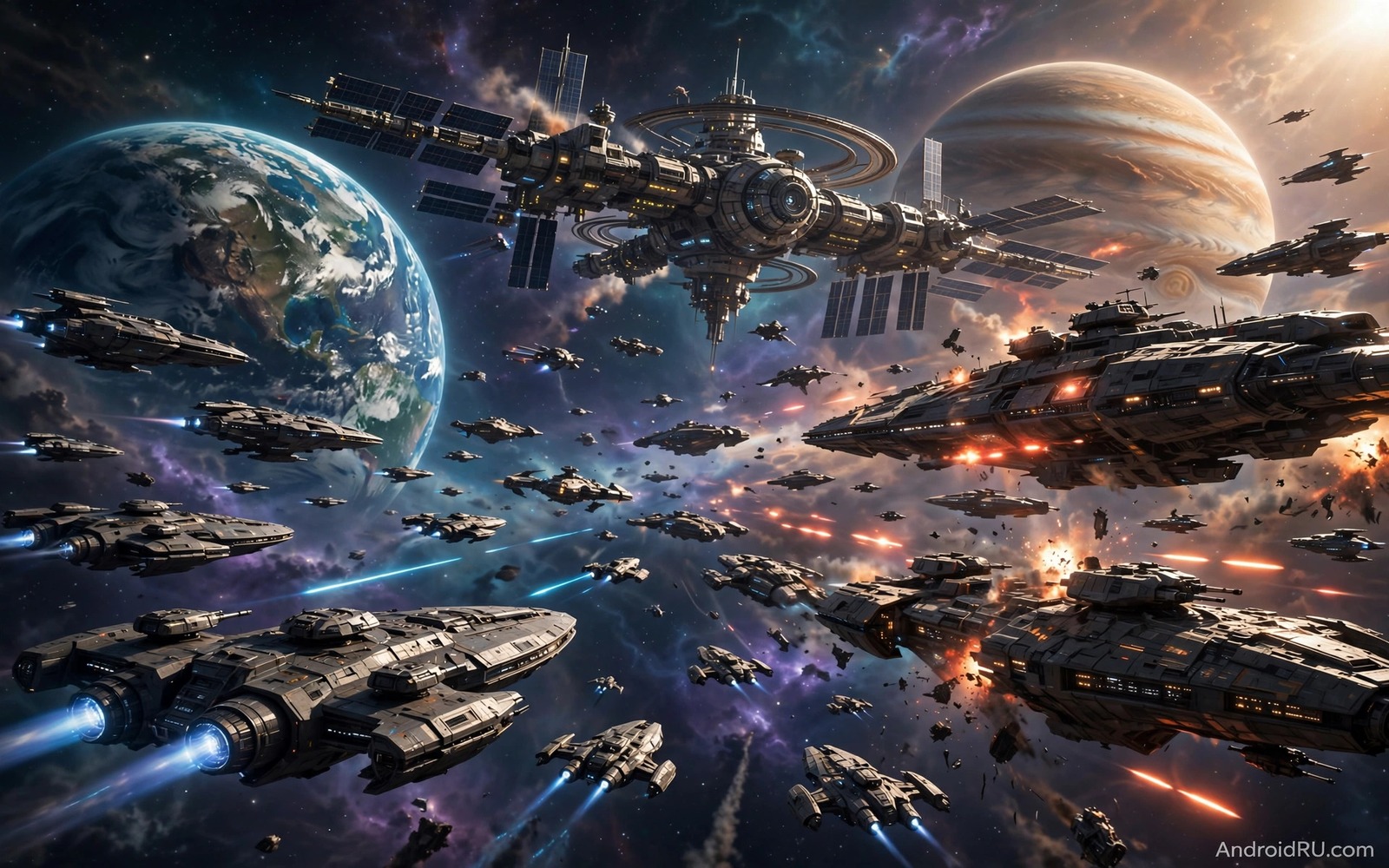
Top Space-Themed RTS Games set in Galactic Environments
There is a moment in every good space strategy game when the map stops looking like a board and starts feeling like a galaxy. You watch a scout slip into a system you have never visited, you see an enemy fleet massing two jumps away, and you realise your next order will decide whether your colonies survive the hour. Ground strategy games give you hills and rivers to fight over. Space strategy gives you distance, timing, and the cold dark between stars, and that changes every decision you make.
This guide ranks the space-themed real-time strategy games that do galactic scale properly, from the 3D fleet battles of Homeworld to the empire-wide wars of Sins of a Solar Empire II. Each game below gets a plain verdict: what it does well, where it falls short, and who should play it. The list covers classics that still hold up, modern sequels that fixed old flaws, and one tactical gem that newer players often miss. If you like careful planning under pressure, you will find your next campaign here.
Players who enjoy fleets and galactic scale will also find that war strategy combat sharpens the same habits in a faster setting, with shorter matches and clearer feedback. That cross-training keeps practice fresh without splitting your focus. The advice in this guide fits short daily sessions as well as longer weekend play, and every game below rewards the same core skills: scouting early, spending wisely, and holding the ground that matters.
What Makes Space RTS Different From Ground RTS
Space strategy trades terrain for distance. There are no hills to hold and no rivers to defend, so the map becomes a web of star systems joined by jump lanes and hyperspace routes. Travel time becomes a weapon: reinforcements that arrive ten minutes late are no reinforcements at all. A player who understands travel times can raid a colony, destroy its defences, and leave before the enemy fleet even arrives. A player who ignores them will watch their empire fall apart one isolated system at a time.
Distance replaces terrain as the key factor
On a ground map, a mountain pass is a natural chokepoint. In space, the chokepoint is a system that connects several routes at once, and holding it guards a whole sector. Losing a hub system can split your empire in two, cutting colonies off from your shipyards and your fleets. Smart players map these hubs in the first minutes of a match and place defences there before they expand anywhere else. The map is not scenery in a space RTS; it is the first decision you make, and it shapes every decision after it.
Fleet shape matters more than single ship power
A single giant battleship looks impressive on screen, and it will lose to a balanced fleet that costs the same. Fighters screen capital ships from bombers, bombers crack stations that fighters cannot scratch, and support ships keep the whole formation alive with repairs and sensors. Fleet composition is the skill that separates new commanders from experienced ones: the right mix of small, fast ships around a heavy core beats a pile of expensive ships with no screen. Learn one balanced mix and use it in every early game, then adjust it once you know what your opponent builds.
How to Pick a Space RTS That Fits Your Time and Skill
Space strategy games vary wildly in match length. A skirmish in Halo Wars 2 can finish in twenty minutes, while a campaign in Stellaris can run for thirty hours across a week. Neither length is better in itself; the right choice is the one that fits the time you actually have. A player with thirty minutes a night should start with a game built around short matches. A player who loves long weekends should pick a game with deep empire systems that reward slow, careful growth.
Match length and session size
Check the average match length before you buy. Games with a strong skirmish mode let you play one complete match in a single sitting, which keeps practice focused and satisfying. Games built around grand campaigns expect you to save and return over many days, which suits players who enjoy watching an empire grow. Both styles work, but mixing them up causes frustration: starting a six-hour campaign when you have forty minutes guarantees an unfinished game and a lost evening. Pick the session size first, then pick the game that matches it.
Learning curve: where beginners should start
Start with the game that teaches you while you play, not the one with the thickest manual. Halo Wars 2 and Star Wars: Empire at War both ease new players in with guided campaigns and clear objectives. Sins of a Solar Empire II and Stellaris expect more from the player, with deeper economies and more systems to learn at once. There is no shame in starting simple: a player who masters one game learns habits that transfer to every other game on this list. Switch to a harder title only when wins in the easy one start to feel routine rather than earned.
The 8 Best Space-Themed RTS Games in Galactic Settings
These eight games earned their places by doing galactic scale well, each in a different way. Some focus on cinematic fleet battles, others on empire building across dozens of systems, and one on tense tactical duels where every ship counts. Read the verdict under each game and pick the one that matches your time, your taste, and your patience for learning curves.
1. Homeworld Remastered Collection
Homeworld remains the benchmark for 3D space strategy more than twenty years after its first release. You command a mothership and its fleet in true three-dimensional space, moving ships above, below, and around the battlefield while a story of exile and return unfolds across the campaign. The Remastered Collection rebuilds the first two games with modern graphics, reworked controls, and a skirmish mode that still produces unforgettable battles. No other game on this list captures the feeling of a fleet moving through deep space quite like it does.
Who it is for: players who want cinematic fleet battles and a story-driven campaign in a true 3D battlefield. Pros: unmatched sense of scale and movement in three dimensions; a moving campaign story that still holds up; remastered visuals and sound that suit modern screens. Cons: the 3D controls take several hours to feel natural; the campaign difficulty spikes sharply in the later missions. Verdict: the essential first pick for anyone who loves space fleets, and the game every other title on this list is measured against.
2. Sins of a Solar Empire II
Sins of a Solar Empire II is the grandest game on this list, a blend of real-time strategy and empire building that plays out across dozens of star systems. You expand from a single homeworld, colonise new planets, research technologies, build trade networks, and raise fleets that can take an hour to cross your empire. The sequel adds dynamic maps, richer diplomacy, and a visual overhaul, while keeping the slow, majestic pace that made the original a cult favourite. Matches here are measured in hours, not minutes.
Who it is for: patient players who love empire building and long, slow-burning wars across a whole galaxy. Pros: huge scale with dozens of systems and deep economy; strong diplomacy and trade systems; each faction plays differently enough to reward replay. Cons: matches run very long, which does not suit short sessions; new players face a steep learning curve with little hand-holding. Verdict: the best choice for players who want a galaxy to rule rather than a battle to win.
3. Stellaris
Stellaris is a grand strategy game that plays in real time, and it offers the widest galaxy on this list. You design a custom species, explore a procedurally generated galaxy, meet alien empires, and shape your civilisation through events, diplomacy, and war. The game pauses with a single key, so the real-time pressure never overwhelms a thoughtful player. Expansions add machine empires, hive minds, espionage, and galactic politics, which means two campaigns rarely play the same way twice.
Who it is for: players who love stories, custom empires, and a galaxy that surprises them every campaign. Pros: endless variety from random galaxies and custom species; a pause button that keeps real-time play relaxed; years of expansions that add real depth. Cons: the full experience costs a lot once expansions are counted; late-game wars can slow down on older machines. Verdict: the richest space strategy experience available, and the best pick for players who value story and variety over fast battles.
4. Battlefleet Gothic: Armada 2
Battlefleet Gothic: Armada 2 turns the Warhammer 40,000 universe into a fleet combat game where capital ships trade broadsides at close range. Battles are brutal and direct: ships ram, board, and blast each other apart while you manage shields, torpedoes, and special abilities. Three campaigns cover the Imperium, the Necrons, and the Tyranids, each with its own ships and tactics. The game is less about economy and more about the fight itself, which makes it the most action-focused title on this list.
Who it is for: players who want heavy, close-range fleet battles in a dark gothic setting. Pros: spectacular capital ship combat with ramming and boarding; three full campaigns with distinct factions; a strong sense of weight and power in every battle. Cons: the economy and empire layer is thin compared with Sins or Stellaris; multiplayer activity has faded since launch. Verdict: the best pick for pure fleet combat, and a great second game once you know the basics of the genre.
5. Star Wars: Empire at War
Star Wars: Empire at War lets you fight the Galactic Civil War on two layers at once: a galactic map where you move fleets and build bases, and real-time battles on the ground and in space. The space battles are the highlight, with Star Destroyers, Mon Calamari cruisers, and fighter squadrons clashing above famous planets. The Forces of Corruption expansion adds a third faction and a deeper campaign. Even years after release, it remains the most accessible way to command a Star Wars fleet, and its modding community keeps it alive with new campaigns and balance updates.
Who it is for: Star Wars fans and new strategy players who want a friendly first space RTS. Pros: two-layer strategy with a galactic map and live battles; an iconic setting with recognisable ships; a large modding community that adds years of extra content. Cons: the graphics show their age; the ground battles are weaker than the space battles. Verdict: the friendliest entry point on this list, and still the best Star Wars strategy game ever made.
6. Halo Wars 2
Halo Wars 2 proves that real-time strategy can work with a controller. Built for Xbox and PC, it trims the genre down to fast, readable matches where you build a base, raise an army, and push for the objective. The Banished faction adds a fresh enemy with its own units and leaders, and the campaign tells a solid Halo story without demanding prior knowledge of the series. Matches usually finish in twenty to thirty minutes, which makes it the best game on this list for short sessions.
Who it is for: console players and busy players who want fast, focused strategy matches. Pros: clean controls that work well on a controller; short matches that fit a single sitting; a polished campaign with strong presentation. Cons: less depth than the PC-focused games here; base building is simpler and offers fewer choices. Verdict: the best space RTS for short sessions, and the easiest way to learn the genre on a console.
7. Homeworld 3
Homeworld 3 returns to the series roots with full 3D fleet combat, a new campaign, and a skirmish mode built for modern play. The headline feature is terrain in space: massive derelict ships and asteroid fields now shape battles, giving fleets cover and creating ambush points that never existed in the earlier games. The campaign follows a new generation of the Hiigaran fleet, and the visuals are the best the series has ever offered. It is the modern answer for players who loved the original and want a current game to play.
Who it is for: returning Homeworld fans and players who want a modern 3D space RTS. Pros: true 3D combat with space terrain that changes tactics; strong presentation and sound; a fresh campaign that respects the original story. Cons: the launch balance needed patches and some systems feel simpler than the remastered classic; the campaign is shorter than the original. Verdict: the modern choice for 3D fleet battles, and a game that keeps improving with updates.
8. Nebulous: Fleet Command
Nebulous: Fleet Command is the tactical gem of this list, a game where every ship is precious and every decision is felt. You design each vessel down to its components, then command a small fleet in slow, deliberate battles where positioning, electronic warfare, and ammunition matter more than raw numbers. There is no base building and no economy to hide behind: the fight is the game. It is the hardest title here to learn, and the most rewarding once its systems click into place.
Who it is for: experienced players who want deep tactical fleet combat without base building. Pros: detailed ship design that rewards careful planning; tense battles where smart positioning beats bigger fleets; a dedicated community that shares fleets and tactics. Cons: a steep learning curve with a thin tutorial; a small player base means longer waits for multiplayer matches. Verdict: the connoisseur pick, and the game to try once the other titles on this list feel too easy.
Space RTS Games Compared Side by Side
The table below puts the eight games next to each other on the criteria that matter most: scale, session length, learning curve, and the player each one suits. Use it to narrow the list to two candidates, then play the campaign opening of each before you commit to a long campaign.
| Game | Scale | Typical session | Learning curve | Best for |
|---|---|---|---|---|
| Homeworld Remastered | Single fleet, 3D battles | 1-2 hours | Medium | Cinematic fleet battles |
| Sins of a Solar Empire II | Whole galaxy, dozens of systems | 3-6 hours | Steep | Empire building |
| Stellaris | Procedural galaxy | 2-10 hours | Steep | Story and variety |
| Battlefleet Gothic: Armada 2 | Fleet battles | 30-60 minutes | Medium | Heavy capital ship combat |
| Star Wars: Empire at War | Galactic map plus battles | 1-2 hours | Gentle | Beginners and Star Wars fans |
| Halo Wars 2 | Single map skirmish | 20-30 minutes | Gentle | Short console sessions |
| Homeworld 3 | Single fleet, 3D battles | 1-2 hours | Medium | Modern 3D fleet combat |
| Nebulous: Fleet Command | Small tactical fleet | 30-60 minutes | Very steep | Deep tactical play |
Fleet Composition Basics That Win Early Matches
Whatever game you pick, the early match follows the same pattern: scout, secure income, build a balanced fleet, and hold the systems that connect your territory. Players who skip the scouting step lose to the first surprise attack. Players who skip income lose the long war even when they win the first battle. The habits below work in every game on this list, and they are worth practising deliberately for your first ten matches.
Build a balanced starter fleet first
Resist the urge to save for one giant ship. A balanced starter fleet of fighters, a few bombers, and one capital ship handles more situations than a single expensive vessel, and it arrives sooner. Fighters keep enemy bombers away from your capital ship. Bombers crack stations and slow targets. The capital ship provides the heavy fire that wins sieges. This mix also teaches you the habit of thinking in roles rather than in raw power, which is the core skill of the whole genre.
Fighter screens first
Build fighters before anything else in the first minutes. They are cheap, they arrive fast, and they protect everything you build after them. A fighter screen also doubles as your scouting force: send two fighters to each nearby system and you will know where the enemy is before they know where you are. Players who skip fighters lose their first capital ship to a bomber run they never saw coming.
Capital ships second
Add capital ships only after your screen exists. A capital ship without fighters is a slow target, and a good opponent will punish it. When you do build one, keep it behind the screen and let it fire from range. Research before expansion is the rule that protects this investment: an upgraded small fleet beats a large outdated fleet, so finish weapon research before you double the size of your navy.
Hold the chokepoints
Chokepoint systems are the systems that connect several routes at once, and holding them guards a whole sector. Place defences there before you expand anywhere else, and keep a reserve fleet near your home system so you can respond to an attack on either side. A reserve fleet feels wasteful until the day it saves your homeworld, and by then it is too late to build one. Position gives vision, vision gives safer decisions, and safer decisions win more games than raw fleet size.
Common Mistakes New Commanders Make
Most early losses come from a short list of repeated errors, and fixing one error at a time works better than changing everything at once. The list below covers the mistakes that cost new players their first ten games. Many of these mistakes appear in PvP arena battles too, so fixing them once improves results across several strategy styles at the same time.
- Building only capital ships without fighter screens, which leaves the fleet open to bomber runs it cannot answer.
- Colonising distant systems without defences, which hands the enemy free targets and splits your attention.
- Expanding fleets before researching upgrades, which spends resources on ships that fall behind in the first real fight.
- Ignoring chokepoint systems on the map, which lets the enemy walk into your territory unopposed.
- Sending the whole fleet on one distant raid, which leaves the home system empty for a counter-attack.
After your first week, try dungeon builder games to practise a related skill without abandoning your main game or losing your current progress. Small focused sessions build habits that last, and the base-building discipline transfers directly back to your space campaigns.
Frequently Asked Questions About Space RTS Games
Are space RTS games harder than ground RTS games?
They feel different rather than harder. Distance replaces terrain as the key factor, so you learn travel times and fleet mix first instead of hill bonuses and river crossings. A player who already knows ground strategy will adapt within a few matches, because scouting, economy, and timing matter in both. The 3D movement in Homeworld is the one skill that takes real practice, and even that feels natural after a weekend of play.
What fleet mix works for beginners?
A mix of fighters and one capital ship class works well in nearly every game on this list. Fighters protect the capital ship from bombers, the capital ship handles stations and heavy targets, and a couple of support ships keep the formation repaired. Start with that mix in every early game, then adjust once you know what your opponent builds. A balanced fleet that arrives on time beats a perfect fleet that arrives too late.
How important are colonies in space RTS games?
Colonies fund everything from ships to research, so they matter enormously. Protect colonies as you would a home base, because a lost colony weakens your whole war effort: less income means fewer ships, and fewer ships means more lost colonies. Grow colonies before expanding the fleet, and never colonise a system you cannot defend. A fleet without colony income cannot replace its losses, and a war of attrition will end it.
Can I play these games on a phone or tablet?
Most games on this list are built for PC and console, where a mouse or controller suits fleet commands better than a touchscreen. Halo Wars 2 is the exception that plays well on a console controller, and several of these titles run on a tablet through cloud streaming services where those are available. Check the current platform listing for each game before you buy, because availability changes with new ports and streaming options. For on-the-go strategy, short-session titles like Halo Wars 2 remain the practical pick.
Your Next Move: Pick One Fleet and Play Three Matches
Choose one game from the table above tonight, using session length as your guide: Halo Wars 2 or Empire at War for short evenings, Homeworld Remastered for a weekend campaign, Sins of a Solar Empire II or Stellaris for a long project. Play three focused matches with the same faction and the same balanced fleet mix, and write down one mistake after each match. Fix that mistake in the next match. That loop will do more for your results than any single purchase, and by the third match the galaxy will start to feel like home.
Return to this guide after ten sessions and reread the mistakes section. Errors that seemed abstract on first reading will feel familiar by then, and fixing them a second time locks in habits that a first read cannot. Space strategy rewards patience more than speed, and the players who improve fastest are the ones who review their losses instead of blaming them.

