

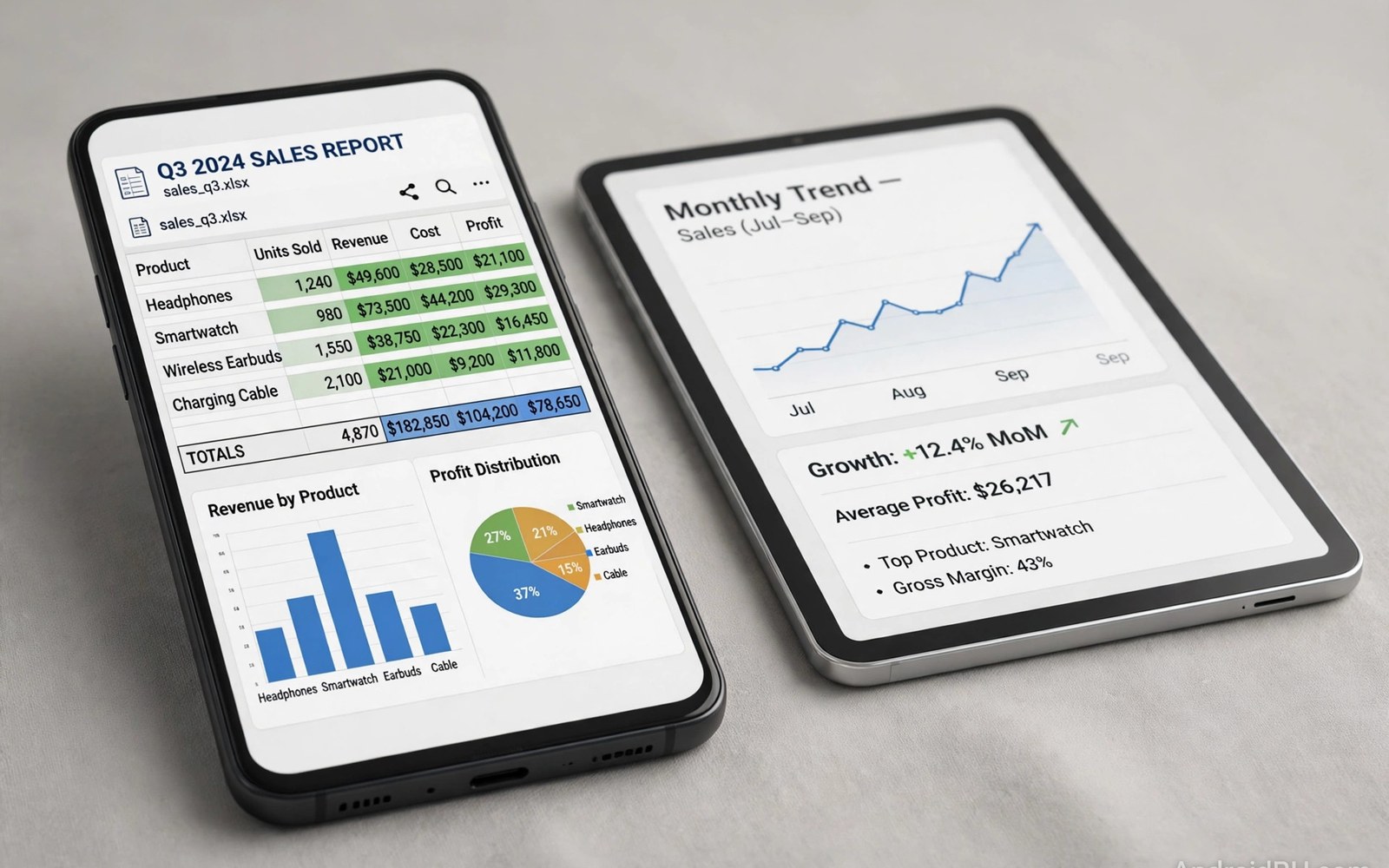
Mobile spreadsheet apps for Android handling large Excel datasets must keep big tables readable and editable without a computer. A good mobile spreadsheet freezes panes and filters rows and calculates formulas without lag. This article shows how to work with large datasets on a phone and when a tablet or computer is the better tool.
Many spreadsheet apps open a small table well and then struggle with thousands of rows. Scroll lag and formula recalculation and filter delays appear only with real large data. The right test uses your own largest file rather than a tiny sample sheet.
Start by listing the spreadsheet jobs you actually do on a phone. Checking totals and filtering rows and entering data each need different strengths. A phone suits quick checks and data entry far better than complex modelling. A closer look at note-taking apps can help you compare daily tools before you commit to one setup.
What matters most
Frozen panes keep headers visible while you scroll through thousands of rows. A table without frozen headers forces you to scroll back to remember column meanings. Freeze the top row and the first column for wide tables on a phone.
Filters and sorting turn a large table into a small answer in seconds. A filter by region or by status can isolate the rows that matter for a decision. A spreadsheet without fast filters will waste time on manual scrolling.
Formulas must recalculate reliably on a phone even when the file is large. A formula that works on a computer may behave differently in a mobile app. Test key formulas on a copy of the file before editing the live version on a phone.
How to choose the right setup
Office spreadsheet apps suit Excel files with complex formulas and formatting. Google Sheets suits shared tables with live collaboration from a phone. A file format mismatch can break formulas when a file moves between apps.
A tablet suits large spreadsheet work far better than a phone screen. A phone suits checking a total or entering a row while away from a desk. Use the device that matches the task size rather than forcing large work onto a small screen.
Cloud sync matters when a spreadsheet changes often and many people use it. A synced file should show the latest version on every device at once. A local copy suits sensitive financial data that should not travel through cloud servers.
A practical daily routine
Start spreadsheet work by opening a copy of the file rather than the live version for risky edits. A copy protects the live file from a wrong filter or a bad formula. Test edits on the copy and apply them to the live file only after checking results. A related look at Notion workflow on Android can show how a second tool fits the same workday without adding clutter.
Use filters to narrow a large table before editing any rows. A narrowed view reduces accidental edits to unrelated rows. Clear filters before saving so the next user sees the full table rather than a filtered fragment.
End work by checking totals and row counts against the version before edits. A total that changed unexpectedly signals an accidental edit somewhere in the table. A quick total check catches errors while they are still easy to fix.
Costs and privacy and limits
Many spreadsheet apps are free with basic editing for modest files. Advanced features and large file support may need a paid tier. Pay only when file size or formula limits block real work rather than for extra templates.
Spreadsheet data can hold financial and personal records that deserve care. Check whether the app uploads files to a server for editing or keeps edits local. Local editing suits sensitive financial tables far better than cloud conversion.
Storage and battery matter because large files can drain a phone during long edits. A large spreadsheet with many formulas can slow a phone and drain battery fast. Work on large files in short sessions and keep a charger nearby.
A useful example
A quick dataset check tells you whether a large table will behave on a phone. The script below counts rows and columns in a CSV file and prints a sample row. Use the same check before opening a huge spreadsheet on a small screen.
import csv
with open("data.csv", newline="", encoding="utf-8") as f:
    rows = list(csv.reader(f))
print(f"Rows: {len(rows)}")
print(f"Columns: {len(rows[0]) if rows else 0}")
print(rows[1] if len(rows) > 1 else "No data rows")
This spreadsheet check pattern follows the approach described in the official Python documentation for comma separated files. The same documentation explains how row and column counts reveal dataset size before editing.
What to check after a week
After a week check formula results on a phone against the same file on a computer. A formula gap reveals a compatibility issue that needs a different app or a simpler formula. A matching total gives confidence for phone edits.
After a week check filter speed on your largest real file. A filter that takes many seconds will frustrate daily use. A faster app or a smaller working copy may solve the delay. A practical look at task manager apps can help you judge whether your current setup still earns its place on your phone.
After a week check file sync by editing a row on a phone and opening the file elsewhere. A sync delay or conflict shows a rule that needs fixing before a deadline depends on the file.
Deeper checks for careful users
Pivot tables and charts often render poorly on a phone screen. A pivot table that looks clear on a computer may crowd a small screen. Use a phone to view pivot results and a computer to build or change pivot layouts.
Data validation rules can prevent bad entries during phone data entry. A dropdown list for status or region reduces typing errors on a small keyboard. Set validation rules on a computer and enjoy cleaner data entry on a phone.
Conditional formatting can highlight key rows but it can also slow large files. Heavy formatting across thousands of rows may lag scrolling on a phone. Use formatting sparingly on large tables and keep it for key columns only.
Making the choice stick
A spreadsheet habit sticks when the current file opens from a home screen shortcut during a project. Place a shortcut for the active file beside the spreadsheet app. A shortcut that opens the right file saves searching through folders each time. A folder search for every session will discourage quick checks. Remove the shortcut when the project ends so the home screen stays focused.
A data entry routine on a phone needs dropdown validation to prevent typing errors. Set validation lists on a computer for status and region and category. A dropdown on a small keyboard beats free typing for accuracy. A free typed entry will create variants that break filters later. Review validation lists monthly and add new values deliberately.
A large file needs a working copy for phone edits rather than the live shared file. Edit the working copy and merge changes back after a total check. A working copy protects the shared file from a wrong filter or formula. A merge after checking totals catches errors while they are still easy to fix. Delete the working copy only after the merge passes.
A chart on a phone suits viewing results rather than building complex visuals. View a chart created on a computer and use the phone to check totals. A chart built on a small screen often needs repair on a computer later. A viewing habit on a phone saves desk trips without creating rework. Build charts on a larger screen and review them on a phone.
A spreadsheet backup needs a version rule for important financial files. Save a dated copy before any large edit or formula change. A dated copy lets you return to a known good state in minutes. A backup without a date will confuse version choice later. Keep dated copies in a separate backup folder away from live files.
A spreadsheet app earns a permanent place when it matches computer totals on your largest file for a month. Test totals weekly and note any formula gap at once. A matching total gives confidence for phone edits. A gap reveals a compatibility issue that needs a different app or a simpler formula. Keep the app that matches totals reliably over time.
A week of practice
Day one of practice should open your largest real spreadsheet and test filters and frozen panes. Filter by a key value and note speed and clarity. A fast filter on a large file proves the app suits your data. A slow filter shows a file size or app limit to fix. Note scroll smoothness as well because lag will discourage use.
Day three of practice should edit a working copy rather than the live file. Make a test edit and check totals before and after. A total check that catches no surprise proves the routine works. A total that changed unexpectedly shows an accidental edit to find. Practise the copy routine until it feels natural.
Day five of practice should test formula results on a phone against a computer. Open the same file on both devices and compare key totals. A matching total gives confidence for phone edits. A gap reveals a compatibility issue that needs a different app or simpler formula. Note any formula that behaved differently.
Day seven of practice should review the week and count phone edits that survived computer checks. A high survival rate proves the mobile workflow works. A low survival rate shows a formula or sync problem to fix. Decide on evidence and keep the app that matched computer totals.
Common mistakes
Most mobile spreadsheet problems come from editing live large files without checks. The list below names the mistakes that cause the most data trouble.
- Editing a live large file without testing on a copy first.
- Scrolling a huge table without frozen panes or filters.
- Trusting phone formulas without checking totals on a computer.
- Saving a filtered view that hides rows from the next user.
- Forcing complex modelling onto a small phone screen.
- Storing sensitive financial tables in a cloud app without checking privacy.
Each mistake above is easy to avoid with a copy and filters and a total check. A phone spreadsheet workflow that passes those checks will serve daily work well. Keep large modelling on a computer and phone work focused and checked.
Frequently asked questions
Can a phone handle large Excel files?
A phone can handle large Excel files for checking totals and filtering and data entry. Complex modelling and pivot work feel better on a tablet or computer. Test your largest file on a phone before relying on it.
Which spreadsheet app is best for Excel on Android?
Office spreadsheet apps suit Excel files with complex formulas and formatting. Google Sheets suits shared tables with live collaboration. Test both with your own largest file for a week.
Are mobile spreadsheet edits safe for shared files?
Mobile edits are safe when you work on a copy for risky changes and check totals after edits. Sync conflicts can occur when many people edit at once. Check sync results before a deadline depends on the file.
Conclusion and next step
A mobile spreadsheet works when panes freeze and filters run fast and formulas match a computer. A phone suits checks and entry and a computer suits modelling. A copy and total check routine will protect large files from phone errors.
Your concrete next step is to test your largest spreadsheet on two apps this week with frozen panes and filters and formula totals. Keep the app that matches computer totals on a phone. A proven mobile workflow will save desk trips for months.

