

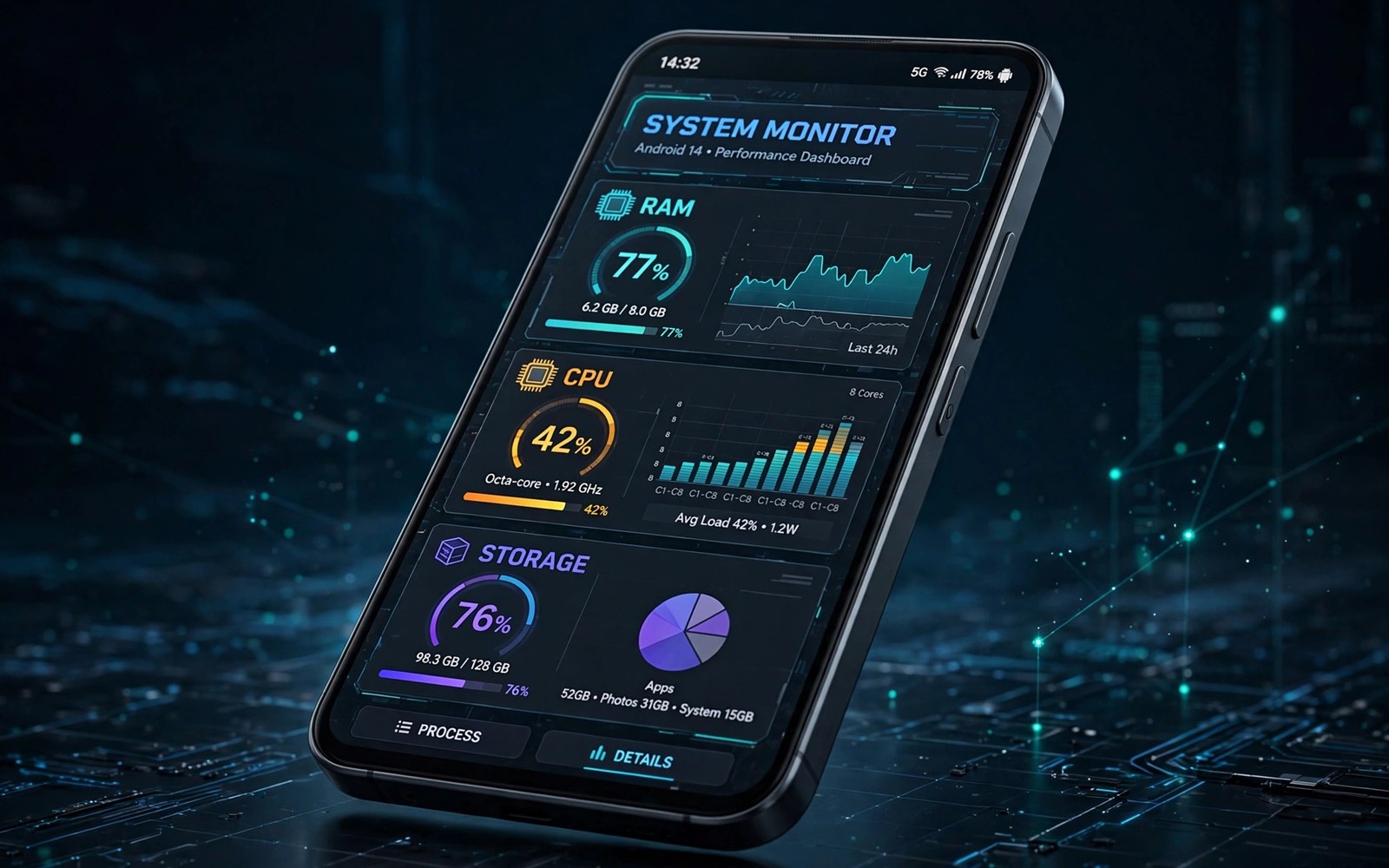
Essential system monitoring apps for RAM and CPU and storage turn vague slowness into clear numbers. A monitor shows which app holds memory and which process heats the processor and which folder fills storage. Those numbers guide fixes that guesses never find. This article teaches you to read a monitor well and to act on what it shows.
Start with a monitor that shows live values and history together. Live values catch a sudden spike while history shows patterns across days. Install one monitor only because two monitors measuring the same system distort each other. Pair monitoring insight with apps to extend smartphone battery life when power and heat appear together. One trusted monitor beats a folder of overlapping tools.
Use this article as a checklist rather than a shopping list. Pick the ideas that match your routine and ignore the rest until your needs change.
Write down the settings you change when you set up a new app. A short note helps you restore the setup after a reset or a new phone. Good notes turn a one time setup into a repeatable routine.
Try one change at a time when you rebuild your phone setup. Install two or three apps first and use them for real tasks before you add more. A slow start reveals problems early while a rushed setup hides them until they hurt.
Write down the settings you change when you set up a new app. A short note helps you restore the setup after a reset or a new phone. Good notes turn a one time setup into a repeatable routine.
Read RAM without panic
Android keeps apps in RAM on purpose so reopening them feels instant. High RAM use alone is not a problem when the phone feels fast. Worry only when free RAM stays near zero and apps reload constantly or the launcher restarts. A monitor that shows cached versus used memory tells the real story. Cached memory is ready to free at once while truly used memory is not.
Check which apps hold the most memory over a day rather than at one moment. A browser with many tabs naturally holds more than a calculator. Judge an app by whether its memory grows without bound during normal use. Growth without bound signals a leak worth reporting or replacing.
Protect your accounts with a second factor wherever the app offers it. A second factor blocks most automated attacks even when a password leaks. Enable it on mail and cloud and banking apps first because those guard the rest.
Notifications decide whether an app helps you or interrupts you all day. Keep alerts on for messages that need a fast reply and silence the rest. A quiet phone still delivers urgent news while it protects your focus.
Check the data use of a new app during its first week. An app that syncs large files in the background can surprise you on a capped plan. Wi-Fi only sync for heavy apps keeps mobile data for urgent use.
Understand CPU and heat
CPU graphs show short spikes during app launches and sustained load during games or video work. Spikes are normal while sustained high load with heat is a warning. A hot phone throttles speed to protect itself which feels like sudden slowness. Find the app behind sustained load and restrict its background work or replace it.
Background CPU use deserves more attention than foreground spikes. An app that burns CPU while the screen is off drains battery and heats a pocket. Check background CPU in the monitor history each evening for a week. A pattern of night time CPU use names a clear target for restriction. A related job worth covering is tools for large downloaded files alongside the tools above.
Permissions deserve a quick review before you trust a new app with daily work. Grant only the access the app truly needs for its main job and leave the rest off until a feature asks for it. You can change any permission later in system settings without losing your data.
A simple home screen layout makes good apps easier to reach. Put daily tools on the first screen and move rarely used apps into folders. Fewer taps mean you finish tasks faster and you are less likely to open a distraction by accident.
Learn one advanced feature per month inside an app you already love. Small steady learning beats a weekend of tutorials that you forget by Monday. One feature per month compounds into mastery within a year.
Storage trends over time
Storage monitors should show growth by folder and by app over weeks. A messaging app that grows by hundreds of megabytes each month stores media you can trim. A system cache that grows steadily may need a simple cache clear for one app. Trend data turns storage cleanup from panic into routine.
Set a storage alert at a comfortable free space level so warnings arrive before installs fail. An alert at two gigabytes gives time to move photos or delete downloads calmly. Waiting for a full storage warning forces rushed deletions. Early alerts protect both data and calm.
Updates matter because developers fix bugs and close security gaps in each release. Turn on automatic updates for trusted apps and read the changelog when an update changes a feature you rely on. Skip an update only when you have a clear reason and a backup plan.
Compare two similar apps on the same task on the same day. A direct comparison shows speed and clarity differences that feature lists hide. Pick the winner promptly and remove the loser so data never splits across two tools.
Updates matter because developers fix bugs and close security gaps in each release. Turn on automatic updates for trusted apps and read the changelog when an update changes a feature you rely on. Skip an update only when you have a clear reason and a backup plan.
adb shell dumpsys meminfo
adb shell top -n 1 -s cpu
adb shell df -h /data
The memory and CPU commands above follow the pattern used in Android developer guides for inspecting app memory and process load. The same guides explain that process inspection shows which apps consume processor time.
Network monitoring basics
Network monitors show which apps use mobile data and Wi-Fi and when they use it. A video app that uploads in the background deserves a Wi-Fi only setting. A game that downloads large updates on mobile data needs an update restriction. Data evidence ends arguments about which app ate the monthly allowance. Owners with little storage can also try lightweight apps for small phones for the same routine.
Check data use per app at the end of each billing cycle. Compare the top data users with the apps you actually value most. Restrict background data for apps that rank high on data but low on value. That single review can save real money on a capped plan.
Try one change at a time when you rebuild your phone setup. Install two or three apps first and use them for real tasks before you add more. A slow start reveals problems early while a rushed setup hides them until they hurt.
Review app settings after a major update because updates sometimes reset a preference. A two minute settings check after an update prevents silent changes to privacy or sync. Updates should improve an app and never surprise its owner.
Check how an app handles your data before you sign in. Read the privacy screen inside the app and look for clear controls to export or delete your content. Strong defaults beat long promises when you compare two similar apps.
Act on monitor data
A monitor only helps when its data changes a decision. Restrict or replace or clear cache for the top offender each week and then watch the next week data. Improvement in the numbers confirms the fix while no change suggests a different cause. Treat monitoring as a weekly loop of measure and fix and remeasure.
Export or screenshot key readings before a major change such as a system update. A baseline lets you compare performance before and after with facts. Without a baseline every change feels like a guess. Baselines turn phone care into a disciplined habit.
Test an app with your real routine before you judge it. A demo on a quiet afternoon hides problems that appear during a busy commute or a low battery day. Real use shows speed and reliability in a way that screenshots never can.
Learn one advanced feature per month inside an app you already love. Small steady learning beats a weekend of tutorials that you forget by Monday. One feature per month compounds into mastery within a year.
Check the data use of a new app during its first week. An app that syncs large files in the background can surprise you on a capped plan. Wi-Fi only sync for heavy apps keeps mobile data for urgent use.
Common mistakes
A common mistake is treating high RAM use as a fault and installing cleaners that fight Android memory management. Another mistake is checking a monitor once and acting on a single spike. A third mistake is installing several monitors that themselves drain battery and distort readings. Read trends and act weekly and keep one monitor.
Notifications decide whether an app helps you or interrupts you all day. Keep alerts on for messages that need a fast reply and silence the rest. A quiet phone still delivers urgent news while it protects your focus.
Keep the home screen focused on tools you open every day. Move seasonal or rare apps into a folder with a clear name. A focused home screen reduces taps and helps you reach the right tool without hunting.
Notifications decide whether an app helps you or interrupts you all day. Keep alerts on for messages that need a fast reply and silence the rest. A quiet phone still delivers urgent news while it protects your focus.
Frequently asked questions
Is high RAM use bad on Android?
High RAM use is normal because Android caches apps for fast reopening. Judge RAM by reloads and slowness rather than by a single percentage.
Do monitoring apps drain battery?
A well built monitor uses little power when it samples at intervals. Avoid monitors that poll every second or show constant floating overlays.
What should I check first when a phone slows down?
Check CPU load and storage free space first. Those two numbers explain most slowdowns without deeper digging.
What to do next
Your concrete next step is to install one system monitor today and record RAM and CPU and storage readings tonight. Repeat the readings in seven days and fix the single worst offender you find. Measured care beats guesswork every time.
A backup turns a phone problem into a short delay instead of a lost week. Sync important notes and files to a cloud account you control and test the restore step once. A backup you never tested is only a hope and not a plan.
The best setup is the one you actually use every day. Choose tools that fit your routine and let the rest go without regret.

