

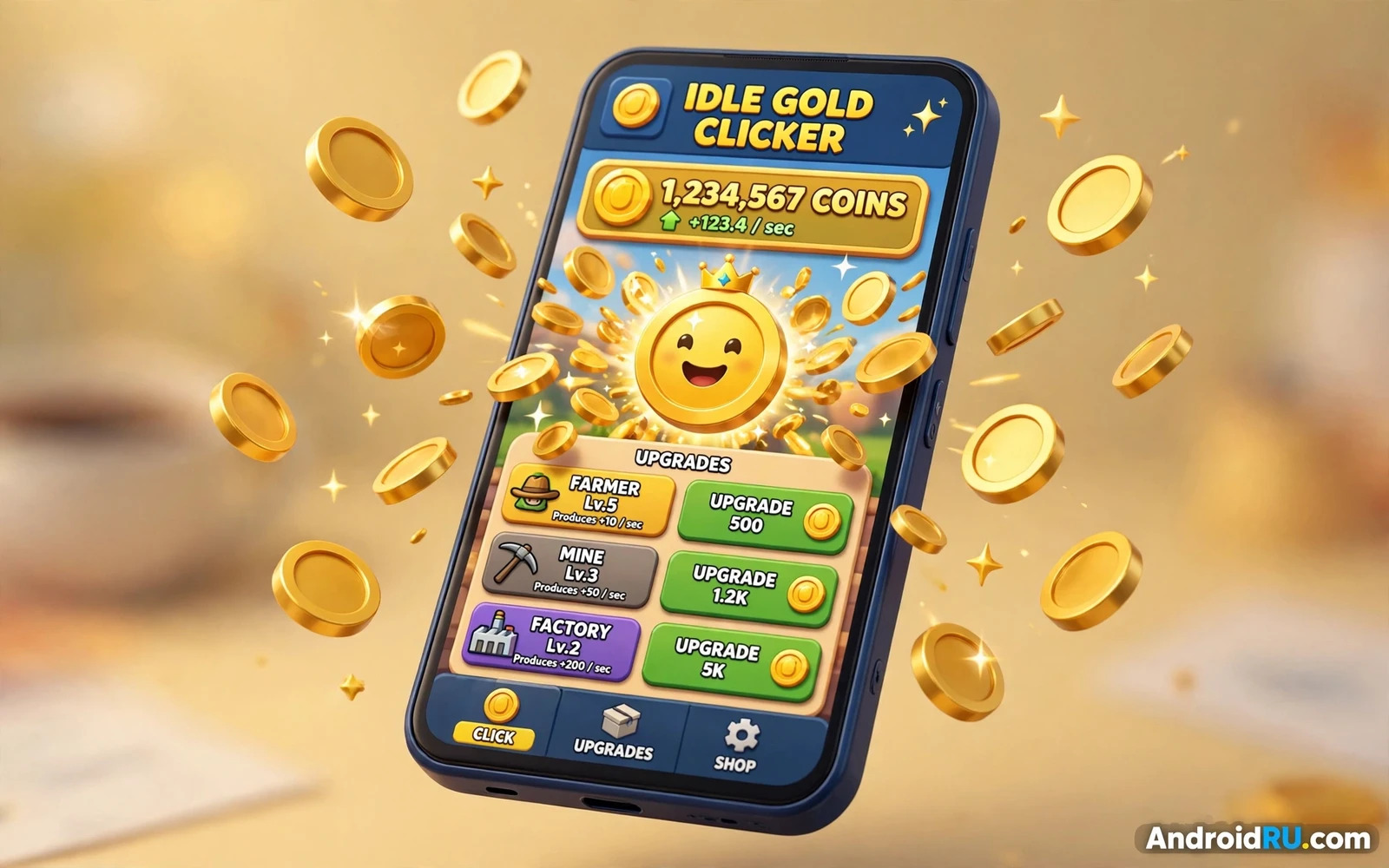
Top Idle Clicker Games for Casual Mobile Gamers
I opened my first idle clicker game on a crowded train with about four minutes to spare, tapped a cartoon lemonade stand a dozen times, and closed the app feeling like I had done nothing at all. When I opened it again that evening, the stand had earned money while I was gone, and I could suddenly afford a second stand, then a third. That small moment explains the whole genre: a few taps now, a little planning, and progress that keeps going while you live your life.
Casual mobile gamers do not want a second job. They want a game that fits between meetings, on a lunch break, or on the sofa after dinner. Idle clicker games do exactly that. You tap to earn, you spend earnings on upgrades, and the upgrades earn for you, even when the app is closed. There is no ranked ladder waiting to punish you for missing a day, and no opponent who needs you to react in half a second.
This guide names the games that are actually worth your time. You will find eight real idle clicker games for Android, each with its own honest rundown of what it does, who it suits, what is good about it, what is not, and whether you should install it. After the list, you will find a plain explanation of prestige systems and offline earnings, a comparison table, and answers to the questions casual players ask most.
Why idle clicker games fit casual mobile gamers so well
The best idle games respect your calendar. A session can last ninety seconds: open the game, collect what your businesses earned overnight, buy the two upgrades that matter most, and close it again. That short loop still feels productive, because the numbers on screen are visibly bigger than they were yesterday. A game that makes ninety seconds feel worthwhile is a game that survives on a busy phone.
There is also no skill wall. You do not need fast reflexes, a memorised build order, or a headset full of teammates shouting instructions. You need a little patience and a little judgement about where to spend. That low barrier is why so many people who say they are not gamers still keep an idle game installed for months.
The loop: tap, upgrade, walk away
Every idle clicker runs on the same three-step loop. First you tap to earn your first coins. Then you spend those coins on something that earns coins without tapping, like a shop, a mine, or a farm. Then you walk away, and the thing you bought keeps earning. Each cycle makes the next cycle faster, so the game constantly hands you a new goal that is just within reach.
That loop works because the next upgrade is always visible. You can see the price of the next mine or the next manager, and you can roughly guess how long it will take to afford it. Games that hide their goals feel aimless, while games that show a clear next step keep you checking back twice a day without ever nagging you.
Why watching numbers grow feels so good
Part of the pleasure is pure scale. You start by earning coins one at a time, and a week later you are earning millions per second. The jump from small numbers to absurd numbers is the genre’s signature joke, and it never quite gets old. A good idle game paces those jumps so that every session includes at least one satisfying purchase.
The other part is control. Unlike a slot machine, an idle game rewards a decision: spend now on a small boost, or save for a bigger multiplier. Those choices are light, but they are real, and they are why a thoughtful idle game can hold your attention for months while a purely automatic one gets deleted in a week.
The 8 best idle clicker games for Android in 2026
These eight games cover the main flavours of the genre: business empires, farming, mining, cats, heroes, and the post-apocalypse. Every one of them is free to start on Android, works in short bursts, and has been played by millions of people. I have ordered them by how well they suit a casual player who checks in once or twice a day, not by raw download count.
1. Adventure Capitalist
Adventure Capitalist is the game most people picture when they hear the words idle clicker. You start with a single lemonade stand on Earth, then buy newspaper stands, donut shops, and eventually oil companies, banks, and a business empire on the Moon and Mars. The humour is dry, the numbers get gloriously silly, and the core loop is about as clean as the genre gets.
What it does best is teach the genre without a tutorial that talks down to you. Managers can be hired to automate each business, so after the first hour your empire runs itself and your job becomes deciding which business to expand next. Events arrive regularly, including limited-time events on the Moon and Mars, and they hand out gold that speeds up your main game. Pros: the clearest upgrade path in the genre, generous events, and a theme that makes every purchase feel like a joke that landed. Cons: the art is plain, the late game slows down hard between big purchases, and the ad bonuses can tempt you into watching more ads than you planned. Verdict: the first idle game anyone should try, and still the best test of whether the genre is for you.
2. Egg, Inc.
Egg, Inc. asks a wonderfully strange question: what if you ran a chicken farm that became an egg empire? You build hatcheries, buy bigger coops, research better feed, and send delivery drones out to sell eggs. The farm fills with chickens, the numbers climb, and the whole thing is calmer than almost any other game in this list.
It suits players who want a slow, pretty game rather than a loud one. The farm is pleasant to look at, the music is gentle, and there is no fail state at all. You cannot lose an egg farm. The research system gives you long-term goals, and the drone deliveries add a small active minigame for days when you want to tap for a few minutes. Pros: relaxing pace, charming visuals, and a research tree that rewards patient players. Cons: progress can feel very slow in the middle weeks, and the premium currency is tempting when a new hatchery costs a fortune. Verdict: the calmest game on this list, and the one I recommend to anyone who plays to unwind.
3. Idle Miner Tycoon
Idle Miner Tycoon turns you into the manager of a mining operation. You dig shafts, hire managers for each level, upgrade elevators and warehouses, and balance the flow of ore from the ground to the surface. It is a little more hands-on than Adventure Capitalist, because a mine where the elevator is slower than the shafts wastes production, and fixing that bottleneck is the game.
That balancing act is what makes it interesting for players who like light strategy with their tapping. You are not just buying the next shiny upgrade; you are deciding whether the mine shaft, the elevator, or the warehouse is the weak link today. Expeditions and events add variety, and mainland mines give you longer goals beyond a single mine. Pros: real decisions about bottlenecks, satisfying visual progress as shafts deepen, and plenty of mines to work through. Cons: it asks for more frequent check-ins than the laziest games here, and some upgrades are priced to push you toward purchases. Verdict: the best pick if you want your idle game to make you think a little.
4. Neko Atsume: Kitty Collector
Neko Atsume is the gentlest game on this list, and the least like a traditional clicker. You put out food and toys in a virtual yard, and cats visit while you are away. You collect photos of them, earn fish as currency, and buy nicer toys to attract rarer cats. There is almost no tapping at all, which is exactly the point.
It suits players who want a collection game that never demands anything. Nobody loses in Neko Atsume. A cat visits, or it does not, and either way your yard looks nice. The joy is in the surprises: a new cat, a rare cat, a cat using a toy in an unexpected way. The game has been around for years, and its charm has not faded, because it never tries to be more than a quiet yard full of cats. Pros: zero pressure, delightful art, and a collection that grows naturally over weeks. Cons: there is very little to actually do in a session, and players who want goals and upgrades will get bored fast. Verdict: the perfect second idle game for people who already have a busy main game.
5. Tap Titans 2
Tap Titans 2 is the loudest game on this list. You tap to swing a sword at waves of titans, recruit heroes who fight alongside you, and prestige to grow stronger for the next run. It sits halfway between an idle game and an action game: it plays itself when you leave it, but an active session of fast tapping can push you much further than an idle one.
That mix suits players who want an idle game they can also play properly when they have ten minutes. Clans add a social layer, with shared raids and weekly goals, and tournaments give you a reason to push hard on a Sunday afternoon. The art is colourful, the heroes are varied, and the prestige system is more generous than in most clickers. Pros: great for both active and idle play, strong clan features, and frequent events with real rewards. Cons: it leans harder on in-app purchases than the quieter games here, and the screen is busy enough to tire some players. Verdict: the best idle game for people who like a bit of noise and a guild to play with.
6. Fallout Shelter
Fallout Shelter puts you in charge of a vault in the post-apocalyptic world of Fallout. You build rooms, assign dwellers to jobs, send explorers out into the wasteland, and defend the vault when raiders attack. Resources like power, food, and water tick up over time, so the vault keeps running while you are away, but it also needs your attention when things go wrong.
It suits players who want a management game with a strong theme rather than a pure numbers game. The dwellers have names, personalities, and family lines, and the vault slowly becomes a place you care about. The Fallout setting is used well: the humour, the art style, and the wasteland exploration all feel true to the series. Pros: a rich theme, real management decisions, and a free game that never forces a purchase to progress. Cons: it needs more attention than a pure idle game, and a vault left alone for days can come back to a crisis. Verdict: the best choice for players who want story and character with their idle progress.
7. Clicker Heroes
Clicker Heroes is one of the oldest names in the genre, and it still holds up. You click to damage monsters, hire heroes who damage them automatically, and move through zones that get steadily tougher. When progress stalls, you ascend: reset the run in exchange for hero souls that make every future run stronger. That cycle of climbing, stalling, and ascending is the purest version of the idle game loop.
It suits players who enjoy watching a build come together. The heroes have distinct abilities, and choosing which ones to level first changes how a run feels. The game is not flashy, and it does not pretend to be anything other than a numbers game with monsters, but the pacing is honest and the ascension system rewards patience. Pros: a clean, deep upgrade system, a fair ascension loop, and no pressure to spend money. Cons: the presentation is dated, and the early game is slower than the newer games on this list. Verdict: the classic pick for players who want depth over decoration.
8. Cats & Soup
Cats & Soup is a cooking game where cats chop vegetables, stir pots, and serve soup while you watch. You earn coins, buy new facilities like a carrot peeler or a juice bar, and the cats get better at their jobs as you upgrade. It is slow, soft, and almost aggressively relaxing, with rain sounds and gentle music that make it feel more like a cosy animation than a game.
It suits players who open an idle game to calm down rather than to chase a goal. There are no timers breathing down your neck and no enemies to fight. The cats wear little outfits, the soup simmers, and the coins accumulate. Events add seasonal recipes and decorations, which gives collectors something to return for without adding pressure. Pros: the most relaxing game on this list, lovely art, and a pace that suits a five-minute evening check-in. Cons: very little challenge, and the upgrade costs climb steeply after the first weeks. Verdict: the best idle game to play right before bed.
How prestige, offline earnings and multipliers really work
Three systems decide whether an idle game stays fun after the first week: prestige, offline earnings, and multipliers. Understand these three, and you will get far more out of every game on this list than a player who just taps and hopes. They are the difference between a run that stalls on day four and a run that keeps climbing for months.
Prestige resets: lose a run, keep a permanent bonus
A prestige reset trades your current progress for a permanent bonus that makes the next run faster. You give up your businesses, your mines, or your heroes, and in return you get a currency or a multiplier that stays with you forever. The first time you do it, it feels like throwing away a week of work. The second time, you will wonder why you waited so long, because the next run reaches your old peak in a fraction of the time.
When to prestige for the first time
Prestige when progress has clearly slowed, not before. A good rule is to wait until the bonus you would gain is at least double what you have now, or until you have not been able to afford a meaningful upgrade for two full days. Prestiging too early gives you a tiny bonus and a long climb back, which is the most common way new players burn out on an idle game.
What a prestige bonus actually multiplies
Read the description before you reset, because not every bonus works the same way. Some bonuses multiply all production, which is the best kind. Some only multiply tap damage or one type of income. A prestige reset that multiplies everything is worth waiting for, while a narrow bonus can be safely ignored until later. The game will usually show you the exact bonus before you confirm, so check that number and do the sums in your head.
Offline earnings: what you earn while the phone sleeps
Offline earnings are the currency your game calculates for the hours you were away. Most games pay a fraction of your normal production rate while you are offline, often for a capped number of hours, commonly eight to twelve. That cap is the number to check first, because it sets your check-in rhythm: a game with an eight-hour cap suits a morning and evening routine, while a game with a two-hour cap wants you back far too often.
Some games let you double offline earnings by watching an ad when you return. That is a fair trade when it is optional and quick. It becomes a chore when the game withholds most of your earnings behind the ad. A generous offline rate is one of the best signs of a casual-friendly idle game, and it matters more than almost any other feature on the list.
Multipliers beat flat bonuses almost every time
When you have a choice between an upgrade that adds a fixed amount and one that multiplies your production, take the multiplier. A flat bonus of 100 coins per second is useful on day one and invisible on day ten. A multiplier of double production grows with every upgrade you buy after it. Early multipliers compound through the whole run, which is why experienced players buy them first and leave flat bonuses for later.
The same logic applies to new production lines. An upgrade that opens a new mine shaft or a new business can matter more than strengthening the one you already have, because a new line adds its own multipliers and bonuses to the total. When in doubt, ask one question: does this upgrade make everything else I own better, or just one thing? The answer tells you what to buy.
Ads, in-app purchases and energy systems: what to check before you commit
Every free idle game on Android has to make money somehow, and how it does so decides whether it stays relaxing. The healthiest model is optional ads for bonus rewards: you watch an ad when you want double earnings or a free boost, and you skip it when you do not. That model respects your time, because the choice is always yours.
Forced ads are the opposite. A game that shows a full-screen video between every action, or after every prestige, is not a calm game, no matter how pretty its art is. Play for one full day before you decide a game is a keeper, and count how often ads interrupt you. If you notice the ads more than the game, delete it and try the next name on this list.
Optional ads vs forced ads
Optional ads usually appear as a small button: double your offline earnings, speed up production for four hours, or earn a chest of premium currency. Those are worth using when you are about to close the game for the night, because the bonus works while you are away. Forced ads appear on a timer or after an action, and they break the exact calm the genre is supposed to deliver.
A useful test is the first session test. Open the game, play for ten minutes, and note every ad you did not choose to watch. Zero is excellent. One short ad is acceptable. Three or more in ten minutes means the game is built to sell your attention, not your enjoyment, and a casual player will tire of it within a week.
Paying without regret: what is worth buying
If you do spend money, spend it on permanent things. A one-time purchase that removes ads forever is the best value in almost any idle game, because it improves every session from then on. A permanent production multiplier is the next best thing. Avoid spending on temporary boosts or on currency that vanishes in a single shopping spree, because those purchases feel good for an hour and empty by the weekend.
Starter packs deserve a careful look before you buy. Some are genuinely good value, bundling ad removal with a useful boost. Others are priced to catch a new player who has not yet learned what the currencies are worth. A good rule is to play free for a week first. If you still love the game after seven days, then a purchase is a reward for a game you already enjoy, not a gamble on one you might not.
Energy systems that respect your time
Some idle games add an energy bar that limits how much you can play, which is a strange fit for a genre built on patience. A generous energy system lets you play whenever you want and refills fast enough that you never notice it. A harsh one stops you mid-session and asks you to wait or pay, which turns a calm game into a vending machine. Before committing to a game, check whether it has energy at all, and if it does, check how fast it refills. The games on this list either have no energy system or one you can safely ignore.
Idle clicker games vs puzzle and strategy games for short sessions
Idle games are not the only way to spend five quiet minutes on a phone. Puzzle games sharpen focus, strategy games reward planning, and offline games cover the moments when the signal drops. The smart move is to keep one of each on your phone and reach for whichever fits your mood. An idle game is for the moments when you want progress without effort, a puzzle is for the moments when you want to think, and a strategy game is for the evenings when you have half an hour to spare.
For travel and weak coverage, it helps to have games that need no connection at all, and Best Offline Android Games That Don’t Require Wi-Fi covers the best options for planes, trains, and rural trips. Idle games often need a connection for events and daily rewards, so an offline game in the same library means you are never stuck staring at a loading screen.
When you want a thinking break between idle check-ins, Best Puzzle Games for Android to Train Your Brain offers puzzles that keep your mind busy while your idle game keeps earning in the background. The two genres balance each other well: puzzles demand focus and logic, idle games demand patience and timing, and alternating between them keeps a long day of mobile play from going stale.
And if the planning side of idle games is what you enjoy most, Best Strategy Games for Android: Build Your Empire offers deeper long-term planning, with base building, resource management, and decisions that matter for days rather than minutes. Strategy games ask for more attention, but they reward the same instinct that makes a good idle player: spend wisely, plan ahead, and let small gains compound.
A simple rotation that keeps mobile play fresh
Here is a rotation that works well for most casual players. Keep one main idle game for daily progress, one puzzle game for thinking breaks, and one strategy game for longer evenings. Check the idle game in the morning and the evening, play the puzzle game during a lunch break, and open the strategy game when you have a proper half hour. That small library covers every mood without turning your phone into a list of chores.
Two idle games at once is the sensible maximum. More than that, and your check-ins start to feel like a shift rota rather than a hobby. One main idle game and one gentle one, like Neko Atsume or Cats and Soup, gives you variety without splitting your attention so thinly that neither game makes real progress.
Comparison table: which idle clicker game should you pick first
The table below lines up all eight games on the points that matter to a casual player: what it is best for, how generous its offline earnings are, and how heavy its ads feel. Use it to narrow the list to two or three names, then try each of those for a day and keep the one that fits your routine.
| Game | Best for | Offline earnings | Ad pressure | Effort per session |
|---|---|---|---|---|
| Adventure Capitalist | First-time idle players | Generous, with optional ad doubling | Low, mostly optional | Very low |
| Egg, Inc. | Relaxing, slow play | Good, capped at fair hours | Low, mostly optional | Very low |
| Idle Miner Tycoon | Players who like light strategy | Good, rewards regular check-ins | Medium, some prompted ads | Low to medium |
| Neko Atsume | Zero-pressure collecting | Not applicable, cats visit anytime | Very low | Almost none |
| Tap Titans 2 | Active play and clans | Good, with tournament rewards | Medium, event-driven offers | Medium when active |
| Fallout Shelter | Theme and management fans | Moderate, vault needs attention | Low, no forced ads | Medium |
| Clicker Heroes | Deep upgrade systems | Good, with ascension bonuses | Low | Low |
| Cats & Soup | Calm evenings before bed | Good, gentle pace | Low, mostly optional | Very low |
If you only install one game from this list, make it Adventure Capitalist when you want the classic experience, Egg, Inc. when you want calm, or Idle Miner Tycoon when you want decisions. If you install two, pair a busy one with a gentle one: Tap Titans 2 with Neko Atsume, or Idle Miner Tycoon with Cats and Soup. The pairing matters more than any single pick, because the gentle game is the one that will still be on your phone in six months.
Frequently asked questions about idle clicker games for casual mobile gamers
What is the best idle clicker game for beginners?
Adventure Capitalist is the safest first pick, because its upgrade path is the clearest in the genre and its managers automate each business early. Egg, Inc. is the better pick if you want something calmer, since it has no fail state and a gentler pace. Either way, play free for a week before spending anything, and prestige only after you have read what the bonus actually does.
How do offline earnings work in idle clicker games?
When you close the game, it records the time you were away and pays you a share of your normal production when you return, usually capped at eight to twelve hours. Some games pay the full rate, most pay a reduced rate, and a few let you double the payout by watching one optional ad. Check the cap in the settings or help screen before you commit, because a short cap means the game wants you back far more often than a casual player wants to return.
Can you play idle clicker games without an internet connection?
Many idle games work offline for the core loop of tapping and upgrading, but events, daily rewards, and cloud saves usually need a connection. Adventure Capitalist and Egg, Inc. both handle offline sessions well, while event-heavy games like Tap Titans 2 lose more when offline. If you travel often, keep a fully offline game beside your idle game so a dead signal never ends your play session.
Why do idle games slow down so much in the middle?
The slowdown is deliberate, and it is called a plateau. Production grows steadily while upgrade costs grow faster, so eventually the next meaningful purchase sits days away. That is the game’s way of telling you to make a decision: save for the big upgrade, or prestige for a permanent bonus that makes the next run faster. Players who recognise a plateau as a decision point rather than a failure enjoy the genre far longer than players who just keep tapping.
Are idle clicker games free to play without spending money?
Yes, every game on this list can be finished as a free player, and several of them, like Fallout Shelter and Clicker Heroes, barely push purchases at all. Spending money buys speed and convenience, not access to the game itself. The purchase that gives the best value is usually the one-time ad removal, because it improves every session. If a game ever blocks real progress behind a purchase, that is a sign to delete it and pick another name from this list.
Final verdict: build a calm two-game idle routine
The right idle game is the one that fits your day, not the one at the top of a chart. Pick a main game that makes you think a little, like Idle Miner Tycoon or Adventure Capitalist, and pair it with a gentle one, like Egg, Inc., Neko Atsume, or Cats and Soup. Check in twice a day, spend on multipliers before flat bonuses, and prestige when progress has clearly slowed rather than the moment the button lights up.
Start today with a single step: install one game from this list, play it for ten minutes, and count the ads you did not choose to watch. If the count is zero or one, keep it. If it is three or more, delete it and try the next name. A calm game that respects your time will still be on your phone in six months, and that is the only review score that really matters.

