

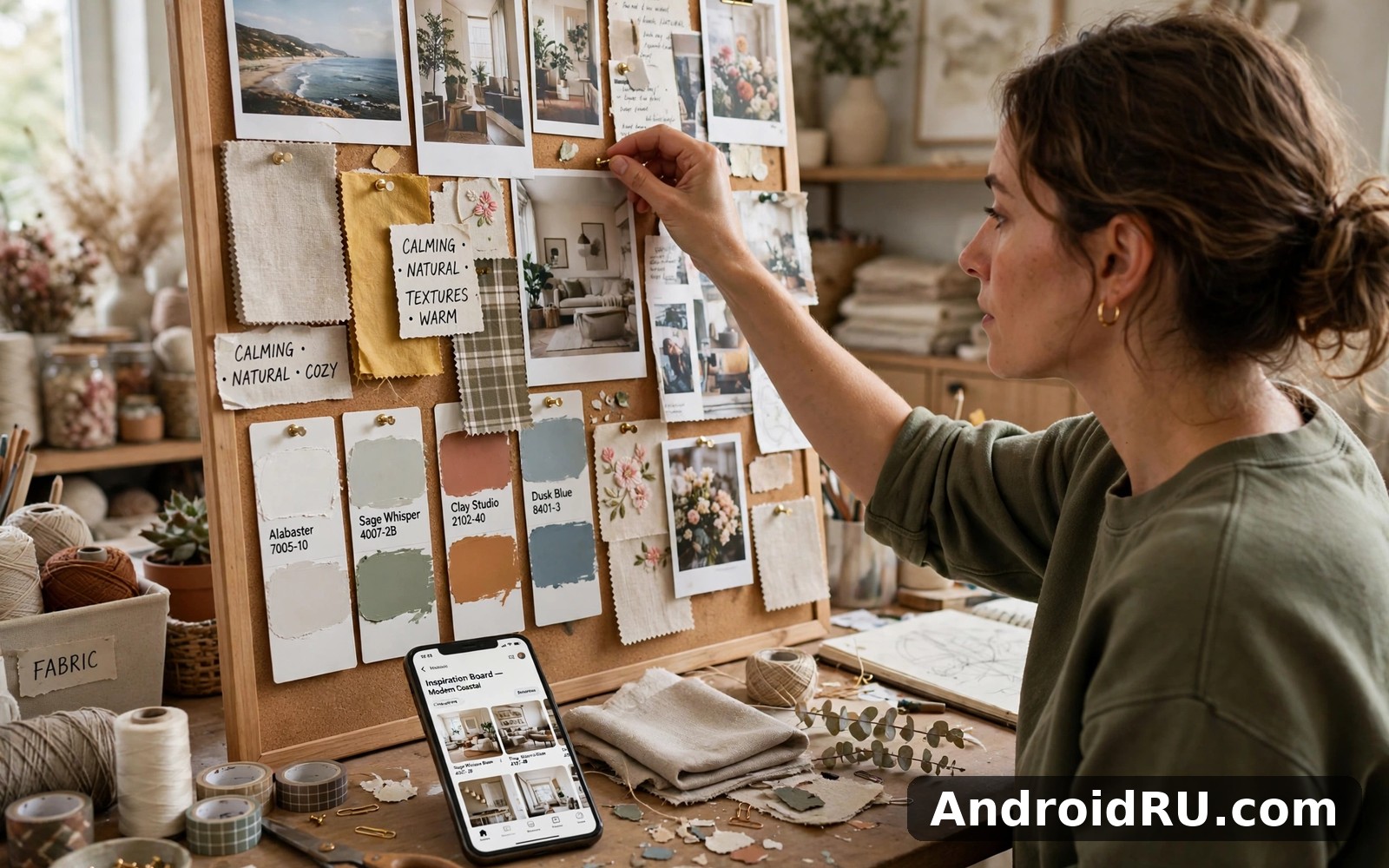
Download APK Pinterest Feature Guide, Alternatives to Consider & Review
I first opened Pinterest on a quiet morning while my phone was still charging and I had a few minutes to spare before the day properly began. What struck me first was the simplicity of the layout and the way the important actions sat exactly where I expected them. Over the first week I used Pinterest mainly for its core purpose and I paid attention to how it felt on ordinary days rather than on perfect ones. The opening screens asked for little and the main view appeared quickly, so I could try the core feature before any long setup.
This guide covers the whole picture. You will find a plain explanation of every feature that matters, from Pins and boards to visual search and shopping ideas, a clear look at the alternatives worth considering, and an honest review based on a month of daily use. If you want to know whether Pinterest deserves space on a crowded home screen, or whether another app fits your habits better, the sections below answer that directly, with real steps, real comparisons, and no hype.
What Pinterest Is and How the Home Feed Actually Works
Pinterest is a visual discovery app. Instead of following people and reading a timeline of posts, you browse images and videos called Pins, save the ones you like to themed collections called boards, and let the app learn your taste from what you save. The home feed is the centre of the experience. It shows a grid of Pins chosen for you, based on your boards, your searches, and the Pins you have tapped or saved before. Scroll down and the feed keeps going, which is both the appeal and the trap: it is easy to lose twenty minutes without noticing.
The feed works because it is personal without demanding much from you. You do not need to build a friend list or post anything yourself. Saving a handful of Pins in your first session is enough for the feed to start reflecting your interests, whether those are home renovation, recipes, travel, fashion, or craft projects. The more specific your saves, the better the feed gets. Save five Pins about small kitchen storage and the feed will show you more small kitchen storage, not generic home content.
How the home feed learns from what you save and skip
Every save, tap, and long press teaches the feed something. Saving a Pin tells Pinterest the topic matters to you. Tapping a Pin and reading the linked page tells it you want depth, not just pictures. Hiding a Pin tells it to show less of that topic, and hiding a Pin from a particular source tells it to show less from that source. I use the hide option more than most people realise, because a feed that only ever adds topics and never removes them slowly drifts away from what I actually want. A quick tidy of the feed once a week keeps it honest.
The feed also reacts to searches. Search for autumn hiking trails and the home feed will start showing more outdoor content within a day or two. That is useful when you are planning something specific, and it is worth knowing when a project ends, because the feed will keep showing that topic until you steer it elsewhere with new saves and a few hides.
Following topics, creators, and boards instead of people
Following on Pinterest works differently from following on a social network. You can follow a creator, a board, or a topic, and each choice shapes a different part of the feed. Following a board about balcony gardens brings you that one collection and nothing else from the creator. Following a creator brings you everything they publish. Following a topic is the broadest choice and the easiest way to fill a new account with relevant Pins. For most users, following boards is the sweet spot: it is specific enough to stay useful and narrow enough to avoid noise.
Pinterest Feature Guide: Pins, Boards, and Visual Search
The three features that carry Pinterest are Pins, boards, and search, and understanding how they fit together is the key to using the app well. A Pin is a single saved idea, usually an image or a short video, with a link to the source behind it. A board is a collection of Pins on one theme. Search is how you find new Pins to save. Everything else in the app, from shopping ideas to video Pins, hangs off those three.
Saving Pins and organising them into boards that stay useful
Saving a Pin takes one tap, and choosing the right board takes a second tap that most people skip. That second tap is what separates a useful Pinterest account from a junk drawer. A board called Home Ideas that holds three hundred unrelated Pins is hard to use. Ten boards with clear names, such as Small Kitchen Storage, Weeknight Dinners, and Balcony Plants, are easy to open and actually use when the moment comes. I rename boards when a project changes direction, and I move Pins between boards when a save lands in the wrong place, because a tidy board is a board I return to.
Boards can be public, private, or shared. Private boards are ideal for gifts, surprises, and half-formed plans you are not ready to share. Shared boards let two or more people save to the same collection, which works well for a wedding, a house move, or a group trip. Sections inside a board add another layer of order: a board about a house renovation can hold sections for the kitchen, the bathroom, and the garden, so each part stays findable.
How to name a board so you can find it in six months
Name boards for the job they do, not for the feeling they give you. Dream Home sounds pleasant and tells you nothing when you search for it later. Kitchen Renovation 2026 tells you exactly what is inside. Add the year when a project has a deadline, add the room when a project covers a house, and keep the name short enough to read at a glance. Your future self, opening the app with a tradesperson waiting, will be grateful.
Searching Pinterest with words, filters, and related ideas
Search on Pinterest rewards specific phrases. Small apartment balcony ideas returns far better Pins than balcony, because the app matches your words against Pin titles, descriptions, and board names. Filters narrow the results further: you can filter by Pin type, by video, or by product, and you can sort by relevance or by the most recent saves. Related search suggestions appear under the search bar, and they are often the fastest way to refine a vague idea into a concrete one. Tap a suggestion, see what changes, and tap again until the results match the project in your head.
Pinterest Lens: searching with your camera instead of words
Lens is the visual search tool, and it is one of the most useful features in the app. Point your camera at an object, a piece of furniture, a plant, or an outfit, and Lens finds visually similar Pins. I have used it on a chair in a cafe, a lamp in a shop, and a jacket a friend was wearing, and in each case it returned close matches with links to buy or to read more. Lens also works on photos already on your phone, so you can search from a screenshot or a photo you took last week. The results are not perfect, and unusual objects return odd matches, but for common items it is faster than describing the object in words.
When Lens works well and when a text search beats it
Lens works best on distinct, well-lit objects with a clear shape: furniture, clothing, plants, and home decor. It struggles with small details, with objects partly hidden behind other things, and with anything the camera cannot see clearly. When Lens returns poor matches, switch to a text search and describe the object instead. The two tools complement each other, and knowing which one to reach for saves time.
Pinterest Shopping, Lens, and Ideas That Go Beyond Saving
Pinterest has grown well beyond a place to save pictures. Shopping features, video Pins, and idea Pins now sit alongside the classic save, and they change what the app is for. You can still use Pinterest as a quiet ideas notebook and ignore all of it, but knowing what these features do helps you decide which ones are worth your time.
Shopping ideas, product Pins, and price alerts
Product Pins carry a price, a retailer, and a link to buy, and the Shop tab gathers them into browsable collections. The shopping search lets you filter by price range and by retailer, which is genuinely useful when you have a budget in mind. Price alerts notify you when a saved product drops in price, and that feature alone has saved me money on items I was already planning to buy. The trade-off is that shopping content now fills a noticeable share of the home feed, and users who want pure inspiration sometimes find the commercial Pins intrusive. Hiding product Pins you do not want is the practical answer.
Video Pins and idea Pins for learning by watching
Video Pins play automatically as you scroll, and they suit recipes, craft tutorials, and short how-to guides far better than a still image. Idea Pins, the multi-page format, walk you through a project step by step with text overlays on each page. A good idea Pin feels like a short lesson rather than an advertisement, and the best creators use the format to teach rather than to sell. The format is weaker for anything that needs long explanation, because each page holds only a little text, so treat idea Pins as a starting point and follow the link for the full detail.
Notifications, the Today tab, and daily inspiration without the noise
The Today tab shows a curated set of Pins chosen by Pinterest editors, organised around seasons, trends, and current events. It is a pleasant way to discover something new without relying on the algorithm alone. Notifications, by contrast, need trimming. By default the app sends alerts about new Pins from people you follow, board activity, and trending topics, and that quickly becomes noise. I keep only price-drop alerts and board activity from shared boards, and I turn the rest off. The app feels calmer after that change, and I miss nothing important.
How to Use Pinterest Well: Setup, Boards, and Daily Habits
Getting Pinterest right takes about fifteen minutes of setup and then a small daily habit. The setup is what most people skip, and it is the reason many accounts feel messy after a month. Do the setup once, keep the habit small, and the app stays useful for years.
Setting up your profile and interests in the first fifteen minutes
Start by picking five to ten interests that reflect real projects, not vague aspirations. Small kitchen storage, beginner sourdough, and autumn hiking trails are real interests. Inspiration and lifestyle are not. Next, create three or four boards with clear names for the projects you actually have, and save ten Pins into each one. That is enough for the feed to understand you. Finally, turn off the notification categories you do not want before they start arriving, because it is easier to allow one later than to silence a noisy app you have learned to ignore.
A daily habit that keeps boards tidy and the feed honest
The habit that works is small: open the app once a day, save anything genuinely useful, hide anything that misses, and spend no more than ten minutes. Saving everything you see creates a board you never open. Saving only what you would actually use creates a board that earns its place. Once a month, open each board and remove the Pins you no longer need. A short list you trust beats a long list you ignore, and the monthly tidy takes less time than one unfocused scrolling session.
How to use Pinterest for a real project from start to finish
Pick one project, such as redecorating a bedroom, and make a board for it. Spend a week saving Pins freely, then spend an evening sorting them into sections and deleting the ones that no longer fit. In week two, follow the links behind the best Pins to read the full guides and note prices. In week three, make decisions from the shortlist rather than from the whole board. The board has done its job when it holds ten good options instead of a hundred vague ones.
Pinterest Alternatives to Consider Before You Commit
Pinterest is not the only app for saving ideas, finding inspiration, or browsing visual content, and the right alternative depends on what you actually use Pinterest for. Some people want community discussion, some want short video, some want a Chinese social feed, and some want a pure image board. The alternatives below cover those needs, and each one is worth a look before you commit your time to a single app.
Reddit for discussion, niche communities, and honest opinions
Reddit is the strongest alternative when you want discussion rather than pictures. Its communities, called subreddits, cover almost every topic, and the best answers come from people who have actually done the thing you are asking about. If you enjoy Pinterest then Reddit is a natural next app to try and it offers a different angle on the same kind of everyday activity. Where Pinterest shows you a beautiful kitchen, Reddit tells you which kitchen renovation was a mistake and why. The trade-off is noise: Reddit rewards strong opinions, and you need to check the community rules and the quality of the discussion before trusting an answer.
Tango for live video, chat, and a social feed that moves fast
Tango sits at the opposite end of the spectrum from Pinterest. It is built around live video streaming, video chat, and a fast-moving social feed, and it suits people who want interaction rather than quiet saving. When you want a change of pace then Tango covers that need neatly. The two apps share almost nothing except the habit of opening them daily, and that is the point: Tango is worth trying when Pinterest starts to feel too quiet and you want people rather than pictures.
Weibo for a fast Chinese social feed, trends, and celebrity news
Weibo is the large Chinese microblogging platform, and it appeals to users who follow Chinese trends, entertainment, and news. And for a third option Weibo is worth a look as well. Its feed moves quickly, its trending topics change hourly, and its mix of text, images, and video feels closer to a news feed than to a ideas board. It is not a replacement for Pinterest, because it does not organise saved ideas into boards, but it is a useful companion when your interests include Chinese culture, language, or current events.
Other alternatives worth a quick look: Instagram, Tumblr, and Behance
Instagram suits people who follow creators and want a polished visual feed with stories and reels, though it pushes interaction and advertising harder than Pinterest does. Tumblr suits people who want a looser, more personal mix of images, text, and community, with far less commercial pressure. Behance suits designers and creative professionals who want portfolios and client work rather than home ideas. None of these replaces Pinterest outright. Each one serves a different corner of the same need, and the honest answer for many people is to use Pinterest for saving and one of these for browsing.
Pinterest Review: Pros, Cons and Who It Is For
After a fair period of real use I can say that Pinterest earns its place on my phone and I would keep it installed without hesitation. Friends who tried Pinterest on my suggestion found the main feature without my help, and that tells me more than any feature list. The experience feels steady rather than flashy, and that steadiness is exactly what I want from a daily app. I judge an app by whether I miss it when it is gone, and Pinterest is one I would notice missing from my phone.
Pros that kept me opening Pinterest every day
- Visual search and Lens that find things words cannot describe: point the camera at an object and get close matches in seconds, which no text search can do.
- Boards that turn scattered inspiration into collections you can actually use when a project starts.
- A calm, readable layout that works in bright light and in a dim room, with short sessions that still feel productive.
- Shopping features with price alerts that save real money on items you were already planning to buy.
Cons that are worth knowing before you commit
- The home feed can drift toward shopping content and repetitive Pins unless you hide what you do not want.
- Many Pins lead to pages that are thin, outdated, or overloaded with advertising, so the idea is often better than the link behind it.
- Daily rewards and streaks do not exist here, so motivation depends entirely on your own projects rather than on the app.
- Video Pins autoplay as you scroll, which uses mobile data faster than a still-image feed.
Who Pinterest is for and who should pick something else
Pinterest suits people who plan projects, collect ideas, and like a calm tool that respects their time. It suits home renovators, cooks, crafters, travellers, and anyone who thinks in pictures. It suits beginners because the app explains itself through use rather than through long instructions, and it suits busy users because a five-minute session is enough. It is less suited to people who want discussion, debate, or live interaction, because saving is a solitary act. Those users will be happier on Reddit for discussion or on Tango for live video, and that is a fair trade rather than a flaw.
Pinterest vs Reddit vs Instagram vs Weibo: Head-to-Head Comparison
The comparison below puts Pinterest beside the three alternatives most readers ask about. Each app wins on a different criterion, and the table makes that plain. Read it as a guide to fit, not as a ranking, because the best app is the one that matches the job you actually do every day.
| Criteria | ||||
|---|---|---|---|---|
| Main job | Save and organise visual ideas | Discuss topics in communities | Follow creators and visual stories | Follow trends and news in China |
| Best feature | Boards and Lens visual search | Subreddits and honest opinions | Reels and stories from creators | Trending topics and live discussion |
| Session feel | Calm, quiet, self-paced | Text-heavy, opinionated, deep | Fast, polished, advertising-heavy | Fast, news-driven, busy |
| Saving ideas | Excellent, boards and sections | Basic save, hard to organise | Collections exist but are secondary | Bookmarks exist but are secondary |
| Shopping | Strong, product Pins and price alerts | Weak, occasional recommendations | Strong, shops and product tags | Moderate, links to Chinese shops |
| Offline use | Saved Pins viewable offline | Limited, needs connection for new posts | Limited, feed needs connection | Limited, feed needs connection |
| Best for | Planners and collectors of ideas | People who want answers and debate | People who follow creators daily | Followers of Chinese trends and news |
The verdict per use case is straightforward. Pick Pinterest when your main job is collecting and organising ideas for a project. Pick Reddit when you want to ask a question and get honest answers from people who have done it before. Pick Instagram when you want to follow creators and enjoy polished visual content every day. Pick Weibo when your interests centre on Chinese trends, entertainment, and news. Many people use two of these together, with Pinterest as the notebook and one of the others as the daily feed, and that combination works better than forcing one app to do every job.
What the comparison means for someone choosing today
Choose by the job, not by popularity. Open each app for a week with a real purpose in mind, such as planning a room or learning a recipe, and notice which one you return to without prompting. The app you open on a tired evening, when you have five minutes and no energy, is the app that fits your life. For most planners that app is Pinterest, and the comparison above explains why.
Practical Tips and Troubleshooting for Everyday Use
Notifications deserve a quick look in week one, and turning on only the ones that actually help keeps the app feeling helpful rather than noisy. Looking back at my first month I can see a clear change, because what started as curiosity became a normal part of my day. Exploring one new feature per week kept the app fresh without overwhelming me, and each discovery felt like a small reward. Sharing a tip with a friend made the experience richer, and comparing notes revealed features I had not noticed on my own.
Fixing a feed that feels repetitive or full of shopping Pins
A repetitive feed usually means the app has too little signal about what you like and too much about one topic. Save a dozen Pins on a new topic, hide the Pins that repeat, and use the hide option on sources you do not trust. Within a few days the feed shifts. If shopping Pins dominate, hide product Pins for a week and the balance changes. The feed is not fixed, and it responds to the signals you give it, so treat a bad feed as a sign to retrain it rather than as a reason to delete the app.
When Pins will not load, saves fail, or the app feels slow
If a screen confuses you, step back to the home screen and try again, because the main path is usually shorter than it first looks. If Pins will not load, check your connection before you blame the app, because a weak signal can make any app feel sluggish for a while. If a save fails, check that you have free storage and that the app has permission to reach the network, then try again on stable Wi-Fi. If the app feels slow after an update, clear the cache from the system settings and restart the phone. A screenshot of a setting you like is worth taking, so you can restore it later if an update ever moves things around unexpectedly.
Backing up the ideas that matter most
Back up any important work inside Pinterest when that option exists, because a quick save now can prevent frustration later. For boards that hold real project plans, take screenshots of the key Pins and keep the source links in a note as well. That habit has rescued me more than once on other apps, and it costs almost nothing.
Frequently Asked Questions About Pinterest
Is Pinterest free to use, and what does it cost?
Yes, Pinterest is free to use for saving Pins, creating boards, and browsing the feed, and there is no paid version required for the core features. The app earns money through advertising and shopping, which is why product Pins and promoted Pins appear in the feed. A business account is also free and adds analytics and advertising tools for creators and shops, but ordinary users never need it.
How do I stop Pinterest showing me Pins I do not want?
Tap the three dots on any Pin and choose Hide Pin to see less of that topic, or choose Hide all Pins from a source to block that website entirely. You can also tune your interests in the settings, where Pinterest lists the topics it thinks you like, and remove the ones that no longer fit. Doing this for a few minutes once a week keeps the feed honest, and the effect shows within a day or two.
Can I use Pinterest without an account?
You can browse some Pinterest content without an account, but saving Pins, creating boards, and personalising the feed all need one. An account also syncs your boards across devices, so a board you build on your phone appears on your computer as well. Signing up takes a minute with an email address, and you can keep your boards private if you do not want anyone else to see them.
What is the difference between a Pin and a board?
A Pin is a single saved idea, usually an image or a short video with a link behind it. A board is a collection of Pins on one theme, such as a room, a recipe type, or a trip. Think of a Pin as one page torn from a magazine and a board as the folder where you keep all the pages about the same project. Sections inside a board divide that folder further, so a large board stays easy to use.
Is Pinterest better than Instagram for finding ideas?
For finding and organising ideas, yes, Pinterest is the stronger tool, because boards, sections, and Lens are built for that job. Instagram is stronger for following creators and for short video entertainment, because its feed is built around people rather than projects. The two apps serve different jobs, and many people use both: Pinterest to save ideas for later, Instagram to enjoy what creators publish today.
Final Word: Is Pinterest Worth Keeping Installed?
The lasting lesson from Pinterest is that a calm tool used steadily beats a powerful tool that never gets opened. I judge an app by whether I miss it when it is gone, and Pinterest is one I would notice missing from my phone within a week. It earns that place not through spectacle but through steady usefulness: boards that hold real plans, a feed that learns from a few honest signals, and a search tool that can find a chair from a photograph. Give it a full week with a real project in mind, tidy the feed once, and let the habit form at its own pace.
When you are ready to give Pinterest a proper try then use the link below and it takes you straight to the Pinterest page on AndroidRU. Click here to download the Pinterest app
A similar app is worth a quick look too. Click here to download the Reddit app. For a second option, Click here to download the Tango app.

