

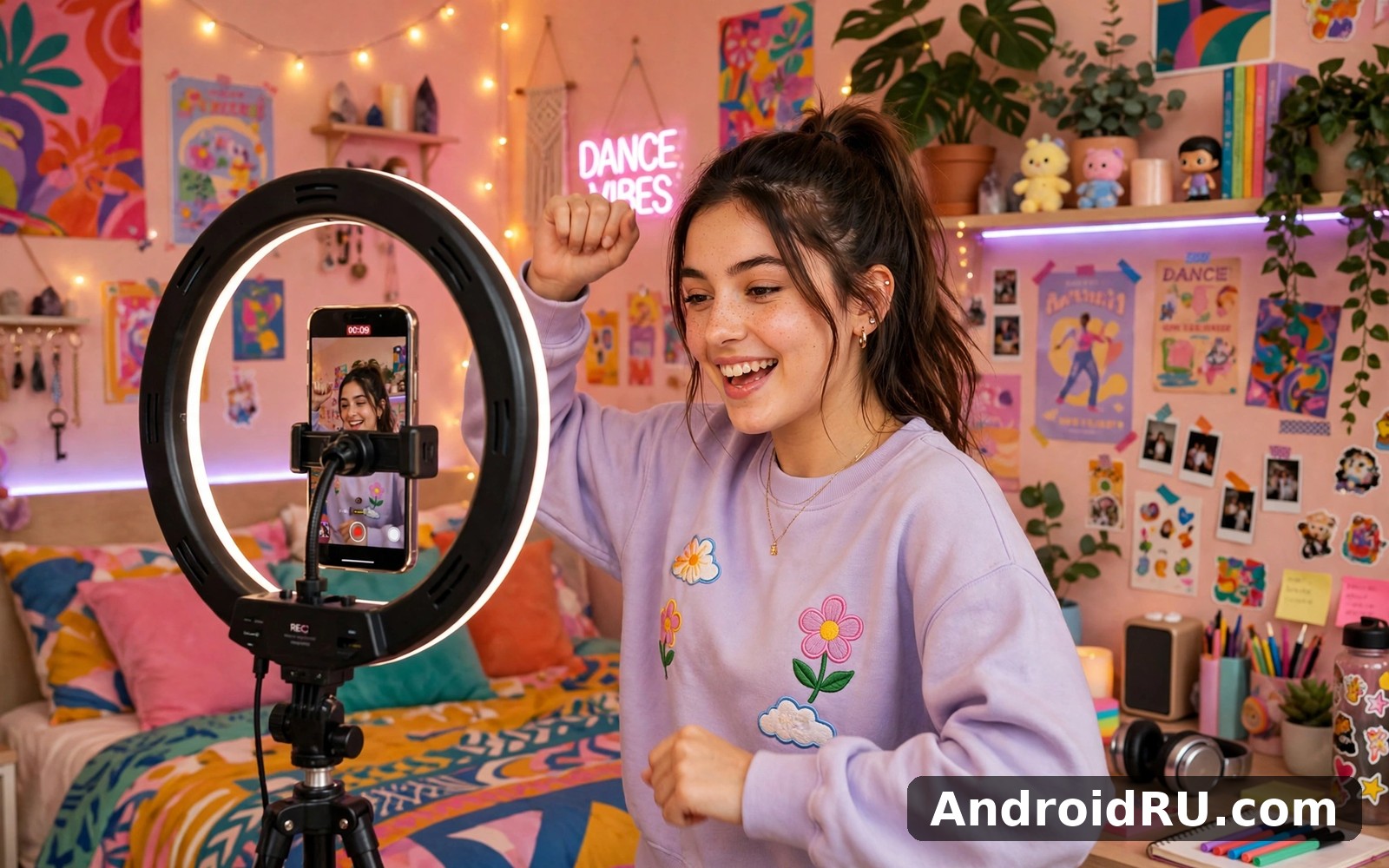
Download APK TikTok Release Notes, Feature Highlights & Review
I first opened TikTok on a quiet morning while my phone was still charging and I had a few minutes to spare before the day properly began. What struck me first was the simplicity of the layout and the way the important actions sat exactly where I expected them. The opening screens asked for little and the main view appeared quickly, so I could try the core feature before any long setup.
Over the first week I used TikTok mainly for its core purpose, short video, and I paid attention to how it felt on ordinary days rather than on perfect ones. The feed loaded fast on home wifi, it held up on a patchy mobile connection, and it never demanded a long session to feel useful. That steadiness is what kept me coming back, and it is the thread that runs through this review.
This article covers what TikTok is in 2026, what recent release notes actually changed, how the For You feed works and how to shape it, what LIVE and Shop do, how the editing tools hold up, how privacy controls work, and how TikTok compares with Telegram, Badoo, and BeReal. If you want a straight answer before the detail, it is this: TikTok is a strong daily app for short video, and its weak spots are time management and the pull of an endless feed rather than any single broken feature.
What TikTok is in 2026: short video, For You and Following
TikTok is a short video app built around a full-screen vertical feed. You open it, a video starts playing, and you swipe up for the next one. That is the whole interaction at its simplest, and the simplicity is the point. Videos range from a few seconds to ten minutes, though most of what the feed serves is under a minute. Creators cover cooking, travel, music, comedy, news, crafts, sport, and just about every hobby you can name.
The app has two main feeds. For You is the recommendation feed, a personalised stream chosen by the app based on what you watch, like, share, and linger on. Following shows videos only from accounts you follow, in roughly the order they were posted. I spent most of my time in For You, because that is where discovery happens, and I dipped into Following when I wanted to catch up with creators I already liked. The balance between the two matters, and I will come back to it later.
Behind the feed sits a large set of tools: search, saved videos, playlists, direct messages, comments, LIVE streams, a shop, and a creation suite with a camera, effects, sounds, and editing. Most people use only a slice of that. I used the feed, search, saves, and the editor in my first month, and I tried LIVE and Shop enough to describe them fairly. The app never forces you to use everything at once, which is a kindness.
How the daily rhythm feels
The fastest way to learn TikTok is to use it briefly each day and let familiarity grow through repetition rather than through study. I left most options alone and the app still felt like mine, because the core flow matched how I actually spend my time. Short visits in the morning and short visits in the evening built a steady habit without any sense of pressure. After a week the main actions felt automatic and I spent less time hunting through menus and more time watching.
A first week that actually works
Start with one purpose in week one and let that focus make the app feel simple rather than sprawling. Weekends are a good time to explore a new corner of the app while weekdays stay focused on the core task. Try one unfamiliar menu each weekend and you will learn the full app within a month without ever feeling overwhelmed. I followed that pattern myself, and by week four the habit felt settled.
TikTok release notes: what recent updates actually changed
Release notes for TikTok are usually short, and they rarely list every change. The pattern across recent updates is consistent: the feed gets faster, the editor gains a few tools, LIVE gets steadier, Shop gets more visible, and privacy and safety settings get small additions. None of that sounds dramatic, and most of it is not. The updates that matter are the ones you notice in daily use, so here is what I actually observed across recent versions.
Video playback is the most obvious improvement. The feed starts faster than it did a year ago, and videos resume cleanly after a brief signal drop instead of freezing on a spinner. On my phone, swiping through the feed on a train felt smoother, with fewer stutters when a video had not fully loaded. The app also handles longer videos better now, with clearer progress and easier seeking, which matters as more creators post videos over a minute long.
The editor has gained steadier tools too. Auto captions arrive faster and are easier to correct, text overlays are simpler to place, and the sound library is easier to search. None of these is a headline feature on its own, but together they make posting a short video a ten-minute job instead of a fiddly half hour. I edited three short clips during my testing, and the third one took half the time of the first, mostly because the tools stayed where I expected them.
On the safety side, recent releases have added more granular controls: who can comment on your videos, who can send you direct messages, who can duet or stitch your clips, and how much time the app reminds you that you have spent. These settings are not new in concept, but they are easier to find than they used to be, and that matters more than the setting itself. A control nobody can find is not a control at all.
What changed for creators
Creators got the most from recent updates. Drafts are more reliable, which sounds dull and is actually vital when you have spent twenty minutes on a clip. The analytics view is clearer, showing which videos held attention and where viewers dropped off. Posting tools now handle longer captions and more hashtags without the awkward scrolling I remember from earlier versions. If you post regularly, these changes save time every single week.
What changed for viewers
Viewers got faster loading, a cleaner search page, and better tools for shaping the feed. The “not interested” control works more visibly now, and the feed reacts faster when you use it. Search results mix videos, accounts, sounds, and hashtags in a way that is easier to scan. I used search more in my second month than in my first, because the results finally felt worth the tap.
One update habit worth keeping
After any update, take a screenshot of a setting you like, so you can restore it later if an update ever moves things around unexpectedly. Updates sometimes rearrange menus, and a screenshot is a faster memory than a guess. I keep one screenshot of my privacy settings and one of my notification settings, and they have saved me a small hunt more than once.
The For You feed: how recommendations work and how to shape them
The For You feed is the heart of TikTok, and it is also the part people understand least. In simple terms, the app watches what you do: which videos you finish, which ones you skip quickly, which ones you like, comment on, share, or save, and which creators and sounds you return to. It then shows you more of what looks like the things you engaged with, and it tests new topics on you in small doses to see what sticks. That is why two people with the same app can have feeds that look nothing alike after a week.
The trade-off is real. A feed that learns quickly can feel delightful, serving you a cooking video just as you were thinking about dinner, and it can also feel narrow, showing you the same kind of video until you are bored of it. The fix is to shape it deliberately. Long-press a video you do not want and choose “not interested”, follow creators whose work you like, and use search for topics you want more of. I did this for a week and the feed visibly changed, with more travel and cooking and fewer of the loud trend videos I kept skipping.
Time management is the other half of the feed story. The feed has no natural ending, and that is by design. I set a daily screen time reminder in the app settings, and I kept the app off my home screen for a while so opening it took a deliberate tap rather than a reflex. Both habits helped. The feed is a good servant and a poor master, and the difference is mostly a matter of a few settings and a little honesty with yourself.
For You versus Following: which feed to use
For You is for discovery, and Following is for keeping up. I use For You when I have ten minutes and want something new, and I use Following when I want to see what specific creators posted. If your For You feed feels stale, spend a day mostly in Following and searching for new topics, and the recommendations will shift. If your Following feed feels quiet, that usually means you follow too few active creators, and a few new follows will fix it.
How to reset a feed that feels stale
First, use “not interested” on the videos you keep skipping, and do it consistently for a few days rather than once. Second, search for three topics you actually care about and watch a few full videos on each. Third, follow five new creators in those topics. Fourth, clear your watch history in settings if you want a firmer reset, though this will also remove the personalisation you built up. I tried the gentle version first and it worked, so I never needed the full reset.
TikTok LIVE, Shop and messaging tools
TikTok LIVE is the app’s live streaming feature. Creators go live to talk, perform, answer questions, or show a process in real time, and viewers can comment, send virtual gifts, and join the chat. I watched several live streams during testing, from a cooking session to a musician taking requests. The streams that worked best were the ones where the creator talked with the chat rather than at it. Quality varies a lot, which is normal for live video, and the best way to find good streams is to follow creators you already like and catch their live sessions.
TikTok Shop sits inside the app and lets creators and sellers show products in videos and live streams, with a product link that opens a shop page. I browsed it, looked at a few product pages, and checked how prices and delivery information were shown. The range is wide, from phone accessories to kitchen tools to clothing, and quality varies just as widely. My honest advice is to treat it like any marketplace: read the reviews, check the seller, and compare the price elsewhere before you buy. The convenience is real, and so is the need for a second look.
Messaging on TikTok is built around direct messages, which you can limit to friends, followers, or nobody, depending on your settings. You can share videos privately, reply to comments, and keep conversations in one place. I kept my messages limited to people I follow, and that kept the inbox quiet. Group chats exist too, though I used them rarely. The messaging tools are solid for sharing videos with friends, and they are not meant to replace a dedicated chat app.
TikTok LIVE: what to expect as a viewer
Expect a mixed bag. Some live streams are warm, funny, and genuinely interactive, and some are noisy rooms chasing gifts. The stream quality depends on the creator’s connection, and the chat moves fast on popular streams. If a stream feels off, leave at once. There is always another one, and your time is worth more than politeness to a stranger on a screen.
TikTok Shop: a careful way to browse
Browse Shop the way you would browse any market stall: look, compare, and do not rush. Check the seller rating, read a few reviews that are not five stars, and look at the delivery estimate before you commit. For You recommendations and Shop listings both learn from what you tap, so heavy browsing in Shop will change what the feed shows you. If you only want to window shop, that is fine, but expect the feed to notice.
TikTok editing tools: captions, effects, sounds and drafts
The editor is where TikTok earns its reputation as a creator tool rather than just a viewer app. You can record inside the app or upload clips, trim them, add text, stickers, effects, filters, and sounds, and then post or save a draft. The layout is forgiving: most tools sit along the side of the screen, and undoing a step is a single tap. I edited three clips from a weekend walk, and the process felt closer to assembling a postcard than to operating video software.
Captions deserve a mention, because they matter for viewers who watch with the sound off. Auto captions generate text from your speech, and you can edit the text before posting, which I strongly recommend, because auto captions get names and place names wrong. Text overlays let you add a title or a punchline at a chosen moment, and they are simple to time once you have done it twice. Keep overlays short. A wall of text on a fifteen-second video is a video nobody finishes.
Sounds are a big part of what makes a TikTok video work. The library holds music, sound effects, and clips from other videos, and you can save sounds you like for later. Using a trending sound can help a video reach more people, though it is no guarantee, and a sound that fits the video beats a sound that is merely popular. I picked sounds that matched the mood of my clips rather than chasing the top of the chart, and the results felt honest.
Effects and filters without the mess
Effects and filters are fun for a few minutes and tiring if overused. My rule is one effect per video, at most, and a filter that flatters the light rather than changing the scene. The app offers a large library, and you can save the ones you like so you are not scrolling every time. A video that relies on five effects is usually a video with nothing to say, and viewers can tell.
Drafts, posting and deleting
Drafts are the unsung hero of the editor. A draft saves your edit in progress, so you can come back to it later without losing work. I saved two drafts and finished them the next day, and both were intact. Posting is straightforward: add a caption, a few hashtags, choose who can view and comment, and publish. Deleting a posted video is also simple, though it is worth remembering that a video can be saved or shared by others before you delete it, so post with that in mind.
Editing a clip in five steps
First, upload or record your clip and trim it to the strongest fifteen to thirty seconds. Second, add auto captions and correct any mistakes. Third, add one text overlay with the point of the video. Fourth, pick a sound that fits the mood and set its volume so speech stays clear. Fifth, save a draft, watch it once with fresh eyes, and only then post it. That pause between draft and post catches more mistakes than any editing tool.
Keeping your drafts tidy
Review your drafts once a week and delete the ones you will never finish. A drafts folder full of half-finished clips is a small weight on the mind, and clearing it feels good. I keep at most three drafts at a time, and if a fourth idea comes along, one of the three has to go. That limit keeps me finishing videos instead of collecting them.
TikTok vs Telegram vs Badoo vs BeReal
These four apps all live on phones and all involve other people, but they do very different jobs. TikTok is a short video feed built for watching and creating. Telegram is a messaging app built for chats, groups, and channels. Badoo is a dating and social app built for meeting new people. BeReal is a social app built around one unfiltered photo a day, shared with friends at the same moment. Comparing them is not about crowning a winner. It is about matching the app to what you actually want to do.
If you enjoy TikTok then Telegram is a natural next app to try and it offers a different angle on the same kind of everyday activity. When you want a change of pace then Badoo covers that need neatly. And for a third option BeReal is worth a look as well. I still came back to TikTok for my daily routine because the simple loop I built here suited me best.
| Aspect | TikTok | Telegram | Badoo | BeReal |
|---|---|---|---|---|
| Main purpose | Short video watching and creating | Messaging, groups and channels | Dating and meeting new people | One real photo a day with friends |
| Best for | Discovery, entertainment, creators | Chats, communities, file sharing | Meeting people nearby | Close friends, honest moments |
| Content style | Short vertical video feed | Text, media, channels | Profiles, photos, chat | Unfiltered daily photos |
| Time demand | High, endless feed needs limits | As much as your chats need | Moderate, check and reply | Low, one moment a day |
| Privacy control | Account, comments, messages, duet | Strong chat and group controls | Profile and location controls | Friends-only sharing by design |
| Creator tools | Editor, effects, LIVE, Shop | Channels and bots | Profile boosts and gifts | Minimal, the photo is the point |
| Long-term appeal | Fresh feed every day | Stable chats and groups | Depends on matches | Quiet daily habit with friends |
Where Telegram fits
Telegram fits the part of your day that TikTok does not touch: real conversation. It is a messaging app with chats, large groups, channels, and generous file sharing, and it is where I keep the group chats that matter. If TikTok is the stage, Telegram is the green room. The two work well together, because a video you find on TikTok is often a video you share in a Telegram chat a minute later.
Where Badoo fits
Badoo fits people who want to meet new people nearby, whether for dating or for new friends. It is built around profiles, photos, and chat, and it works best when you are honest in your profile and patient in your replies. It has nothing to do with video discovery, and that is the point. Use it when you want to meet someone, not when you want to watch videos.
Where BeReal fits
BeReal fits close friends who want an honest glimpse of each other’s day. Once a day it asks everyone to take a photo at the same moment, front and back camera together, with no filters and no staging. The result is mundane in the best way: a desk, a bus, a kitchen. It is the opposite of a polished feed, and for a small circle of friends that honesty is the whole appeal.
Pros and cons of TikTok, privacy controls and screen time
After a month of real use, my view of TikTok is positive with clear reservations. The feed is genuinely good at finding videos you will enjoy, the editor is strong for a phone app, and the range of creators is enormous. The reservations are about time and attention rather than about broken features. An endless feed is a design choice, and it is one you need to manage rather than one the app will manage for you.
Pros
First, the For You feed is remarkably good at discovery, and it introduced me to creators and topics I would never have searched for. Second, the editing tools are strong and approachable, and a decent video takes minutes rather than hours. Third, LIVE streams add a live, human layer that recorded video cannot match. Fourth, the app is free to use with a huge range of content, and the basic experience needs no payment at all.
Cons
First, the endless feed makes it easy to lose track of time, and the app does little to stop you unless you set limits yourself. Second, video quality varies widely, and the feed mixes excellent work with noisy trend-chasing. Third, privacy needs active management, because the defaults favour sharing more than a cautious user might want. Fourth, Shop listings vary in quality, and a careless tap can lead to a purchase you regret.
Who it is for
TikTok suits people who enjoy short video, who like discovering new creators, and who are happy to set their own limits. It suits creators who want a large audience without expensive equipment, and viewers who want a quick, varied break in the day. It is less suited to people who struggle to stop scrolling, to anyone who wants a calm and finite feed, and to people who prefer long-form video or text. Privacy controls and screen-time limits are the two settings that decide whether the app stays a pleasure or becomes a drain, so set them in your first week.
Privacy controls worth setting on day one
Open settings, then privacy, and work through four choices. Set your account to private if you do not want strangers finding your videos. Choose who can comment, who can send you direct messages, and who can duet or stitch your clips. I set comments to friends, messages to people I follow, and duets off, and that kept the experience calm. Review these settings after any major update, because menus move and defaults can change.
Screen time limits that actually help
Set a daily screen time reminder in the app, and pick a number you can keep, such as sixty minutes. When the reminder appears, treat it as a real stop sign rather than a suggestion to dismiss. I also turned on the sleep reminder, which nudges you when your usual bedtime approaches. These two small settings did more for my evenings than any amount of willpower.
What to do when the feed feels too much
When the feed feels noisy, switch to Following for a day, use “not interested” on the videos you skip, and take a break from the app entirely for an evening. A short break resets your taste faster than any setting. I took one evening off each week during testing, and I came back to the app with fresher eyes and a clearer sense of what I actually wanted to watch.
TikTok frequently asked questions
These are the questions I asked before keeping the app, and the answers I found after a month of use. They cover the practical worries: whether it costs money, whether it works on a slow connection, and whether it is safe to use every day.
Is TikTok free to use?
Yes, the core app is free, and watching videos, following creators, and posting your own clips costs nothing. There are optional purchases inside the app, such as coins for virtual gifts on LIVE streams and items in Shop, but none of them are needed to enjoy the feed. I used the app for a month without spending anything, and I never felt locked out of a feature that mattered.
Does TikTok work well on a slow connection?
It holds up better than I expected. Videos load at a lower quality when the connection is weak, and the feed keeps working instead of freezing. On a train with patchy signal I could still watch, though I sometimes waited a second or two between videos. If your connection is very slow, the Following feed tends to feel smoother than For You, because it serves fewer new videos at once.
Can I control what TikTok shows me?
Yes, and the controls work if you use them consistently. Long-press a video and choose “not interested” to see less of that kind of content, follow creators you like, search for topics you want more of, and use the content preferences in settings. The feed reacts within days rather than minutes, so give it a week of steady signals before judging the result. A feed shaped deliberately is a very different feed from one left to chance.
Is TikTok safe for everyday use?
It is as safe as the settings you choose and the habits you keep. Set your account to private if you want, limit who can message and comment, be careful about what personal details appear in your videos, and set a screen time limit. Parents should look at the family pairing tools, which let a parent link their account to a child’s and set limits together. No app is risk-free, and a few minutes spent on settings in week one pays for itself many times over.
Final word on TikTok
No app is perfect and TikTok is no exception, yet its strengths outweigh its limits for most everyday users. I judge an app by whether I miss it when it is gone, and TikTok is one I would notice missing from my phone. The lasting lesson from my month with it is that a calm tool used steadily beats a powerful tool that never gets opened, and TikTok, used with limits, is a tool I open gladly.
When you are ready to give TikTok a proper try, use the link below. It takes you straight to the TikTok page on AndroidRU. I suggest trying it for a full week before you judge it, starting with the For You feed, a few follows, and the privacy settings set the way you like them. A week of short sessions shows the real character of an app, and this one passed that test for me.
Click here to download the TikTok app
A similar app is worth a quick look too. Click here to download the Telegram app. For a second option, Click here to download the Badoo app. Short video with honest limits is the version of TikTok that stays enjoyable in month two, so set the limits first and let the feed earn the rest of your time.

