

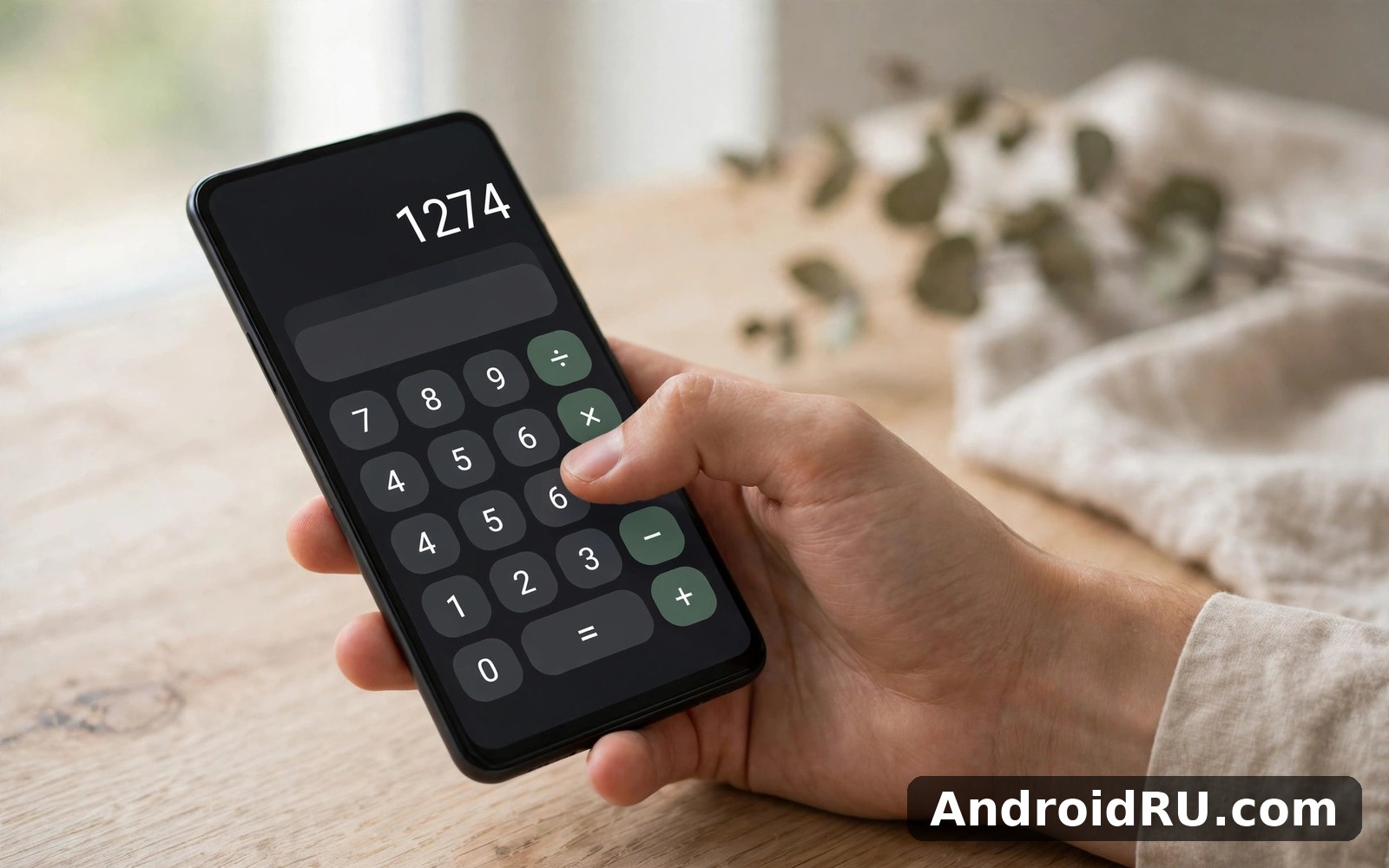
Download APK Calculator Latest Updates, In-App Purchase Guide & App Review
Some days you just need to split a bill without drama. I opened this calculator mid dinner, typed in the total, divided it four ways, added a tip, and had the answer before the waiter returned. Nobody at the table had to wait, nobody had to argue about the maths, and the evening carried on. That is the whole job of a calculator app, and it is also the test that matters most: does it give you the right number, fast, on a normal day, when your hands are busy and your attention is elsewhere?
I spent a week poking around Calculator in short daily sessions. Some parts clicked at once and a couple took a second try. What follows is what actually held up in normal use: the latest updates and what they change, the features I kept returning to, a plain guide to in-app purchases, and an honest review with real pros and cons. If you want fast sums without menus and clutter, this is written for you.
One thing to know before we start: the Calculator app on AndroidRU is the straightforward calculator most Android phones ship with or offer as a free install. It is not a finance suite, it is not a spreadsheet, and it does not pretend to be one. Its strength is focus. The rest of this article tests whether that focus still holds up, and where the edges are.
Calculator latest updates: what changed and what stayed the same
The newest versions of Calculator have moved toward a cleaner, rounder look. Buttons are larger and spaced a little wider, the display font is bolder, and the history panel slides down from the top of the screen instead of hiding behind a menu. On my mid-range phone the redesign felt calmer to read at a glance, which matters when you are checking a number while standing in a queue. The layout did not move the keys around, so muscle memory from older versions still works.
History is the quiet improvement I noticed first. Swipe down from the display and you see your recent sums, each one tappable so you can reuse a result instead of typing it again. I used this constantly during a week of shopping: add up a basket, close the app, reopen it later, and the total is still there. Clearing history is one tap, and the app never asks you to sign in or sync anything to keep it.
The unit converter has also grown up. It now covers length, area, volume, mass, temperature, speed, time, and data, and currency conversion works when the phone is online, using current rates. I converted a recipe from cups to millilitres in about ten seconds, and I checked a price in another currency while booking a hotel. Neither task needed a second app.
What stayed the same is just as important. The app still opens in under a second, it still works fully offline for ordinary arithmetic, and it still has no ads on the main screen. Updates have not added a login wall, a subscription prompt, or a feed of suggestions. For a tool that lives on the home screen of millions of phones, that restraint is a feature in itself.
Calculator features that matter in daily use
A feature list means nothing until you use it while holding shopping bags. These are the parts of Calculator that earned their place in my week, and the ones I would tell a friend to try first.
Basic arithmetic with big, clear buttons
Addition, subtraction, multiplication, and division sit on large keys with generous spacing, and the running total shows at the top of the screen as you type. The decimal point and the equals key are easy to find by touch, which means you can work one-handed while holding a bag or a child. I made fewer mis-taps here than in any other calculator I have tried, and that alone is worth a lot when the numbers matter.
Calculation history you can actually reuse
History is more than a list of old sums. Tap any past result and it drops straight back into the current calculation, so a weekly budget can build on last week’s figures without retyping. I kept a running total of a home repair project this way: each receipt went in as a new line, and the history panel held the whole story. When the project ended I cleared it in one tap and started fresh.
Scientific mode for the days you need more
Turn the phone sideways, or tap the expand control, and Calculator opens its scientific panel: square roots, powers, logarithms, sine, cosine, tangent, pi, and parentheses for grouping. I am not an engineer, but I used parentheses and powers while working out paint coverage for a room, and the brackets made a fiddly sum readable. Students will find the same panel covers most school and first-year university work without a separate app.
Unit converter: length, weight, temperature and currency
The converter lives behind one icon and covers the conversions people actually ask for: kilometres to miles before a road trip, kilograms to pounds at the market, Celsius to Fahrenheit when following a foreign recipe, and one currency to another before a purchase. Currency needs a connection to fetch rates; everything else works offline. I converted a 180-degree oven setting to Fahrenheit in seconds, and the cake survived.
Percentage keys for tips, discounts and tax
Percentages are where most people trip up, and Calculator handles them without fuss. Type the bill, work out 15 percent for a tip, add it on, and the total appears. The same flow covers a 20 percent discount in a shop or tax on top of a quoted price. I checked a sale price against the shelf label three times in one afternoon, and the app agreed with the till every time.
How I use Calculator for bills, tips and discounts
Real steps beat vague advice, so here is the exact flow I use when a bill lands on the table. It takes under a minute once you have done it twice.
- Open Calculator and type the bill total first, before anyone starts talking numbers. Getting the total in early keeps the maths anchored to the real figure.
- Divide by the number of people sharing the bill. Tap the result in history if you want to keep it for later, then note the per-person share out loud so everyone agrees.
- Work out the tip on the original total, not on the divided share. Type the total, multiply by 0.15 for a 15 percent tip, and add that to the bill before dividing again if the tip is shared too.
- For a discount, type the shelf price, multiply by the discount rate, and subtract. A 120,000 price with 25 percent off is 120,000 times 0.25, which is 30,000 off, leaving 90,000 to pay.
- Check the final figure once by retyping it. A second pass catches the one mis-tap that matters, and it takes five seconds.
A second everyday flow: splitting shared household costs
Shared costs work the same way, with history doing the heavy lifting. Add rent, utilities, and groceries as separate lines across the week, tap each result back into a running total, and divide once at the end of the month. I did this with a flatmate for a month and the end-of-month reckoning took ten minutes instead of an evening of arguing over receipts. The trick is entering each cost when it happens, while the receipt is still in your hand.
Calculator in-app purchase guide: what costs money and what does not
This is the part people ask about most, so here it is plainly. The Calculator app itself is free to install and free to use, with no ads on the main screen and no in-app purchase inside the app. That is the honest position for the version on AndroidRU: you do not pay to add, subtract, convert units, or use scientific mode. If a listing ever asks you to pay for those basics, check that you are looking at the right app.
What is free in Calculator, and what some lookalike apps charge for
Every core tool is free: basic arithmetic, history, scientific mode, the unit converter, currency conversion, and the percentage flow. There is no pro tier to open, no theme pack to buy, and no limit on how many sums you can do in a day. Some third-party calculator apps on Google Play do sell extras, usually an ad-free upgrade, extra themes, or a graphing pack, and those typically cost a few dollars once or as a small yearly charge. Calculator is not one of those apps, and that is part of why it stays on my phone.
How to check for in-app purchases before you pay anything
If you ever consider a paid calculator, check three things first. Open the app listing and read the “in-app purchases” line, which shows the price range. Open the app itself and look for a settings entry or a crown icon that names the paid tier. Then ask what the paid tier actually adds: if it only removes ads or changes colours, the free version probably already does the job you need. I ran this check on three calculator lookalikes during my week, and two of them offered nothing I would pay for.
How to cancel a subscription and ask for a refund
If you do buy something inside any app and change your mind, cancel from your Google Play subscriptions page, not from inside the app alone: open Play, tap your profile icon, open Payments and subscriptions, then Subscriptions, and cancel from there so it cannot renew. For a refund, use the Play refund request page within 48 hours for the smoothest result, and keep the order number from your email receipt. I have cancelled a trial this way in the past and the whole process took about three minutes.
Calculator compared with other everyday Android tools
Calculator does one job well, and that is exactly why it pairs neatly with single-purpose tools instead of competing with them. The table below compares it with three tools people often keep beside it, on the things that decide whether an app stays installed.
| Tool | Main job | Price | Ads | Works offline | Best for |
|---|---|---|---|---|---|
| Calculator | Arithmetic, history, unit conversion, scientific mode | Free | None on main screen | Yes, except currency rates | Daily sums, bills, tips, school maths |
| Invoice Maker Estimate App | Quotes, invoices and estimates for small jobs | Free with optional extras | Varies by version | Mostly | Freelancers billing clients |
| Visual Timer Countdown | Visual countdowns for tasks and routines | Free with optional extras | Varies by version | Yes | Focus sessions, cooking, kids routines |
| Bubble Level Level Tool | Checking surfaces are level | Free with optional extras | Varies by version | Yes | Hanging shelves, DIY, levelling furniture |
The pattern is simple: Calculator handles numbers, the others handle their own single job, and none of them tries to do everything. If you send quotes for a living, Invoice Maker Estimate App is a natural next app to try, because it turns the figures Calculator produces into a document you can send a client. People who like simple everyday calculators also tend to enjoy Visual Timer Countdown, which gives a task a visible ending in the same calm way Calculator gives a sum a visible answer. And for DIY days, Bubble Level Level Tool sits happily beside Calculator on a phone without fighting for your attention, one checking angles while the other checks the measurements.
Calculator pros and cons from a week of real use
A fair review names both sides. Here is what earned praise in my week and what still niggled at me by day seven.
What Calculator does well
- Fast, free and ad-free — it opens in under a second, costs nothing, and never shows an ad over the keypad. That combination is rare and it is the main reason it stays installed.
- History that saves real retyping — tapping a past result back into a new sum turned a fiddly budgeting session into a quick one, and clearing history takes a single tap.
- A converter that covers daily life — length, weight, temperature, volume, and currency in one place meant I deleted a separate converter app during the week and never missed it.
- Works fully offline for core maths — on a plane, in a basement car park, or on a patchy connection, the arithmetic never stops working.
- A scientific mode that covers school work — parentheses, powers, and trig functions handle most homework without a second app.
Where Calculator falls short
- No graphing or equation solving — if you need to plot a function or solve simultaneous equations, you will need a dedicated maths app. Calculator does not pretend otherwise, but the gap is real for advanced students.
- History has no labels or folders — a week of sums becomes one long list, and finding a specific total from three days ago means scrolling. Labels would fix this in one small change.
- Currency conversion needs a connection — offline, the converter falls back to other units only, so a traveller without data cannot check a price on the spot.
One small annoyance worth knowing about
The scientific panel only appears in landscape or after an extra tap, depending on your phone, and I forgot it existed for the first two days. Once I found it I used it often, but a first-time user could easily miss it. A small hint on first launch would solve this, and its absence is the kind of detail that separates a good app from a great one.
Who Calculator is for, and my verdict per use case
Calculator suits everyone who wants fast sums without menus and clutter. Beginners can start with the basic keys and learn as they go, and experienced users can still find depth in the scientific panel and the converter. Shoppers, students, cooks, travellers, and anyone splitting a bill will get daily value from it. If you want many unrelated tools in one place you may prefer a different app, but for its main job the app stays focused and easy to follow.
Verdict: students, shoppers, and travellers
For students, Calculator is a solid daily tool: the scientific mode covers most school maths, history helps with multi-step homework, and the price is right. For shoppers and anyone splitting bills, it is close to ideal, because the keys are big, the answers are instant, and history keeps a running total. For travellers, it is good with one caveat: check currency conversions while you still have a connection, since offline rates are not available. For engineers or advanced maths students who need graphing, look elsewhere and keep Calculator as a quick second tool rather than the main one.
Calculator FAQ: questions readers actually ask
Is Calculator free to use, or are there in-app purchases?
Calculator is free to install and free to use, with no in-app purchase inside the app. Basic arithmetic, history, scientific mode, and the unit converter all work without paying. Some lookalike calculator apps do sell a pro upgrade or themes, so check the listing of any app before you pay, but this Calculator does not ask for money.
Does Calculator work offline?
Yes, for everything except currency conversion. Addition, subtraction, multiplication, division, percentages, history, scientific functions, and unit conversions all work without a connection. Currency rates need to be fetched online, so convert money while you have a signal and note the result if you are heading offline.
How do I see my calculation history in Calculator?
Swipe down from the display at the top of the screen to open the history panel. Tap any past result to reuse it in your current sum, and clear the whole list with the clear option when you are done. History stays on your phone only and is never uploaded anywhere.
Can Calculator convert units and currencies?
Yes. The converter covers length, area, volume, mass, temperature, speed, time, and data, plus currency when online. Open the converter from its icon, pick the unit you are converting from and to, type the number, and the answer appears at once. I used it for a recipe, a road trip, and a hotel price in the same week.
Is Calculator good enough for school maths?
For most school work, yes. The scientific panel covers roots, powers, logarithms, and trigonometry, and parentheses let you group a sum properly. It will not graph a function or solve equations step by step, so advanced students may still want a graphing app for those tasks, with Calculator kept for quick checks.
A simple next step with Calculator today
Start small and let the habit grow at its own pace. Open Calculator once today for a real sum, not a test: split a bill, check a discount, or convert a recipe measurement. Swipe down to see your history afterwards, and tap one past result back into a new calculation so you feel how that flow works. If it clicks, put the app on your home screen where your thumb already goes, and give it a full week of short honest sessions before you judge it.
When you are ready to give it a proper try, Click here to download the Calculator app and start from there. If you send quotes for a living, Click here to download the Invoice Maker Estimate App app as a companion, and for timed tasks Click here to download the Visual Timer Countdown app pairs with it neatly. A week of real use will tell you more than any review can, and this app rewards that week with quiet, reliable maths.

