

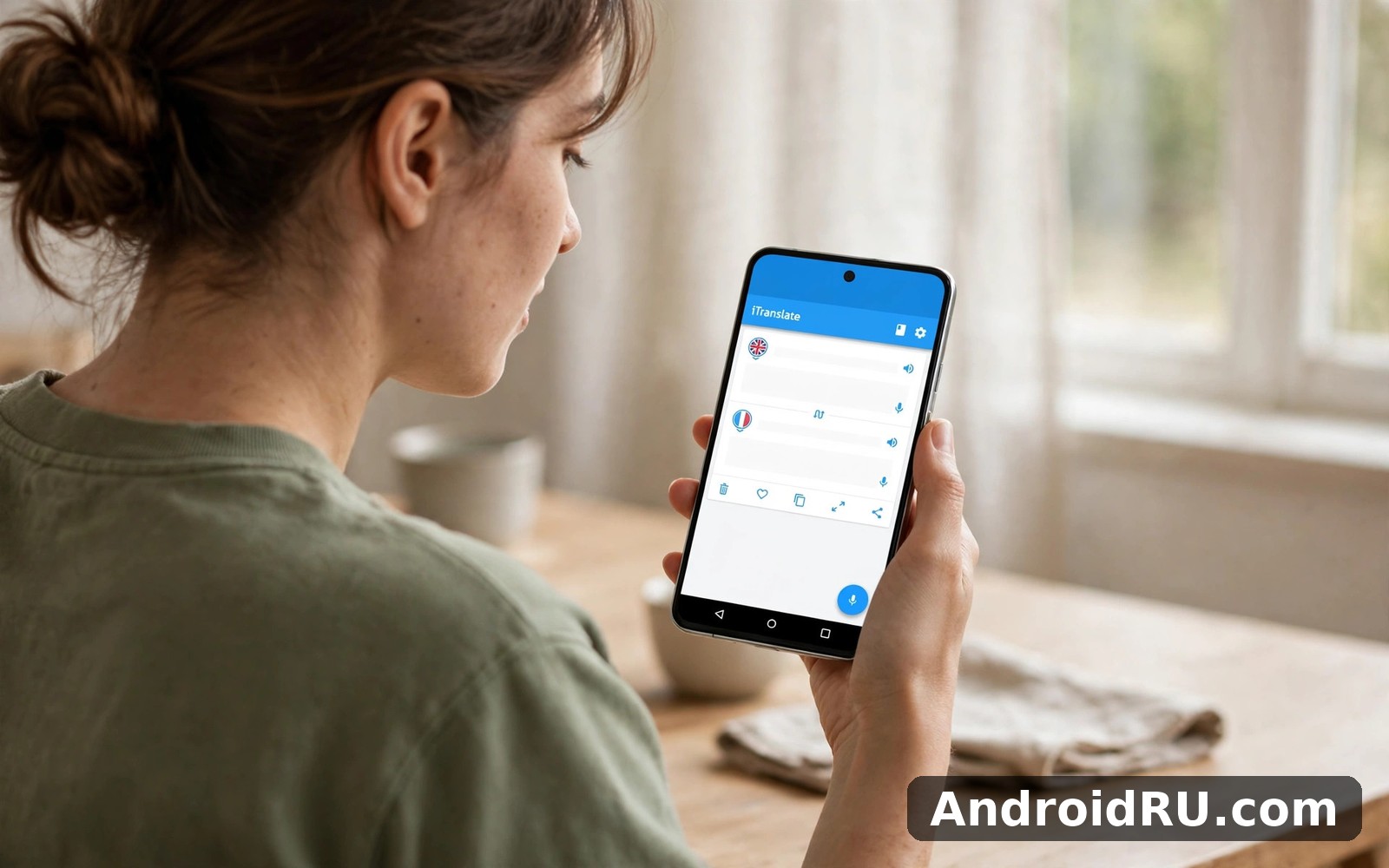
Download APK iTranslate Translator What’s New, Hands-On Experience & Review
I was standing in a small shop abroad trying to ask for a charger in a language I barely knew. Gestures got me halfway and then we both laughed at the confusion. Later that day I tried this translator for the same conversation and it bridged the gap in seconds. Travel suddenly felt less lonely and far more doable, and that one small moment is still the reason the app stays on my phone.
It suits travellers and students and anyone working across languages. You do not need to be fluent to benefit from it. A few phrases and a willingness to try are enough. Business users will like the quick lookup during calls. Casual users will like it for menus and signs. This article covers what is new, what the hands-on experience feels like across text, voice and camera, how the pricing works, and the honest strengths and limits I found after weeks of real use.
I tested this on a mid-range Android phone across a trip, a market visit and plenty of ordinary days at home. The verdict is not a simple yes or no, because a translator is only as good as the moment you need it in. Read on for the moments it shone, the moments it stumbled, and the setup that made it reliable for me.
What iTranslate Translator Does Differently
iTranslate is a translation app that covers text, voice, camera and conversation in one place. You type or paste a phrase and the meaning appears quickly, you speak into the phone and the app speaks the translation back, and you point the camera at a sign or a menu to read it in your own language. That combination is the point: one app for the three situations travellers actually meet, instead of three separate tools.
The first screen deserves a moment of attention because it sets the tone for everything after it. I judge an app partly by whether I can understand the main action without a tutorial video. Here the main action was clear within seconds and the secondary options stayed quietly in the background. That clarity reduced the usual new app anxiety. I did not feel lectured or herded toward a single feature. I felt invited to explore at my own pace, and a calm first screen predicts how the app will feel on a tired evening when patience is thin.
Text translation for everyday phrases
Text translation covers a wide range of languages with clear results. In daily use I typed short phrases rather than long speeches, because short input gave clearer translations and fewer odd results. I used it for directions and food orders and polite greetings, and the translations were natural enough for everyday conversation. Formal documents may still need a human expert, and long legal or medical text is not the place to trust any machine translator alone.
Voice translation when typing is awkward
Voice mode helps when typing is awkward or slow. You speak into the phone and the app speaks the translation back. I used it at a market stall while holding shopping bags, and the shopkeeper smiled and answered more easily after hearing the translated question. Voice mode turns a barrier into a conversation, and it works best when you speak slowly, in short sentences, in a place that is not too noisy.
Getting the clearest voice results
Three habits made voice translation far more reliable for me. First, I kept sentences under ten words. Second, I paused between sentences instead of running them together. Third, I held the phone at a steady distance rather than waving it around. None of that is glamorous, and all of it matters more than any setting buried in a menu.
What’s New: Recent Changes Worth Knowing
Recent updates to iTranslate have focused on speed, on offline language packs and on making the camera translator steadier with real world text. Translations return faster than they did in earlier builds I tried, and the app feels less likely to stall when the connection is weak. The offline packs are the change that matters most for travellers: you can prepare a language before a trip and keep translating when the signal disappears.
The camera translator has also improved on plain printed text, which is exactly the text travellers meet most: menus, station boards, museum labels and street signs. Fancy fonts and handwriting still trip it up, and that is normal for this kind of feature. The phrasebook and history have been tidied too, so starred phrases are easier to find when you are standing in front of a real person waiting for an answer. As always, check the current version and changelog on the official listing, because features and language counts change between releases.
Offline language packs for travel
Offline packs let you translate without a connection, and the right time to get them is the night before you travel, on home Wi-Fi, when you are not in a hurry. I keep packs for the language of the country I am visiting plus English, and I remove packs I no longer need so the app stays light. A pack that sits unused for a year is just weight on the phone.
Camera translation improvements
Camera translation is handy for signs and menus. You point the camera at text and the translation appears over the image. I read a museum label this way that I would otherwise have skipped. For plain printed text it works remarkably well, and the steadier the hand and the better the light, the better the result. Hold the phone still for a second longer than feels natural and let the app settle before you move on.
What still needs a connection
Voice translation and some of the newer language pairs still work best online, and the app will tell you when a feature needs a connection. Plan around that: do your voice practice at the hotel, and lean on text and saved phrases when you are out. A translator that is honest about its limits is more useful than one that pretends every feature works everywhere.
Hands-On Experience: A Week of Real Conversations
A week of steady use changed how I saw this translator. At first I tried too much at once. Then I cut back to one simple habit and the app felt lighter. Small wins built up without any drama, and I liked that pace far better than a grand plan that lasts two days. The habit survived a busy week and a holiday and a cold, because the sessions were short and the benefit was clear.
One small moment sold me on the app more than any feature list could. I was having an ordinary Tuesday that felt heavier than usual. I opened the app for a short session with no great expectations. A few minutes later my shoulders had dropped and the afternoon looked manageable again. Nothing dramatic happened. Just a small shift in how the day felt, and those small shifts are the ones I actually remember weeks later.
The first screen test
The first screen test is simple: can a tired person understand the main action in five seconds? Here the answer was yes. The language pair sits at the top, the text box sits in the middle, and voice and camera sit one tap away. I set my own language and the language of the country I was visiting, then I tried a simple greeting and listened to the pronunciation. That test gave me confidence before a real conversation.
Conversation mode in a real shop
Conversation mode is the feature I reached for in shops and at reception desks. You speak, the app translates aloud, the other person answers, and the app translates back. It is slower than a fluent chat and far faster than a phrasebook hunt. The trick is to let the other person see the screen, so they understand the rhythm and do not talk over the translation. Once people see the pattern, they slow down and the whole exchange relaxes.
Phrasebook and history in daily use
A phrasebook and history keep your useful translations close. You can star a phrase you expect to reuse on a trip, and history lets you revisit yesterday conversations without retyping them. I starred phrases for the train and the pharmacy early on, and that small preparation saved time later. I also prune the history once a month, because a list you trust beats a long list you ignore.
Setting Up iTranslate Translator in Five Minutes
Setup took only a language choice and a quick test phrase, and the steps below are the whole routine I now use on a fresh install.
- Open the app and choose your home language as the first language in the pair.
- Choose the language of the country you are visiting, or the language you study, as the second language.
- Type a simple greeting, translate it, and tap the speaker icon to hear the pronunciation.
- Try voice mode once with a short sentence, so you know how it sounds before a real conversation.
- Star three phrases you will actually need: a greeting, a direction question and a polite thank you.
- Optional: install the offline pack for your travel language before your trip, while you are on Wi-Fi.
Making the app truly yours
Making the app feel personal took only a few small choices. I adjusted the reminder time to match my real day rather than an ideal day. I kept the home view simple and hid anything I did not use weekly. I also gave myself permission to use it imperfectly: some days I did a full session and some days I did the smallest version, and both days counted. Personalisation is less about colours and more about permission. Give yourself a version of the habit that survives real life.
One settings note worth reading early
One honest tip is to set the app up for your worst day. Choose the smallest useful session. Pick a reminder time that survives a busy afternoon. Turn down anything loud or flashy. On a tired day the gentle version still gets used, and the ambitious version gets skipped. A setting I wanted lived one menu deeper than I expected, and I tapped around for a minute before I found it. Once found it stayed found and the annoyance faded.
Key Features: Text, Voice, Camera and Conversation
The feature set is broad, but a small core does most of the work. These are the features I used weekly, and the ones I would check first on any translator.
- Text translation across a wide range of languages, with a clean result and a listen button for pronunciation.
- Voice translation that speaks the result aloud, built for markets, stations and reception desks.
- Camera translation that overlays translations on signs, menus and labels in real time.
- Offline language packs for translating without a connection once a pack is installed.
- Phrasebook and history that keep starred phrases and past translations one tap away.
- Conversation mode for two-way spoken exchanges with a real person in front of you.
Which feature to use when
Text is the default for anything you can type calmly. Voice wins when your hands are full or when spelling is the problem. Camera wins for printed text you cannot type at all, like a menu in a script you cannot read. Conversation mode wins when the other person is standing in front of you. Picking the right tool for the moment matters more than mastering every feature, and the app makes switching between them a single tap.
Language coverage and accuracy
Coverage is broad for major languages and thinner for rarer ones, which is true of every translator. Accuracy is strongest on short everyday sentences and weakest on idioms, jokes and long formal text. I treat every translation of an important message as a draft: read it back, check the reverse translation, and keep the sentence short. That habit catches most errors before they reach another person.
Pro Plans and Pricing: Is the Subscription Worth It?
iTranslate offers a free tier and a Pro subscription, and the honest answer about value depends on how often you travel. The free tier covers basic text translation well enough for occasional use. Pro adds offline packs, camera translation without limits, conversation mode extras and an ad-free experience, along with extra languages and features that change between releases.
I would not pay for Pro for a single weekend trip. I would consider it for a month abroad, for regular work across languages, or for study where offline access matters daily. Check the current plan and price on the official listing before you subscribe, because prices and included features change, and look for a free trial if one is offered so you can test Pro on a real trip before committing. If you only translate a few phrases a month, the free tier is the right answer and the subscription would be money spent on a habit you do not have.
What Pro adds that free does not
The Pro differences that mattered to me were offline packs, unlimited camera translation and the removal of ads. Those three change the feel of the app more than any single extra language. Offline access turns the app from a hotel tool into a street tool, and that is the whole difference for a traveller. If your use is mostly at home on Wi-Fi, the free tier already gives you the core.
iTranslate Translator vs Google Translate and DeepL
Every translator gets compared with Google Translate, and the comparison is fair but incomplete. Google Translate has the broadest language coverage and the deepest integration with other Google tools. DeepL has a reputation for natural sounding results in the European languages it covers best. iTranslate sits between them: a focused travel companion with voice, camera and conversation in one tidy package.
| Feature | iTranslate | Google Translate | DeepL |
|---|---|---|---|
| Languages covered | Wide, over 100 languages for text | Very wide, over 130 languages | Narrower, strongest in European languages |
| Voice translation | Yes, with spoken replies | Yes, with conversation mode | Limited, text focused |
| Camera translation | Yes, real time overlay | Yes, with lens features | Basic, not its strength |
| Offline packs | Yes, with Pro | Yes, free for many languages | Limited offline support |
| Best for | Travellers who want one tidy tool | Everyday lookup across many languages | Polished written translation |
| Price | Free tier plus Pro subscription | Free for most features | Free tier plus paid plans |
The neutral verdict is that no one translator wins for everyone. Pick iTranslate if you want text, voice, camera and conversation in one calm app and you travel often. Pick Google Translate if you need the widest language coverage and free offline packs. Pick DeepL if your work is written translation between European languages and natural phrasing matters most. Many people keep two installed, and that is a sensible answer rather than a failure to choose.
Pros, Cons and Who It Is For
After a fair period of real use I can say the app earns its place on my phone and I would keep it installed without hesitation. The list below is my honest tally.
Pros
- Text, voice, camera and conversation in one place, so one app covers the situations travellers actually meet.
- A calm first screen and a gentle learning curve, with the main action clear within seconds.
- Phrasebook, history and offline packs reward a little preparation and keep working when the signal disappears.
- Light on resources in my test week, with no heavy battery drain and no demanding behaviour in the background.
Cons
- Some settings live one menu deeper than expected, and the first week involves a little hunting.
- Camera translation struggles with fancy fonts and handwriting, and voice mode needs a quiet spot to shine.
- The best features sit behind Pro, so the free tier feels limited on a long trip.
Who it is for
This translator fits travellers, students and anyone working across languages who wants a reliable pocket helper rather than a study course. It also fits casual users who need menus, signs and short conversations rather than formal documents. If you already have a system that works beautifully, switching may add friction for no gain, and if you dislike apps that ask for a daily check in, this rhythm may irritate you. When people ask me what pairs well with this translator I usually mention Duolingo Learn Languages first. It approaches a similar goal from another direction. On other days I reached for Praktika AI Language Tutor instead. Both choices taught me something about my own routine. If one more suggestion helps then Rosetta Stone Classic 2024 is the one I would add. It fits the same part of the day. Keep your main app as the translator and treat the rest as backup, because a small toolkit beats a large collection.
Practical Tips and Troubleshooting
Keep sentences short for the clearest translations. Speak slowly and clearly in voice mode. Save phrases for places you will visit again. Get any offline language packs before you travel if the app offers them. And always smile, because a friendly face helps any translation land well. Those five habits did more for my results than any setting I changed.
Before I settle on any app I run one last practical check on my own phone. I look at how much space it uses and whether it drains power in the background. I check which permissions it truly needs for the features I use. I also test it once on a weaker signal because real life is not always a perfect connection. This translator passed that ordinary check without drama. It did not hog resources during my test week. It behaved like a polite guest on the phone rather than a demanding tenant.
If a translation looks wrong, shorten the sentence and try again, then check the reverse translation back into your own language. If voice mode mishears you, move somewhere quieter and speak a little slower. If the camera will not read a sign, steady your hand, improve the light and hold the phone a little further back. Returning after a break felt easy too: I left the app alone for a full week while life got busy, and coming back was simple because the layout was familiar and my earlier work was still there.
Frequently Asked Questions
Is this translator free?
The app is free to install with a free tier that covers basic text translation, and a Pro subscription adds offline packs, unlimited camera translation and extra features. Check the current price on the official listing before subscribing, because plans change. For occasional lookups the free tier is enough, and for a long trip the trial of Pro is worth testing first.
Does this translator work offline?
Yes, once you install an offline language pack for the language you need, text translation keeps working without a connection. Voice and some newer features still work best online, so install packs on Wi-Fi before you travel and lean on text and saved phrases when you are out. A pack you install the night before a trip is worth more than any feature you discover after you lose signal.
How accurate is it?
Accuracy is strong for short everyday sentences in major languages, and weaker for idioms, jokes, slang and long formal text. I treat important translations as drafts: keep the sentence short, read the reverse translation, and confirm anything that matters, like an address, a price or a medical phrase, with a second check. No machine translator should carry a legal or medical decision on its own.
Is iTranslate Translator better than Google Translate?
Neither is better for everyone. iTranslate feels tidier as a travel companion, with voice, camera and conversation in one calm package. Google Translate covers more languages and offers free offline packs for many of them. DeepL often sounds more natural for written European languages. The right pick depends on your trip, your languages and whether you need offline access, and keeping two translators installed is a sensible answer.
If language barriers hold you back then keep this translator on your phone. Try it for one short conversation and notice how much easier travel feels. You do not need perfect grammar to connect with people. You need a little help and a little courage. This app supplies the help and you bring the courage.
If you decide to try it then Click here to download the iTranslate Translator app is a good place to start. If you want to try a similar tool, Click here to download the Duolingo Learn Languages app. You can also Click here to download the Praktika AI Language Tutor app when you are ready to compare it with this one. Try it for one week of real use before you judge it, because a week of real conversations tells you more than any review can.

