

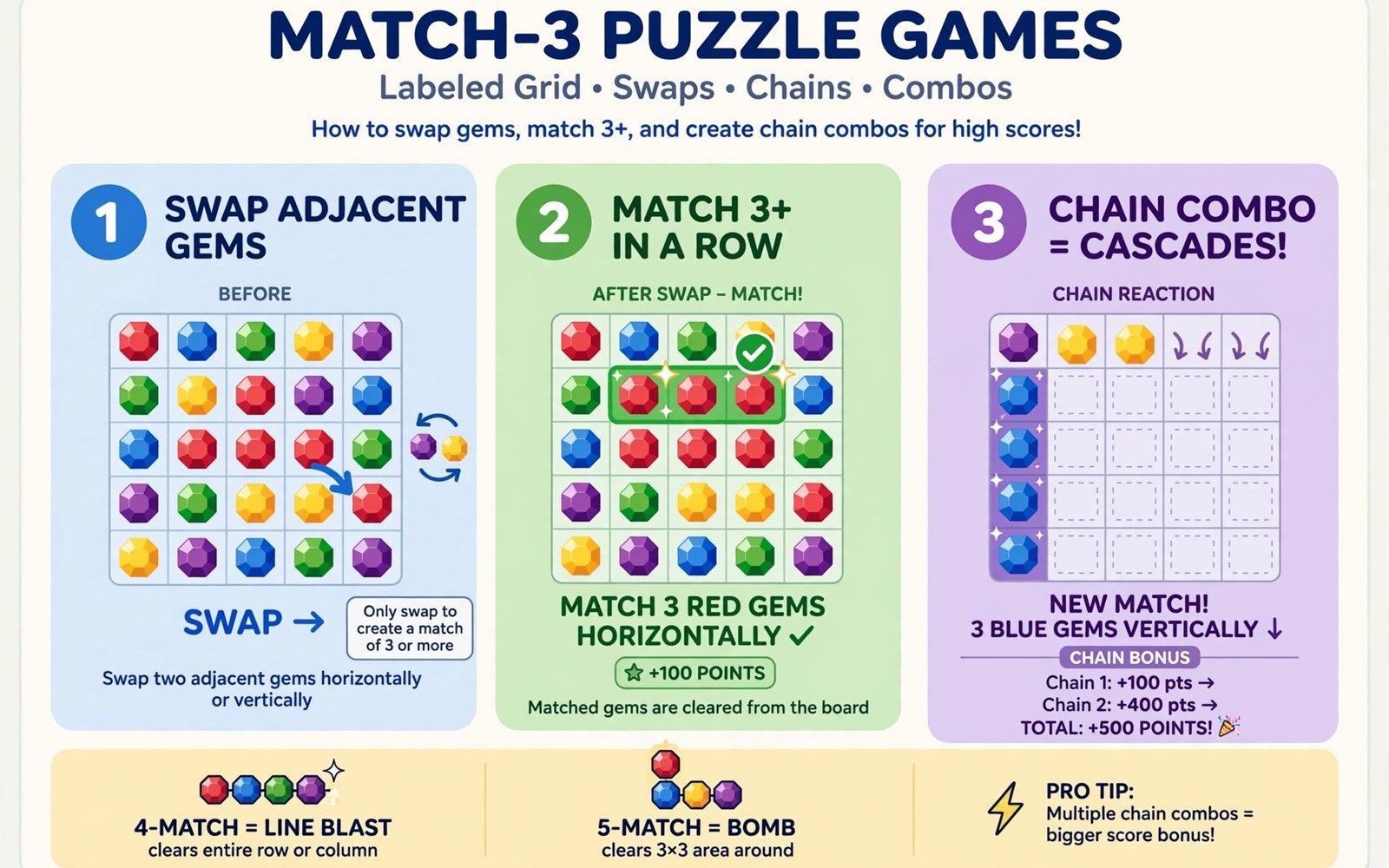
Match-3 puzzle games offer a calm and clever way to enjoy Android gaming without stress or noise. This guide explores match-3 puzzle games and shows how to pick titles that fit your time and taste. You will learn what makes a great game in this genre and how to avoid common traps. By the end you will know exactly where to start and what to try first.
Many players discover match-3 puzzle games during a short break and then keep playing for months. The appeal lies in tile swapping and chain combos that feels fair and rewarding from the first level. Unlike fast action games these titles let you think before you act. That slower pace suits commutes and quiet evenings and busy lunch breaks.
If you enjoy board clearing and level goals then this genre deserves a place on your phone. Start with one well rated title and learn its rules before you add more games. For a change of pace you can explore another puzzle style that rewards careful thinking during the same week and compare how each game feels. Variety helps you learn what you enjoy and what bores you fast.
Why match-3 puzzle games work so well
The strength of match-3 puzzle games lies in clear goals and honest feedback. Every move shows a result so you can learn from each attempt. That loop builds skill without pressure or harsh punishment. Players improve steadily because mistakes teach useful lessons.
Plan two moves ahead instead of grabbing the first match you see. Designers shape levels around tile swapping and chain combos so each stage feels distinct. Early levels teach basics while later levels mix ideas in fresh ways. This steady growth keeps the game fun for weeks.
Good games respect your attention and never waste it on filler. Menus stay simple and levels load fast on most phones. Progress saves cleanly so you can stop mid session without worry. That reliability matters more than flashy graphics.
Another strength is how well match-3 puzzle games fit real life. You can play for five minutes or for a full hour. Sessions pause cleanly when life interrupts your game. This flexibility explains why the genre stays popular year after year.
How to pick the right title
Start by deciding how much time you want to spend each day. Short session games suit busy schedules and quick breaks. Longer titles suit players who enjoy deep progress and rich stories. Match the game to your routine and not to hype alone.
Board edges hide the best chain setups in many match-3 levels. Read recent reviews and look for notes about fairness and ads. A game with kind monetisation will feel better after a month. Avoid titles where progress stalls unless you pay often.
Check device needs before you install a large game. Most titles in this genre run well on modest Android phones. Lower graphics settings if your phone heats up during play. Smooth frames matter more than maximum visual detail.
Try the free version first when one is available. A few levels reveal the core loop and the monetisation style. If the early game feels fair then the full game likely stays fair. When you find a title that clicks you can explore a related casual game with a different twist to broaden your options.
Getting started in your first week
Your first week should focus on learning and not on winning fast. Play the tutorial levels slowly and notice how rules connect. Repeat a level when you fail and study what changed. Small habits in week one shape long term enjoyment.
Save boosters for levels where one extra move changes the result. Set a daily play limit that feels easy to keep. Ten to twenty minutes a day builds skill without fatigue. Stop when play stops feeling fun and return fresh later. Rest keeps your mind sharp for tricky levels.
Use practice modes when the game offers them. Practice removes pressure and lets you test risky ideas. Try odd solutions in practice and keep the best ones for real levels. This habit turns random play into steady improvement.
Keep notes on levels that confuse you. A short note about a failed plan helps you spot patterns later. Many players improve fast once they review their own mistakes. Notes also help when you return after a break.
Practical techniques that improve results
Technique matters more than talent in match-3 puzzle games. Slow down before each move and scan the whole board or scene. Ask what the level wants you to learn and not just what it wants you to do. That question often reveals the intended solution path.
Colour clusters near the bottom create more falling combos above. Break hard levels into smaller goals and solve one part at a time. Clear a corner or secure a key item before you chase the main goal. Small wins build momentum and reveal new options. Patience turns impossible levels into manageable puzzles.
Watch for patterns that repeat across levels. Designers reuse core ideas with small twists each time. Once you spot a pattern you can solve new levels much faster. Pattern skill transfers well to other games in the genre.
When a level feels unfair step away for a short break. Fresh eyes often spot a simple move you missed while tired. Many players solve hard levels right after a break. For fresh ideas you might enjoy a different take on casual puzzle play and notice how its design handles difficulty.
Settings and device tips
Good settings make match-3 puzzle games more comfortable on any Android phone. Adjust brightness and sound to suit your room and time of day. Turn on battery saver when you play long sessions away from home. Small tweaks add up to a much better daily experience.
Check storage before you install several large titles. Delete old games you no longer play to free space. Keep your system updated for smoother performance and security. Most casual titles need little storage and run well offline.
Use headphones when sound matters for timing or mood. Headphones reveal subtle cues that phone speakers hide. Keep volume moderate to protect your hearing during long play. Comfort matters as much as skill for steady progress.
A calm board read beats fast random swaps on hard levels. Back up progress through your account when the game offers it. Cloud saves protect your work when you switch phones. Check sync settings once so you never lose a long run. A little setup now prevents painful losses later.
A simple setup you can copy
Many players benefit from a clear personal setup for match-3 puzzle games. The example below shows a simple settings plan you can adapt. It covers session length and comfort and progress tracking. Adjust the values to match your own routine and device.
{"board_size": "8x8", "moves": 25, "booster_slots": 3, "target_score": 50000}The snippet above is an original example written for this guide. It is shared for learning and personal use and it needs no special tools. Change one value at a time so you can see what helps most. Keep the version that feels best and ignore the rest.
A written plan also helps you compare games fairly. Use the same session length for each new title you test. Fair comparisons reveal which game truly suits your taste. Without a plan hype can push you toward the wrong choice.
Common mistakes
The most common mistake is rushing through early levels. Fast play skips lessons that later levels assume you know. Slow down early and your later progress will feel easier. Speed comes naturally once the rules feel automatic.
Another mistake is spending money too early. Early purchases rarely fix a skill gap. Learn the core loop first and spend only when value is clear. Patience saves money and builds real skill.
Players also quit too soon after a hard level. Hard levels often teach the most useful skills. Take a break instead of deleting a good game in frustration. Return fresh and the solution may feel obvious.
A final mistake is juggling too many games at once. Five half learned games teach less than one mastered game. Focus on one title until its rules feel natural. Then add a second game if you still want variety.
Frequently asked questions
New players ask similar questions about match-3 puzzle games. The answers below cover the points that matter most. Read them before you install your first title. They will save you time and avoid early frustration.
What makes a match-3 game unique?
Fresh mechanics change the board in new ways. Stories and goals also shape how each level feels. This point matters because match-3 puzzle games reward steady habits over quick bursts. Keep expectations realistic and enjoy small gains each day. Progress will follow when the habit stays easy to keep.
How do I beat hard match-3 levels?
Study the board first. Plan chains near the bottom and save boosters for key moments. This point matters because match-3 puzzle games reward steady habits over quick bursts. Keep expectations realistic and enjoy small gains each day. Progress will follow when the habit stays easy to keep.
Do match-3 games need internet?
Many work offline. Check the store page before you travel without a connection. This point matters because match-3 puzzle games reward steady habits over quick bursts. Keep expectations realistic and enjoy small gains each day. Progress will follow when the habit stays easy to keep.
How match-3 puzzle games fit different lifestyles
Students enjoy match-3 puzzle games because short sessions fit study breaks. Workers use them to unwind after long days without new stress. Parents share simple titles with kids during family time. The genre adapts to many lives because sessions stay flexible.
Travellers value games that work offline and pause instantly. Commuters enjoy one handed play on crowded trains. Night players prefer calm visuals and soft sound. Each lifestyle finds a different strength in the same genre.
Choose titles that match your daily rhythm and not someone else routine. A game that fits your life will survive longer on your phone. Delete titles that demand more time than you can give. Your library should serve your life and not control it.
Revisit your library every few months and prune weak titles. Fresh picks keep the genre exciting without clutter. Keep your favourites and try one new title each month. That balance keeps play fresh and focused.
What to try next
After a week with one title you will know your taste better. Try a harder mode or a new theme within the same genre. Small changes reveal whether you enjoy challenge or calm more. Use that insight to pick your next game wisely.
Share tips with friends who play the same genre. Friendly discussion reveals solutions and new titles. Keep comparisons kind and focus on what each game does well. Community knowledge makes every player stronger.
Track your progress with simple notes or screenshots. Visible progress motivates you on slow days. Celebrate small wins like a clean level or a new record. Motivation grows when progress feels visible and real.
Stay curious and keep testing new ideas inside each game. Curiosity turns routine play into lasting enjoyment. The best players never stop learning from each level. That mindset works for every title in this genre.
Conclusion
Match-3 puzzle games offer thoughtful fun that fits real life and real schedules. Pick one title and learn its rules with patience and curiosity. Avoid rushing and spending early and juggling too many games. Steady habits will carry you further than any single trick.
Your concrete next step is simple and takes only a few minutes. Install one well reviewed title tonight and play its first ten levels slowly. Note what you enjoy and what frustrates you after that session. Use those notes to choose your second game with confidence tomorrow.

