

Download APK Conflict Modern War Strategy Latest Features, Clean Install Tips & Review
I opened Conflict Modern War Strategy on a Tuesday morning while my phone was still on charge and I had ten minutes before I needed to leave the house. The first screen felt calm, the main buttons were easy to spot, and I did not have to hunt for the core feature before my coffee had finished brewing. That small start mattered more than I expected, because a strategy game that respects the first five minutes is a game I am willing to come back to. I spent the next month playing in short bursts, usually while waiting for a kettle to boil or sitting in a parked car, and I also ran a few longer evening sessions to see how the game holds up when you have a full hour to plan.
This review covers what the game actually is, how a match plays out, which features are worth your time, and how to install it cleanly on Android without carrying over old data that causes trouble later. I will also compare it with two similar strategy games, list the honest pros and cons, and walk through the problems I hit and how I fixed them. If you like modern warfare strategy games with base building, timed battles, and a slow-burn research tree, the next ten minutes of reading should tell you whether this one deserves a place on your home screen.
A quick note on expectations before we start: this is a free-to-play mobile strategy game, so timers, resources, and optional purchases are part of the design. I played the free path for most of my testing and only looked at the paid options to see what they change. Nothing here needs a purchase to enjoy, but some parts of the game do move faster if you pay, and I will say plainly where that shows up.
What Conflict Modern War Strategy Is and How a Match Actually Plays
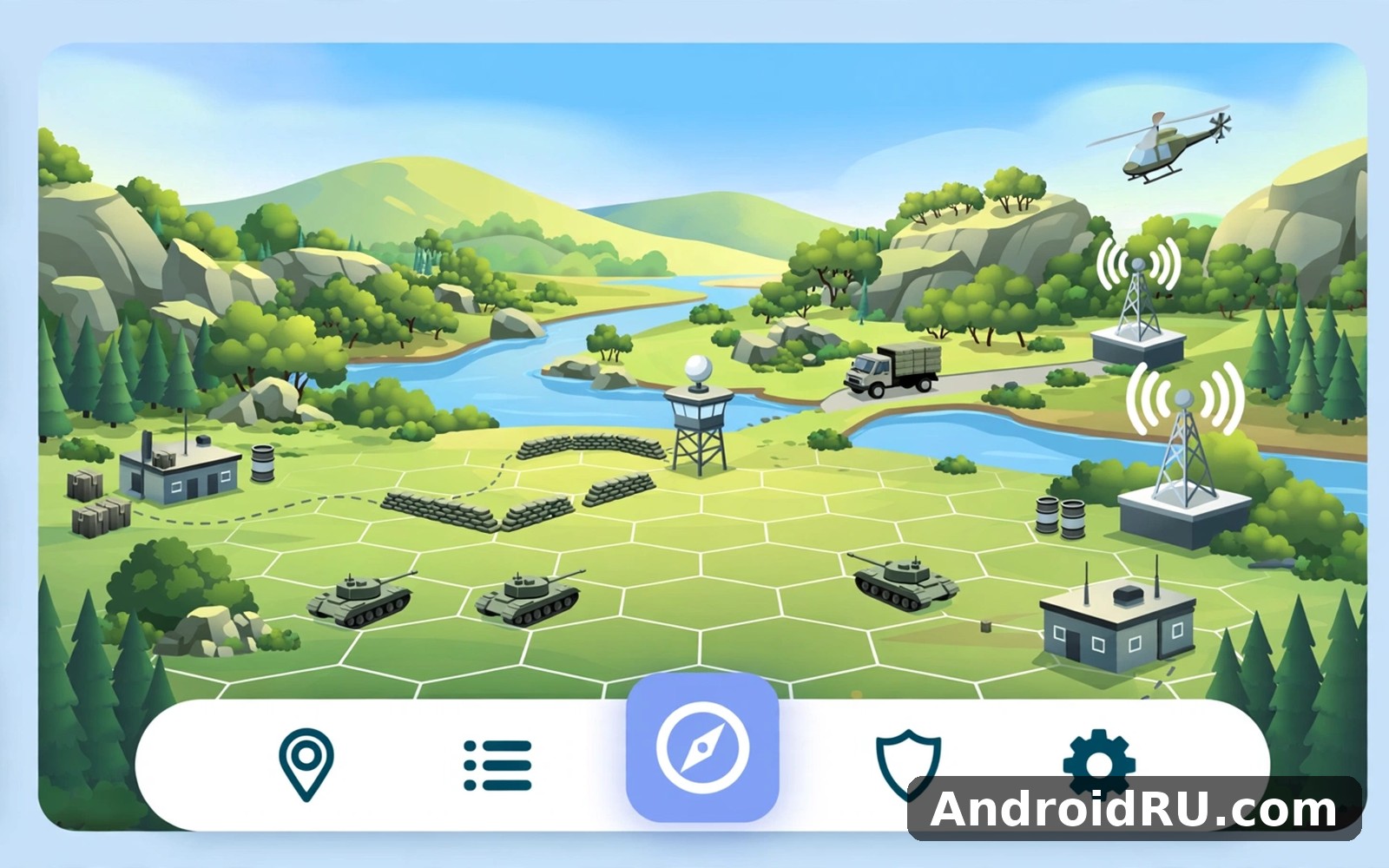
At its core, this is a modern warfare strategy game where you build a base, train units, research better equipment, and fight battles against computer-controlled opponents and other players. The setting is present-day military conflict rather than medieval fantasy or science fiction, so the units look familiar: infantry squads, armoured vehicles, artillery, helicopters, and naval support on some maps. The art style leans realistic enough that a tank reads as a tank at a glance, yet the interface stays readable on a phone screen, which is a balance many strategy games get wrong.
A typical match runs in two phases. First comes the planning phase, where you check your base, collect resources, queue training, and pick a battle. Then comes the battle itself, which plays out in real time on a map you can zoom and pan. You deploy units from the edge of the map, give them move and attack orders, and react when the enemy brings in reinforcements or artillery. Battles I played lasted between three and eight minutes, which fits the short-session pattern the game is built around. Longer campaign missions can stretch past ten minutes, but the game autosaves your campaign progress, so a phone call in the middle of a mission does not cost you the whole run.
The first ten minutes: your opening moves
Your first session starts with a short guided sequence that walks you through building a headquarters, placing a resource collector, and training a basic infantry squad. The guide is brief, and I liked that it lets you tap around freely after about two minutes instead of holding your hand for half an hour. After the guide, the game gives you a starter bundle of resources and a shield that protects your base from player attacks for a limited time. Use that shield window well: build collectors first, then a barracks, then basic defences, because the shield runs out whether you are ready or not. I spent my first shield window on economy buildings and it paid off within two days, since every later upgrade depends on a steady flow of fuel and steel.
How battles are won and lost
Battles are won by destroying the enemy headquarters or by holding more objectives than your opponent when the timer ends. In practice, most of my early wins came from a simple pattern: send infantry to scout, bring armour up behind them, and keep artillery one screen back where it can fire without being rushed. The mistake I kept making in week one was sending everything in at once, which looks decisive and ends with your whole army walking into a prepared defence. The game rewards patience more than aggression, and that surprised me, because the marketing leans hard on explosions. A useful habit is to watch the first thirty seconds of a battle before committing your heavy units, since the enemy layout tells you where the anti-tank guns are hiding.
Conflict Modern War Strategy Base Building, Units and Research
The base is the heart of the game, and it is also where most new players make their first real mistake. It is tempting to spend early resources on flashy units, but the base decides how fast everything else happens. Your headquarters level caps the level of every other building, so rushing the headquarters while your collectors sit at level one leaves you with expensive buildings and no income to feed them. I learned this the slow way, and after I restarted my approach on a second account, the difference was obvious within three days: the balanced base produced roughly twice the resources per day and could keep two research projects running at once.
Base layout that survives early raids
Place your resource collectors inside the wall ring and put the headquarters near the centre, because raiders score points by destroying buildings, and a collector on the edge is a free target. Walls are cheap in the early game and they buy your defences time to work, so I build a full ring before I spend anything on decoration or cosmetic upgrades. Anti-air guns belong near the headquarters and the airfield, since helicopter raids are the most common way to lose a base quickly in the first two weeks. One layout change that helped me a lot was moving my artillery out of the centre and into a corner behind two layers of wall, which stopped a common raid pattern where the enemy rushes the middle and knocks out my long-range guns in the first minute.
Unit types and when to train each one
Infantry is cheap, trains fast, and soaks up damage while your heavy units do the real work. I keep two squads of infantry in every attack because they spot hidden defences and trigger traps before my tanks arrive. Armoured vehicles are your main damage dealers against buildings, but they are slow and they struggle against infantry in close terrain, so they need support. Artillery wins sieges from a distance and loses badly if anything gets close to it, which means it needs a bodyguard at all times. Helicopters are the most flexible unit in the game, able to cross the map quickly and hit targets behind walls, yet they melt under focused anti-air fire, so I only deploy them after I have seen where the enemy air defences sit.
Research priorities for new commanders
Research is split into three trees: economy, military, and defence. For the first week, economy research gives the best return, because a ten percent boost to fuel income compounds across every session you play. After that, I put points into infantry armour and artillery range, since those two upgrades change how battles feel more than any single new unit. Defence research matters most once other players start raiding your base regularly, which in my experience began around headquarters level five. A research project takes real time to finish, so queue a long project before bed and a short one before a play session, and you will waste far less of the day waiting on a timer.
Latest Features in the Current Version of Conflict Modern War Strategy
The current version of the game has moved well past the bare loop of build, train, and attack. The biggest change I noticed after returning to the game this year is how much of the daily experience now happens outside battles: alliance missions, seasonal events, and a battle pass that hands out steady rewards for simply playing a few minutes a day. None of these systems are new to the genre, but the way they fit together here feels considered rather than bolted on, and the daily checklist is short enough that I can finish it in one coffee break.
Seasonal events and limited missions
Seasonal events run for a few weeks at a time and add a themed mission chain with its own reward track. The missions are usually simple variations on normal play, such as winning three battles with infantry only or collecting a set amount of fuel, and the rewards include resources, speed-up items, and occasionally a unique unit skin. I treat events as a bonus rather than a grind, because chasing every event reward turns a relaxed game into a second job. The one event habit worth keeping is checking the event shop before it closes, since leftover event currency disappears and the shop often has a research speed-up that is genuinely useful.
Quality-of-life changes worth knowing
Several small changes have made the daily routine smoother. The training queue now shows a clear time remaining for each unit, the resource collectors have a collect-all button, and the battle replay system lets you watch a defence fail and see exactly which wall the enemy broke through. The replay feature is the one I use most, because it turns every lost base defence into a lesson instead of a mystery. Notifications can be trimmed to the ones that matter, such as a finished research project or a base under attack, and I recommend turning off the generic reminder pings in the first week, since a game that nags you is a game you start ignoring.
Clean Install Tips for Conflict Modern War Strategy on Android
A clean install sounds like a small thing until a bad install costs you an evening. I have installed this game on two phones and a tablet, and the smoothest install each time was the one where I prepared first instead of tapping install and hoping. The steps below take about ten minutes and they prevent the three problems I see most often: the game stalling on the first data pack, progress not appearing after a reinstall, and the game crashing on older phones that are short on free space. Click here to download the Conflict Modern War Strategy app when you are ready to start, and run through the checklist below before you open the game for the first time.
Before you install: space and permissions
The game itself is a modest install, but the first launch pulls extra data packs for maps, sounds, and unit models, so the real footprint is larger than the listing suggests. I keep at least 2 GB free before installing any strategy game, because Android needs working room to unpack files and a phone with almost no space left will stall or crash during that first data pull. Check your Android version too: the game runs best on recent versions, and while it will open on older ones, the frame rate in large battles drops sharply. A stable Wi-Fi connection for the first launch is worth the wait, since the data packs are large and a mobile connection that drops halfway can leave a half-unpacked pack that the game then tries to repair on every launch.
Check free space and Android version
Open Settings, then Storage, and look at the free space number before you install anything. If you are under 2 GB free, delete a few old videos or move photos to a cloud backup first, because that single step fixes more install failures than any other. Then check Settings, then About phone, for the Android version, and compare it with the minimum version on the game listing. A phone that meets the minimum will run the game, but a phone two versions above it will run the large battles far more smoothly, and that difference matters in a real-time battle where a stutter can cost you a unit.
Permissions the game actually needs
The game asks for storage permission to save its data packs and for permission to send notifications about finished research and attacks. Both are reasonable and both can be changed later in the app settings, so there is no need to worry about granting them at install time. If the game asks for anything that looks unrelated to playing, such as access to your contacts, deny it and check whether the request came from the game itself or from an overlay on your phone. A clean install means the game is the only new thing on the phone that day, so any strange request is easy to spot.
Numbered clean install steps that work
- Free at least 2 GB of space and connect to stable Wi-Fi, then restart the phone so no old process is holding memory.
- Install the game from the listing and wait for the install to finish fully before you tap Open, because opening it early can interrupt the final file check.
- Open the game on Wi-Fi and let the first data pack finish without switching apps, since switching away during the first pull is the most common cause of a stuck progress bar.
- Sign in with your usual account on the first screen, or link an account in settings right away, so your progress is tied to something you can recover later.
- Play through the opening guide, then open Settings inside the game and set your notification preferences and graphics quality before your first real battle.
- Close the game fully, reopen it once, and check that your commander name and headquarters level are still there, which confirms the save is working.
That final reopen check takes thirty seconds and it is the step most people skip. I skipped it once, played for an hour, and came back to a fresh account because the first session had never saved. Linking an account before you invest time is the cheapest insurance in the whole game, and it also makes moving to a new phone painless later.
Conflict Modern War Strategy vs Hegemon War Strategy Ww3 and Rts Siege Up Medieval War
Three strategy games can look identical in a listing, so the useful question is not which one is best in general, but which one fits the way you like to play. I have spent time with all three, and they pull in different directions: one leans on modern units and short battles, one leans on a global campaign map, and one leans on medieval sieges. The table below compares them on the points that decided which one stayed on my phone.
| Feature | Conflict Modern War Strategy | Hegemon War Strategy Ww3 | Rts Siege Up Medieval War |
|---|---|---|---|
| Setting | Modern military, present-day units | World war era, global campaign map | Medieval castles, siege warfare |
| Typical battle length | 3 to 8 minutes, real-time | Longer, campaign turns plus battles | 5 to 10 minutes, siege focused |
| Base building depth | Strong, headquarters caps all buildings | Lighter, map control matters more | Strong, castle walls and defences |
| Best for short sessions | Yes, daily checklist is quick | Less so, campaigns reward long play | Yes, single sieges fit short gaps |
| Learning curve | Gentle first week, deep later | Steeper, many systems at once | Moderate, siege mechanics take practice |
| Offline play | Limited, campaign parts need connection | Some campaign modes work offline | Mostly needs connection for events |
Where Hegemon War Strategy Ww3 does things differently
Hegemon War Strategy Ww3 is a natural next app to try if the global campaign map is what excites you, because it puts the world map first and the individual battles second. You move armies between regions, manage supply lines, and fight for territory over many turns, which gives a sense of scale that a single-base game cannot match. The trade-off is time: a campaign demands longer sessions and more patience, and the early game throws several systems at you before you have learned any of them well. Click here to download the Hegemon War Strategy Ww3 app if you want that bigger map, and keep this game installed too if you still want a quick battle between campaign turns.
Where Rts Siege Up Medieval War does things differently
Rts Siege Up Medieval War covers that need neatly if you prefer castles, catapults, and wall-breaking to tanks and helicopters. The siege mechanics are the heart of it: you build siege engines, breach a wall section, and push infantry through the gap while archers fire from the towers. It is a slower, more deliberate kind of battle than the modern game, and the medieval setting gives it a different mood entirely. Click here to download the Rts Siege Up Medieval War app when you want a change of pace, and expect a learning curve around siege timing, since a mistimed breach can waste your whole army. For a third option, Netmeds India Ki Pharmacy is worth a look as well if you want something completely different on your phone for everyday errands between gaming sessions.
Pros and Cons of Conflict Modern War Strategy After a Month of Play
A month is long enough to see past the opening shine and find out whether a game still earns its place. I kept a short note each evening about what I enjoyed and what annoyed me, and the pattern was clear by week three: the game is at its best in short, regular sessions, and it shows its rough edges when you try to binge it for hours or when you reach the mid-game research wall. The lists below are the honest version, not the marketing version.
Features that keep me coming back
The modern warfare strategy game loop of build, train, research, and battle is simple to learn and still interesting after a month, because each new unit changes how a battle plays. The daily checklist respects your time, the battle replay system turns losses into lessons, and the alliance missions give a reason to check in even on days when you do not feel like fighting. The base building and unit research systems connect to each other in a way that makes every upgrade feel like a decision rather than a chore, and the seasonal events add just enough variety to keep the routine from going stale. A clean install on Android is straightforward when you follow the steps above, and the game runs well on a mid-range phone once the graphics are set to match the hardware.
Pros
- Short battles fit real life, since most fights finish in under eight minutes and the daily checklist takes one coffee break.
- Base building has real depth, with headquarters levels, wall layout, and research trees that reward planning instead of random tapping.
- Battle replays show exactly how a defence failed, which makes every loss useful instead of frustrating.
- Seasonal events and alliance missions add variety without forcing you to play for hours each day.
- The interface stays readable on a phone screen, even in a large battle with many units on the map.
Cons
- Research timers get long in the mid-game, and progress can feel slow for a week or two without spending on speed-ups.
- Some battles stutter on older phones when many units and effects appear at once, so graphics settings need adjusting.
- The free-to-play economy pushes optional purchases at several points, and the prompts appear often enough to notice.
- Alliance features matter a lot in the later game, so solo players may feel the limits of playing alone after the first month.
Who it is for
This game suits players who like strategy in short daily sessions, enjoy planning a base over weeks, and do not mind timers as part of the genre. It fits a commuter, a parent with ten spare minutes, or anyone who likes checking in on a long-term project a few times a day. It is a weaker fit for players who want long, uninterrupted real-time battles, who dislike waiting on research timers, or who want a purely single-player campaign with no online systems at all. If you fall in the first group, the game is an easy recommendation; if you fall in the second, try the comparison games above first and see which pace suits you better.
Troubleshooting Common Problems in Conflict Modern War Strategy
Most problems I met had a simple cause and a simple fix, and the pattern was almost always the same: check the connection, check the space, restart the app, and only then look for a deeper cause. The three issues below are the ones I actually hit during my month of testing, plus the one I hear about most from other players, and each fix is written in the order I would try it.
The game will not load past the logo screen
A stuck logo screen usually means a data pack did not finish unpacking, or the phone ran out of space during the first launch. Close the game fully, free at least 1 GB of space, connect to stable Wi-Fi, and reopen it. If the bar still stalls in the same place, clear the app cache in Android Settings, then Apps, then the game, then Storage, and launch again. Do not clear app data unless your account is linked, because clearing data wipes local progress that is not tied to an account. I fixed my one stuck load with a cache clear and a Wi-Fi restart, and the game has loaded cleanly since.
When a cache clear is not enough
If a cache clear does not fix the stuck screen, uninstall the game, restart the phone, and reinstall it using the clean install steps in the section above. Reinstalling sounds drastic, but it takes ten minutes and it fixes a half-unpacked data pack that a cache clear cannot reach. Make sure your account is linked before you uninstall, or you will lose local progress that was never saved to an account.
Battles lag on an older phone
Lag in battles is almost always a graphics setting problem rather than a connection problem. Open the in-game settings, drop the graphics quality one step, turn off shadows and high-resolution effects, and close other apps before you play. I played on a three-year-old mid-range phone and the medium setting kept battles smooth, while the high setting stuttered whenever artillery and helicopters appeared together. A phone that is hot from charging will also slow down, so I play unplugged when I can, and I restart the phone once a day during a heavy gaming week.
Progress seems to be missing after reinstalling
Missing progress after a reinstall almost always means the game was never linked to an account. Open the game, sign in with the same account you used before, and wait a full minute on the loading screen while the save syncs. If the base still looks fresh, check that you signed in with the right account and not a guest profile, since guest progress stays on the old install. This is the one problem that is genuinely hard to fix after the fact, which is why the clean install section puts account linking before any real play. If you did link an account and the save still does not appear, contact support from inside the game settings and include your commander name and the approximate date you started.
Frequently Asked Questions About Conflict Modern War Strategy
What is Conflict Modern War Strategy about?
It is a modern military strategy game where you build a base, train units such as infantry, tanks, artillery, and helicopters, research upgrades, and fight real-time battles against computer opponents and other players. The goal is to grow your headquarters, defend your base from raids, and win battles by destroying the enemy headquarters or holding more objectives when the timer ends. A typical session lasts a few minutes, and progress carries over day by day, so it works well as a daily habit rather than a game you finish in one sitting.
How long does a battle take in Conflict Modern War Strategy?
Most battles I played lasted between three and eight minutes, with campaign missions sometimes stretching past ten. The battle timer and the map size keep fights short, and the game autosaves campaign progress, so an interruption does not cost you the whole mission. If you only have five minutes, a single quick battle or a round of base management fits easily, and the daily checklist is designed around that kind of short visit.
Can I play Conflict Modern War Strategy for free?
Yes, the game is free to play and the full loop of base building, training, research, and battling is open without paying. Optional purchases speed up research and training timers and buy cosmetic items, and they appear regularly in the interface. I played the free path for most of my testing and reached the mid-game without spending, though research timers do get longer there, so free players should expect a slower pace after the first few weeks.
Is Conflict Modern War Strategy good for beginners?
Yes, the first week is gentle, with a short guide, a starter bundle of resources, and a temporary shield that protects your base from player raids while you learn. The learning curve rises once you reach headquarters level five and other players start raiding seriously, but by then you will have learned the basics of layout, unit roles, and research. Beginners should focus on economy buildings first and save the advanced units for later, since a strong income makes every later step easier.
Verdict: Who Should Play Conflict Modern War Strategy
After a month of daily play, I keep this game installed because it fits the shape of my day: short sessions, steady progress, and a base that rewards a little planning each morning. It is not the deepest strategy game I have played, and it is not the fastest, but it is one of the most consistent, and consistency is what keeps a mobile game on a phone for months instead of days. The mid-game research wall is real, and the purchase prompts are frequent, yet neither problem stopped me enjoying the core loop.
If you like modern military strategy, enjoy building something over weeks, and want a game that fits into ten-minute gaps, install it with the clean steps above and give it a week. Play the opening guide, link your account, build your economy first, and try one alliance mission before you judge it. If you prefer long campaigns, a global map, or medieval sieges, the comparison games in this review are a better first stop. Either way, the right next step is a small one: try a week of short sessions and see whether the habit sticks, because that is the only test that actually answers the question.

