

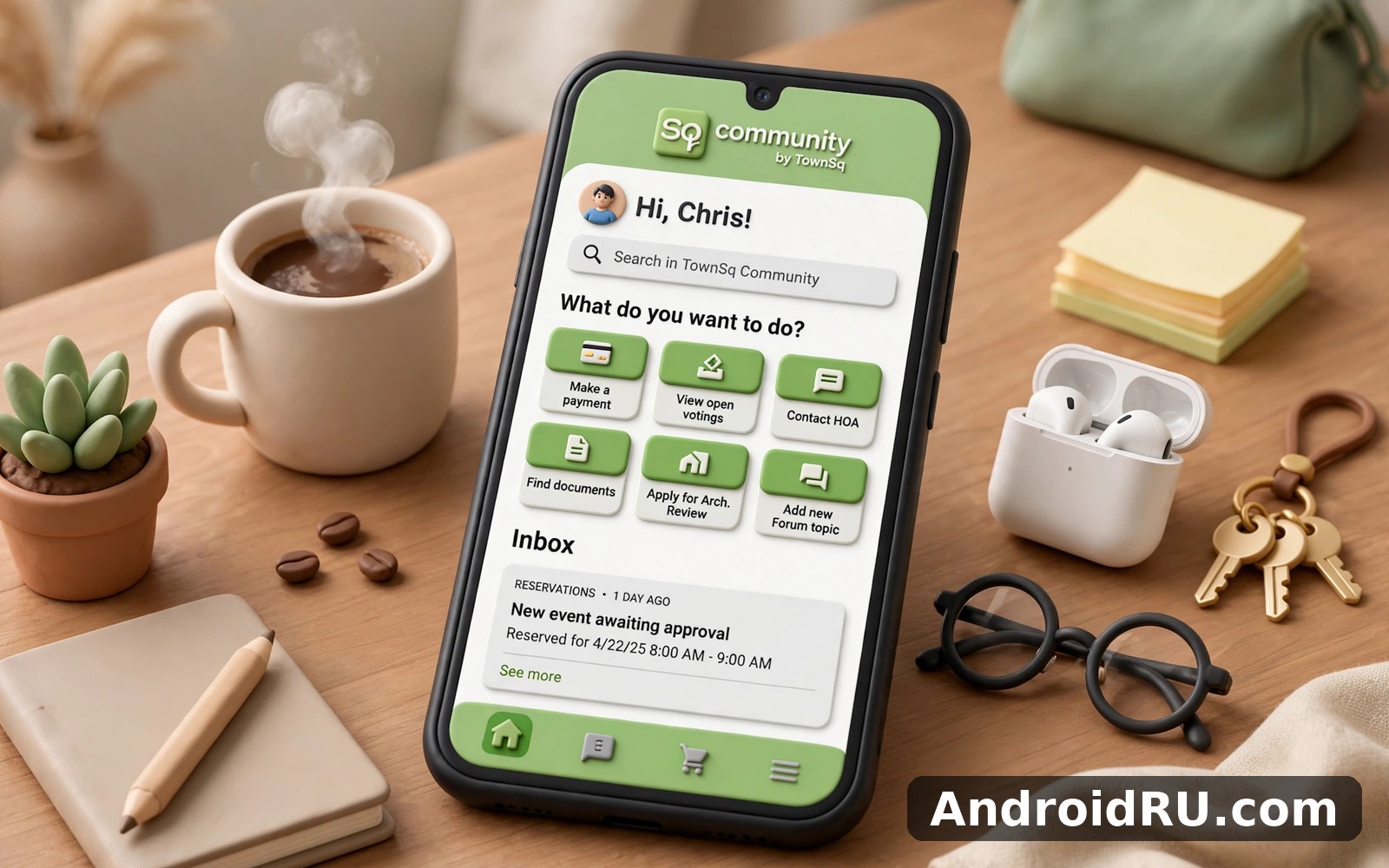
Download APK Townsq Community Latest Features, Installation Troubleshooting & Review
I first opened Townsq Community on a weekday evening, after a neighbour mentioned that the building’s maintenance notices, event sign-ups and amenity bookings had all moved into one app. Until then I had relied on a noticeboard in the lobby, a group chat that never stopped buzzing, and a paper form for booking the common room. None of them talked to each other. Townsq promised to put them in one place, and after a month of using it for real notices, real bookings and one very real leaking pipe, I can say what it does well, where it still feels rough, and who should bother installing it at all.
This review answers the title in full. You will find the latest features in the current version, a detailed look at each major tool, a head-to-head comparison with Bluesky, Diffuse and Nextdoor, an honest list of pros and cons, and a troubleshooting guide for the installation and login problems that new users hit most often. It is written from daily use in a real residential community, not from a feature list, and it keeps the focus on the practical question: does this app make community life easier, or does it just move the same chores onto a smaller screen?
Townsq suits a particular kind of reader. If you live in a managed community, a housing association, a condominium or a neighbourhood with an active residents’ group, and your manager or committee already uses Townsq, it is worth installing on day one. If nobody in your area uses it, the app on its own cannot conjure a community, and this review will say so plainly rather than pretending otherwise.
What Townsq Community Is and Who It Is Built For
Townsq Community is an app for residential communities: apartment buildings, housing estates, condominiums and neighbourhood associations that need one shared place for announcements, events, payments, documents and maintenance requests. The idea is simple. Instead of scattering community life across a noticeboard, a chat group, an email list and a paper form, the community manager posts everything in Townsq, and residents see it in one feed, on their phones, with a notification when something matters. Residents can reply, book shared spaces, report a problem, pay a charge and find a document without chasing the manager on the phone.
The app is built for two audiences at once, and that shapes everything about it. Managers and committee members get tools for posting announcements, scheduling events, collecting payments, sharing documents and tracking maintenance requests from report to repair. Residents get a calmer view: a feed of announcements, a calendar of events, a directory of neighbours who chose to be listed, and simple forms for the things they need most often. That split is important, because a resident judges the app by how fast they can book a room or report a leak, while a manager judges it by how many phone calls it prevents.
In practice the app works best where a community already has some organisation. A building with an active manager, a regular events calendar and a shared laundry room will get value from Townsq within a week. A street where neighbours barely know each other will get far less, because the app organises a community that exists rather than creating one from nothing. That is not a flaw in the software, but it is the first thing to check before you install it: ask whether your manager, committee or neighbours already use it, because a community app with no community inside it is just an empty feed.
Townsq Community Latest Features in the Current Version
The current version of Townsq focuses on the daily jobs rather than on flashy additions. The announcement feed is the centre of the app, and recent updates made it easier to tell urgent notices apart from routine ones, with clearer labels, pinned posts for the things every resident must see, and better handling of attachments such as PDFs and photos. I noticed the difference during a water shutdown in my building: the notice was pinned at the top, the times were clear, and the follow-up message saying the water was back appeared in the same thread instead of starting a new one.
Events and amenity booking have also improved. Residents can now see upcoming events in a calendar view, sign up with a tap, and get a reminder before the event starts. Booking a shared space such as a common room, a gym slot or a barbecue area follows the same pattern: pick a date, pick a time, confirm, and the booking shows up in your list. Managers can set rules for each space, such as maximum hours or advance booking limits, so the system handles the fair use without a human having to police every request.
Payments and documents round out the recent changes. Dues, fees and one-off charges can be paid inside the app where the community has enabled payments, with a receipt and a history you can check later. The document library holds the files residents actually ask for: house rules, meeting minutes, insurance papers, contact lists and maintenance schedules. Search inside the library is quicker than it used to be, and the most-used documents can be pinned so new residents find them without asking. Taken together, these updates do not change what Townsq is, but they make the version on your phone today noticeably smoother than the one from a year ago.
One honest note about versions: Townsq updates often, and the exact version number on your phone will move on within weeks, so this review describes the direction rather than a single build. The direction is toward fewer taps for common jobs, clearer urgent notices, and better tools for managers to keep information current. If you read a review that quotes a version number from last year, treat its screenshots with care, because the layout has moved on since then.
Townsq Community Features in Depth
Townsq packs a lot into one app, so it helps to look at each major tool on its own. The features below are the ones I used every week during testing, and each one earns its place only if it saves a resident or a manager real time. A feature that looks good in a list but takes five taps to reach is not a feature in daily use, it is a chore, and this section judges each tool by that standard.
Announcements, news feed and urgent alerts
The announcement feed is where most residents spend their time. Managers post notices about maintenance, meetings, rule changes and local news, and residents can react or comment. Urgent alerts stand out from routine posts, which matters when the lift is out of service or the water is off. During my month of testing, the feed replaced the lobby noticeboard for me entirely: I checked it in the morning, saw what had changed, and moved on. The trade-off is that a feed only works if managers post in it, so a silent manager means a silent app, and no design can fix that.
Events, calendar and amenity booking
The events calendar lists community gatherings, meetings, classes and social events, with sign-up built in. Amenity booking covers the shared spaces and equipment that cause the most arguments in a building: the common room, the gym, the pool slots, the guest parking and the barbecue area. Booking takes less than a minute once you know the layout, and the confirmation stays in the app so you can prove your slot if anyone asks. The catch is that the rules are set by the manager, so if the booking window for your building is narrow or the cancellation policy is strict, that is a community decision, not an app limitation, and it will feel like one until the rules change.
Payments, dues and receipts
Where payments are enabled, residents can pay dues, fees and one-off charges inside the app and keep a receipt and a payment history in one place. That replaces bank transfers with no reference, cash in an envelope, and the monthly question of whether a payment actually arrived. Managers get a record of who paid and who has not, which is the part that saves the most time. Availability varies by community and region, so check whether your building has switched payments on before you expect to use it, and confirm which payment methods are accepted in your area.
Maintenance requests, documents and the resident directory
Maintenance requests are the feature that sold me on the app. Reporting a leaking pipe took me two minutes: a photo, a short description, a location, and the request appeared in a list I could follow until it was marked fixed. The document library holds the files residents ask for again and again, from house rules to meeting minutes, and the directory lists neighbours who chose to be visible, with a way to contact them through the app. Together these tools replace the three most common phone calls a manager receives, and that is the real measure of whether a community app is working.
Two settings worth changing on day one
First, open notification settings and choose which kinds of posts can buzz your phone, because the default can be chatty if your community posts often. Second, check your profile visibility in the directory and decide what neighbours can see. Those two minutes of setup prevent most of the complaints new users have in their first week.
Townsq Community vs Bluesky vs Diffuse vs Nextdoor: A Head-to-Head Comparison
Townsq is not the only app that connects neighbours, so it helps to see how it compares with three very different alternatives. Nextdoor is the best-known neighbourhood network, built around local posts, recommendations and lost-and-found for a whole area. Bluesky is an open, decentralised social network with a chronological feed and custom algorithms, built for public conversation rather than for one building. Diffuse is an offline-first social app designed to keep working with limited connectivity and to put the user in control of their own data. They solve different problems, and the right choice depends on whether you need to run a building, meet the street, talk to the world, or stay connected when the signal is weak.
If your need is a managed community with bookings, payments, documents and maintenance tracking, Townsq is the only one of the four built for that job. Bluesky is the better comparison when you want open public conversation and a feed you control, because its custom feeds and decentralised design suit discussion rather than building management. Diffuse is the one to study when offline access matters most, since its offline-first design keeps your posts and messages available even when the connection drops. Nextdoor is the closest rival for local life, with a much larger crowd of nearby residents, recommendations for local services, and the kind of neighbourhood news that a single building app cannot provide.
| Feature | Townsq Community | Bluesky | Diffuse | Nextdoor |
|---|---|---|---|---|
| Main purpose | Managed residential communities | Open public social networking | Offline-first social networking | Neighbourhood news and recommendations |
| Announcements and alerts | Yes, pinned and urgent notices | Posts and feeds, no urgent alerts | Posts and messages | Yes, local posts and alerts |
| Events and amenity booking | Yes, built-in calendar and booking | No booking tools | No booking tools | Events yes, booking no |
| Payments and dues | Yes, where enabled | No | No | No |
| Maintenance requests | Yes, with tracking to completion | No | No | Basic reporting only |
| Documents and house rules | Yes, shared library | No | Basic file sharing | No |
| Offline access | Limited, needs a connection | Limited, needs a connection | Strong, offline-first design | Limited, needs a connection |
| Audience size | Your building or estate | Large open network | Smaller, growing network | Large local network |
| Cost | Free for residents, community plan for managers | Free | Free | Free |
| Best for | Running a managed community | Public conversation and custom feeds | Staying connected offline | Meeting the wider neighbourhood |
The table makes the trade-off plain. Townsq wins on the practical machinery of community life: bookings, payments, documents and maintenance tracking. Nextdoor wins on crowd size and local discovery. Bluesky wins on open conversation and control over your feed. Diffuse wins when the connection itself is unreliable. There is no overall winner, because the apps are built for different jobs: running a building belongs to Townsq, meeting the street belongs to Nextdoor, talking to the wider world belongs to Bluesky, and staying in touch without a signal belongs to Diffuse.
Townsq Community Pros and Cons: An Honest Balance
After a month of daily use, my view of Townsq is positive with clear reservations. It does the unglamorous jobs of community life well, and it replaces a pile of disconnected tools with one place that residents actually check. But it depends on the people running your community, and it will feel empty or frustrating if they do not use it. The honest balance is below, and it is the part of this review I would read first if I were deciding today.
Townsq Community pros: what it does well
- One place for announcements, bookings, payments and repairs — the daily jobs of community life stop living in five different places and start living in one feed.
- Maintenance requests with tracking, so a reported problem does not vanish into a chat thread and you can see when it is fixed.
- Amenity booking that prevents the usual arguments about who booked the common room and when.
- A document library that answers the questions every new resident asks, without a phone call to the manager.
- Urgent alerts that stand out from routine posts, which matters when the lift, the water or the power is affected.
Townsq Community cons: where it strains
- Only as good as your manager and neighbours — if nobody posts, books or replies, the app feels empty no matter how good the design is.
- Payments and some tools depend on your community enabling them, so two buildings can have very different experiences of the same app.
- Smaller audience than Nextdoor, so local recommendations and neighbourhood news are thinner.
- Needs a connection for most features, unlike offline-first alternatives, so a weak signal in a basement car park can slow you down.
Who Townsq Community is for
Townsq is for residents of managed communities whose manager or committee already uses it, and for managers who want fewer phone calls and a clear record of requests, bookings and payments. It is for people who value an organised building over a lively public feed. It is not for people looking for a big public social network, a dating app, or a place to meet strangers across a city. If your building has not adopted it, talk to your manager first, because one resident alone cannot make a community app work.
Townsq Community Installation Troubleshooting
Most Townsq problems happen at the start: the install fails, the code does not arrive, or the login screen loops. The steps below cover the problems new users report most often, in the order I would try them. Work through them one at a time, and test the app after each step, because the fix is often simpler than the symptom suggests. If a problem survives every step here, the in-app help and your community manager are the next stop, since some issues are tied to how your building set the app up rather than to your phone.
App will not install or update
Check that your phone has enough free storage first, because a full phone is the most common cause of a failed install, and freeing a gigabyte or two often fixes it at once. Next, check your Android version against the app’s minimum requirement on the listing page, and update your system if you are far behind. If the download stalls, switch between Wi-Fi and mobile data to test the connection, then clear the cache of the app store itself from Android settings and try again. A restart of the phone clears the remaining stuck installs more often than people expect.
Verification code or invitation link does not arrive
If you registered with an email address, check the spam folder before anything else, then request a new code and wait a few minutes, because repeated requests can delay delivery. If you registered with a phone number, check that the number is correct and that your phone can receive messages from short codes. Invitation links usually come from your manager or committee, so if the link has expired or says it is invalid, ask them to send a fresh one rather than guessing at the address. Joining with the wrong email, the one you rarely check, is the most common cause of a missing code, and it is worth searching your other inboxes before anything else.
Login loops, crashes and missing community
If the app returns you to the login screen after you sign in, clear the app cache from Android settings, then sign in again slowly, checking each field as you go. If the app crashes on opening, update it to the latest version, restart the phone, and reinstall only as a last resort, since a reinstall fixes most corrupted installs but also clears your saved login. If you can log in but your building or community does not appear, you are probably signed in with a different account than the one your manager invited, or your invitation has not been accepted on the manager’s side yet, so confirm the exact email address with them before trying anything more drastic.
Notifications, images and slow loading
If notifications do not arrive, check three places in order: the notification settings inside Townsq, the notification permission for the app in Android settings, and battery optimisation, because aggressive battery saving can delay or silence alerts on some phones. If images load slowly, test another connection, clear the cache, and make sure the app has enough free storage on the device. If the feed feels slow, close the app fully and reopen it, and check that you are on the latest version, since performance fixes arrive in most updates.
Townsq Community Setup Guide for Residents and Managers
Setup takes about ten minutes for a resident and a little longer for a manager. A resident installs the app, registers with the email address the manager invited, confirms the verification message, and checks that their building appears on the home screen. Then they fill in their profile, set notification preferences, and look at the document library before they need anything urgently, because finding the house rules during a dispute is the worst time to learn where they live. I suggest new residents spend their first evening doing exactly that: read the pinned notices, check the events calendar, and book nothing yet, just learn where everything sits.
Managers have more to do, and the order matters. Start with the community profile and the member list, making sure every resident has an invitation and that the directory only shows what residents agreed to share. Then post the three documents every new resident asks for: the house rules, the contact list and the maintenance schedule. Next, set up the amenity booking rules for each shared space, and only then announce the app to residents with a clear message about what it replaces. A launch message that says what the app is for, and what residents should stop doing by phone or paper, gets far more sign-ups than a bare download link.
The setup habit that matters most is keeping information current. An announcement feed with last month’s notices at the top teaches residents to stop checking, and a document library with outdated rules teaches them to stop trusting it. A weekly five-minute check by the manager, archiving what is finished and pinning what is new, keeps the app feeling alive. That small routine is the difference between a community app that residents open every morning and one they delete after a month.
Townsq Community Frequently Asked Questions
Is Townsq Community free for residents to use?
Yes, residents use the app free of charge in the usual setup, while the community or its management pays for the service that runs it. Some tools, such as payments, depend on the community enabling them, so the experience can differ between buildings. If a feature you expected is missing, ask your manager whether it has been switched on for your community before assuming the app itself lacks it.
How do I join my building or community on Townsq?
You join through an invitation from your community manager or committee, usually sent to your email address or phone number. Install the app, register with the same address the invitation was sent to, and your community should appear on the home screen. If it does not, confirm the exact email address with your manager, since joining with a different address is the most common cause of a missing community.
Can I pay my dues and charges through Townsq?
You can where your community has enabled payments inside the app. Dues, fees and one-off charges can be paid there, with a receipt and a payment history you can check later. Availability varies by community and region, so check whether your building has switched payments on, and confirm which payment methods are accepted in your area before you rely on it.
What should I do if my maintenance request gets no reply?
Check the request status in the app first, since it may be marked as received or scheduled without a message to you. If the status has not changed for several days, add a polite follow-up note to the same request rather than starting a new one, so the history stays in one place. If there is still no reply, contact your manager directly and mention the request number or date, because a paper trail inside the app makes the follow-up much easier than a phone call with no record.
Is Townsq a replacement for Nextdoor?
Not exactly. Townsq is built for running a managed community, with bookings, payments, documents and maintenance tracking, while Nextdoor is built for the wider neighbourhood, with local news, recommendations and a much larger crowd. Many residents use both: Townsq for their building and Nextdoor for the area around it. If you only need neighbourhood news and local recommendations, Nextdoor alone may be enough, but it will not book your common room or track a repair.
Townsq Community Verdict: Who Should Join and Who Should Skip It
Townsq Community is a practical app with a clear job, and it does that job well when the people running your community use it properly. The reward is fewer phone calls, fewer arguments about bookings, a clear record of repairs, and a noticeboard that residents actually read. The price is dependence on your manager and neighbours: the app cannot create a community, it can only organise one. For residents of a managed building that already runs on Townsq, installing it is an easy yes, and it will pay for itself the first time you report a problem or book a room in under a minute.
Skip it if nobody in your building uses it and nobody plans to, because an empty community app is just an empty feed, and no feature list will change that. Try it if your manager has invited you, even if you are sceptical, because a week of checking the feed each morning is enough to judge it fairly. Click here to download the Townsq Community app when you are ready to give it that week. If you want a wider local network alongside it, Click here to download the Bluesky app, and for an offline-first option, Click here to download the Diffuse app. Whichever you choose, start by reading the pinned notices and the house rules, and judge the app by whether it makes one real job easier this week.

