

Download APK Match the Emoji Combine All Latest Updates, Getting Started & App Review
Match the Emoji Combine All does not try to be everything at once, and that restraint is part of its charm. It is a bright, casual puzzle game built around one idea: match identical emoji, combine them into a new emoji, and clear the board before it fills up. I first opened it while waiting for a kettle to boil, expecting to close it after a minute. Three rounds later I was still there, working out whether to merge two laughing faces now or save them for a bigger combination later. That small decision, repeated round after round, is the whole game, and it is more absorbing than it sounds.
This guide explains the game in plain terms, covers the latest updates and how they change play, walks through getting started step by step, and gives an honest review with real strengths and real limits. It is written for casual puzzle players who like short, bright games, and for parents and friends who want to know whether this is a calm five-minute game or another noisy time sink. The short answer is that it is a calm five-minute game, as long as you play it that way, and the longer answer is in the sections below.
Match the Emoji Combine All helps you match and combine emoji in quick puzzle rounds, and it respects your time from the first open. There is no long story to follow, no complex controls to learn, and no penalty for putting the phone down mid-round. You can open it for a few minutes and still make progress, because the design suits short sessions. Small habits often beat long rare sessions for this kind of game, and this one is built around that truth.
What Match the Emoji Combine All Is and How the Game Works
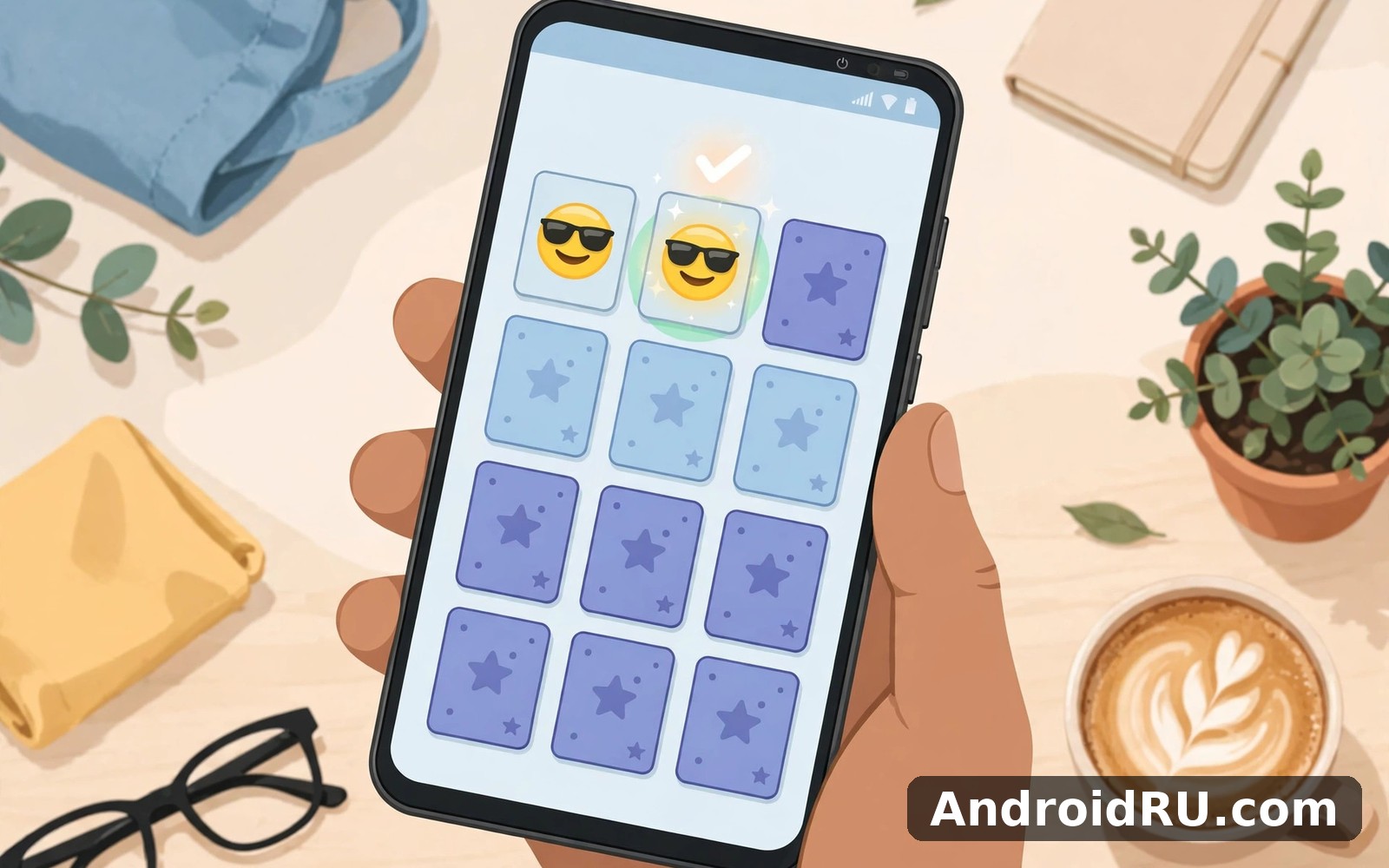
The main job of Match the Emoji Combine All is simple to describe: you look at a board full of emoji faces, you tap matching pairs, and you combine them to make a new emoji and free up space. Some versions of the idea work like a merging puzzle, where two identical emoji join into the next emoji in a chain, and some work like a matching puzzle, where you clear pairs and earn points for each clear. In both cases the skill is the same: look at the whole board before you tap, plan two moves ahead, and do not waste a good pair on a bad spot.
The home screen shows the most useful tools first, and that keeps the game simple for new players and fast for returning ones. You can see your level, your progress, and the next board without digging through menus. A round usually takes a few minutes, which makes the game easy to fit into a spare moment. It also makes it easy to stop cleanly: finish a round, put the phone down, and pick up where you left off later.
Matching identical emoji and clearing the board step by step
Matching is the first skill to learn, and it is easy to pick up. You scan the board for two identical faces, tap them, and watch them clear with a small burst of colour. The trick is not to tap the first pair you see. A better habit is to scan the whole board first, because the obvious match is not always the smartest match. Sometimes clearing one pair opens up a better pair, and sometimes it blocks a combination you were building towards. I learned this the slow way, by clearing pairs too fast and then staring at a board with no good moves left.
Clearing a board feels satisfying because the feedback is immediate: the board empties, the score ticks up, and the next level opens. That small loop of effort and reward is why casual puzzles work so well on a phone. It is also why the game is easy to play in short bursts. One board, one small win, and you can stop while it still feels fun, which is a better ending than playing until you are tired of it.
Combining pairs to make new emoji and open harder boards
Combining is where the game gets its name and its depth. When you merge two matching emoji, they do not just vanish. They join into a new emoji, often a bigger or rarer face, and that new emoji can then be combined again with its own match. The chain gives you a reason to think ahead: two small emoji today become one bigger emoji tomorrow, and that bigger emoji may be the key to clearing a crowded board. Players who plan their combinations last longer than players who tap at random.
The combine and merge chain is the heart of the game, and it is what separates this puzzle from a plain matching game. A plain matching game asks you to find pairs. This game asks you to build pairs, save them, and spend them at the right moment. That extra layer is light enough for a casual player and deep enough to keep a regular player interested for weeks. If you only ever clear the obvious pairs, you will progress slowly. If you learn to hold a pair for a better combination, you will clear boards faster and with fewer wasted moves.
How the merge chain works on a real board
Picture a board with two smiling faces, two heart eyes, and two laughing faces. Merging the two smiling faces makes a new face that sits in a fresh spot. That new face may match another face already on the board, which lets you merge again at once. The chain works best when you keep the board tidy: group similar faces together, avoid filling the edges with faces you cannot use, and leave one clear space for the next merge. It sounds fussy, but after a few rounds it becomes a habit, and the habit is what turns a lucky clear into a planned one.
Levels, progress rewards and daily play in Match the Emoji Combine All
Progress in Match the Emoji Combine All comes from finishing boards, opening new levels, and keeping a streak of completed rounds alive. New boards get harder in small steps: more emoji types, tighter layouts, and less room for careless taps. That gentle rise in difficulty is well judged, because a board that is too hard too soon drives new players away, while a board that never changes bores regular players. Here the difficulty climbs slowly enough that you usually feel ready for the next level when it arrives.
Rewards for steady play are modest and that is a good thing. You earn coins or points for completed rounds, you can build a streak by returning each day, and you can use hints or boosters when a board stumps you. The rewards are not so generous that they remove the challenge, and not so stingy that progress feels pointless. A daily visit of five minutes is enough to keep a streak alive, and that is the rhythm the game is designed around.
Match the Emoji Combine All Latest Updates and What Changed
Updates to a casual puzzle game rarely make headlines, but they change how the game feels day to day. Recent updates to Match the Emoji Combine All have focused on the things regular players notice: smoother play, clearer boards, new emoji sets, and better rewards for returning players. The developers have also fixed the small annoyances that build up over time, such as slow loading, crowded screens, and levels that felt unfair. None of these changes reinvents the game, and that is the point. A good update to a simple game makes the simple game work better.
One of the most welcome changes is a cleaner board layout, with emoji that are easier to tell apart at a glance. That matters more than it sounds, because a matching game lives or dies on how fast you can read the board. When two faces look too similar, you tap the wrong one and lose a move. When each face is clear and distinct, you can scan the board in seconds and plan your next merge. Players who returned after a break often notice this change first, because the board simply feels calmer to look at.
New emoji sets, boards and seasonal content in recent updates
New emoji sets are the most visible part of recent updates. The game has added fresh faces and themed boards, including seasonal sets that appear for holidays and special events. These sets do not change the rules, but they change the look and feel of play, and for a casual game that is enough. A new set of faces gives a regular player a reason to open the game again, and a themed board gives a lapsed player a reason to come back for a round or two.
Seasonal content is worth checking when it appears, because it often comes with a short event or a small reward for completing a themed board. The events are usually simple: finish a set of boards, earn a badge or a few coins, and move on. They are not worth rearranging your day for, but they are a pleasant extra if you already play daily. If you miss an event, nothing important is lost, and the next one will arrive soon enough.
Performance, loading and quality-of-life fixes after the latest update
Behind the visible changes, recent updates have improved loading times, fixed crashes on older phones, and made the game use less storage over time. The main screen now loads quickly enough that I rarely think about loading at all, and that is the best kind of performance: the app disappears and the game takes centre stage. Waiting time stays short for the common tasks, such as starting a round, opening a new level, or collecting a daily reward.
Quality-of-life fixes are the small changes that regular players feel most. A clearer undo button, a better hint system, and a settings screen that is easier to read all add up to a smoother game. After any update, it is worth opening the settings once and checking that sound, hints, and notifications are still set the way you like them. Updates sometimes reset a setting, and finding that out mid-round is a needless annoyance.
What to do if an update changes the layout you were used to
If an update moves a button or changes a board layout, give yourself a day to get used to it before you judge it. New layouts always feel strange on first sight, and after two or three rounds the new layout usually feels normal. If a feature you relied on has genuinely gone, check the settings screen and the help section before you assume it is lost. Most features are moved, not removed, and a quick look saves a lot of frustration.
Getting Started With Match the Emoji Combine All in Your First Week
Getting started is deliberately easy, and the game is at its best when you let it stay easy for the first few days. You do not need a guide to play the first round, but a little structure in the first week will help you build good habits and avoid the mistakes that make new players quit early. The steps below are the ones I would give to a friend who had just installed the game.
Start by playing the first few boards slowly. Read the board, find the pairs, and learn how a combination works before you worry about speed or score. Speed comes later, and it comes naturally once you can read a board at a glance. A player who rushes the first boards learns bad habits, such as tapping the first pair they see, and those habits are harder to unlearn than they are to avoid.
- Open the game, allow only the permissions it needs for play, and check the settings for sound, hints, and notifications before your first round.
- Play the first board slowly, scanning the whole board before you tap, and notice how two matching emoji combine into a new one.
- Finish three short rounds in your first session, then stop while the game still feels fun and come back tomorrow for more.
- Try one new feature per session, such as a hint or a booster, so you learn what each one does without using them all at once.
- Set a simple daily habit, such as one round with morning coffee or while waiting for a bus, and keep the streak alive with short visits.
- When a board stumps you, pause, look away for a minute, and return with fresh eyes instead of spending hints in frustration.
That six-step start is enough for the first week. By the end of it you will know whether the game suits you, which emoji sets you like, and whether you prefer short daily rounds or longer weekend sessions. You will also know whether the difficulty curve feels fair, which is the real test of a puzzle game.
First setup, permissions and storage checks before you play
Before you play for long, check the basics. Make sure your phone has enough free space, close a few background apps if your phone is already busy, and grant only the permissions tied to the game itself. Extra permissions can wait until a feature actually needs them, and that habit has saved me from noisy apps in the past. You can change permissions later from phone settings if you change your mind.
Storage is worth a quick check because puzzle games can grow over time as they save progress, boards, and cached images. A quick clean of old items every month keeps the game feeling light, and it takes less than five minutes. I set a monthly reminder for that clean, and it has kept the game fast on a mid-range phone that is already full of other apps.
Devices and screens: phone, tablet and older Android phones
On a mid-range phone, Match the Emoji Combine All opened without drama and the main screen loaded in a reasonable time. On an older tablet, the same game felt slower but still usable for short tasks. That gap is normal and it matters more for long sessions than for quick checks. A tablet screen suits the game when you want room to see detail, because the emoji are bigger and easier to tell apart. A phone screen suits quick sessions on the move, and most people will use a phone most of the time.
If your phone is older, turn down the visual effects where the game allows it, and close background apps before a long session. Those two small changes make more difference than any other setting. Comfort matters more than maximum quality, and a smooth game on a modest phone is better than a pretty game that stutters.
Match the Emoji Combine All Features in Everyday Play
The features below are the ones you will actually use, and each one earns its place by helping in daily play. None of them needs a tutorial to understand, and each one works best when you pair it with the core matching and combining loop. Start with the core, add one feature at a time, and judge each one on whether it makes a round more fun or just more cluttered.
Matching emoji is easy to learn. You can match identical faces in a tap and you can clear a board without reading a long tutorial. Combining pairs adds a twist. You can merge two matching emoji and you can watch the board change in a way that keeps rounds fresh. Clearing boards feels satisfying. You can finish a board in a few minutes and you can enjoy the small pop of progress at the end. These three features form the core loop, and the rest of the game is built around them.
Hints, boosters and power-ups: when to use them and when to save them
Hints and boosters are the most useful extra features, and the easiest to waste. A hint will point to a pair you missed, which is handy when a board has stumped you for a minute. A booster can clear a tricky spot or shuffle a crowded board, which is handy when no good move is visible. The mistake is to spend them the moment you feel stuck. A better habit is to pause first, look at the board with fresh eyes, and only spend a hint if you are still stuck after that pause. Most stuck boards solve themselves after a short break.
Save your best boosters for the hardest boards, usually the ones near the end of a level set, where the layout is tight and the emoji types are many. Using a booster on an easy board is a waste, and it teaches you nothing about reading the board. Using it on a hard board, after you have tried to solve it yourself, is a sensible use of a tool the game gives you. Keep a small reserve of hints for those moments, and do not buy more until you have learned to solve most boards without them.
Daily rewards, streaks and coins for steady players
Daily rewards and streaks are designed to bring you back each day, and they work best when you treat them lightly. A short daily visit earns a small reward, and a streak of daily visits earns a slightly bigger one. The rewards are modest, which is a good thing, because a game that pays you too much for showing up soon feels like a chore. The right attitude is to play because you enjoy a round, and to let the reward be a bonus, not the reason.
Coins earned from completed rounds can usually be spent on hints, boosters, or new emoji sets. Spend them slowly, and spend them on the things that make play more fun rather than on the things that make play easier in a way that removes the challenge. A new emoji set changes the look of the game and is worth a few coins. A pile of hints that lets you skip every hard board is not, because it removes the puzzle from the puzzle game.
Sound, vibration and display settings worth changing early
Sound and vibration deserve a quick look in your first week. The cheerful pops and chimes are pleasant for a round or two, but they can become noisy on a bus or in a quiet room. Turn the sound down or off for public play, and keep vibration on only if it helps you feel a successful match. A quiet game is a game you can play anywhere, and that flexibility is worth more than a loud celebration after every clear.
Match the Emoji Combine All Pros and Cons From Regular Play
A fair review gives both sides room to breathe. This game has real strengths that explain why casual players keep it on their phones for months, and it has real limits that explain why players who want deep strategy move on. The list below comes from regular play, not from a single good or bad session.
Pros of Match the Emoji Combine All
- Easy to learn and quick to play, with rounds that fit into a few spare minutes and a board that can be read at a glance.
- Bright, cheerful design with clear emoji faces, which makes the game pleasant to look at and easy to follow for players of all ages.
- Gentle difficulty curve, so new boards get harder in small steps rather than jumping from easy to impossible without warning.
- Short sessions that respect your time, with no penalty for stopping mid-round and no pressure to play for an hour at a time.
- Steady progress through levels, streaks, and rewards, which gives regular players a sense of moving forward without demanding daily marathons.
Cons of Match the Emoji Combine All
- Light puzzle depth by design, so players who want deep strategy, complex rules, or long campaigns will outgrow it quickly.
- Repetition over time, because the core loop of matching and combining does not change much from one level to the next.
- Hints and boosters can become a crutch, and players who rely on them too early may never learn to read a board properly.
- Ads or in-app offers, where present, can interrupt the calm flow of play, especially after a failed board when patience is already thin.
Who Match the Emoji Combine All is for and who should skip it
This game is for casual puzzle players who like short bright games, for people who want a calm five-minute break, and for players who enjoy matching and merging without a steep learning curve. It is for commuters, for parents waiting at school pickup, and for anyone who likes a puzzle that can be paused and resumed without losing the thread. It is also a good fit for younger players and for older players who want a cheerful game that does not demand fast reflexes.
It is less suited to players who want a deep strategy game, a long story, or a competitive puzzle with ranked play. Those players will find the loop too simple after a week or two, and they will be happier with a puzzle that asks more of them. That is not a flaw in this game. It is a sign that the game knows what it is, and that it does its one job well rather than trying to do five jobs badly.
Match the Emoji Combine All Compared With Other Casual Puzzle Games
Match the Emoji Combine All sits in a crowded group of casual puzzle games, and it helps to see how it compares with its neighbours. Some players like pure matching games, some like merging games, and some like word or number puzzles that ask for a different kind of thinking. The table below compares this game with five other kinds of casual puzzle, on the same criteria, so you can see where it fits and where another game might suit you better.
| Game type | Core skill | Session length | Best for |
|---|---|---|---|
| Match the Emoji Combine All | Matching and merging emoji | Three to five minutes | Short bright puzzle breaks |
| Classic match-three puzzle | Swapping tiles to make lines | Five to ten minutes | Players who like long levels |
| Merge number puzzle | Combining numbers in order | Three to five minutes | Players who like tidy chains |
| Word puzzle game | Finding words from letters | Five to fifteen minutes | Players who like language |
| Jigsaw puzzle app | Placing pieces by shape | Ten to thirty minutes | Quiet longer sessions at home |
| Board game app | Strategy against an opponent | Ten to twenty minutes | Players who want a contest |
The table shows that this game wins on short sessions and simple rules, and loses on depth and variety. A classic match-three game offers longer levels and more power-ups, a word puzzle offers a different kind of thinking, and a board game offers a contest against another person. For a slower, more strategic change of pace, Backgammon Lord of the Board is worth a look when you want a contest rather than a quick clear. My neutral verdict is that Match the Emoji Combine All is the right pick for a quick, cheerful break, and the wrong pick for an evening of deep play. If you enjoy playing quick puzzle games then Diggys Adventure Mine Puzzle is a natural next app to try because it covers a different corner of the same interest. Together the two apps cover more ground while each one stays simple on its own.
Tips, Tricks and Common Mistakes in Match the Emoji Combine All
Most of the skill in this game comes from habits, not from secret tricks. The habits below are the ones that separate a player who clears boards calmly from a player who taps fast and hopes for the best. They are simple to learn, and they pay off in every round after the first week.
The most common mistake is tapping the first pair you see. It feels fast, and it clears the board quickly, but it often blocks a better combination that was one move away. A slower habit, scanning the whole board first, takes a few seconds longer and saves many more seconds later. Another common mistake is spending hints too early. A hint feels helpful in the moment, but it teaches you nothing about the board, and a player who uses hints on every hard board never learns to solve a hard board alone.
Reading the board first and planning two moves ahead
Look at the whole board first because the obvious match is not always the smartest match. Try it for a few sessions before you decide to keep it or change it back. When you scan a board, look for pairs that are close together, pairs that will open up space, and pairs that will create a new emoji in a useful spot. Then plan two moves ahead: if I merge this pair now, what will the board look like, and will I still have a good move after it? That question is the whole game in one sentence, and players who ask it regularly clear boards with fewer wasted moves.
Saving boosters for hard boards and avoiding the hint trap
Boosters are tools, not solutions. The best time to use one is after you have tried the board yourself, paused, and returned with fresh eyes, and still cannot see a good move. The worst time is the moment you feel stuck, because that feeling often passes in thirty seconds. Keep a small reserve, use them on the hardest boards in a level set, and do not buy more until you have learned to finish most boards without them. A player who can solve a board without a hint has learned the game. A player who cannot solve a board without a hint has only learned to tap the hint button.
A simple routine for a hard board that will not clear
When a board will not clear, try this routine: stop tapping, look at the board for thirty seconds without touching it, and name the three pairs you can see out loud or in your head. Then pick the pair that opens the most space, not the pair that looks easiest. If that still does not work, close the game, do something else for five minutes, and return. A fresh look solves more stuck boards than any booster, and it costs nothing.
Troubleshooting Match the Emoji Combine All: Slow Play, Stuck Boards and Lost Progress
Most problems with a casual puzzle game have simple causes, and most of them have simple fixes. The steps below cover the ones players report most often, in the order I would try them. Start with the simplest fix first, because a restart or a storage clean solves more problems than a reinstall ever will.
If the game feels slow, close background apps and check free storage before you blame the game itself. A full phone slows everything, and a quick clean often restores normal speed. Only reinstall after the simple fixes have failed, and check that your progress is saved or linked to an account before you reinstall, because a fresh install can lose a streak that took weeks to build. If the game will not open at all, restart the phone and try again. A restart fixes many temporary problems on Android phones, and if the problem continues, check for an app update.
Fixing slow loading, crashes and boards that will not move
Slow loading usually comes from a busy phone, a weak connection where the game checks for updates, or a board with many saved items. Close the game fully, clear the cache from phone settings if the game allows it, and reopen it with a clear connection. If a board will not move, check whether you have actually run out of moves or whether a face is hidden behind another element on the board. A board that looks stuck is often a board with one pair you have missed in a corner.
Crashes are rarer, but they do happen on older phones after an update. If the game crashes on the same board twice, note the level number, restart the phone, and try the board again. If it crashes a third time, try a different board or level, and if the problem is limited to one board, report the level number to support with your phone model and app version. That detail helps the developers fix it far faster than a vague report that the game crashes.
Match the Emoji Combine All Frequently Asked Questions
Is Match the Emoji Combine All free to play, and what costs extra?
The game is free to play in its basic form, with coins and rewards earned from completed rounds. Extra items, such as hints, boosters, or new emoji sets, may cost coins earned in play or, where offered, a small in-app purchase. Check the current in-app offers inside the game before you buy anything, because prices and bundles change, and never buy hints in frustration after a failed board. A short break is free, and it usually works better than a paid hint.
Can I play Match the Emoji Combine All offline without a connection?
Most of the core game works without a connection once the game is installed and the boards are loaded, because matching and combining happen on your phone. Some features, such as daily rewards, events, and new emoji sets, may need a connection to check for updates or to save progress. If you play on a plane or in a place with no signal, the rounds themselves should still work, and your progress should sync the next time you connect. Check the settings if you are unsure, and test offline play before a long trip.
How do I keep my progress and streak if I change phones?
Progress and streaks are usually tied to an account or a cloud save where the game offers one, so the first step is to check the settings for an account, sign-in, or backup option. Link the game to an account before you change phones, and check on the new phone that your level and coins have arrived before you play further. If the game only saves locally, your progress may not move with you, so it is worth checking this early rather than after you have already switched devices.
Is Match the Emoji Combine All good for children and older players?
Yes, the game suits a wide age range, because the rules are simple, the faces are cheerful, and the game does not demand fast reflexes. Younger players enjoy matching bright faces, and older players enjoy the calm pace and the planning involved in combining pairs. Parents should still check the settings for sound, offers, and any in-app purchase options, and set up purchase controls on a shared device so a child cannot buy hints by accident.
What should I do when I keep failing the same level?
When the same level beats you several times, stop repeating it at once. Play an easier level for a round or two, then return with fresh eyes and a slower approach. Scan the whole board, plan two moves ahead, and save your boosters for the moment when you have a clear plan for them. If the level still will not clear after several calm attempts, it may be a genuinely hard board, and taking a break until tomorrow is a better plan than spending every hint you own on one level.
Match the Emoji Combine All Final Verdict: Who Should Play It
For short puzzle breaks that do not demand a long session, this game is a cheerful pick. It is easy to learn, quick to play, and kind to players who only have a few minutes. The matching and combining loop is simple enough for a first-time player and deep enough, through its merge chain, to reward a regular player who plans ahead. The latest updates have made the boards clearer, the loading faster, and the rewards for steady play a little kinder, and those small improvements add up to a smoother game.
That said, the game knows its limits, and so should you. It is not a deep strategy game, it is not a long campaign, and it will not satisfy a player who wants a new mechanic every week. If that is what you want, try a different puzzle from the comparison table above. If what you want is a bright, calm game for spare minutes, this one does the job well. People who like playing quick puzzle games often end up opening Globo World Geography Game as well because the two apps sit well together in a daily routine. The pair works well because each app keeps its own clear job. When you are ready you can get Click here to download the Match the Emoji Combine All app from AndroidRU and try it for yourself. Play one round in a spare minute and stop while it still feels fun. If you want to try a similar tool, Click here to download the Backgammon Lord of the Board app. You can also Click here to download the Diggys Adventure Mine Puzzle app when you are ready to compare it with this one.

