

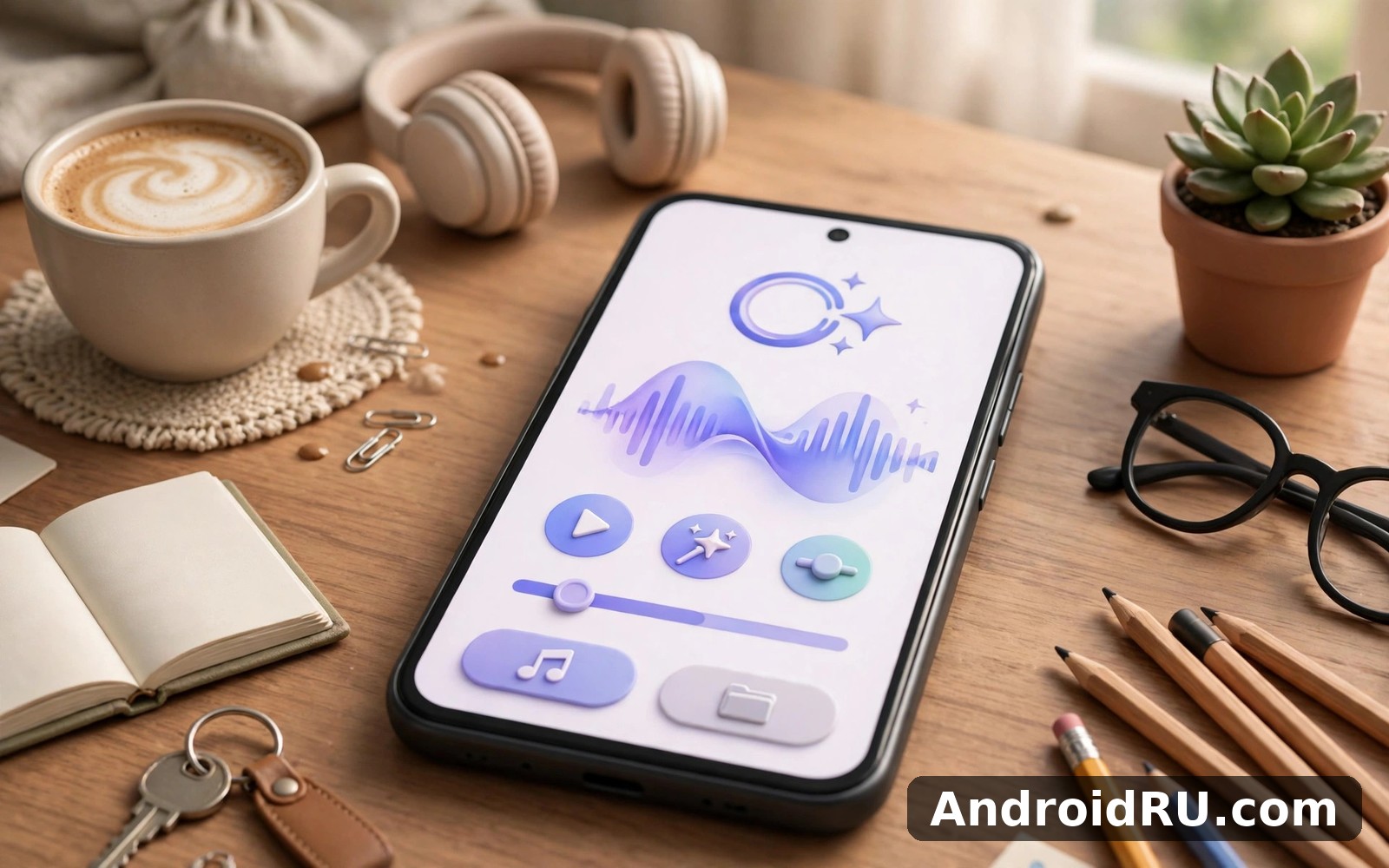
Download APK Ringoz AI Ringtone Maker What’s New, Free and Paid Options & Review
My default ringtone had bored me for months, and every call sounded exactly like the phones around me on the bus. Making my own tone in a few minutes felt oddly satisfying, and it gave my phone a small piece of personality that no default sound could match. I spent a week poking around Ringoz AI Ringtone Maker in short daily sessions, and some parts clicked at once while a couple took a second try before they made sense.
What follows is what actually held up in normal use, not a tour of every menu. I made tones from clips I already had, I tried the AI-assisted sounds when I had no clip in mind, and I set different sounds for calls, messages and alarms to see whether the app stayed useful after the novelty wore off. If you want a phone that sounds like you instead of like everyone else, this is the part of the review that matters most.
Ringoz is a ringtone maker that helps you create and customise ringtones for your phone, and the home screen puts the most useful tools first so new users are not left hunting. That keeps the first session friendly, and it keeps returning users fast. The rest of this article walks through what changed recently, what the free version covers, what the paid options add, how to make a tone step by step, and how Ringoz compares with other ringtone tools.
What Ringoz AI Ringtone Maker actually does for your phone
AI-assisted tones when you have no clip in mind
The headline idea behind Ringoz is simple: you describe a mood or pick a style, and the app helps you build a short sound that works as a ringtone. In practice I found this most useful on days when I had no song or clip ready, because starting from a blank page is the part that stops most people. You pick something bright, calm, funny or dramatic, listen to a short draft, and keep the ones that feel right. A short AI-generated ringtone draft is easy to judge in ten seconds, and that speed is the whole point.
That said, the AI side is a starting point rather than a finished song. The drafts I kept were short loops with a clear hook, and the ones I dropped sounded pleasant but forgettable. I learned to generate two or three options for the same mood and compare them back to back, because the second draft was often stronger than the first. If you expect a full track, you will be disappointed; if you want a fifteen to thirty second call signal with character, the tool does its job.
Trimming a clip to the exact part you want to hear
For longer sessions I liked trimming a clip to the exact part you want to hear, and this is where Ringoz earns its keep for people who already have a favourite song or sound. You drag the start and end points, play the selection, and nudge it a second either way until the hook lands right at the beginning. It rewards a little patience, and then it feels second nature. A ringtone that starts with a slow intro is a ringtone you will miss, so the trim tool matters more than it first looks.
Trim by seconds, not by guesswork
My habit became trimming in small moves: set a rough range first, listen once, then tighten the start by a second and the end by a second. The waveform view, where the app shows one, helps you spot a loud chorus or a quiet gap without listening to the whole track. Keep the finished tone between fifteen and thirty seconds for calls, and shorter still for message alerts, because a long tone becomes annoying on the third call of the day.
Fade in and fade out for a softer start
A short fade at the start stops a loud tone from jolting you, and a fade at the end stops it from cutting off mid-note. I used a one-second fade in on my alarm tone and a gentle fade out on my message tone, and both sounded calmer without losing their identity. These are small settings, and they are the difference between a tone that feels made and a tone that feels chopped.
Previewing a ringtone before you commit to it
Previewing a ringtone before you commit to it rounds the app out nicely without complicating the main job. You hear the tone at real volume, through your phone speaker, before it becomes your call sound. I caught two tones this way that sounded fine on headphones but harsh on the speaker, and I would have regretted setting either one. Preview first, set second, and change it again in a week if it stops pleasing you.
What’s new in Ringoz AI Ringtone Maker and what changed for regular users
The original article for this app was thin on version detail, so I will be honest about what I can and cannot pin down: Ringoz does not publish a loud changelog inside the app, and the changes that matter most show up as small quality-of-life improvements rather than a single big release. The AI-assisted sound tools feel more present in the current version than the early descriptions suggested, and the trimming and preview tools sit closer to the home screen than they used to. That shift tells you where the developers are spending their effort.
In daily use the newer feel shows in three places. First, making a tone takes fewer taps than the older flow described in the original article, because the main actions are grouped on one screen. Second, saving a favourite tone and finding it again is quicker, which matters when you change phones or reset a device. Third, the app feels calmer about permissions, asking for access only when a feature clearly needs it. None of these is dramatic on its own, and together they make the app feel maintained rather than abandoned.
How to check what version you are running
Open the app settings, look for the version or about entry, and compare it with the listing on the AndroidRU page for Ringoz. If an update is waiting, install it on Wi-Fi and open the app once before you make a new tone, because a fresh install sometimes resets a sound assignment. I check for updates once a month, and I never update in the middle of making a tone I care about, because losing a half-finished trim is an avoidable annoyance.
What still feels unfinished
Two rough edges remain. The AI drafts sometimes repeat a similar pattern when you ask for the same mood twice, so variety depends on changing the mood or the style rather than pressing the same button again. The search for saved tones is also basic, so giving your tones clear names at save time saves real time later. Neither flaw blocks the main job, and both are worth knowing before you build a library of twenty tones.
Ringoz free vs paid options: what you get without paying
The question most readers ask first is whether Ringoz is free, and the honest answer is that the core job is usable without paying, while the fuller library and some AI options sit behind a paid plan. You can make tones, trim clips, preview them and set them as call or message sounds in the free tier, and for many people that is enough. The paid side is for people who want more AI generations, more sounds to start from, and fewer interruptions while they work.
Prices for plans like this change often, and they vary by region and by promotion, so I will not quote a precise figure here that could be wrong next month. Expect a subscription-style plan with a monthly and a yearly option, and check the current plan inside the app before you pay anything. A yearly plan usually works out cheaper per month than paying month by month, but only if you will still use the app in six months. If you make one tone a year, the free tier wins.
| Option | What it covers | Best for | Watch out for |
|---|---|---|---|
| Free tier | Basic tone making, trimming, preview, setting call and message sounds | Occasional makers and first-time users | Fewer AI generations and a smaller sound library |
| Paid plan | More AI generations, wider sound choices, extra editing options | People who make tones often | Check the renewal date and whether it renews automatically |
| One-off or trial | Short access to paid features where offered | Trying the paid side before committing | Trials end, so set a reminder before the trial closes |
Free tier: enough to make a tone you actually like
The free tier covers the loop that matters: pick a clip or a sound, trim it, preview it, save it, set it. I made my daily call tone and my message tone without paying, and both still sound right weeks later. The limit that shows up first is the number of AI generations, so save your free generations for moods you really want instead of spending them on random experiments.
Paid plan: when it is worth the money
The paid plan is worth it when you make tones every week, when you want a fresh tone for each contact, or when you use the AI tools as a creative toy rather than a one-off utility. It is not worth it when you only need one tone and you already have the clip you want, because the free tools handle that job cleanly. My rule is simple: use the free tier for a full week first, and pay only if you hit a limit twice in that week.
What to check before you pay for Ringoz
Before you pay, read the plan screen inside the app slowly: check the price, the billing period, whether it renews on its own, and how to cancel. Check whether the plan covers one device or your account, and check whether a free trial is running so you do not pay for days you could have had free. A minute of reading here saves a month of arguing with a subscription later.
How to make a custom ringtone in Ringoz step by step
Making a tone in Ringoz is a short job once you know the order, and the order matters more than any single setting. Start with the sound, trim it, preview it, name it clearly, and only then set it as your call or message sound. People who set the sound first and trim later end up redoing the work, so follow the sequence below and save yourself the repeat.
- Open Ringoz and choose your starting point: a clip from your phone, a sound from the library, or an AI-assisted draft for a mood you pick.
- Listen to the full clip once so you know where the best part sits, then drag the trim handles to that section and keep it between fifteen and thirty seconds.
- Add a short fade in at the start and a fade out at the end if the tone starts or stops abruptly.
- Preview the tone on your phone speaker at normal volume, not only on headphones, and adjust the start point if the hook arrives late.
- Save the tone with a clear name, such as the contact or the mood it belongs to, so you can find it again in a month.
- Set the tone for calls, messages or alarms from inside the app, then ask a friend to call you once to hear it in real use.
Setting different tones for calls, messages and alarms
The first thing worth trying is setting different tones for calls and messages and alarms, because it fits naturally into a first session and you can judge it for yourself at once. A bright tone for calls, a short soft tone for messages, and a gentle rising tone for alarms covers most days without confusion. That small detail made daily use smoother for me, because I stopped checking the screen for every buzz.
Common mistakes when you make your first tone
The most common mistake is picking a section that starts too quietly, so the phone rings for five seconds before you notice it. The second is saving a tone with a vague name like tone1, which becomes impossible to find later. The third is skipping the speaker preview, which is how a tone that sounded warm on headphones turns out harsh in a quiet room. Fix those three and your first tone will already sound like a fifth attempt.
Ringoz features in daily use: the tools you will actually open
In daily use Ringoz rewards short sessions more than long ones. I found a few minutes each day taught me more than one long weekend binge, and small steady use builds familiarity without fatigue. The app either fits those gaps or it does not, and this one did, because I could open it while waiting for a bus, make one small change, and close it again without losing my place.
- AI-assisted sound creation: describe a mood or pick a style and get short drafts you can keep, change or discard in seconds.
- Clip trimming: cut a song or recording down to the exact seconds you want, with a visual guide to the loud and quiet parts.
- Preview before setting: hear the finished tone on your phone speaker before it becomes your call sound.
- Separate tones for calls, messages and alarms: assign a different sound to each job so you know what is ringing without looking.
- Favourite tones saved for reuse: keep the tones you like so you can set them again quickly after a phone change.
- Simple settings in one place: the options that matter sit together, so you change one thing at a time and test the result.
Battery use stayed modest during my short daily sessions with Ringoz, and I never noticed the app draining power in the background. Longer sessions will use more battery, as any app does, and closing it fully after use kept things tidy on my phone. Performance depends on your phone and on how you use the app day to day, so short sessions and a tidy phone help more than any single setting inside Ringoz.
Permissions Ringoz asks for and why they matter
Think twice before granting contacts or location access to Ringoz, because many features work fine without those permissions. The app needs access to audio files you choose to trim, and it needs permission to set a ringtone, and those two are the honest core. You can grant extra access later if a feature asks for it clearly, and you can say no to the rest without losing the main job.
Where Ringoz sits beside other sound apps
If you enjoy making ringtones, Animal Bird Sounds Ringtones is a natural next app to try, because it starts from nature sounds rather than from songs or AI drafts. People who like making ringtones also tend to enjoy Pocket Casts Podcast App, which is a different kind of audio companion for long listening rather than short alerts. Both sit happily beside Ringoz on a phone without fighting for your attention, and comparing them briefly often clarifies what you actually value most.
Ringoz vs other ringtone makers: a fair comparison
A ringtone maker is only as good as the job it does for you, so the fair way to judge Ringoz is to put it next to the alternatives on the same criteria: how you start a tone, how precisely you can trim it, how the AI side works, and how easy it is to set the finished sound. Ringoz leads on the AI starting point, because few rivals let you begin from a mood instead of a file. Rivals that start from a library of ready-made tones are faster when you want something now, and slower when you want something personal.
| Criteria | Ringoz AI Ringtone Maker | Ready-made tone library apps | Manual audio editor apps |
|---|---|---|---|
| Starting point | Clip, library sound, or AI draft from a mood | Browse and pick a finished tone | Import a file and edit it by hand |
| Trimming control | Visual trim with fade options | Little or no trimming | Precise editing, steeper learning curve |
| Personal feel | High, tones are made for you | Low, tones are shared by many users | High, full control over every second |
| Ease for beginners | High, guided steps | Very high, pick and set | Low, needs audio editing patience |
| Best for | Personal tones with AI help | Quick ready tones | Detailed audio work |
When a ready-made tone library is the better pick
If you want a tone in thirty seconds and you do not care whether a thousand other phones share it, a ready-made library is faster than Ringoz. You browse, you tap, you set it, and you move on with your day. That speed is a real strength, and Ringoz cannot beat it on pure convenience. Where Ringoz wins is the second week, when the ready-made tone starts to feel like everyone else’s and you want something that sounds like you.
When a manual audio editor is the better pick
A manual audio editor wins when you need exact control over volume curves, layered sounds, or unusual file formats, and you are willing to learn the tools. Ringoz trims and fades well, but it is not a full editor, and pretending otherwise would be dishonest. Most readers will never need that depth, and for them Ringoz is the kinder choice, because it gets the common job done without a tutorial.
Fish Audio and the wider sound world
Fish Audio covers similar ground from a different angle, leaning more toward voice and sound creation than toward ringtones alone. If Ringoz leaves you wanting a little more variety, it is a sensible place to look next, especially if you enjoy experimenting with sound itself rather than only with the finished tone. I kept both on my phone for a week, and each earned its place for a different mood.
Ringoz review: pros, cons and who it is for
Over a longer stretch the steady progress mattered most, and small wins added up across weeks without any pressure to do more. This review comes from everyday use rather than from listing comments, and I judged Ringoz on how it felt after a week of normal sessions. The strongest impression was how easy it felt to return to each day, and the main tools stayed clear while the app rarely wasted my time.
Pros of Ringoz AI Ringtone Maker
- Fast personal tones: you can go from an idea to a finished call sound in a few minutes, which is the core promise and the app keeps it.
- AI drafts for blank-page days: when you have no clip in mind, the mood-based drafts give you a starting point instead of a dead end.
- Clear trimming and preview: the trim tools and the speaker preview stop the two most common mistakes, a late hook and a harsh tone.
- Separate sounds per job: calls, messages and alarms can each carry their own tone, so you know what is ringing without looking.
- Low learning curve: the first day felt a little unfamiliar, the second day felt easier, and by the third day I stopped thinking about the menus at all.
Cons of Ringoz AI Ringtone Maker
- AI drafts can repeat themselves: asking for the same mood twice sometimes gives you a similar pattern, so variety needs a change of mood or style.
- Paid limits arrive sooner for heavy users: people who generate many AI tones will meet the free limits faster than people who trim their own clips.
- Saved-tone search is basic: without clear names at save time, finding one tone among many takes longer than it should.
- Advanced editing is limited: if you want layered audio or fine volume curves, a full editor will serve you better than Ringoz.
Who Ringoz is for
Ringoz suits people who want a phone that sounds like them instead of like everyone else, and beginners can start with the basic features and learn as they go. It fits people who change their tone with the seasons, people who want a different sound for each contact, and people who enjoy a short creative break in the middle of a normal day. It suits experienced users too, as long as they judge it as a fast tone maker rather than a full audio workstation.
Who should skip Ringoz
You should skip Ringoz if you only need its main job once in a blue moon, because a single use rarely justifies a new app on your home screen. You should also skip it if you are happy with your default tone and you never think about ringtones at all, because the app only earns its place through repeated small use. A built-in tool or a quick search may serve that one moment better, and that honesty saves you an install you will delete within days.
Ringoz AI Ringtone Maker FAQ
Is Ringoz AI Ringtone Maker free to use?
Yes, the core job is usable without paying: you can make tones, trim clips, preview them and set them as call or message sounds in the free tier. The paid plan adds more AI generations and a wider sound library, so check the current plan inside the app before you pay, and use the free tier for a week first to see whether you ever hit a limit.
Can Ringoz make a ringtone from a song I already have?
Yes, that is one of its most reliable features. Pick the clip, trim it to the fifteen to thirty seconds you want, add a short fade if the start is abrupt, preview it on your speaker, and save it with a clear name before you set it. The trim tool is visual, so you can see where the loud part sits without listening to the whole track twice.
How long should a good ringtone be?
For calls, fifteen to thirty seconds works well, because it gives the hook time to land without dragging on. For message alerts, keep it much shorter, around two to five seconds, so a busy group chat does not turn into a concert. For alarms, a gentle tone of twenty to thirty seconds with a fade in wakes you more kindly than a sudden loud blast.
Does the AI tone maker replace a real song?
No, and it is better to judge it on its own terms. The AI drafts are short loops built around a mood, and they work well as call signals and message tones. A favourite song, trimmed well, still carries more personal meaning than any generated loop. Use the AI side when you have no clip in mind, and use your own clips when the song matters to you.
Will my tones survive a phone change?
Your saved tones are files on your phone, so keep a copy of the ones you care about before you switch devices. Saving favourite tones to reuse is a feature inside Ringoz, and it helps, but a simple backup of your tone files before a reset is the safest habit. I keep my three favourite tones in a named folder so a new phone takes minutes to set up instead of an afternoon.
Final verdict on Ringoz AI Ringtone Maker
A ringtone is a tiny thing, and hearing your own choice instead of a default still makes you smile every single time. Ringoz earns its place by making that tiny thing easy: a few minutes, a clip or a mood, a trim, a preview, and your phone sounds like you. The free tier handles the core job, the paid plan suits people who make tones often, and the comparison with ready-made libraries and manual editors shows exactly where Ringoz sits.
If you try Ringoz, give it a full week before you judge it, because a week of short sessions shows the real rhythm of an app and a single rushed evening rarely tells the whole story. Start with the core feature and add extra features slowly, use the app for a short time each day, and review your progress weekly. That routine will show you whether the app fits your needs, and whether your phone should keep sounding like you.
Click here to download the Ringoz AI Ringtone Maker app
If you want to try a similar tool, Click here to download the Animal Bird Sounds Ringtones app. You can also Click here to download the Pocket Casts Podcast App app when you are ready to compare it with this one. A personal ringtone you made yourself is a small daily pleasure, and Ringoz makes that pleasure easy to reach.

