

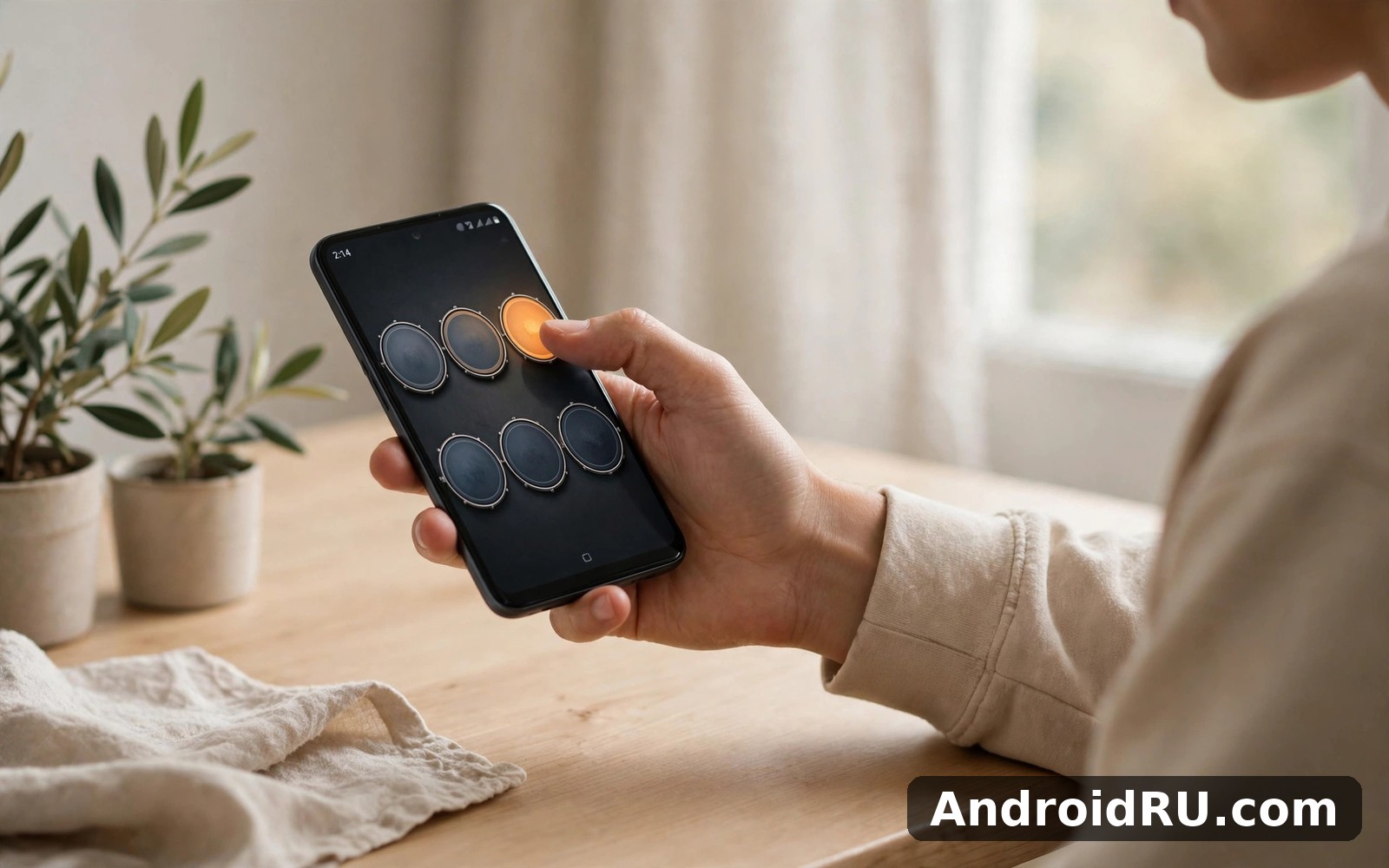
Download APK Classic Drum Play Drums Notification Setup, Latest Features & Review
I tapped the snare once and grinned like a child. Drums on a phone should feel silly, and this one somehow feels satisfying instead. I spent a week poking around Classic Drum in short daily sessions. Some parts clicked at once and a couple took a second try. What follows is what actually held up in normal use: the kits and sounds, the practice tools, the recording feature, the notification setup that keeps practice on track, and the latest features worth knowing about.
You can find Classic Drum Play Drums on AndroidRU and start with the basics first. The page puts the app and its guide in one place, which makes it easy to check before you install anything. This guide assumes you are a beginner or a returning player who wants a drum kit in a pocket, not a full studio. If that sounds like you, the app earns its place quickly, and the setup below takes about ten minutes.
What Classic Drum Play Drums Does on Your Phone
In plain terms, Classic Drum is a drum simulator app that turns your phone screen into a playable drum kit. The home screen puts the most useful tools first, which keeps the app friendly for new users and fast for returning ones. You tap pads on the screen to play drums and cymbals, and the app plays the sound at once, with very little delay. That low delay is the whole point: if a tap and a sound are out of step, drumming feels broken, and here they stay in step on most modern phones.
Many people keep Classic Drum because it fits into a daily routine. You can open it for a few minutes and still make progress, and that short session design is one reason the app feels welcoming. A few minutes each day taught me more than one long weekend binge, because small steady use builds familiarity without fatigue. The app does not demand a daily streak or a subscription before it lets you play, and that calm approach suits busy people better than a demanding practice schedule.
Classic Drum suits music lovers and beginners who want to tap out rhythms anywhere. Beginners can start with the basic features and learn as they go, and experienced users can still find depth in the advanced options. If you want a tool that does one job well, it is worth a look. If you want many unrelated tools in one place, you may prefer a different app. For its main job, the app stays focused and easy to follow, and that focus is its best quality.
Drum Kits, Pads, Cymbals and Sounds in Classic Drum
The drum kit layout is the heart of the app. The screen shows a kit seen from the drummer’s seat: a snare and toms in the middle, a bass drum at the bottom, hi-hats to one side and crash and ride cymbals above. Each pad is large enough to hit with a thumb, and the layout stays the same across kits so your hands learn where things are. Once the layout clicks, you stop thinking about it and just play, and that is when the app starts to feel like an instrument rather than a toy.
Different kits change the character of the sound. A rock kit is punchy and loud, with a deep kick and a sharp snare. A jazz kit is softer and brushier, with a lighter touch that suits slower tempos. An electronic kit gives you clipped, synthetic sounds that fit dance beats. Switching kits is a quick menu choice, and the change applies at once, so you can try three kits against the same beat in under a minute. That fast switching is the best way to learn what each kit is for.
Kit Layouts From Rock to Jazz in Classic Drum
The standard kit layout is the one to learn first. Snare on the left hand, hi-hat beside it, kick drum under your right thumb, and toms across the middle. Play a simple four-beat pattern: kick on beats one and three, snare on two and four, hi-hat on every beat. That pattern is the backbone of most pop and rock, and it takes about five minutes to feel natural. The jazz layout keeps the same pads but changes the sounds and the feel, with a ride cymbal pattern doing more of the work and the snare played lighter. An electronic layout often adds extra pads for claps, shakers and synthetic percussion, which makes it the most fun for experimenting, even if it is the least like a real kit.
Cymbals, Hi-Hats and Extra Percussion
Cymbals give a beat its shine, and the app gives you the three that matter: hi-hat, crash and ride. The hi-hat has two states, open and closed, and switching between them is how a beat breathes. A closed hi-hat keeps time quietly, and an open hi-hat on the off-beat lifts the whole pattern. The crash cymbal marks the start of a section, so hit it once at the top of a chorus rather than on every bar. The ride cymbal carries slower songs, with a steady ping that holds the tempo. Extra percussion pads, such as cowbell, tambourine and shaker, sit at the edges of the screen. They are easy to ignore at first, and that is fine, because one well-placed cowbell hit per bar adds more than a dozen random taps.
Tuning Pad Volume and Sensitivity
Each pad has its own volume, and the balance between pads is what makes a beat sound like music instead of noise. Open the kit settings and lower the crash cymbal slightly, because it is the loudest pad by default and it drowns the snare. Raise the kick a touch if your beats feel thin. Sensitivity controls how hard you need to tap: a higher sensitivity makes light taps sound, which suits fast finger drumming, while a lower sensitivity needs a firm tap and suits players who hit hard and want fewer accidental notes. Change one setting at a time and play for a minute after each change, because two changes at once make it hard to tell which one helped.
Switching Kits Mid-Session Without Losing Your Beat
You can change kits while a metronome or a backing pattern is running, and the tempo stays the same. That is useful when a beat sounds right but the sounds feel wrong: keep the pattern, change the kit, and hear the difference at once. The app keeps your tempo and your recording state when you switch, so nothing is lost. The one thing that does not carry over is a custom pad volume balance, because each kit stores its own mix. If you spent time tuning a rock kit, write the values down before you switch, or you will be tuning again later.
Metronome, Tempo and Practice Patterns in Classic Drum
A quieter strength of the app is keeping a steady rhythm with simple practice patterns. Try it early so you know whether it suits your routine, because I would put it near the top of the list for new users. The metronome is the tool that makes practice work. It clicks at a steady tempo, and your job is to land each hit on the click. That sounds easy until you try it, and the gap between your hit and the click is the most honest feedback the app gives you.
Start slow. A tempo of 60 beats per minute feels almost too slow, and that is the point: slow practice shows you where your timing slips, while fast practice hides it. Play a simple pattern at 60, and only raise the tempo by five beats per minute when the pattern feels easy. Jumping from 60 to 120 in one step teaches nothing except frustration. The app lets you set the tempo with a slider or by tapping a tempo button in time with the beat you want, and tap tempo is the faster way when you are matching a song.
Building Steady Timing With the Metronome
Turn the metronome on before you play, not after. Set it to 60 beats per minute, play the kick on beats one and three and the snare on two and four, and listen to whether your hits sit on the click or just after it. Most beginners hit late, and hearing that lateness is the lesson. Count out loud while you play: one, two, three, four. Counting keeps your hands honest, because a hand that drifts will show up against the count at once. After a few minutes, turn the metronome off for one bar and then back on, and see whether you stayed in time without it. That gap test is the real measure of progress.
Practice Patterns and Fills Worth Drilling
A fill is a short burst of notes that marks the end of a section, usually played on the toms in the last bar before a new part starts. The simplest useful fill is four hits: snare, tom, tom, floor tom, spread across the last beat of the bar. Practise fills in short sessions without waking the neighbours, because a fill only needs a minute of attention at a time. Another pattern worth drilling is the paradiddle, a sticking pattern of right-left-right-right followed by left-right-left-left. It feels awkward for the first day, and then it becomes the pattern your hands fall back on whenever you improvise. The app does not teach sticking directly, so say the pattern out loud while you tap, and your hands will follow the words.
Setting Tempo and Time Signature
Most songs you will play along with are in 4/4 time, which means four beats per bar, and the app defaults to that. The tempo setting lives next to the metronome controls, and you can change it in steps of one beat per minute or by tapping. Some kits offer a 3/4 option for waltz-style patterns, which is a good stretch exercise even if you never play a waltz, because it forces you to count differently. If a pattern feels wrong and you cannot say why, check the time signature first: a 4/4 pattern played over a 3/4 click will always feel off, and the fix is a setting, not more practice.
Recording Your Beats and Listening Back in Classic Drum
Recording a beat and listening back for timing slips rounds the app out nicely without complicating the main job. The record button sits on the main screen, and one tap starts a take. Play your pattern, tap stop, and the take is saved with a timestamp. Listening back is where the learning happens: the slips you could not feel while playing are obvious on playback, and a take that felt messy often sounds better than you feared, which is encouraging in its own way.
Keep takes short. A 30-second take is easier to judge than a five-minute ramble, and short takes are easier to compare. Record the same pattern three times in a row and listen to all three, because the differences between them show what is steady and what is luck. Delete takes you do not need, because a long list of unnamed recordings is hard to search later. Name a take when it matters, such as the first clean run of a new pattern, so you can find it again in a week.
Recording a Take and Saving It
Tap the record button, wait for the count-in if the metronome is on, and play. The app records the pads you hit and the timing of each hit, and it plays the sounds back exactly as you played them. When you stop, the take appears in the recordings list with the date and length. Saving is automatic, so there is no save button to forget, but check the recordings list after your first take to confirm it is there. If the list is empty, the take did not record, and the usual cause is a permission problem: the app needs microphone permission only if you are recording audio from the room, and storage permission to keep the file, so grant both when asked.
Listening Back for Timing Slips
Play a take back with the metronome on, and the slips jump out: a snare that lands just after the click, a kick that rushes the first beat of the bar. Write down the one worst slip and practise only that bar for a few minutes. That focused fix beats replaying the whole pattern ten times. If you record with headphones on, use the same headphones for playback, because different speakers change how loud each pad sounds, and a mix that sounded balanced on earbuds can sound different on a phone speaker.
Sharing a Recording With Friends
A saved take can be shared as an audio file through the share button in the recordings list. The file goes out by whatever app you choose, such as a messenger or email, and the recipient can listen without installing Classic Drum. Keep shared takes short, because a 30-second clip gets listened to and a five-minute file does not. If you are sharing for feedback, say what you want judged, such as the timing of the fill in the last bar, because a vague “what do you think” gets a vague answer.
Classic Drum Notification Setup Step by Step
Notifications are the part of Classic Drum most people skip, and they are the part that keeps practice happening. A practice reminder is a small nudge at a time you choose, and it is the difference between playing most days and forgetting the app for a month. The setup takes two minutes, and it has two halves: the reminder inside the app, and the permission in Android that lets the reminder appear. Both halves have to work, and the troubleshooting section below covers the case where one of them does not.
Start inside the app. Open Classic Drum, open Settings, and look for Notifications or Reminders. Turn on practice reminders, choose a time that fits your day, and pick how often the reminder repeats. A single daily reminder at a time when you are usually free works better than three reminders you learn to ignore. If the app asks whether it may send notifications, tap Allow. That prompt is the Android permission, and denying it here silences every reminder even though the in-app switch is on.
Turning Practice Reminders On in Classic Drum
Open Settings inside the app and find the reminder section. Switch practice reminders on, set the time, and choose the days. Weekdays only is a sensible default if weekends are already busy. Some versions of the app let you choose a reminder message or a sound: pick a short, quiet sound rather than a long one, because a reminder should nudge, not startle. Save the setting and exit. The reminder will fire at the next scheduled time, not at once, so do not expect a test notification the moment you save. To test it, set the time two minutes ahead, wait, and watch for the notification. If it appears, set the time back to your real practice time.
Android Notification Channels and Permissions for Classic Drum
Android groups an app’s notifications into channels, and Classic Drum may have more than one: one for practice reminders, and possibly one for updates or news. Long-press the app icon, tap App info, then Notifications, and you will see the switches. Make sure the main notifications switch is on and the reminders channel is on. If the reminders channel is off, the in-app setting does nothing, and that mismatch is the most common reason reminders never appear. On some phones, a battery optimisation setting can also delay notifications: in App info, open Battery, and set the app to Unrestricted or turn off battery optimisation for it, so the system does not put the app to sleep before the reminder fires.
Quiet Hours and Silencing Reminders
If reminders arrive at the wrong time, do not turn them off entirely. Set quiet hours instead. Android’s Do Not Disturb mode silences notifications during the hours you choose, and you can set it in the phone Settings under Sound, then Do Not Disturb. A cleaner option inside the app is to change the reminder time to one that suits you, because a reminder at the right time is useful and a reminder at the wrong time is noise. If you only want a break for a week, turn the reminder off in the app and set yourself a note to turn it back on, because a switched-off reminder stays off until you remember it.
Fixing Reminders That Never Appear
Work through this list in order. First, check the in-app reminder switch is on and the time is correct, remembering that the phone may be set to a 12-hour or 24-hour clock. Second, check the Android notification permission in App info and confirm the reminders channel is on. Third, check Do Not Disturb and battery optimisation, because both can swallow a notification silently. Fourth, restart the phone, because a stuck notification service is fixed by a restart more often than anyone admits. If the reminder still does not appear, uninstall and reinstall the app, then set the reminder up again from scratch. A reinstall clears a corrupted reminder schedule, and it is the last resort rather than the first step.
Latest Features in Classic Drum
The features below focus on everyday use rather than on gimmicks, and each one is a general capability in the current form of the app. This guide makes no claim about a new version number or a release date, because version numbers change faster than guides do. What matters is what the app does now, and the features in this section are the ones that changed how I used it during my week of testing.
The first thing worth trying is playing along with songs you already love. Load a song from your device, or play it from another app while Classic Drum stays open, and tap along to the beat. The app does not slow the song down for you, so pick a slow song first and a fast one later. Playing along teaches timing better than any metronome exercise, because a real song has feeling as well as tempo, and your hands learn to follow both. If you like shaping sound beyond drums, Fish Audio is a different kind of audio app worth a look, though it is a sound tool rather than a drum kit.
Playing Along With Songs You Already Love
Choose a song with a clear, steady beat and a tempo you can follow. Rock and pop songs with a strong kick and snare are the easiest to follow, and songs with a busy drum part are harder than they sound. Start by playing only the kick and snare, and add the hi-hat once the main pattern feels steady. If you lose the beat, stop, listen for two bars, and rejoin on the next downbeat instead of chasing the song. Chasing makes the timing worse, while rejoining cleanly keeps the take usable. After a few sessions, try a song with a fill at the end of each section, and copy the fill on your toms. Copying a real drummer’s fill is the fastest way to learn fills that sound musical rather than mechanical.
New Sounds and Kit Updates in Classic Drum
Kit updates usually add new sounds rather than new screens, and that is the right priority for a drum app. New snare and cymbal sounds give old patterns a fresh feel, and a new electronic kit can turn a rock pattern into something entirely different. When an update adds a kit, spend five minutes with it before judging it, because a kit that sounds odd at first often fits a tempo you have not tried yet. Check the kit list after each update, because a new kit may not announce itself. If an update changes the layout of a screen, the kit itself rarely changes, so your hands will still know where the pads are.
What Changed for Returning Players
Returning players will notice small things rather than big ones: a cleaner settings screen, a reminder system that works more reliably, and recordings that are easier to find. The core playing experience has stayed the same, which is good news, because relearning the layout would cost more than any new feature is worth. If you played an older version and came back after a long break, check the notification settings first, because Android updates can reset notification permissions, and a reminder that worked a year ago may be switched off now. Then check the recordings list, because old takes are kept across updates and they are a useful record of how far you have come.
Classic Drum vs Real Percussion Drum Set vs Real Guitar Acoustic Electric
Comparison is the honest way to choose a music app, because each of these apps does one job and the right one depends on the instrument you want to play. Classic Drum is a drum kit. Real Percussion Drum Set is also a drum kit, with its own layout and sound set. Real Guitar Acoustic Electric is a guitar, which is a different instrument entirely, and comparing it with a drum app is really about choosing what to practise rather than which drum kit is better. The table below compares them on the points that change daily use.
| Feature | Classic Drum | Real Percussion Drum Set | Real Guitar Acoustic Electric |
|---|---|---|---|
| Instrument | Drum kit simulator | Drum kit simulator | Acoustic and electric guitar |
| Best for | Beginners learning rhythm | Players who want realistic kit sounds | Guitar chords and strumming |
| Metronome and practice tools | Yes, tempo and patterns | Yes, with loop options | Yes, chord trainer and tuner |
| Recording | Yes, save and share takes | Yes, save and share takes | Yes, record practice sessions |
| Notifications and reminders | Practice reminders | Practice reminders | Practice reminders |
| Learning curve | Short, friendly for new players | Short, more kit detail | Longer, chords take weeks |
If you enjoy playing drums on your phone, Real Percussion Drum Set is a natural next app to try. It is the closest alternative to Classic Drum, and the honest difference is feel: its kits sound a little more realistic, while Classic Drum feels a little simpler to pick up. People who like playing drums on your phone also tend to enjoy Real Guitar Acoustic Electric, which is a different instrument but the same idea: a playable instrument on a phone screen, with practice tools and recording built in.
Pros of Classic Drum: the layout is easy to learn in minutes; the metronome and practice patterns are built in rather than bolted on; recording and listening back is simple; reminders keep practice regular. Cons of Classic Drum: the sound set is smaller than some rivals; there is no built-in song library to play along with; advanced players may outgrow the kit options. Pros of Real Percussion Drum Set: more realistic kit sounds and a wider choice of kits; good loop tools for practice. Cons of Real Percussion Drum Set: a busier screen and a slightly longer learning curve. Pros of Real Guitar Acoustic Electric: a real chord trainer and tuner make it a genuine practice tool. Cons of Real Guitar Acoustic Electric: guitar takes weeks to sound good, so it demands more patience than drums.
Who Should Pick Which Music App
Pick Classic Drum if you are starting drums and you want the simplest path to playing a beat today. Pick Real Percussion Drum Set if you already play a little and you want kits that sound closer to a real drum room. Pick Real Guitar Acoustic Electric if you want to learn guitar rather than drums, because no drum app teaches chords. Many players keep two of these apps: one drum kit for rhythm practice and the guitar app for melody. That combination covers more music than either app alone, and both fit in the same daily practice slot.
Classic Drum Frequently Asked Questions
Does Classic Drum work offline?
Yes, the core drumming works offline. The kits, pads, metronome and recording are all on the device, so you can play on a plane or anywhere without a connection. Some features need the internet, such as downloading a new kit or sharing a recording, and an update check needs a connection too. If you plan to play offline for a while, open the app once while online first, so any pending kit download finishes before you lose the connection.
Can I use Classic Drum with headphones?
Yes, and headphones are the best way to play. They keep the timing tight, because phone speakers add a small delay, and they keep the neighbours happy. Wired headphones have the lowest delay, while Bluetooth headphones add a little latency that most players notice only on very fast patterns. If Bluetooth feels slightly behind your taps, switch to wired headphones for practice and use Bluetooth for listening back. The app plays through whatever audio output the phone is using, so no setting needs changing.
Why did my Classic Drum practice reminder not appear?
The reminder needs two things to work: the in-app switch must be on, and Android must allow the app to show notifications. Check the in-app reminder time first, then check App info, then Notifications, and confirm the reminders channel is on. Check Do Not Disturb and battery optimisation, because both can hide a notification without any warning. Restart the phone if everything looks right but the reminder still does not appear. If it still fails, reinstall the app and set the reminder up again, because a corrupted reminder schedule is fixed by a clean install.
Is Classic Drum good for complete beginners?
Yes, it is one of the friendliest drum apps for a complete beginner. The layout is clear, the metronome is easy to find, and a simple four-beat pattern takes about five minutes to learn. Start with the standard kit, set the metronome to 60 beats per minute, and play kick on beats one and three with snare on two and four. That single pattern is the foundation of most popular music, and everything else in the app builds on it. Give it a week of short daily sessions before you judge it, because the second and third days feel much easier than the first.
Final Verdict: Who Classic Drum Fits Best
Over a longer stretch, the steady progress mattered most. Small wins added up across weeks without any pressure to do more, and that gentle rhythm suits busy people better than a demanding daily target. The app either fits the gaps of a normal day or it does not, and this one did. I tried it while waiting for a bus and a kettle, and those short tests showed me more than a single long session ever could. Battery use stayed modest during short daily sessions, and I never noticed the app draining power in the background.
Classic Drum fits best if you want a drum kit in your pocket, a short daily practice habit, and a tool that stays out of your way. It fits less well if you want a full song library, a large sound collection, or a studio-grade recording setup. For most people, the practical move is to install it, set one daily reminder at a time you are usually free, learn the four-beat pattern at 60 beats per minute, and record your first take within the first week. Click here to download the Classic Drum Play Drums app to get started, and if you want a second kit to compare it with, Click here to download the Real Percussion Drum Set app or Click here to download the Real Guitar Acoustic Electric app to try a different instrument on the same phone.

