

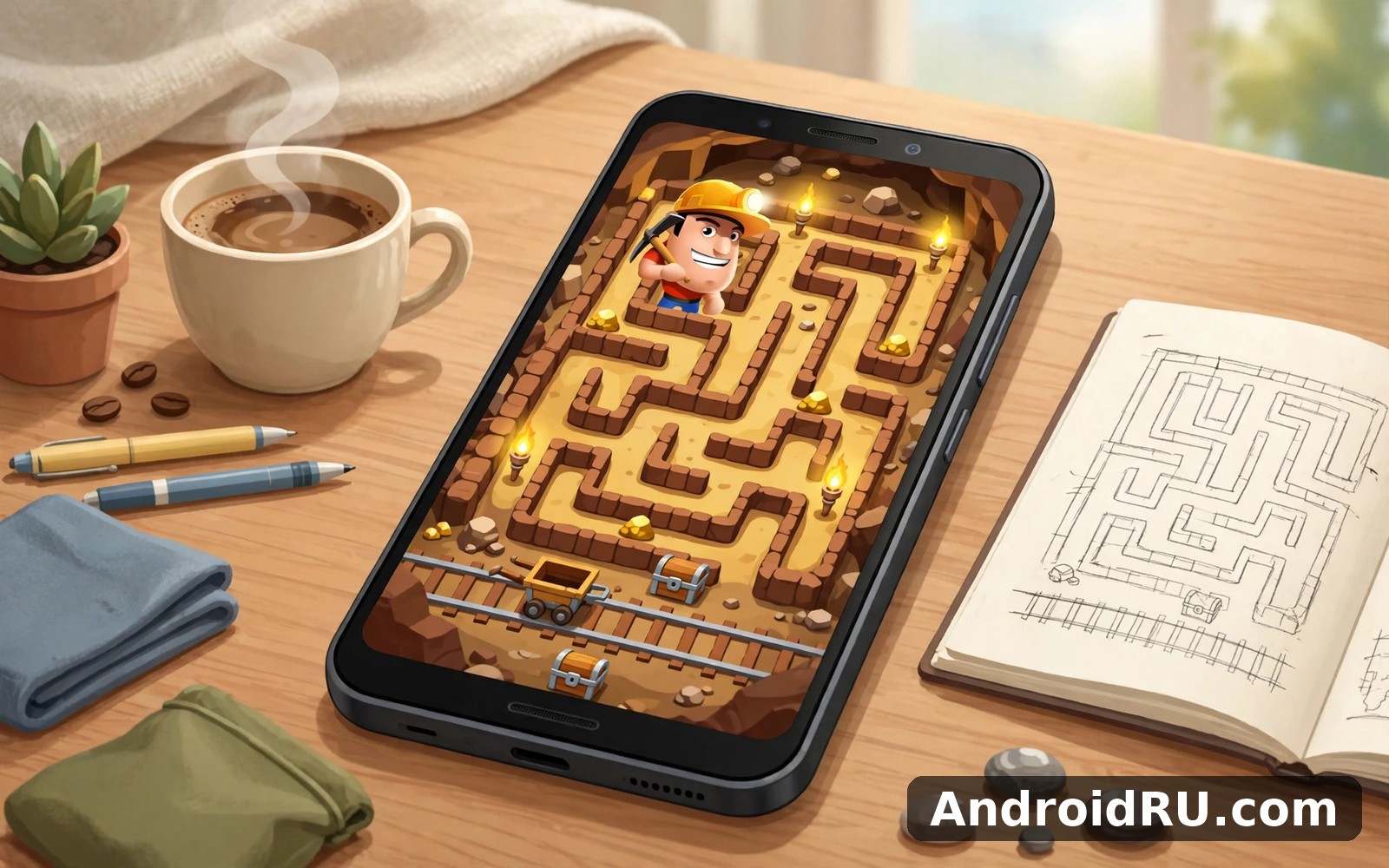
Download APK Diggys Adventure Mine Puzzle Feature Guide, Data Handling & Review
I dug one tunnel too far on my third evening with Diggys Adventure Mine Puzzle and ran out of energy two tiles short of a treasure room. I laughed, closed the game, and came back the next morning with a plan. That small failure taught me more about the game than any tutorial screen did: this is a puzzle adventure that rewards patience and a little planning, not fast tapping.
This guide covers the features that matter in daily play, from mine digging puzzles and story quests to camp upgrades and event challenges. It also looks at data handling in plain terms, so you know what the game asks for and which controls you can change. Everything here comes from a few weeks of short daily sessions on a mid-range Android phone.
If you like puzzle games with a story wrapped around them, or you want a calm game that fits into ten-minute gaps, this is written for you. If you want a fast arcade game with no waiting, the energy system will test your patience, and the comparison near the end will help you pick a better fit.
What Diggys Adventure actually is
Diggys Adventure Mine Puzzle is a digging puzzle game from Pixel Federation. You play Diggy, a treasure hunter who clears mines tile by tile, solves small puzzles, and follows a story that moves from Egypt through Scandinavia, China, Atlantis, Greece, and more regions. Each mine is a grid of tiles hiding stone, wood, treasure, traps, and the odd locked door.
The loop is simple to learn and hard to rush. Every tile you clear costs energy, so each dig is a small decision. Do you spend energy on a side tunnel that might hold a chest, or do you follow the quest marker and save the rest for tomorrow? That tension is the whole game, and it is why short sessions feel complete instead of cut short.
New players start in Egypt with a small camp and a handful of tools. The camp grows as you play: you place equipment that refills energy faster, cook food that gives you extra energy, and send out caravans for materials. The game never asks you to learn all of that on day one. It hands you one system at a time and lets the rest wait.
Diggys Adventure mine digging puzzles: how the core loop works
The core loop has three beats: look, plan, dig. You open a mine, study the layout, and spot the tiles that matter. Some tiles hide treasure chests, some hide switches that open doors, and some are just rock that wastes your energy. A minute spent looking at the map often saves ten minutes of digging in the wrong direction.
How a single mine puzzle plays out
A typical mine starts with a clear path and a quest marker. You dig toward the marker, clearing stone and wood as you go, and you meet a puzzle along the way: a switch hidden behind rubble, a boulder that needs to be rolled, or a door that opens only when you clear the tiles around it. None of these puzzles needs a guide. They need a slow look and a little trial and error.
Treasure rooms sit off the main path in most mines. They cost extra energy to reach, and the payoff is a chest with coins, materials, or event items. I learned to check the map first and decide before I dig: if the chest is two tiles away, I take it. If it is a long detour through hard rock, I leave it for a repeat visit when I have energy to spare.
Reading the map before you dig
The map view shows the whole mine as a grid, with cleared tiles marked and the quest path visible. I open it before every long mine now. It tells me where the locked doors are, which rooms I have already cleared, and how far the exit sits from where I stand. That habit cut my wasted energy in half during my second week.
When to stop digging and save energy
The best time to stop is when the next room needs more energy than you have left. Pushing on with a nearly empty bar usually ends with a half-cleared room and no way back in without waiting. I stop at about a quarter of a bar, cook a dish or two in camp, and return fresh. The mine waits for you. Nothing in the main story punishes a pause.
Tools that help you clear a tricky room
A few tools make hard rooms easier. The journal lists your current quests and the materials each one needs, so you never dig blind. Repeatable mines let you farm stone, wood, and coins when your camp needs them. And the daily rewards hand you small energy boosts just for showing up, which adds up across a week of short visits.
The heart of the game is energy based digging sessions that ask you to plan instead of rush. Once that clicks, the rest of the game makes sense: the camp exists to give you more energy, the kitchen exists to stretch it further, and the events exist to give you a reason to spend it well.
Story quests, regions and treasure hunting in Diggys Adventure
The story follows Diggy and his father through a chain of regions, each with its own look and its own puzzles. Egypt teaches the basics with open tombs and simple switches. Scandinavia adds ice and harder rock. China brings new materials and longer quest chains. Atlantis, Greece, and the later regions keep raising the stakes without changing the core idea: dig, solve, move on.
Story quests across regions
Each region is a chain of quest givers and mines that open in order. You talk to a character, get a goal, clear a mine, and come back with what you found. The writing stays light and cheerful, and the quests rarely ask you to grind the same mine ten times. When a quest does need materials, the game points you at the mine that has them.
What I like most about the quest structure is that it never leaves you guessing. The journal always shows the active goal, the character who gave it, and the mine where it happens. If you put the game down for a week, the journal tells you where you stopped in one glance, and that small kindness is why I kept coming back after busy stretches.
Treasure hunting and collections
Treasure hunting is the quiet reward for players who explore. Chests hide in side rooms, behind breakable walls, and under tiles that look like ordinary rock. Collections gather the pieces you find, artefacts, maps, and event souvenirs, and finishing a set pays out coins and experience. I check my collection tab once a week now, because a finished set is the easiest free reward in the game.
Some of my best sessions were the ones where I ignored the quest marker completely and went hunting instead. A side room with three chests can fund a whole round of camp upgrades, and the game never punishes you for taking the scenic route. That freedom is part of the charm: the main path is always there, but the game is happy to let you wander.
Energy, camp upgrades and event challenges explained
Energy is the one resource that shapes every session. It refills slowly over time, it comes faster from camp equipment, and it arrives in bigger chunks from cooked food. A short session uses the energy you have, and a longer session needs planning: cook before you dig, not after you run out.
How energy refills and what it costs to wait
Your energy bar refills on its own while you are away, so the game is built around coming back later rather than playing for hours. Camp equipment raises the refill rate and the size of the bar, which is why upgrading the camp matters more than it first looks. Food from the kitchen gives instant energy in amounts that grow with better recipes, from a small snack to a meal that covers a whole mine.
Waiting is the free option and it works fine if you treat the game as a daily habit. The paid option is there if you want to keep digging right now, and the game will offer it, but nothing in the main story forces you to pay. I settled into a rhythm of two short sessions a day, morning and evening, and that rhythm covered every quest I cared about.
Camp upgrades worth doing first
If you upgrade one thing first, make it energy regeneration in camp. A faster refill changes every session you play after that. Next, look at kitchen capacity, because better dishes mean fewer trips back to camp. Storage and caravan upgrades can wait until you start running out of room for materials, which usually happens around the second region.
Done right, camp upgrades turn waiting time into progress, and that is the difference between a game that nags you and a game that fits around your day. I check the camp screen every morning before my first mine, because a finished upgrade or a ready caravan is free progress I would otherwise miss.
Event challenges run on a regular cycle and add a second layer to the game. A typical event opens a special map with its own mines, quests, and rewards, and it runs for a week or two. The rewards are worth chasing, event items, energy food, and exclusive decorations, but the main story never blocks you if you skip an event. I treat events as a bonus week, not a second job, and that keeps them fun.
Diggys Adventure data handling: what the app collects and how to control it
Data handling is the part of this guide most players skip, and it is the part worth five minutes of your time. Diggys Adventure is a free game with optional purchases and ads, which means it collects some data to run the game, show ads, and measure how features are used. The exact list sits in the Data Safety section of the game listing, and it is worth reading because it changes with updates.
What data Diggys Adventure asks for
The listing for the game states that it may collect device identifiers, approximate location, and details about how you use the app, and that some of this data may be shared with advertising and analytics partners. It also states that data is encrypted while it travels between your phone and the servers. Those statements are written by the developer, Pixel Federation, and they are the first place to check when you want the current facts rather than a guess.
In practice, the game needs an account or a linked profile to save progress across devices, and it asks for the usual permissions a game needs: network access and space to save files on your phone. It does not need your contacts, your photos, or your microphone to play. If a permission request surprises you, that is a good moment to pause and check what it is for.
How to review permissions and connected accounts
Open your phone settings, find the game in the app list, and look at the permissions screen. Switch off anything that does not match how you play. A game that only needs network access should not keep location permission switched on all day. In the game itself, look for the account or profile screen and check which login you used, because that login is what ties your progress to you.
Two account habits are worth building early. First, link your progress to an account you control, so a lost phone does not mean a lost camp. Second, check the linked login after any big update, because updates sometimes sign you out or ask you to confirm the account again. Both habits take a minute and both have saved players I know from starting over.
A weekly privacy check that takes two minutes
Once a week I open the permissions screen, glance at what the game can reach, and check the Data Safety section after a big update. Two minutes, once a week, is enough to catch a new permission or a changed setting before it becomes a habit. It is the same routine I use for every game on my phone, and it has never taken longer than a coffee break.
The practical rule is simple: keep the data handling controls you understand switched on, switch off the ones you do not need, and re-check after every major update. You do not need to be an expert to do this well. You only need to look once in a while and ask whether each permission still matches how you actually play.
Diggys Adventure Mine Puzzle review: pros and cons after daily play
After three weeks of short daily sessions, my honest read is warm with clear limits. The game does one thing well, calm, thoughtful digging with a story attached, and it does not pretend to be anything else. That focus is its biggest strength and, for some players, its biggest weakness too.
Pros of Diggys Adventure
- Calm, thoughtful pacing: sessions feel complete in ten minutes, and the game never rushes you through a mine.
- A real story across regions: Egypt, Scandinavia, China, Atlantis, and Greece give the digging a reason beyond the next chest.
- Fair free play: the main story is fully playable without paying, and progress comes from regular visits rather than purchases.
- Clear goals at every step: the journal and the map always tell you what to do next, so you never feel lost in a mine.
- Steady new content: regular events and new regions give returning players a reason to come back.
Cons of Diggys Adventure
- Energy limits cut good sessions short: a long mine can end mid-way when the bar runs dry, and waiting is the only free fix.
- Later regions ask for more grinding: materials and quest chains get longer, and progress slows unless you plan ahead.
- Ads and purchase prompts appear often: free play is fair, but the game reminds you about offers more than some players will like.
Who Diggys Adventure is for
This game fits puzzle fans who enjoy a slow burn, players who like a story with their digging, and anyone who wants a calm game for short breaks. It fits less well if you want long uninterrupted sessions, fast action, or a game you can finish in a weekend. Families will find it gentle enough to share, though the purchase prompts deserve a quick talk with younger players first.
It also fits players who like to collect and complete things. The collections, the camp, and the event rewards give completionists a long tail of goals beyond the main story. If you are the kind of player who checks a collection tab just to see one more set finished, this game will keep you busy for months.
Diggys Adventure vs Backgammon, Polytopia and Bingo Drive: a quick comparison
If Diggys Adventure sounds close but not quite right, the games below cover similar ground in different ways. Backgammon Lord of the Board is a classic board game with a social side, The Battle of Polytopia is a turn-based strategy game about building a small empire, and Bingo Drive Fun Bingo Games is a light bingo game built for short, social sessions. All three are worth a look if the digging loop is not your pace.
| Game | Core loop | Best for | Typical session | Cost model |
|---|---|---|---|---|
| Diggys Adventure Mine Puzzle | Dig tiles, solve mine puzzles, follow story quests | Puzzle fans who like a story | 10 to 20 minutes | Free with optional purchases |
| Backgammon Lord of the Board | Classic backgammon matches against people or AI | Board game fans and social players | 5 to 15 minutes | Free with optional purchases |
| The Battle of Polytopia | Turn-based strategy, explore and expand a tribe | Strategy fans who like slow thinking | 15 to 30 minutes | Free with extra tribes as purchases |
| Bingo Drive Fun Bingo Games | Bingo rounds with power-ups and social rooms | Light, social play in short bursts | 5 to 10 minutes | Free with optional purchases |
| Monument Valley | Quiet puzzle levels with optical illusions | Players who want calm puzzles with no timers | 10 to 20 minutes | Paid game with extra chapters |
Who should pick which game?
Pick Diggys Adventure if you want a story and a puzzle in the same session. Pick Backgammon Lord of the Board if you want a classic two-player game you can learn in an evening. Pick The Battle of Polytopia if you want strategy you can think through at your own speed. Pick Bingo Drive if you want something light, social, and easy to dip into for five minutes. And pick Monument Valley if you want pure puzzles with no energy bar and no waiting at all.
Diggys Adventure Mine Puzzle FAQ and final verdict
Is Diggys Adventure free to play?
Yes. The main story, the regions, and the regular events are all playable without paying. Purchases exist for energy, gems, and event items, and they speed things up, but they are not needed to finish a region. The fairest way to play free is to use the daily rewards, cook food in camp, and treat the energy bar as a natural stopping point.
Can you play Diggys Adventure offline?
Parts of the game need a connection, because progress saves to your account and events run on the server. Short digging sessions may work while you are briefly offline, but you should expect the game to ask for a connection when it saves, loads an event, or checks a purchase. If you play on a commute with patchy signal, finish the mine before the signal drops rather than starting a new one.
How does energy work in Diggys Adventure?
Every tile you clear costs energy, and the bar refills slowly over time. Camp equipment raises the refill rate and the maximum size of the bar, while food cooked in the kitchen gives instant energy. Daily rewards and event prizes add extra energy on top. The practical approach is to upgrade regeneration first, cook before long mines, and stop at about a quarter of a bar so you never get stuck mid-room.
Does Diggys Adventure share my data with advertisers?
The Data Safety section of the game listing states that some data, such as device identifiers and usage details, may be shared with advertising and analytics partners. That is common for free games that show ads. You can limit it by checking the permissions screen on your phone, reviewing the in-game privacy options, and reading the current Data Safety section after updates, since the developer can change what is collected.
My verdict is simple: Diggys Adventure is a strong pick for puzzle fans who like a story and a calm pace. Start with the core digging, upgrade energy regeneration first, and give it a week of short sessions before you judge it. If the energy wait bothers you by day seven, the comparison above gives you three solid alternatives, and Monument Valley waits for players who want no waiting at all.
When you are ready to start, Click here to download the Diggys Adventure Mine Puzzle app. If you want to compare first, Click here to download the Backgammon Lord of the Board app or Click here to download the The Battle of Polytopia app and try a different kind of game for a week.

