

Samsung Galaxy M56 5G Review: Everyday Speed, Cameras and Value
The Samsung Galaxy M56 5G arrived in April 2025 as the kind of phone that rarely makes headlines yet ends up in a lot of pockets. The Galaxy M56 5G release date April 2025 places it in Samsung’s 2025 mid-range line-up, a line built for buyers who want a big screen, a big battery and a dependable camera without paying flagship money. On paper it reads like a careful balance: a 6.7-inch Super AMOLED+ display with a 120Hz refresh rate, the Exynos 1480 chipset, 8GB of RAM, a 50MP main camera with optical image stabilisation, and a 5000 mAh battery with 45W wired charging. The Samsung Galaxy M56 5G price puts it in the crowded upper mid-range, where every phone promises the same things, so the real test is whether that balance holds up when the phone is used the way most people actually use a phone: messaging, maps, video, social feeds, photos of the kids, and a game or two after dinner. Many buyers ask, is Galaxy M56 5G worth buying? For buyers who want a 120Hz AMOLED display, 45W charging and six years of updates, the answer is yes. The Galaxy M56 5G NFC supports contactless payments in markets where the feature is included.
I spent my time with this phone judging it against that everyday routine rather than against benchmark charts. A mid-range phone earns its keep in small moments: the app that opens before you lose patience, the photo that stays sharp when your hand shakes a little, the battery that still has charge left at 11 at night. This review works through each of those moments in turn, with the strengths and the weak points stated plainly. The full hardware record sits alongside the hands-on findings here, so you can check any single figure and see how it behaves in real use in the same place. In a Galaxy M56 5G camera test, daylight shots come out sharp and well exposed, while low light is where the limits show. The Galaxy M56 5G dual SIM support covers two nano-SIM cards in most regions.
Who should read this? Anyone comparing Samsung’s 2025 mid-range phones, anyone coming from an older Galaxy M or A series phone, and anyone who wants to know whether the M56 5G is genuinely good value or just a familiar name on a modest upgrade. If you are stepping up from a much older budget phone, the Samsung Galaxy A13 5G Review: Screen Quality, Cameras and Charging shows how far Samsung’s affordable 5G range has come and what an upgrade to this tier actually buys you. Short version: the M56 5G is a strong everyday phone with a very good screen and a reliable main camera, held back by a few familiar mid-range compromises that are easy to live with once you know about them.
Samsung Galaxy M56 5G Design and In-Hand Feel
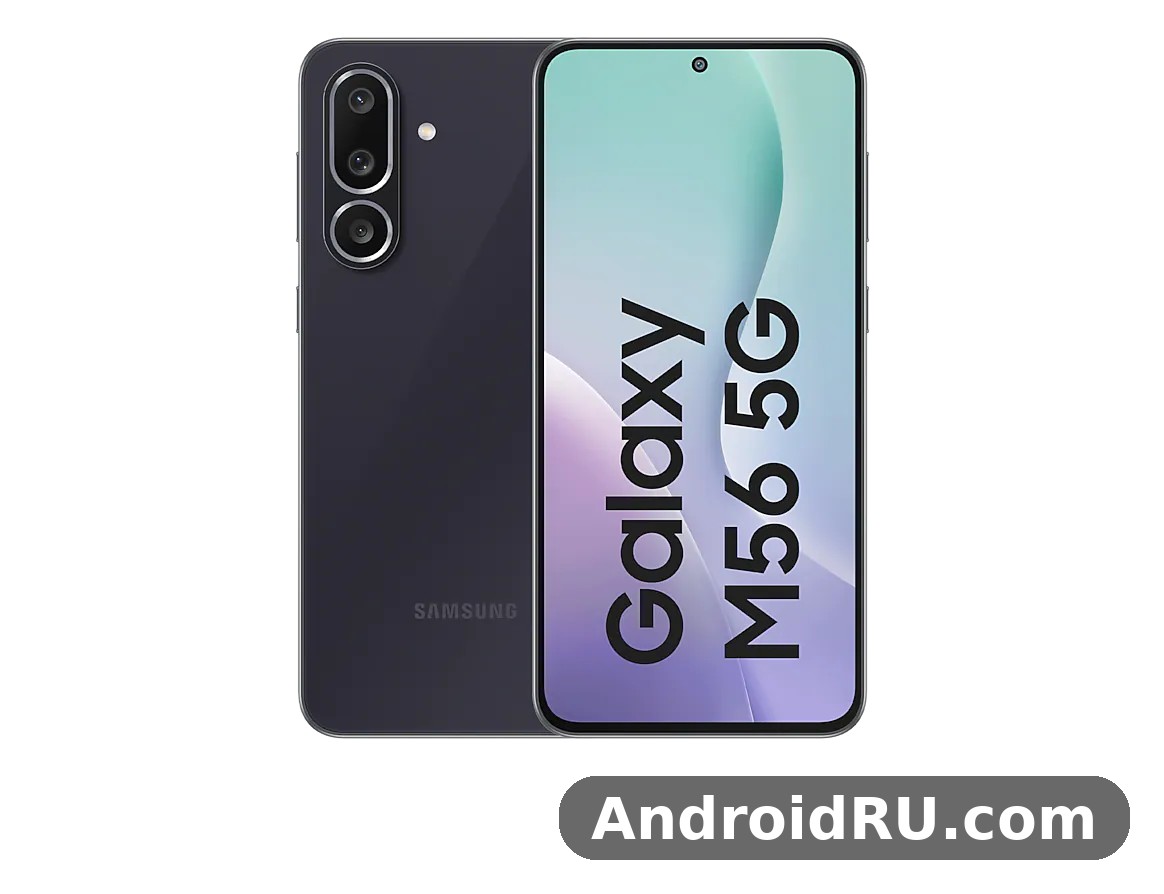
The first thing you notice about the Galaxy M56 5G is how thin and light it feels for a phone with a 6.7-inch screen and a 5000 mAh battery inside. Samsung trimmed the frame compared with the previous M55, and the result is a handset that slips into a jeans pocket without the bulk you might expect. The back panel is plastic with a matte finish that resists fingerprints far better than glossy glass, and the camera lenses sit in three separate rings rather than inside a raised island, which keeps the phone stable when it lies flat on a desk. For a phone you will hold for hours a day, that flat, steady back and the light frame matter more than any single specification on the box. A Galaxy M56 5G battery life test with mixed use shows it reaches the end of the day, and lighter users often get into a second day. The Galaxy M56 5G water resistant claims are limited: there is no official IP rating, so keep it away from water.
Build quality is solid rather than luxurious. The frame is plastic, the back is plastic, and the front is protected by Corning Gorilla Glass Victus+, which is a genuine step up for scratch resistance at this price. There is no official IP rating for dust and water resistance on this model, so it is best kept away from rain and sinks, and a case is worth buying on day one. The buttons sit on the right edge, with the volume rocker above the power key, and both have a firm, quiet click. The Galaxy M56 5G fingerprint sensor is optical, sits low on the screen, and unlocks quickly once you train the same finger twice. Face recognition is also available for quick unlocking when your hands are full. The Galaxy M56 5G price and specifications together make it a strong budget option, with the screen and battery leading the list. The Galaxy M56 5G headphone jack is absent, so wired headphones need a USB-C adapter or Bluetooth.
How Slim and Light Is the Galaxy M56 5G?
At about 7.2 millimetres thick and 180 grams, the M56 5G is one of the slimmer phones in its class, and the flat edges and matte back make it comfortable to hold for long reading and video sessions. The phone lies flat on a desk without rocking, since the camera rings are shallow, and the buttons on the right edge are easy to reach with the thumb. Buyers coming from a heavier phone will notice the difference immediately, especially during long calls and evening reading sessions when a heavy phone starts to feel like a brick in the hand. The Galaxy M56 5G weight and dimensions are the first thing that makes this phone feel more expensive than it is. In a Galaxy M56 5G vs Galaxy M55 5G comparison, the deciding factors are chipset, charging speed and camera hardware. The Galaxy M56 5G gaming performance is fine for casual titles, though heavy games run best at medium settings.
| Design and build | Specification |
|---|---|
| Dimensions | About 162.4 x 77.3 x 7.2 mm |
| Weight | About 180 grams |
| Build | Plastic frame and back, Gorilla Glass Victus+ front |
| Water resistance | No official IP rating |
| SIM | Dual nano-SIM, second slot shared with microSD |
Colours, SIM Slots and microSD Storage
Colour choice is a matter of taste, but the darker finishes hide wear better over a year of use, while the lighter finishes show the matte texture more clearly. The phone supports two nano-SIM cards, and storage can be expanded with a microSD card in the shared slot, which matters if you pick the 128GB version and shoot a lot of video. The Galaxy M56 5G microSD card slot shares the second SIM tray, so you choose between a second SIM and extra storage. Galaxy M56 5G Gorilla Glass Victus+ protection covers the front of the phone, which is a genuine step up for scratch resistance at this price. Colours and storage options can vary by region, so it is worth checking what your market actually sells before settling on a combination. At this price, a headphone jack is absent, so wireless earbuds or a USB-C adapter are part of the package if you still listen wired. How long does Galaxy M56 5G battery last? With mixed use it reaches the end of the day, and lighter users often get into a second day. The Galaxy M56 5G overheating reports are rare in normal use, and the phone stays comfortable during long video sessions.
6.7-Inch Super AMOLED+ Display With 120Hz Refresh Rate
The display is the single best reason to pick this phone. The 6.7-inch Super AMOLED+ display with 120Hz refresh rate produces deep blacks, strong contrast and colours that stay vivid without looking artificial in the Natural screen mode. Text is crisp thanks to the Full HD+ resolution, and the 120Hz refresh rate makes scrolling through news feeds, photo galleries and long web pages feel smooth in a way that a 60Hz panel simply cannot match. Once you live with 120Hz for a week, going back feels sluggish, and that is the kind of difference that matters every single time you pick the phone up. For anyone asking whether the Galaxy M56 5G display is good enough for daily video and reading, the answer is yes, with room to spare.
The panel measures 1080 by 2340 pixels with a 19.5:9 aspect ratio, which works out to roughly 385 pixels per inch across the 6.7-inch diagonal. That Galaxy M56 5G screen resolution is sharp enough that individual pixels are invisible at normal viewing distance, text edges stay clean, small fonts stay readable, and photo detail holds up when you pinch to zoom. Full HD+ is the sensible resolution for this class: it keeps the processor and battery load lower than a Quad HD panel would, while still looking crisp in every normal use. An optical in-display fingerprint sensor sits under the lower part of the panel, and the always-on display can show the clock, date, battery level and notification icons without waking the full screen. A Galaxy M56 5G performance test shows the Exynos 1480 handling everyday apps smoothly, with only heavy games asking for lower settings. A Galaxy M56 5G screen protector is a cheap add-on that keeps the display free of scratches.
How Bright Is the Galaxy M56 5G Screen Outdoors?
Outdoor visibility is good for this class. The panel reaches brightness levels that keep maps and messages readable in direct sunlight, though it is not as searingly bright as a flagship panel on a beach at noon. The automatic brightness sensor reacts quickly when you step from indoors to outdoors, and the high brightness mode kicks in without any menu digging. If you read a lot outside, the Vivid mode adds punch, while the Natural mode is kinder for long reading sessions and keeps skin tones honest in photos. Galaxy M56 5G display brightness is one of those details that rarely appears on a shop shelf label yet decides whether the phone is pleasant to use on a bright day. The Galaxy M56 5G display quality stands out for the price, with strong colours and good outdoor visibility. The Galaxy M56 5G 128GB price is the one most buyers compare, since that is the standard storage option.
120Hz Scrolling, Video Playback and Everyday Smoothness
The 120Hz refresh rate adapts to what is on screen, dropping lower for still images and video to save battery, then ramping up the moment you start scrolling. The Galaxy M56 5G stereo speakers are loud enough for a video call or a clip in a quiet room, even if they lack the bass of a flagship. The Galaxy M56 5G always-on display shows the time and notifications without waking the full screen, and it is easy to schedule it to switch off overnight so it never disturbs your sleep. Watching a long video on this screen, with the adaptive refresh rate doing its quiet work in the background, is where the M56 5G feels closest to a phone that costs much more. The Galaxy M56 5G camera quality at night is decent for the price, with night mode lifting shadows at the cost of some detail. The Galaxy M56 5G used price depends on condition and battery health, so check the screen and charging port before paying.
Display Settings Worth Changing on Day One
Open Settings, then Display, and set the screen mode to Natural if you edit photos, turn on Eye Comfort Shield for evening reading, and check that Motion Smoothness is set to Adaptive so you actually get the 120Hz benefit. Dark mode is worth enabling too: on an AMOLED panel it saves a little battery and makes the phone easier on the eyes at night. Two display modes are offered, Vivid and Natural, and Natural is the better choice for photo editing because it keeps colours closer to real life. These four small changes take two minutes and make the screen feel like it was tuned for you rather than for a shop display. Should I buy Galaxy M56 5G or wait for a sale? If you want a 120Hz AMOLED display, 45W charging and six years of updates, it is an easy recommendation. A Galaxy M56 5G battery replacement is a repair-shop job, and it is worth pricing before you decide to keep an old phone.
Samsung Galaxy M56 5G Full Specifications
This section is the complete hardware record for the Galaxy M56 5G: screen, processor, memory, cameras, battery, charging, software, connectivity and sensors, gathered in one place. Every figure below comes from Samsung’s published specifications for the model, and where a detail varies by region or storage version, that variation is stated rather than smoothed over. If you are comparing this phone against a rival or checking whether it fits a specific need, the tables here give you the answer faster than a dozen shop listings. A short note on reading specifications honestly: a spec sheet tells you what a phone can do, not how well it does it. A 50MP camera with optical image stabilisation is a strong starting point, but the lens, the processing and the software all shape the final photo. Use this section to shortlist, then read the hands-on findings around it to decide. This Galaxy M56 5G honest review keeps the trade-offs in view: the screen and battery impress, while there is no charger in the box, no wireless charging and no official IP rating. The Galaxy M56 5G screen replacement cost varies by repair shop, so get two quotes before booking a repair.
Display Specifications: 6.7-Inch Super AMOLED+ Panel
The display is a 6.7-inch Super AMOLED+ panel with Full HD+ resolution and a 120Hz refresh rate, measuring 1080 by 2340 pixels with a 19.5:9 aspect ratio. Super AMOLED+ means the panel produces its own light per pixel, so blacks are truly black, contrast is very high and colours are vivid. The screen is protected by Corning Gorilla Glass Victus+, which guards against scratches and everyday drops far better than the plain glass used on cheaper phones. At roughly 385 pixels per inch, the Galaxy M56 5G pixel density keeps text and photos sharp at any normal viewing distance. The Galaxy M56 5G charging time from empty is an hour with a 45W charger, so overnight charging is the easy routine. The Galaxy M56 5G best price usually shows up during sales events, so wait for a promotion if you are not in a hurry.
| Display feature | Specification |
|---|---|
| Size | 6.7 inches |
| Panel type | Super AMOLED+ |
| Resolution | 1080 x 2340 pixels, Full HD+ |
| Refresh rate | 120Hz adaptive |
| Aspect ratio | 19.5:9 |
| Protection | Corning Gorilla Glass Victus+ |
| Extra features | Always-on display, optical in-display fingerprint sensor |
Processor and Chipset: Exynos 1480 in Detail
The Galaxy M56 5G runs on the Samsung Exynos 1480, a 4nm octa-core chipset with an Xclipse 530 GPU built on AMD RDNA graphics architecture. The CPU combines four performance cores based on the Cortex-A78 design running at up to 2.75GHz with four efficiency cores based on the Cortex-A55 running at up to 2.0GHz. That layout gives the phone strong single-task speed for opening apps and browsing, while the efficiency cores handle background work without draining the battery. The 4nm manufacturing process keeps heat and power use lower than older 5nm and 6nm mid-range chips, which is part of why the battery lasts as long as it does. The Xclipse 530 GPU handles the graphics load for games, video playback and the camera viewfinder, and it supports hardware ray tracing in the titles that use it, though at this price the practical benefit is smoother graphics at medium settings rather than flagship-level effects.
| Processor feature | Specification |
|---|---|
| Chipset | Samsung Exynos 1480, 4nm |
| CPU | Octa-core: 4x Cortex-A78 up to 2.75GHz + 4x Cortex-A55 up to 2.0GHz |
| GPU | Xclipse 530, AMD RDNA architecture |
| RAM | 8GB |
RAM, Storage and microSD Expansion
Memory and storage are straightforward on this model. Galaxy M56 5G storage options are 128GB or 256GB of internal storage with 8GB of RAM, and the storage can be expanded with a microSD card. The 128GB version suits buyers who stream music and video and keep few large games installed, while the 256GB version is the safer pick for anyone who shoots a lot of 4K video, downloads films for travel, or keeps a large offline music library. Storage uses the UFS standard for fast read and write speeds, so installing apps and loading games is quick. The Galaxy M56 5G 128GB vs 256GB decision comes down to how long you plan to keep the phone: choose 256GB if the price gap is small in your market, because video files and app sizes only grow over a phone’s life, and this model is supported with updates for six years. A 128GB phone that feels roomy today can feel cramped in year three, and moving photos to a microSD card helps but does not solve app storage limits. If your budget is tight, 128GB plus a microSD card for photos and media is a workable compromise, since the card slot is built in. A Galaxy M56 5G gaming test shows casual games running smoothly, while demanding titles need medium settings to stay stable.
| Memory and storage | Specification |
|---|---|
| RAM | 8GB |
| Internal storage | 128GB or 256GB |
| Expandable storage | microSD card, shared SIM slot |
| RAM Plus | Virtual RAM using storage, adjustable in settings |
Camera Specifications in Full
The rear camera system has three lenses: a 50MP main camera with optical image stabilisation and an f/1.8 aperture, an 8MP ultrawide camera with an f/2.2 aperture and a 123-degree field of view, and a 2MP macro camera with an f/2.4 aperture. The front camera is a 12MP sensor with an f/2.2 aperture. The main camera uses pixel binning to combine four pixels into one for cleaner 12.5MP photos in normal use, while a full 50MP mode is available for maximum detail. Video recording from the main camera reaches 4K at 30 frames per second, with 1080p at 30 or 60 frames per second also available. Galaxy M56 5G camera specifications look strong on paper, and the hands-on camera section below shows which of those numbers translate into photos you will actually keep. The Galaxy M56 5G unboxing covers the phone, a USB-C cable and the paperwork, so check what your retailer includes before you buy.
| Camera | Specification |
|---|---|
| Main rear camera | 50MP, f/1.8, optical image stabilisation, autofocus |
| Ultrawide camera | 8MP, f/2.2, 123-degree field of view |
| Macro camera | 2MP, f/2.4 |
| Front camera | 12MP, f/2.2 |
| Video recording | 4K at 30fps, 1080p at 30 or 60fps |
| Camera features | Night mode, portrait mode, HDR, slow motion, panorama |
Battery, Charging, Software and Connectivity Specifications
The battery is a 5000 mAh lithium-ion cell, and charging is wired USB-C at up to 45W with a compatible Power Delivery charger. Samsung quotes the battery as a typical capacity, so the rated minimum is slightly lower, which is normal across the industry. There is no wireless charging and no charger included in the box. The Galaxy M56 5G ships with Android 15 and Samsung One UI 7, and Samsung promises six generations of Android OS upgrades and six years of security updates. Connectivity covers sub-6GHz 5G, Wi-Fi 6, Bluetooth 5.3, NFC for contactless payments, GPS with multiple satellite systems, and USB-C 2.0 for charging and data. The phone takes two nano-SIM cards, with the second slot shared with the microSD card. Sensors include an accelerometer, gyroscope, proximity sensor, compass, light sensor and the optical in-display fingerprint sensor, plus face recognition for quick unlocking. A Galaxy M56 5G battery drain overnight fix usually starts with battery saver and a check for apps running in the background.
| Battery and charging | Specification |
|---|---|
| Battery capacity | 5000 mAh, typical |
| Wired charging | 45W USB-C Power Delivery |
| Charging time | About 50 percent in roughly 30 minutes with a 45W charger |
| Wireless charging | Not supported |
| Charger in box | Not included |
| Battery care | Charge limit at 80 percent, adaptive charging in settings |
| Software and connectivity | Specification |
|---|---|
| Operating system | Android 15, One UI 7 |
| Update promise | 6 OS upgrades, 6 years of security updates |
| 5G | Sub-6GHz, dual nano-SIM |
| Wi-Fi | Wi-Fi 6, 802.11 a/b/g/n/ac/ax |
| Bluetooth | 5.3 with A2DP and LE |
| NFC | Yes, for payments and pairing |
| USB | USB-C 2.0, OTG supported |
| Security | Optical in-display fingerprint, face recognition, Samsung Knox |
Exynos 1480 Performance for Everyday Speed
Day-to-day speed is where the M56 5G quietly earns its keep. The Exynos 1480 is a 4nm chipset with an octa-core CPU and Samsung’s Xclipse 530 GPU, built with AMD RDNA graphics technology, and paired here with 8GB of RAM. In normal use that combination means apps open promptly, switching between a browser, a chat app and the camera does not force reloads, and the interface rarely stutters. It is not a flagship chip, and it does not pretend to be, but for the tasks this phone is designed for, it is fast where it counts. Exynos 1480 performance in real life is less about benchmark scores and more about the absence of waiting: the phone gets out of your way, which is exactly what a daily phone should do. For a Galaxy M56 5G fingerprint sensor not working problem, re-register the same finger twice and clean the sensor area first.
App Launching, Multitasking and 8GB RAM in Daily Use
With 8GB of RAM, the phone keeps a dozen apps in memory without aggressively closing them, so returning to a half-written message or a paused video does not mean starting over. Galaxy M56 5G split screen multitasking works well on the large display: a video call on top and notes below is genuinely usable, and pop-up view lets a chat window float over a map while you navigate. Galaxy M56 5G RAM Plus can extend memory virtually using storage, but the physical 8GB is enough for most people, and turning RAM Plus up too high can slow storage access, so the default setting is the sensible one. Galaxy M56 5G multitasking holds up under the kind of load a real day creates, with a browser full of tabs, a chat app, maps and a music player all running at once. A Galaxy M56 5G screen flickering issue is rare, and a restart or a software update usually clears it.
Is the Samsung Galaxy M56 5G Good for Gaming?
For casual and mid-weight games, yes. Exynos 1480 gaming performance at medium settings is smooth in popular titles, and the large screen makes on-screen controls comfortable. Titles like puzzle games, racing games at balanced settings and popular battle royale games at medium graphics run smoothly, and the large screen makes on-screen controls comfortable. Demanding games at their highest graphics settings will push the Exynos 1480 harder: frame rates dip, and the phone warms up after twenty minutes of sustained play. Dropping one graphics preset restores smooth play, and the 120Hz display keeps the experience feeling responsive even at medium settings. Readers who play a lot on a tight budget can compare notes with the Samsung Galaxy A14 5G Review: Gaming, Multitasking and Battery Life, which covers gaming and multitasking on a cheaper Samsung phone and shows what the step up to the M56 5G buys you in speed and screen quality.
Heat, Throttling and Sustained Performance After Long Sessions
After a long gaming session or a 4K video export, the upper back of the phone gets warm but never uncomfortably hot, and performance settles to a steady level rather than collapsing. That is the behaviour you want: a phone that slows a little to stay cool is far better than one that races, overheats and stutters. Under sustained load the chipset reduces its peak speed gradually to control temperature, which is the correct behaviour for a thin phone, and the result is steady performance over a long session rather than a fast start followed by stuttering. For everyday use, heat is a non-issue; the chip only works hard when you ask it to, and it recovers quickly once the load is gone. There is no serious Galaxy M56 5G heating issue in normal use, and only long gaming sessions make warmth noticeable at all. Wondering how to take a screenshot on Galaxy M56 5G? Press power and volume down together, or use a palm swipe.
50MP Main Camera With OIS: Photo Quality in Real Life
The camera system is built around a 50MP main sensor with optical image stabilisation, joined by an 8MP ultrawide camera and a 2MP macro camera, with a 12MP front camera for selfies and video calls. OIS is the feature that matters most here: it steadies the lens against small hand movements, which means sharper photos in dim restaurants, steadier video while walking, and fewer blurry shots of moving children. Samsung’s image processing leans toward vivid colours and bright exposures, which most people like straight out of the camera, even if purists sometimes find the greens a touch strong. Galaxy M56 5G camera quality in everyday shooting is defined by that combination of stabilisation and friendly processing: photos that look good immediately, without editing. This is how to factory reset Galaxy M56 5G safely: back up first, then use Settings, General management, Reset.
Daylight Photos, Detail and Colour From the 50MP Camera
In good light the main camera produces detailed, punchy photos with reliable autofocus and sensible HDR that holds both sky and shadow. The full 50MP mode captures extra detail for cropping, but the default pixel-binned 12.5MP output is the better everyday choice: smaller files, faster processing and cleaner results in most conditions. Portrait mode separates subject from background convincingly for people and pets, and the 2x digital zoom from the main sensor is usable for social posts, though it cannot match a dedicated telephoto lens. Galaxy M56 5G daylight photos hold detail well when you zoom in, and the f/1.8 aperture keeps the main camera fast enough for quick shots of children and pets that refuse to sit still. Does Galaxy M56 5G have a headphone jack? No, audio goes through USB-C or Bluetooth.
Low Light, Night Mode and Indoor Photography
Low light is where OIS earns its keep. Night mode takes a few seconds and merges several frames, and the results are bright, usable photos of streets, cafes and living rooms that a phone without stabilisation would smear. Noise is visible if you zoom right in, and moving subjects still blur, which is true of every phone in this class. Indoors, the camera handles warm artificial light well, keeping skin tones natural rather than orange, and food photos come out appetising without heavy editing. Galaxy M56 5G night mode photos are the single biggest reason the camera feels a step above cheaper phones: the stabilised sensor turns dim scenes into keepers instead of blurs. Does Galaxy M56 5G support microSD card expansion? Yes, the slot takes cards up to 1TB.
Ultrawide, Macro and the 12MP Selfie Camera
The 8MP ultrawide is handy for landscapes, group shots and tight interiors, with a noticeable but acceptable drop in detail compared with the main camera. The Galaxy M56 5G ultrawide camera captures a 123-degree view, and edge distortion is controlled, so colours stay close to the main sensor and switching lenses does not change the look of a photo set. The 2MP macro camera is the weakest part of the system: it needs bright light and a steady hand, and most people will get better close-ups by cropping a main-camera shot. The Galaxy M56 5G selfie camera is a 12MP sensor that takes sharp selfies with natural skin tones, and video calls look clear even in mediocre indoor light. The front camera supports portrait mode and records video up to 4K at 30 frames per second, which is more than most video calls will ever need. The Galaxy M56 5G best settings for battery life are adaptive brightness, a 60Hz cap when you need it, and battery saver overnight.
Video Recording, Stabilisation and 4K Capture
Video recording reaches 4K at 30 frames per second from the main camera, with electronic stabilisation on top of OIS for smooth walking footage. The results are steady and detailed, and the phone switches between lenses during recording without jarring jumps in exposure. For a family video or a short clip for social media, this is more than enough. Serious video makers will miss 4K at 60 frames per second, but at this price that omission is expected rather than surprising. Slow motion and hyperlapse modes are included, the camera app offers pro-style controls for ISO, shutter speed and white balance in the dedicated Pro mode, and Super steady mode crops the frame slightly for extra stability, which is useful for action clips and cycling videos. Galaxy M56 5G 4K video is steady enough to use handheld without a gimbal for everyday clips. The Galaxy M56 5G hidden features include one-handed mode, edge panels and routines that automate daily tasks.
5000 mAh Battery Life and 45W Fast Charging
Battery life is the second-best reason to buy this phone. The 5000 mAh battery with 45W wired charging is a combination that covers both long days and quick top-ups. The efficient 4nm chipset, the adaptive 120Hz display and the large cell work together, and in my use the phone regularly ended the day with a third of its charge left after heavy messaging, navigation, streaming and photography. Lighter users will comfortably reach a second day, and the battery care settings can cap charging at 80 percent to slow long-term wear if you plan to keep the phone for years. Galaxy M56 5G battery life is the kind of strength you stop noticing after a week, which is the highest praise a battery can earn: it simply stops being something you worry about.
Real Battery Life: Screen Time, Streaming and Standby Drain
Expect around seven to eight hours of screen-on time with mixed use, including an hour or two of video streaming, which is strong for a phone of this size. Standby drain overnight is minimal, usually one or two percent, thanks to Samsung’s power management putting unused apps to sleep. The heaviest drains are 5G in weak signal areas, long navigation sessions with the screen at full brightness, and extended gaming, so a day of travel with maps running will still need a top-up by evening. Galaxy M56 5G screen-on time holds up because the adaptive refresh rate drops when nothing is moving on screen, and the 4nm Exynos 1480 sips power during the light tasks that fill most of a day. A Galaxy M56 5G overheating while gaming fix is to lower the graphics settings and take the case off during long sessions.
How Fast Is 45W Charging on the Galaxy M56 5G?
With a compatible 45W USB-C charger, the phone charges from empty to about half in roughly half an hour, and a full charge takes around an hour, though exact times vary with temperature and charger. Galaxy M56 5G 45W charging time is about half an hour to 50 percent in everyday use with a 45W brick, and a Galaxy M56 5G charging speed test in daily use confirms that a quick top-up before leaving home genuinely helps. Note that Samsung does not include a charger in the box, so you need your own USB-C Power Delivery charger to get the full 45W speed; a basic 15W charger will work but takes far longer. The Galaxy M56 5G no charger in box policy means the 45W brick is a separate purchase, so budget for it on the same order as the phone. There is no wireless charging, which is normal for this price, and the USB-C port also handles data transfer and audio output. Galaxy M56 5G charging speed depends on the charger you own, so the 45W figure is only real if you buy the right brick: a 45W USB-C Power Delivery charger plus a cable rated for that power is what delivers the half-hour top-up, and charging slows automatically when the battery is nearly full or the phone is hot, which protects the cell. A Galaxy M56 5G camera blurry photos fix is to clean the lens, tap to focus, and hold the phone steady for a second longer.
Android 15 and One UI 7: Software Experience
The Galaxy M56 5G ships with Android 15 and Samsung’s One UI 7, and software is one of Samsung’s strongest cards in this price range. One UI 7 brings a cleaner quick panel, smoother animations, better lock screen customisation and a more polished notification shade. The interface is calm and consistent, the settings menus are sensibly organised, and Samsung’s own apps for gallery, notes and health are genuinely useful rather than filler. Galaxy AI features are present in lighter form, including writing assistance and photo editing tools like object eraser, though the full flagship AI suite is not here. Galaxy M56 5G One UI 7 features feel complete rather than cut down for daily use, and the interface stays smooth because the chipset and the 120Hz screen work together instead of fighting each other. The Galaxy M56 5G software update problems are uncommon, and a restart after installing usually clears a stuck update.
Samsung Software Update Promise and Long-Term Support
Samsung promises six generations of Android OS upgrades and six years of security updates for this model, which is outstanding for a mid-range phone and means the M56 5G should stay current and secure well into the next decade. That long support window changes the value calculation: a phone that receives updates until 2031 costs less per year than a cheaper rival abandoned after two years. It also keeps resale value healthier, since buyers check update support before buying a used phone. Galaxy M56 5G software update support is the feature that will still matter when the frame material is long forgotten, and it is the strongest argument for choosing this phone over a cheaper rival with a shorter life.
Useful One UI 7 Features: Modes, Routines and Security
Modes and Routines deserve a mention because they quietly improve daily life: a sleep routine that silences notifications and dims the screen, a driving routine that reads messages aloud, a work routine that limits distractions during office hours. Samsung Knox security runs underneath, with Secure Folder for private files and apps, and the phone supports Samsung Wallet for payments and passes where available. Bloat is present but manageable: a handful of preinstalled apps can be uninstalled or disabled in a few minutes. Galaxy M56 5G security is built on that Knox foundation, with the optical fingerprint sensor and face recognition on top, and the whole package is the reason this phone is easy to recommend to family members who will never open a settings menu on their own. To learn how to turn off 5G on Galaxy M56 5G, open Settings, Connections, Mobile networks, and pick 4G.
Samsung Galaxy M56 5G vs Galaxy A56 and Galaxy M55 Comparison
The closest rivals to this phone wear the same badge. The Galaxy A56 5G costs more and adds a metal frame, a slightly stronger camera setup and an IP67 rating, while the older Galaxy M55 5G is cheaper now but runs an older chip and a shorter update window. The M56 5G sits between them: newer and better supported than the M55, cheaper than the A56, with the same screen size and battery philosophy. If you value water resistance and a premium frame, the A56 justifies its price. If you value battery life and long support at a lower price, the M56 5G is the smarter buy. The Samsung Galaxy M55 5G Review: Display, Cameras and Budget Trade-Offs is the closest read for anyone deciding between the two M-series generations, since it covers the older phone’s screen, cameras and compromises in the same everyday terms used here.
Buyers looking at older M-series phones second-hand should also weigh the generation before that. The Samsung Galaxy M54 5G Review: App Performance and Camera Quality covers the M54 5G’s app speed and camera results, and the Samsung Galaxy M53 5G Review: Daily Use, Software and Battery Life covers daily use, software and battery life on the M53 5G, so together they show how much the M series has improved in screen smoothness, charging speed and update support since those models. Against the older Galaxy M55 5G, the M56 5G brings a newer chipset, a longer six-year update promise and a slimmer body with the same screen size, battery and charging speed. Against the Galaxy A56 5G, it matches the screen, battery and charging, but gives up the metal frame and the IP67 water resistance rating in exchange for a lower price.
| Feature | Galaxy M56 5G | Galaxy A56 5G | Galaxy M55 5G |
|---|---|---|---|
| Display | 6.7-inch Super AMOLED+, 120Hz | 6.7-inch Super AMOLED, 120Hz | 6.7-inch Super AMOLED+, 120Hz |
| Chipset | Exynos 1480 | Exynos 1580 | Snapdragon 7 Gen 1 |
| RAM | 8GB | 8GB or 12GB | 8GB or 12GB |
| Main camera | 50MP with OIS | 50MP with OIS | 50MP with OIS |
| Battery and charging | 5000 mAh, 45W | 5000 mAh, 45W | 5000 mAh, 45W |
| Water resistance | No official rating | IP67 | No official rating |
| Software support | 6 OS upgrades, 6 years security | 6 OS upgrades, 6 years security | 4 OS upgrades, 5 years security |
| Positioning | Value with long support | Premium mid-range | Older value option |
The table makes the trade-off plain: the M56 5G matches its siblings on screen, battery and charging, and its main weakness is the missing water resistance rating and the plastic frame. For most buyers those are acceptable compromises at the price, and the six-year update promise is the feature that will still matter when the frame material is long forgotten. Galaxy M56 5G vs A56 5G comes down to frame and water resistance against price, and Galaxy M56 5G vs M55 5G comes down to a newer chip and two extra years of updates against a lower price today. A Galaxy M56 5G slow charging fix is to use a 45W USB-C PD charger and a good cable, since old low-wattage chargers charge slowly.
Samsung Galaxy M56 5G Pros and Cons and Frequently Asked Questions
No phone is perfect, and an honest review lists the weak points next to the strong ones. The M56 5G earns its recommendation because its strengths line up with what people use every day, while its weaknesses are things most buyers can work around with a case, a charger and realistic expectations about gaming. Galaxy M56 5G pros and cons in one place make the decision simple: the screen, battery, camera and update promise are the reasons to buy, and the plastic body, missing water rating and missing charger are the reasons to pause and think. Is Galaxy M56 5G good for students? With a 120Hz display and 45W charging and a price that fits a student budget, it is a sensible pick.
- Excellent 120Hz AMOLED display: bright, smooth and vivid, the best screen in its price band.
- Long battery life: the 5000 mAh cell comfortably lasts a full heavy day and often a second morning.
- Reliable 50MP camera with OIS: sharp daylight shots and steady low-light photos and video.
- Six years of updates: Android upgrades and security patches promised until 2031.
- Fast 45W charging: a quick top-up before leaving home genuinely helps on busy days.
- No water resistance rating: rain and splashes need more care than on the Galaxy A56.
- Plastic frame and back: solid but less premium to hold than metal-framed rivals.
- Weak macro camera: the 2MP macro lens is rarely worth using over a cropped main-camera shot.
- No charger in the box: the full 45W speed needs a separate USB-C Power Delivery charger.
- No wireless charging: expected at this price, but still a convenience some buyers will miss.
Is the Galaxy M56 5G worth buying in 2026?
Yes, for buyers who want a large smooth display, long battery life and six years of software support without paying flagship prices. It is not the best choice for heavy gamers chasing maximum frame rates or for anyone who needs an official water resistance rating, but as an everyday phone it delivers where it matters and its update promise keeps it relevant for years. The Samsung Galaxy M56 5G price makes sense when you divide it by six years of updates: the cost per year of supported use is lower than most rivals that cost less up front but stop receiving updates sooner. The Galaxy M56 5G specs cover the essentials: Exynos 1480, 5,000 mAh battery, 50MP main camera and a 6.7-inch Super AMOLED display.
Does the Samsung Galaxy M56 5G support 5G, Wi-Fi 6 and NFC?
Yes. The phone supports sub-6GHz 5G, Wi-Fi 6, Bluetooth 5.3 and NFC for contactless payments where Samsung Wallet or Google Wallet is available. Galaxy M56 5G Wi-Fi 6 NFC 5G support covers the three wireless features most buyers ask about, so everyday connectivity is complete out of the box. It also supports dual nano-SIM, GPS with multiple satellite systems, and a USB-C port for charging, audio and data. Check the official page for your region, since band support can vary by market, and buyers who travel or import should confirm the bands sold in their market before ordering from another country. A Galaxy M56 5G vs Galaxy M55 5G comparison comes down to chipset, charging speed and camera hardware.
How many Android updates will the Samsung Galaxy M56 5G receive?
Samsung promises six generations of Android OS upgrades and six years of security updates for the Galaxy M56 5G. It launched with Android 15 and One UI 7, so it should receive major Android versions well into the early 2030s, which is one of the longest support windows available on any mid-range phone. That promise covers the whole ownership period for most buyers, so the phone you buy today should still be receiving security patches when you are ready to replace it. The Galaxy M56 5G price in India varies by seller and variant, so check a few listings before ordering.
Is the Samsung Galaxy M56 5G good for photography and video calls?
For photography, yes: the 50MP main camera with OIS takes sharp daylight photos and solid low-light shots, and the 12MP front camera handles selfies and video calls cleanly. If you are considering the Galaxy M56 5G for photography, the stabilised main camera is the deciding feature, since OIS keeps dim shots sharp where cheaper phones smear them. Video reaches 4K at 30 frames per second with good stabilisation. The ultrawide is useful for landscapes and groups, while the macro camera is the one part of the system most people can ignore. For video calls, the front camera and the stereo speakers make the phone easy to use hands-free on a desk stand, and the large screen keeps the other person’s face easy to see. The Galaxy M56 5G benchmark score reflects a mid-range chip: quick in everyday apps, modest in heavy games.
The Galaxy M56 5G is a phone that understands its job. It gives you a superb screen, a battery that outlasts your day, a camera you can trust in the moments that matter, and software support that stretches further than most phones twice its price. Galaxy M56 5G water resistance is not officially rated, so a case and a little care around water are part of the deal, and the phone asks you to accept a plastic body and no charger in the box in exchange for that screen, battery and update promise. For anyone weighing the Galaxy M56 5G for students on a budget, the combination of a big screen, a battery that lasts the whole day and six years of updates is hard to beat at this price. The Galaxy M56 5G colours range from understated dark shades to lighter finishes, so pick the one that hides smudges best for you.
Then, if the M56 5G is your pick, buy the 256GB version if you shoot a lot of video, pick up a 45W charger and a case on the same order, and set the display to Adaptive 120Hz on day one. That is the whole setup, and the phone takes care of the rest. Check the figures on this page against the official page for your region before buying, since storage options, colours and 5G bands can vary by market, and decide whether the M56 5G’s balance of screen, battery and long support is the right fit for the next few years of your phone life. A Galaxy M56 5G case is worth buying from day one, since it protects the camera lenses and the corners from drops.

